


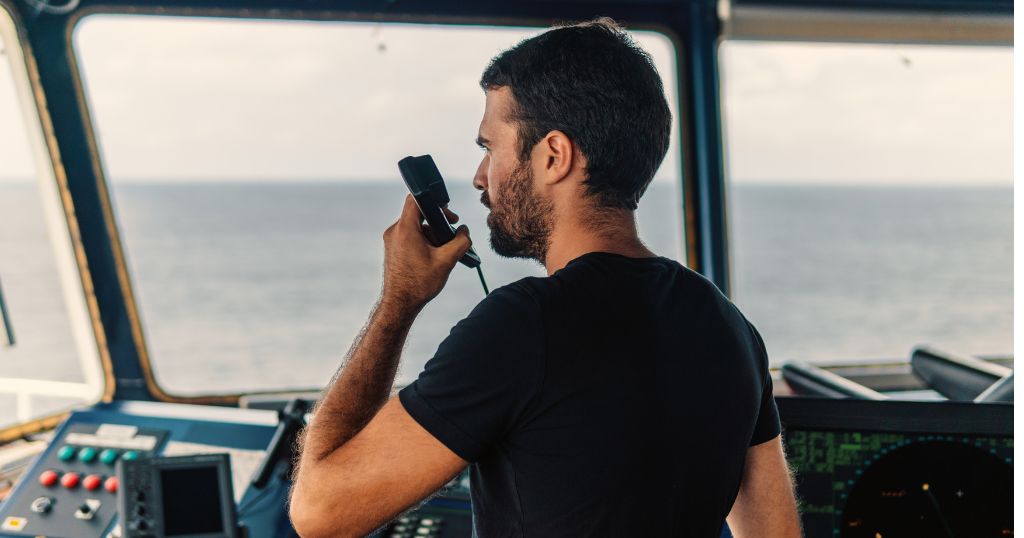
Clear and accurate VHF communication with a Vessel Traffic Service (VTS) is essential for safe navigation, smooth port operations, and compliance with IMO and SOLAS regulations.
Whether you’re entering a busy traffic lane, reporting your position, or requesting pilot instructions, following the correct procedure ensures safety and efficiency.
This guide explains how to call a VTS station step by step, the required information you must prepare, and the standard IMO SMCP phrases to use during communication.
🚢 What Is Vessel Traffic Service (VTS)?
A Vessel Traffic Service (VTS) is a shore-based monitoring and communication system designed to enhance safety, prevent collisions, and manage ship movements.
These services are established under the IMO’s SOLAS Convention and operated following IALA guidelines.
Knowing the type of VTS service available helps you tailor your communication for faster, more accurate coordination.
⏳ When Should You Call a VTS Station?
Deck officers and masters must contact VTS at specific times to ensure compliance with SOLAS, port authority regulations, and local reporting rules.
You should call VTS when:
- ✅ Entering or exiting a VTS zone
- ✅ Passing reporting points shown on ENCs, pilot books, or NP 286
- ✅ Requesting traffic information before altering course or speed
- ✅ Reporting collisions, groundings, equipment failures, or pollution
- ✅ Confirming pilot boarding instructions
- ✅ Requesting assistance in emergencies
📻 Preparing to Call a VTS Station
Before transmitting on VHF, the bridge team should prepare in advance. This ensures your call is accurate, efficient, and compliant.
1. Identify the Correct VTS Channel
Always confirm the designated working channel for the area:
- Check the Admiralty List of Radio Signals (ALRS Vol. 6 / NP 286)
- Refer to port entry guides and sailing directions
- Verify on ENC/ECDIS overlays
NP 286 or ALRS Volume 6 Parts
Here’s a list of the coverage of the NP 286 or the Admiralty List of Radio Signals Volume 6 – Pilot Services, Vessel Traffic Services (VTS), and Port Operations:
| Volume | Coverage Region |
|---|---|
| NP 286(1) | United Kingdom and Europe (excluding Arctic, Baltic and Mediterranean Coasts) |
| NP 286(2) | Europe, Arctic and Baltic Coasts, including lceland and Faroe lslands |
| NP 286(3) | Mediterranean and Africa (including Persian Gulf) |
| NP 286(4) | Indian sub-continent, South East Asia and Australasia |
| NP 286(5) | North America, Canada and Greenland |
| NP 286(6) | North East Asia and Russia (Pacific Coast) |
| NP 286(7) | Central and South America and the Caribbean |
| NP 286(8) | Africa (excluding Mediterranean Coast), Red Sea and the Persian Gulf |
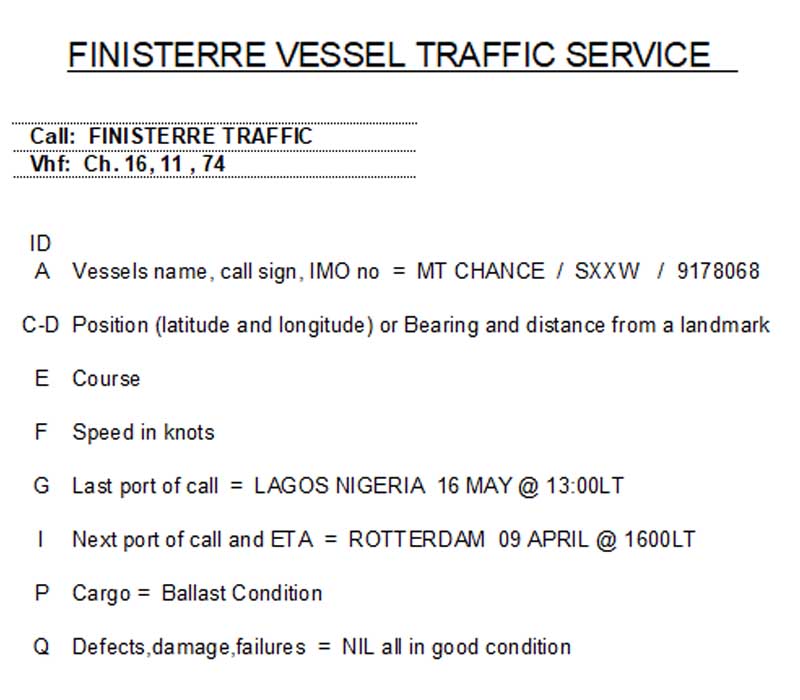
2. Gather Required Vessel Information
Before calling, prepare the following essential details:
- Ship’s name and call sign
- IMO number and MMSI (if required)
- Present position (latitude/longitude or range & bearing)
- Course and speed
- Departure port, destination, and ETA
- Draft, cargo type, and dangerous goods details
- Persons on board
- Any defects or limitations affecting navigation
You can find zone-specific reporting requirements in NP 286 or the local Port Entry Guide.
3. Set Up Bridge Equipment
- Test VHF radios and select the correct channel
- Verify AIS data is transmitting correctly
- Keep pilot cards, port guides, and reporting checklists handy
📞 Step-by-Step VTS Call Procedure
Follow this sequence for initial contact with any VTS station:
- Listen to the channel first → Avoid interrupting ongoing communications.
- Call the station clearly → Repeat its name twice for clarity.
- Identify your vessel → State your ship name, call sign, and IMO number.
- State your position → Use latitude/longitude or a nearby navigational reference.
- Specify your intention → Example: entering, exiting, or requesting traffic updates.
- Answer the station’s questions → provide honest and accurate answers to the VTS.
- Acknowledge their response → Confirm instructions and repeat critical details back.
Pro Tip: Always speak slowly and clearly to avoid miscommunication, especially when English is not the native language.
🗣️ Using IMO SMCP Phrases for Clear VTS Communication
The IMO Standard Marine Communication Phrases (SMCP) provide a standardized language to avoid misunderstandings, especially in mixed-nationality traffic areas.
Always use these short, precise phrases:
| Phrase | Meaning / Usage |
|---|---|
| “This is [Vessel Name], Call Sign [XXXX]” | Initial identification |
| “Say again” | Repeat your message |
| “Stand by” | Wait before responding |
| “Acknowledge” | Confirm receipt of instructions |
| “Correct” | Confirms that the received information is accurate |
| “Negative” / “Affirmative” | Clear yes or no responses |
| “I require assistance” | Used during emergencies |
Tip: SMCP phrases are recognized globally and are mandatory for VTS reporting, pilot boarding, and collision avoidance communications.
🎙️ Sample VHF Communication with VTS
VHF exchanges with Vessel Traffic Services follow structured formats.
Below are two complete real-world examples of how a ship and a VTS station interact during reporting.
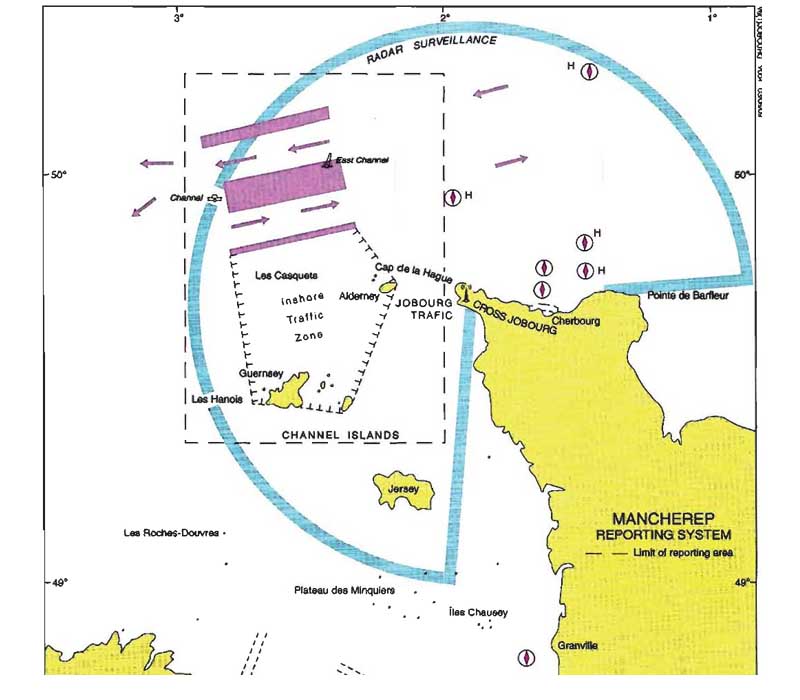
Example 1: VTS Asking – Ship Answering
In this example, the vessel initiates the call, and VTS asks questions step by step:
Ship:
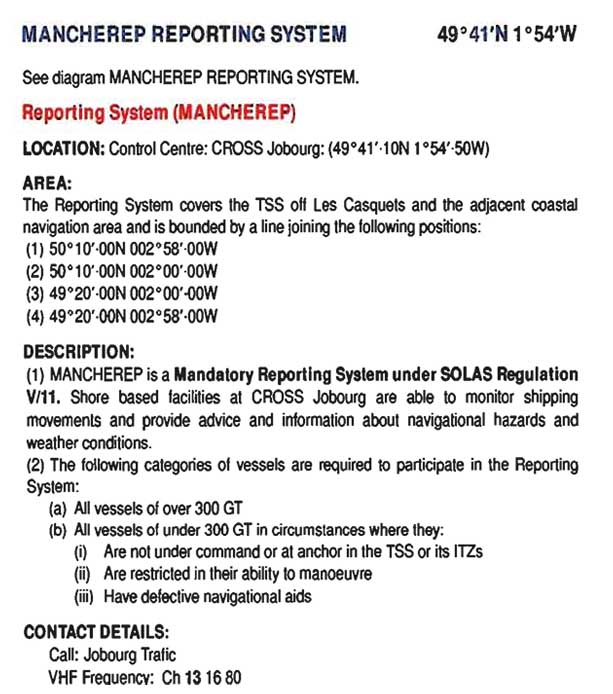
“Jobourg Traffic (repeat 3 times), this is Motor Tanker Sunny Euro, call sign TST1234 (repeat 3 times), calling on VHF Channel 13, over.”
Jobourg Traffic:
“Motor Tanker Sunny Euro, please go ahead, sir.”
Ship:
“Yes sir, for your information, we are passing MANCHEREP reporting position heading eastbound, over.”
Jobourg Traffic:
“Thank you, MT Sunny Euro. What is your position, course, and speed, over?”
Ship:
“My position is Latitude 49° 48.5′ North, Longitude 002° 57.5′ West. Course is 075°T, and speed is 12.5 knots.”
Jobourg Traffic:
“Thank you, sir. What is your departure port, destination, and ETA?”
Ship:
“Jobourg Traffic, my departure port is Sines, Portugal. My destination is Amsterdam, Netherlands. ETA is August 29, 2025, at 2000H, over.”
Jobourg Traffic:
“Copy MT Sunny Euro. What is your draft, cargo, quantity, and UN number?”
Ship:
“Jobourg Traffic, my draft is 11.5 meters even keel, cargo is gasoline, quantity is 12,000 MT, UN number 1203. Over.”
Jobourg Traffic:
“Okay sir, and how many persons are on board?”
Ship:
“23 persons on board including master.”
Jobourg Traffic:
“Last question, sir. Do you have any defects in your navigational equipment or anything on board?”
Ship:
“No defects or damages, sir. Everything is in good working condition.”
Jobourg Traffic:
“Thank you very much for your cooperation, MT Sunny Euro, and have a good watch. Bye-bye.”
Ship:
“Thank you also, sir, and have a good watch as well. Standing by on VHF Channel 16. Out!”
Example 2: Ship Dropping it all together!
In this faster approach, the ship delivers the entire required report in one structured message:
Ship:
“Jobourg Traffic (repeat 3 times), this is Motor Tanker Sunny Euro, call sign TST1234 (repeat 3 times), calling on VHF Channel 13, over.”
Jobourg Traffic:
“Motor Tanker Sunny Euro, please go ahead, sir.”
Ship:
“Yes sir, for your information, we are passing MANCHEREP reporting position heading eastbound.
My position is Latitude 49°48.5’ North, Longitude 002°57.5’ West.
Course is 075°T.
Speed is 12.5 knots.
Departure port Sines, Portugal.
Destination Amsterdam, Netherlands.
ETA August 29, 2025, at 2000H.
Draft 11.5 meters even keel.
Cargo gasoline, quantity 12,000 MT, UN number 1203.
23 persons on board, including master.
No defects or damages, sir. Everything is in good working condition, over.”
Jobourg Traffic:
“Thank you very much for your cooperation, MT Sunny Euro, and have a good watch. Bye-bye.”
Ship:
“Thank you also, sir, and have a good watch as well. Standing by on VHF Channel 16. Out!”
Tip: Choose the format that works best for the situation. In heavy traffic, the second approach saves time, but ensure you speak clearly and slowly.
✅ Pro Tips for Smooth VTS Communication
- Always prepare your report before making the call.
- Use a VHF reporting checklist.
- If unsure, ask VTS to repeat instructions instead of guessing.
- Stay updated with the latest Admiralty List of Radio Signals (ALRS) for reporting zones and channel assignments.
❓ Frequently Asked Questions (FAQ)
1. Do all ports have VTS stations?
No. VTS systems are usually installed in busy ports, narrow straits, and congested waterways. Always check NP 286 or port entry guides for confirmation.
2. What if VTS instructions conflict with COLREGS?
COLREGS take priority. VTS provides guidance, but the Master retains full responsibility for safe navigation.
3. Is English mandatory for VTS calls?
Yes. English is the IMO-mandated language for VTS worldwide, although some local stations may accept their native language.
4. What happens if I fail to report to VTS?
Consequences can include warnings, fines, port entry refusal, and in some cases, reporting to flag state authorities for repeated violations.
5. Which publication lists all VTS reporting channels?
The Admiralty List of Radio Signals (ALRS Vol.6 / NP 286) provides VHF channels, reporting formats, and mandatory points for global VTS zones.
⚓ Conclusion
Mastering VTS radio procedures is a vital skill for every deck officer and bridge team.
Correct VHF communication ensures navigational safety, compliance with SOLAS, and smooth coordination with port authorities.
For more guides on bridge communication, COLREGS compliance, and ship handling, visit Captains Mod, your trusted maritime resource. 🌊⚓
This post was requested by one of my Facebook audience Mr. Widi Ardika Afc in one of my FB posts.
May the winds be in your favor.
Leave a Reply