

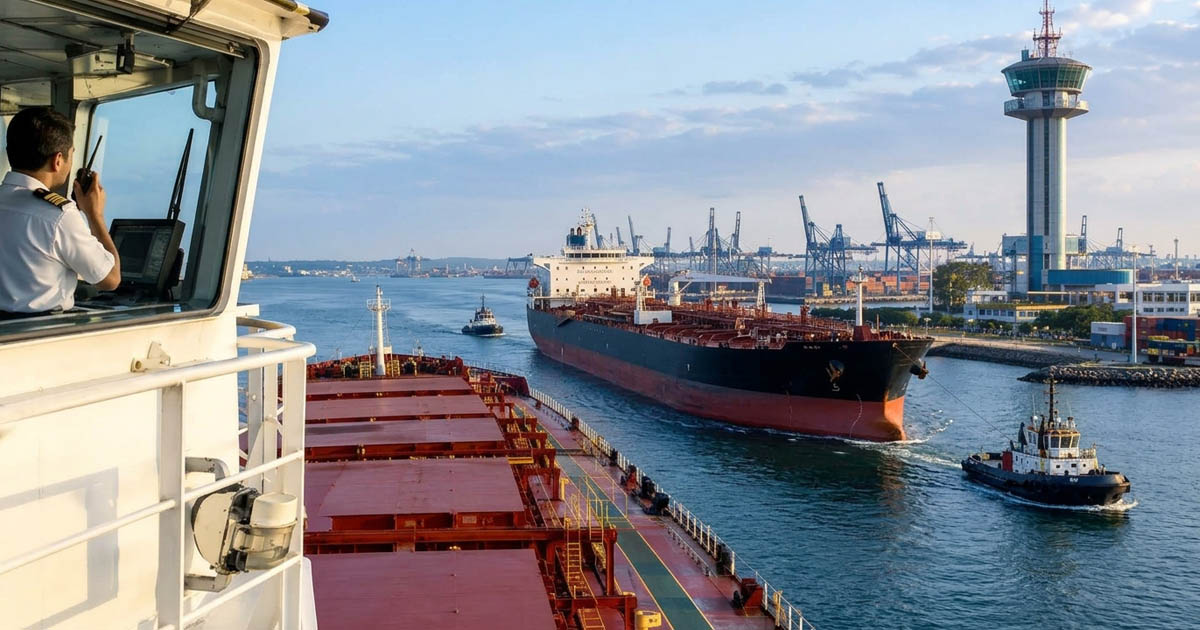
When a ship is approaching port, the ship’s agent and port control may both provide instructions about the vessel’s arrival. Most of the time, these instructions are consistent. But when they conflict, the bridge team needs to know which information should take precedence.
The practical rule is simple: when the ship reaches the reporting position, follow the latest instruction from port control after confirmation from the ship’s agent.
Port control or traffic control coordinates vessel movements within the port and normally has the most current information about berth availability, pilot movements, traffic, anchorage instructions, and changes to the berthing schedule.
Why Can the Agent and Port Control Give Different Instructions?
The ship’s agent often provides the vessel with information before arrival. This can include the expected berthing time, berth readiness, pilot arrangements, or whether the vessel should anchor.
However, port conditions can change after the agent has sent that information.
For example, the agent may advise:
“Berthing prospect: October 6 at 1500.”
The officer of the watch may then contact port control as soon as they reach the reporting position to confirm the arrangement.
Port control may respond that the berth is no longer available and that the ship must wait or that the schedule has been changed.
This is why the berthing prospect is not necessarily a final instruction. It is a proposed or expected arrangement that can change according to the latest port situation.
For an explanation of what a berthing prospect means and how it is normally confirmed, see our article on What Is a Berthing Prospect and How Is It Confirmed?.
Why Does Port Control Take Precedence?
Port control normally has the latest operational picture.
It coordinates vessel traffic and receives updates concerning:
- Berth availability
- Pilot movements
- Arriving and departing vessels
- Anchorage requirements
- Sudden Congestions
- Traffic restrictions
- Changes to the port schedule
- Other operational developments
The ship’s agent can also provide valuable information, but there can be a delay between a change occurring at the port and the agent communicating that change to the ship.
This can be particularly relevant during evenings, weekends, holidays, or busy periods, when the agent may not immediately have the latest operational information.
For this reason, the bridge team should confirm the vessel’s instructions with port control at the appropriate reporting position rather than relying solely on an earlier message from the agent.
📌 Important: When there’s a major incident in the channel affecting ship movements, your vessel may not be able to pass despite your terminal being ready for cargo operation. That’s why it is important to communicate the port control’s instructions to your agent.
Example: Agent Says Pilot on Arrival, Port Control Says Anchor
A real world example illustrates the situation clearly.
On one of our arrivals at the Port of Rotterdam, the ship had been scheduled to arrive at approximately 1030. The agent had confirmed pilot on arrival.
When the vessel reached the reporting position, however, the port control instructed the ship to drop anchor and wait for berth availability.
The master informed traffic control that the agent had previously advised the pilot on arrival.
The port control explained that there had been a new development and instructed the ship to contact the agent.
After contacting the agent, he verified that the vessel should indeed wait at the anchorage.
The important lesson is not that the agent’s information was useless. The agent had provided information that was correct when it was given. The situation had simply changed.
The bridge team must verify the latest operational instructions and confirm it on both sides before acting.
What Should the Officer of the Watch Do?
When approaching the reporting position, the officer of the watch should make sure the latest instructions are confirmed.
A practical sequence is:
- Review the latest information from the ship’s agent.
- Check the expected berthing or pilot arrangement.
- Call port control at the required reporting position.
- Confirm to both parties whether the previous instructions are still valid.
- Record or communicate any changes to the bridge team.
- Follow the latest applicable instruction from traffic control.
If port control changes the arrangement, the bridge team should immediately call the agent and confirm if the instruction is correct.
The same principle applies when the agent and port control provide different instructions about anchoring or pilot boarding.
For example, the agent may instruct the ship to drop anchor upon arrival. When the ship reaches the reporting position, port control may instead instruct pilot on arrival.
In that situation, the ship should inform the agent and follow the current instruction from port control.
Do Not Treat the Agent’s Information as Unimportant
The ship’s agent remains an important source of information.
The agent may provide the ship with the expected berth, estimated berthing time, berth readiness updates, and other useful arrangements before arrival.
The key is understanding the difference between advance information and the latest operational instruction.
A good bridge team uses the agent’s information to prepare the ship while still confirming the actual situation with port control when required.
This avoids acting on outdated information.
Important: In rare cases, the Agent and port control may insist on their instructions. As the Captain of the ship, you have to call the company’s Operations Department and confirm which instructions to follow.
Port Control vs. Ship’s Agent: Quick Guide
| Situation | What the Bridge Team Should Do |
| Agent provides a berthing time | Use it as the expected schedule |
| Berthing time is approaching | Confirm the latest situation |
| Agent and port control agree | Follow the confirmed arrangement |
| Agent and port control conflict | Verify with the agent and follow the latest port control instruction |
| Agent says anchor | Confirm with port control at the reporting position |
| Port control changes the plan | Confirm with agent and follow the updated instruction |
Key Takeaway ⚓
The ship’s agent and port control both provide important information, but they serve different operational roles.
When their instructions conflict, the ship should confirm the latest situation with port control. Their instructions usually have precedence unless there is a strong opposition from the agent.
Do not assume that an earlier message from the agent remains valid until the vessel has confirmed the current arrangement.
Good port arrival practice is therefore not simply about receiving instructions. It is about checking, confirming, and acting on the latest information before the ship commits to the next stage of the operation.
For the next stage, see Pilot Boarding Arrangements: What the Deck Crew Needs to Know.
May the winds be in your favor.
Leave a Reply