


Short answer: Only with caution! Never as your primary fix method.
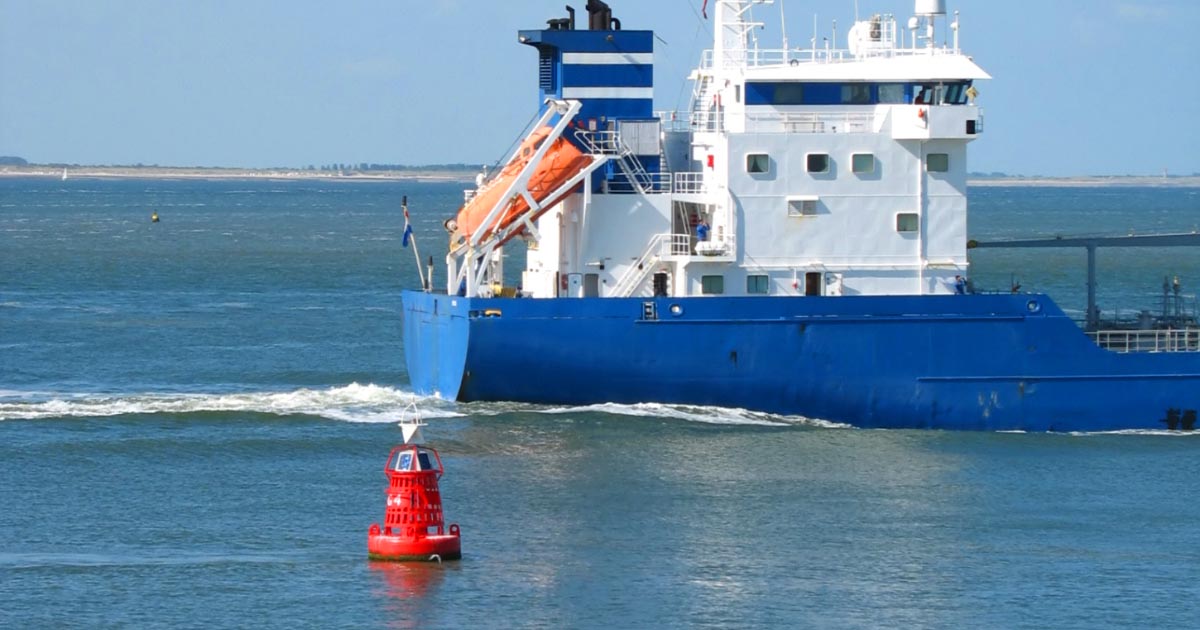
Floating aids to navigation, such as buoys, lightships, ODAS buoys, and light floats, are not fixed objects.
Though they are anchored, they can shift position due to weather, currents, or maintenance delays.
This makes them unreliable for precise position fixing.
That said, in certain situations- like open ocean navigation or training, they can serve as secondary references.
But they should never be your main source of a navigational fix when other options are available.
🛟 What Are Floating Aids to Navigation?
Floating aids to navigation are buoyant structures anchored to the seabed to mark:
- Navigable channels
- Shoals or underwater hazards
- Traffic separation schemes (TSS)
- Special areas (e.g., scientific zones, anchorage)
They may be equipped with:
- Radar reflectors
- AIS transponders
- GPS or weather sensors
- Lights and sound signals
- Color-coded markings (per the IALA buoyage system)
⛴️ These aids form a core part of marine navigation, but unlike fixed marks (e.g., lighthouses or beacons), they are subject to drift and should be treated with caution.
📝 Example: An ODAS buoy in the open ocean may appear in the correct charted position, but storms or delayed repositioning could make it several cables off-station.
📍 What Is a Position Fix in Navigation?
A position fix refers to the exact location of a vessel at a specific time, determined by cross-referencing known reference points.
Fixing your position ensures:
- Accurate course monitoring
- Hazard avoidance
- Legal compliance and log accuracy
- Safe passage planning
🧭 Common Methods of Fixing a Position:
- GPS and ECDIS
- Radar bearings and ranges
- Visual bearings to fixed aids
- Lines of position (LOPs)
- Cross bearings
- Celestial navigation
- Echo sounder depth comparisons
While floating aids are included in the list of navigational references, they should be treated as supplementary to more stable and verifiable methods.
✅ When It’s Acceptable to Use Floating Aids for Position Fixing
There are cases where floating aids can support your fix, especially if no fixed objects are charted nearby.
Here are some valid scenarios:
- 🌊 Open waters: When no land-based or fixed aids are available.
- 🛰️ ODAS buoy reference: In deep-sea crossings, known buoys can help with estimated fixes.
- 📚 Training drills: For cadets or refresher scenarios where safe approximation is acceptable.
- 🧭 Constellation of buoys: When multiple buoys are present and cross-checking is possible.
- 🚢 Between two lateral marks: In clearly marked channels, buoys can help verify position alignment.
- 📍 Familiar waters: If you’re confident in the accuracy and stability of the aids based on local experience.
- 🔄 Backup for electronic systems: In case of GPS error or ECDIS uncertainty.

❌ When You Should Not Use Floating Aids for Fixing Position
Despite their usefulness in limited cases, floating aids should not be your go-to for navigation fixes, especially in critical or uncertain situations.
Here are specific scenarios where they must be avoided:
- ⛈️ After a storm or rough weather – buoys may have shifted, broken free, or gone off-station.
- 🌫️ Low visibility – radar echoes or visual sightings of buoys can be inaccurate.
- 🗺️ Unfamiliar waters – don’t risk it if you’re unfamiliar with the area’s buoy reliability.
- 📉 Uncharted or unlit buoys – if it’s not shown on your ENC or paper chart, treat it as a hazard.
- 🌊 Areas with strong currents or heavy traffic – these can displace or obscure floating aids.
- ⚠️ Drifting or reported defective buoys – check NAVTEX, Notices to Mariners, and local warnings.
- 📍 When fixed navigational aids are available – such as beacons, lighthouses, breakwaters, or charted radar conspicuous objects.
- 🛑 During critical navigation – like port approach, pilot boarding, or maneuvering in restricted waters.
- 🧾 Before inspections or audits – always use traceable, verifiable methods (GPS, radar fixes, visual bearings).
🔍 Remember: Floating aids are not “fixed positions” even when charted, they are expected to move within a tolerance range.
⚓ Best Practices for Position Fixing at Sea
Always follow this rule of thumb:
📌 “Use floating aids only if there are no better options available and never use just one.”
🧭 Reliable Fixing Methods You Should Prioritize:
- Visual bearings to fixed charted objects
- Radar ranges and bearings
- GPS cross-checks with ECDIS overlays
- Echo sounder vs. depth contours
- Celestial navigation (in open seas)
🔄 Cross-Verification Is Key
Using two or more independent sources to cross-check a fix helps ensure accuracy and safety.
This is especially critical when navigating:
- In congested ports
- At night or in restricted visibility
- During coastal passages
- Near hazards or TSS intersections
✅ A reliable position fix isn’t just about where you are, it’s about how confidently you know it.
🧭 Conclusion
Floating aids like buoys, ODAS markers, and lightships can be used to help estimate your position, but they are not reliable for precise fixes.
Because they float (and move), their position can deviate from what’s charted even if their light or radar echo appears correct.
Always cross-reference with more dependable sources like radar, GPS, fixed visual marks, or echo sounder.
In deep-sea or training scenarios, you might use floating aids temporarily but always with caution and cross-checking.
❓ FAQs
Can I use a buoy to fix my ship’s position?
Only as a last resort or backup. Buoys are floating and prone to movement, making them unreliable for accurate fixes.
Are ODAS buoys accurate for position fixing?
If the ODAS buoy is charted, verified, and on-station, it can assist in estimating position, but not as your sole fix method.
What’s the safest way to fix a position at sea?
Use a combination of GPS, radar, visual bearings, echo sounder, and fixed charted references.
Avoid relying on a single source especially if it floats.
🚀 Call to Action
Want more real-world navigation insights and tools trusted by deck officers worldwide?
🌐 Visit Captain’s Mode– your go-to hub for bridge procedures, navigation safety, and seamanship best practices.
May the winds be in your favor.
Leave a Reply