



Chipping and painting are two essential deck maintenance activities on all merchant vessels, especially on tanker ships.
These tasks are part of a vessel’s corrosion control strategy, aimed at extending hull integrity and protecting structural components from rust damage.
Ships operate in highly corrosive environments- constant exposure to seawater, salt spray, and humidity accelerates oxidation.
Left untreated, rust can compromise structural integrity, cause leaks, and lead to expensive repairs.
To combat this, seafarers routinely perform:
- Chipping: the process of removing rust and scale using hand or power tools.
- Painting: the application of protective coatings (primers and topcoats) to prevent rust from reoccurring.
✅ Pro Tip: Chipping always precedes painting. Never apply paint on a rusted surface.

🧯 Why Tanker Ships Require Strict Maintenance
Tanker vessels are held to higher safety standards than most ship types.
Their flammable cargoes such as gasoline, diesel, and naphtha require rigorous fire and explosion prevention measures.
That’s why even a small maintenance job like chipping must follow strict precautions.
🔥 Risks of Corrosion on Tankers
Rust doesn’t just affect aesthetics. It weakens walkways, deck plating, and structures critical to ship safety.
Unaddressed corrosion in catwalks or manifolds can lead to:
- Equipment failure
- Crew injuries
- Structural collapse
- Non-compliance with classification society standards
⚠️ Why Sparks Are Dangerous on Tankers
Chipping generates metal-to-metal contact, especially when using pneumatic or electric tools.
This impact can produce sparks- a critical hazard on tankers.
Even on deck, fumes from flammable cargo can linger in air pockets or settle in low areas.
A single spark can trigger:
- 🔥 Fire or explosion
- 🚨 Evacuation or emergency shutdowns
- 💸 Severe fines from port state control or class societies
⚠️ Remember: Tanker vessels are sometimes described as “floating bombs.” Chipping must only be done under safe conditions.
✅ Benefits of Chipping and Painting on Board
Here’s why chipping and painting should be part of every deck maintenance plan:
1. 🛡️ Prevent Corrosion
Removes rust before it spreads, protecting hulls, decks, pipelines, and fittings from premature damage.
2. 🚢 Improve Vessel Appearance
A freshly painted ship looks newer and more professional. This is crucial during inspections, charterer evaluations, or STS transfers.
Example: During one STS operation, a newer tanker appeared more deteriorated than our older vessel due to visible rust patches and stains.
3. ⚙️ Reduce Hull Drag
Corrosion on the ship’s underwater hull increases resistance, which can reduce speed and fuel efficiency.
4. 📋 Ensure Regulatory Compliance
Class societies like DNV or Lloyd’s Register inspect vessel condition. Severe rust levels can lead to remarks or detention.
Real-world note: One GL surveyor once noted 47% deck corrosion on a newly acquired ship. The result? Five riding squads were deployed within a month for urgent maintenance.
5. 🚧 Prevent Accidents
Rust compromises deck integrity.
Crew could fall through weak spots in walkways or catwalks if corrosion is left unchecked.
6. 📈 Extend Ship’s Lifespan
Preventive maintenance like chipping and painting helps extend a vessel’s serviceable years and increases resale value.
🧨 Risks and Safety Considerations in Tanker Maintenance
⚙️ How Sparks Form During Chipping
Power tools like needle gun scalers and deck hammers deliver intense, repetitive impact on metal.
This metal-on-metal action generates heat and sometimes visible sparks.
🧠 Note: While chipping doesn’t generate as much heat as welding or cutting, the spark risk is still real.
✅ When It’s Safe to Chip on Tankers
You can only chip safely on a tanker deck under the following conditions:
| Condition | Safe to Chip? | Notes |
|---|---|---|
| Tank is gas-free | ✅ Yes | Must have 21.0% O₂ and 0% flammable vapors |
| Tank is inerted (with Inert Gas or I.G.) | ✅ Yes (with restrictions) | Allowed during ballast condition only |
| Tank is loaded | ❌ No | Chipping must be suspended due to vapor risk |
| Inside ballast tanks next to cargo | ❌ No | Residues may reside inside the ballast tank |

🔧 Step-by-Step Guide: How to Chip on Board
Chipping may look simple, but on tanker ships, it must follow a deliberate safety and procedural sequence.
✅ 1. Inspect Your Tools
Before use, check all chipping tools for defects. Most are pneumatic and rely on compressed air systems.
Checklist:
- 🔌 Air hoses (check for leaks or cracks)
- 🔧 Tool couplings and fittings
- 🪛 Function test (check if trigger and needle action works)
- ❗ Remove faulty or damaged tools from service
⚠️ Never chip with damaged hoses or worn-out scalers. This increases injury and spark risk.
🧰 2. Wear Full PPE
Always wear appropriate Personal Protective Equipment (PPE) when chipping on deck.
Required Gear:
- 👢 Safety boots
- 🧤 Safety gloves
- 👷♂️ Hard hat with chin strap
- 👓 Safety goggles or face shield
- 🎧 Ear protection (earmuffs or plugs)
- 👕 Flame-resistant coveralls
- 😷 Dust mask or respirator
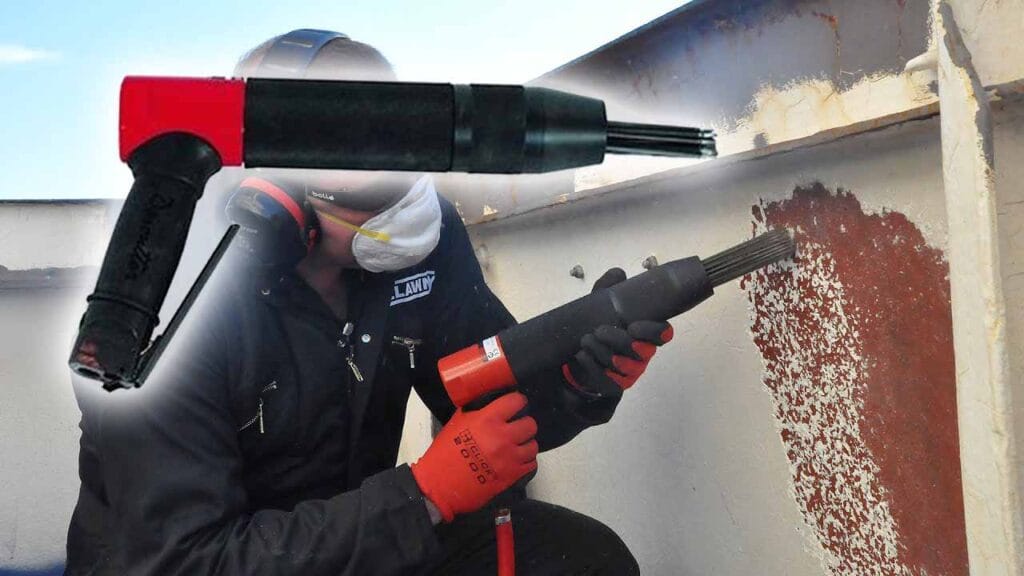
🛠️ 3. Choose the Right Chipping Tool
There are various types of chipping tools used on tanker vessels:
| Tool | Description | Use |
|---|---|---|
| Needle gun scaler | Vibrating needles chip rust via percussion | Ideal for small to medium patches of corrosion |
| Deck scaler | Rotary head with tungsten tips | Best for flat, heavily rusted areas |
| Chipping hammer | Manual tool for precision | Used in tight corners or delicate areas |
| Wire brush | For finishing or brushing off loose rust | Always used after primary chipping |
💡 Tip: Always wire-brush the surface after chipping to remove fine particles and smoothen the surface before painting.
🎨 Step-by-Step Guide: How to Paint After Chipping
Once the surface is rust-free and clean, it’s time to apply protective coatings.
✅ 1. Prepare the Paint
In your ship’s paint room, mix the paint according to manufacturer instructions. Paint types vary, but generally follow a layering system.
Layers of Paint:
- Primer Coats (1–3 layers)
- First line of defense
- Usually two-component epoxy-based
- Topcoat (1–2 layers)
- Provides UV, heat, and seawater resistance
- Adds color and aesthetics
🧪 Caution: Follow proper mixing ratios and pot life. Improperly mixed paint will not adhere or protect.
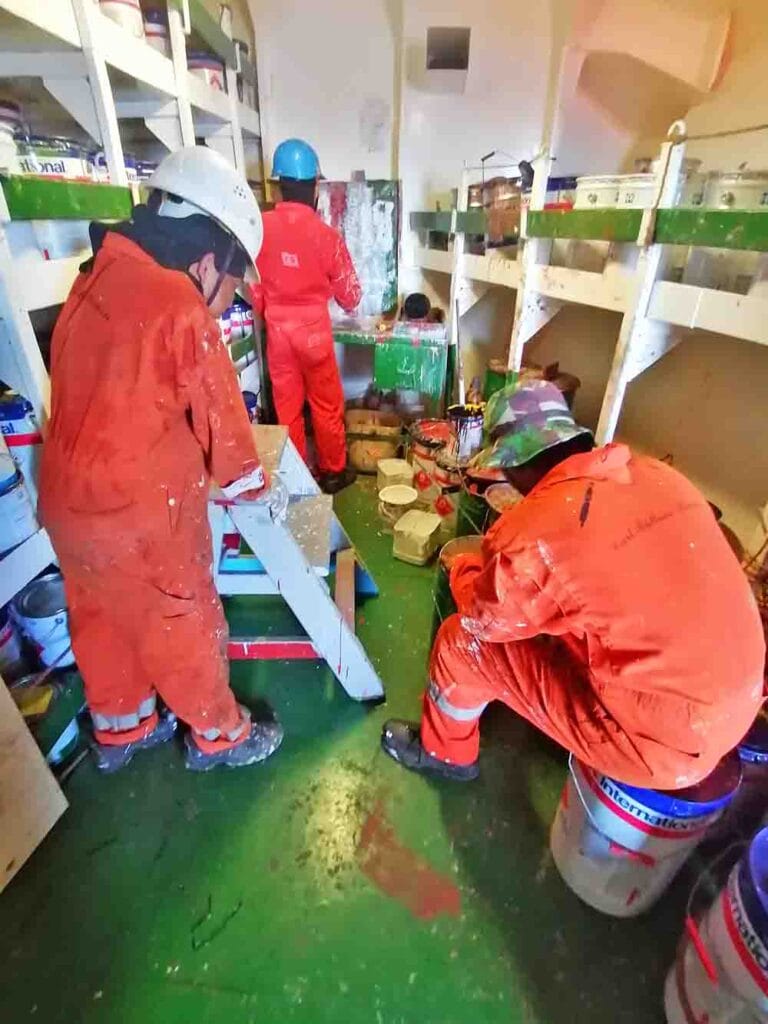
🖌️ 2. Apply Paint According to Weather and Policy
Paint application must follow manufacturer recommendations and company policy. Consider temperature, humidity, and wind.
General Tips:
- Apply during dry weather
- Avoid strong winds to prevent overspray
- Follow curing time before applying additional coats
- Use rollers or brushes depending on surface area
🚫 When Not to Paint
You should not paint if:
- Deck is wet or sweaty
- Cargo fumes are strong
- Surface wasn’t properly cleaned after chipping
- Paint shows signs of gelling or separation
🕐 Best Time to Perform Chipping and Painting on Tankers
Since tankers carry flammable cargo, timing is critical.
| Voyage Type | Chipping | Painting |
|---|---|---|
| Ballast Voyage | ✅ Yes (inerted tanks) | ⚠️ Limited- depends on weather |
| Loaded Condition | ❌ No | ✅ Yes (non-hot work) |
| STS Operations | ❌ Avoid | ❌ Avoid |
| Port Stay (idle) | ⚠️ Only if approved | ⚠️ Only if approved |
✅ Deck crews often chip during ballast voyages and apply topcoats when the ship is loaded.
🧠 Key Takeaways for Safe Tanker Maintenance
- Chipping and painting prevent corrosion, reduce deterioration, and improve vessel life.
- Always ensure tanks are gas-free or inerted before chipping.
- Never chip near loaded cargo areas or flammable vapor zones.
- Use correct PPE and approved tools.
- Paint only on clean, dry, and rust-free surfaces.
❓ Frequently Asked Questions (FAQs)
🔹 Can we chip near cargo tanks during loading?
No. Chipping is strictly prohibited near or above loaded tanks due to vapor ignition risk.
🔹 Is painting allowed during cargo operations?
Yes. Painting can be done as it does not generate heat or sparks, but always follow shipboard safety policies.
🔹 How many coats of paint are typically applied?
Most vessels apply 2 to 3 primer coats and 1 topcoat, depending on company SOPs and environmental conditions.
🔹 What is a gas-free condition?
It means the tank contains 21.0% oxygen and 0% flammable gases verified using calibrated gas meters.
📌 Conclusion: Maintain Safety While Extending Vessel Life
Chipping and painting may seem routine, but on tanker ships, they’re serious safety-sensitive operations.
With the right tools, timing, and procedures, deck crews can perform these tasks effectively- preserving vessel integrity and keeping inspections clean.
⚓ “Rust never sleeps.” Stay proactive with deck maintenance to keep your ship safe and seaworthy.
May the winds be in your favor.
Leave a Reply