

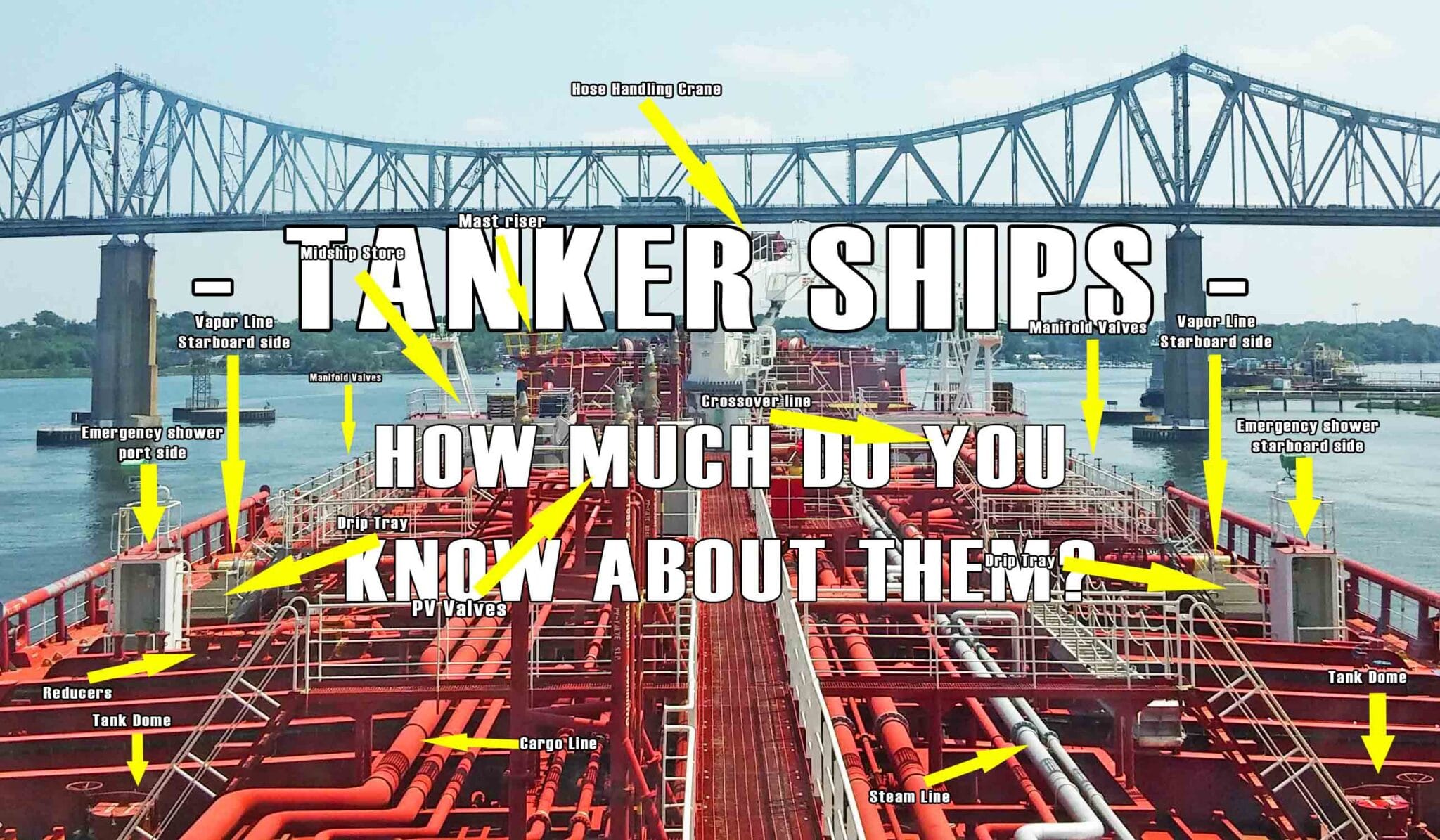
Tanker ships, often simply called “tankers”, are specialized vessels designed to transport liquid cargoes in bulk.
These include crude oil, refined petroleum products, chemicals, liquefied gases, and even edible oils.
Due to the diversity of cargoes, tankers are fitted with highly specific parts and systems to ensure safe, efficient, and compliant cargo operations.
Whether you’re a cadet studying for your first tanker job or a junior officer refreshing your knowledge, this guide provides a complete overview of essential tanker ship parts and equipment used in real-world operations.
⚙️ A. Cargo Handling System
The cargo handling system is the core operational backbone of any tanker ship.
It ensures that liquid cargoes are loaded, transferred, and discharged safely and efficiently.
1. 🛢️ Cargo Tanks
Function: Store liquid cargo onboard.
Tanker ships have multiple cargo tanks arranged across the ship’s breadth and length. They are typically named using an alphanumeric system:
- C = Center
- P = Port
- S = Starboard
Example: 1P, 1C, 1S (also referred to as “1 Across”). A single tanker can have up to 50 separate tanks depending on its type and size.
📌 Note: Common tanker types include VLCCs, Product Tankers, Chemical Tankers, and Gas Carriers.

2. ⚙️ Cargo Pumps
Function: Discharge cargo from the tanks to shore or transfer it internally.
These pumps vary by ship type:
- Framo (hydraulic) and Marflex (electric): Submerged centrifugal pumps used in most modern tankers.
- Centrifugal pumps: Used in older or larger vessels like VLCCs.
- Other types: Reciprocating, screw, and gear pumps (less common).
Pumps may also serve dual purposes like driving tank cleaning machines or handling emergency discharges.
3. 🔀 Cargo Lines
Function: Transport cargo between tanks and manifolds during loading/discharging.
Cargo lines act as internal pipelines.
Their flow paths are controlled by valves and monitored via the Cargo Control Room (CCR).
They are critical for segregated cargo handling, especially in multi-grade loadings (e.g., on product and chemical tankers).
4. 🧭 Cargo Valves
Function: Control flow direction, rate, and tank selection.
Valves are either manual or remote-controlled (often pneumatically or hydraulically).
By opening or closing specific valves, officers can isolate individual tanks, direct flow during discharging, or prevent contamination between incompatible cargoes.
⚠️ Safety note: Improper valve alignment can lead to cross-contamination, overflow, or operational delays.
5. 📋 Cargo Control Room (CCR)
Function: Centralized monitoring and operation of cargo and ballast systems.
The CCR is the ship’s nerve center for cargo operations. Monitored values include:
- Tank levels, pressure, temperature
- Loading/discharging rates
- Trim, list, bending moment
- IG system and alarm status
- Ballast and counter-ballast operations
The CCR also maintains communication with the shore terminal and is equipped with emergency stops and checklists.
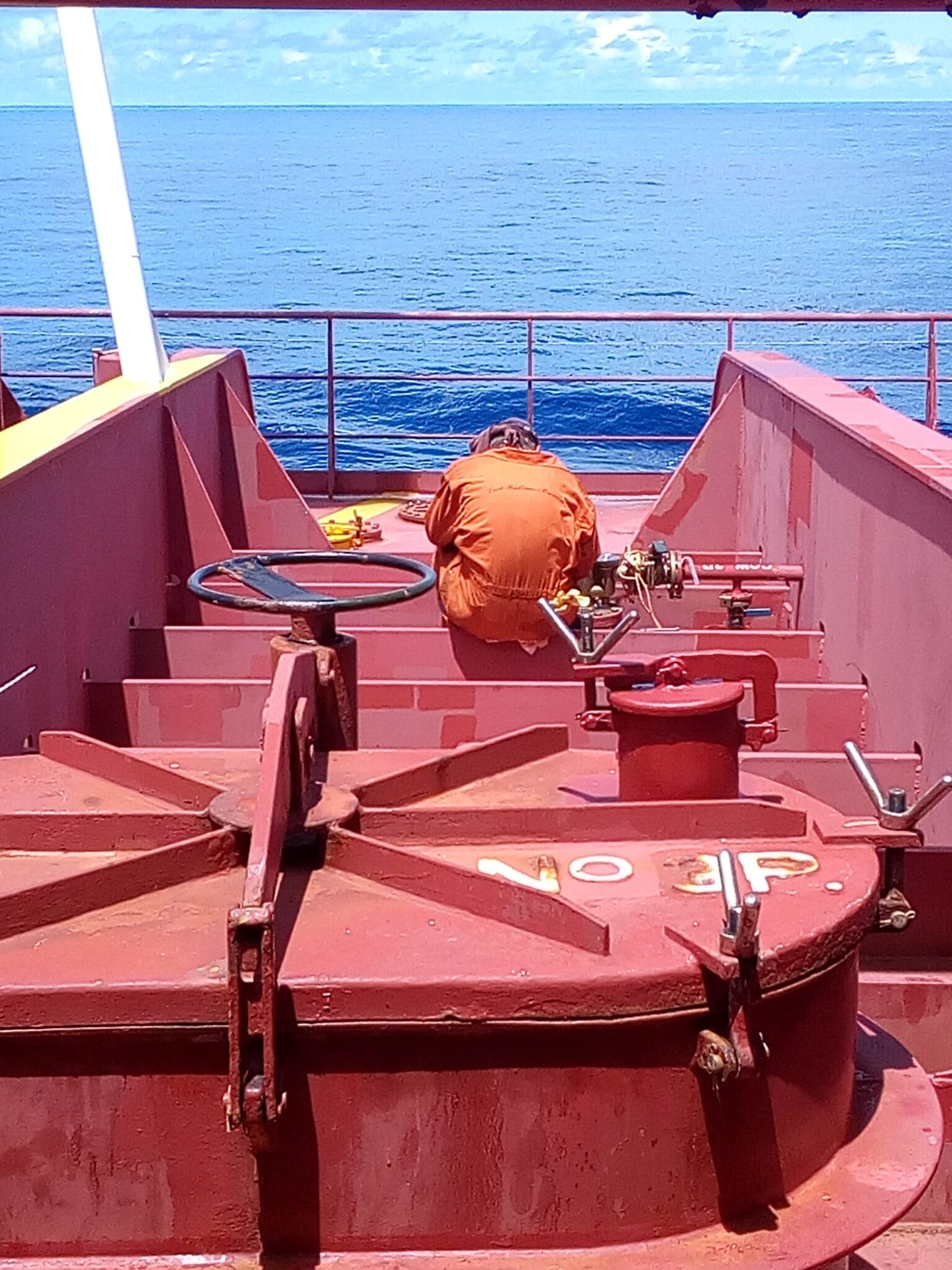
6. 🔓 Main Cargo Hatch
Function: Access point for tank entry or equipment lowering.
Also called the tank dome, this opening is used during inspections, gas freeing, cleaning, and equipment deployment.
It’s typically accessed using ladders and is sealed airtight during cargo operations.
💨 Gas Production Plants
7. 🔥 Inert Gas Plant (IG Plant)
Function: Supply low-oxygen gas to the cargo tanks, reducing the risk of fire or explosion during cargo operations.
- Uses flue gas from the ship’s boiler
- Maintains the oxygen content below 8%
- Interconnected to the IG system
✅ The IG plant revolutionized tanker safety by virtually eliminating tank explosions due to flammable vapors.
8. 🧪 Nitrogen Generator Plant (N₂ Plant)
Function: Serves as a substitute for inert gas because of its non-reactive properties and is regarded as a cleaner option.
- The ship must have an onboard Nitrogen Generator
- Nitrogen is used for:
- Inerting: Creating a non-combustible environment inside tanks.
- Purging: Removing oxygen or moisture from tanks and pipelines.
- Padding: Maintaining an inert blanket over liquid cargo.
✅ Unlike flue gas, nitrogen is clean, dry, and compatible with a wider range of sensitive or high-purity cargoes.
🌬️ B. Venting and Inerting System
The venting and inert gas system (IGS) protects tanker vessels from pressure-related hazards and prevents flammable vapor-air mixtures inside cargo tanks.
These components ensure safe pressure equalization during cargo operations and maintain an inert atmosphere within the tanks.
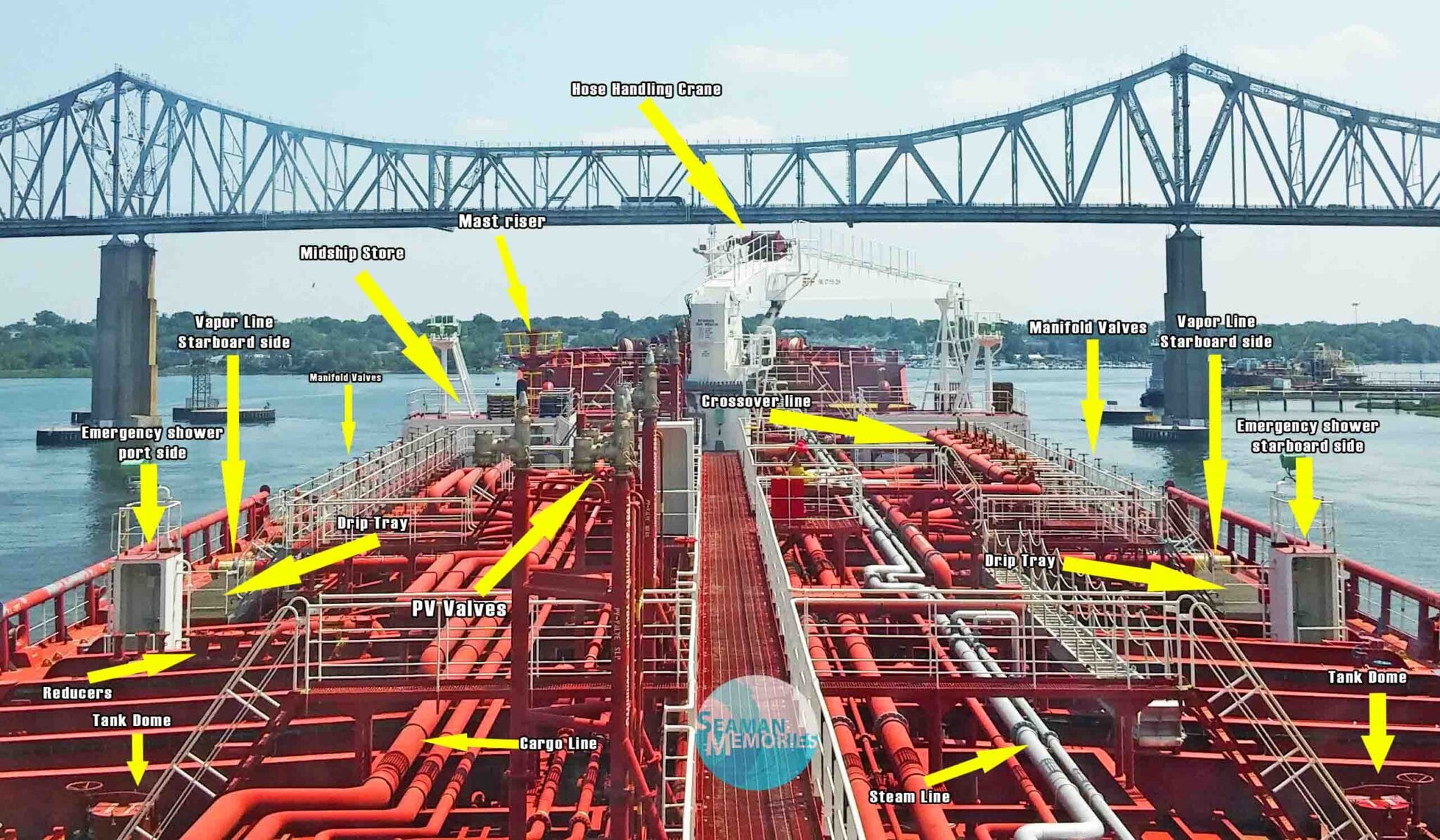
9. 🧯 P/V Valves (Pressure/Vacuum Valves)
Function: Protect cargo tanks from overpressure and vacuum conditions.
Installed on each tank’s venting line, P/V valves automatically release pressure during loading and allow air entry during discharging.
Their dual action:
- Opens pressure valve if tank pressure exceeds safe limits.
- Opens vacuum valve if a negative pressure threshold is reached.
✅ MARPOL & SOLAS compliant to prevent tank ruptures or implosions.
10. 🌡️ Mast Riser
Function: Provides atmospheric venting of cargo vapors.
Used when handling homogeneous cargo and if terminal regulations allow open venting.
The mast riser vents tank pressure to the atmosphere through a controlled valve, typically operated during cargo discharge or stripping.
⚠️ Not used in ports with strict vapor emission controls.
11. 💧 P/V Breaker
Function: Acts as a secondary venting safeguard linked to the IG line.
This is a cylindrical water-filled device that manages tank pressure:
- Overpressure forces water out.
- Vacuum conditions draw water in.
P/V breakers ensure additional pressure balance during sudden surges in cargo or IG operations.
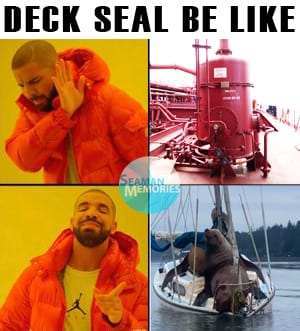
12. 🧼 Deck Water Seal
Function: Prevents backflow of flammable vapors into machinery spaces.
Before inert gas reaches cargo tanks, it passes through a deck seal (or water seal), which:
- Scrubs the IG of contaminants.
- Blocks backflow of hydrocarbon gases from cargo tanks into the engine room or inert gas generator.
13. 🔁 IG Branches (IG Local Lines)
Function: Distribute inert gas to individual cargo tanks.
The main IG line branches into smaller pipes called IG branches, each equipped with a control valve to regulate IG supply to specific tanks.
This allows targeted inerting or purging operations.
Used during tank inerting, purging, and maintenance of non-flammable atmospheres.
14. 🌫️ Vapor Return Line
Function: Returns displaced vapors from cargo tanks to shore.
During loading operation, vapor volume increases inside tanks.
When terminal venting restrictions apply, these vapors are returned to the shore vapor recovery system through the vapor return line.
Features include:
- Dedicated manifold connection.
- Flexible hose linking ship and terminal.
- Vapor lock valves for isolation and control.
📌 Required under vapor emission control regulations like 46 CFR Part 39 (USCG).
⚓ C. Midship and Deck Equipment
These components are mostly located around the manifold area and midship region of a tanker.
They are essential for connecting to terminals, managing emergency equipment, and conducting safe cargo operations.
15. 🔥 Midship Store (Deck Store)
Function: Storage area for deck, emergency, and pollution control equipment.
Despite the name, this isn’t a retail store.
The midship store, also called the deck store, houses:
- Fire extinguishers
- Breathing apparatus (BA sets)
- Oil spill kits and booms
- Portable cargo pumps
📌 It serves as the go-to location for oil pollution response gear as required by MARPOL Annex I.
16. 🏗️ Hose Handling Crane
Function: Lifts heavy equipment and hoses on deck.
Mounted near the cargo manifold, this crane handles:
- Cargo hoses and reducers
- Portable gangways
- Electric motors and cargo gear
- Crew baggage during sign on/off
This crane is also a quick way to identify a tanker from afar due to its prominent location.
17. 🔄 Manifold Reducers
Function: Ensure compatibility between ship and shore connections.
Since terminal hose diameters vary, tankers carry manifold reducers to match connection sizes.
These fittings allow:
- Conversion between ANSI flange sizes (e.g., 12” to 8”)
- Safe and leak-proof hose or arm connections
⚠️ Without proper reducer fittings, cargo operations cannot commence.
18. 🛑 Drip Tray
Function: Prevents oil spills during cargo hose connections.
Positioned directly under the manifold area, the drip tray collects:
- Residual cargo in hoses
- Minor leaks during connection/disconnection
This tray is a critical component of a tanker’s oil spill prevention system (SOPEP and SMPEP), especially in high-risk terminals.
19. 🧳 Portable Cargo Pump
Function: Emergency or backup pump for cargo discharge.
When a main pump fails, a portable cargo pump is used to discharge the remaining cargo. These are:
- Lowered manually into the tank
- Electrically or hydraulically powered
- Slower than main pumps
⚠️ Only one portable unit is usually carried- multiple pump failures can significantly delay operations.
20. 🔁 Manifold Area
Function: Central zone for all cargo line and hose connections.
Located port and starboard midship, the manifold area includes:
- Loading/discharging headers
- Valve control panels
- Sampling connections
- Drip trays and reducers
📌 This is the interface point between ship and terminal. Highly regulated for safety and spill prevention.
21. 🛢️ Deck Tanks
Function: Supplementary tanks used for cargo or slops.
Visible as cylindrical tanks on deck, these are used when:
- Cargo tanks are full
- Temporary storage is needed (e.g., dirty ballast, slops)
Common on older or modified vessels, these tanks must also be fitted with IG and venting systems.
22. 🌬️ Gas-Freeing Fans
Function: Remove toxic gases and restore breathable air inside tanks.
After cargo discharge, tanks are cleaned and gas-freed using fans that introduce fresh air and reduce vapor levels.
These fans may be:
- Water, steam, air, or hydraulically driven
- Operated from the main deck
⚠️ Required before tank entry, hot work, or inspection.
23. Crossover lines
Function: Allows cargo to be transferred between different tanks and lines, ensuring efficient loading and unloading processes.
- Widely used in Product and Crude Tankers
- Consist of interconnected valves used to direct the flow of cargos
- Main crossover line is bigger than the rest
- Manifold connection is usually at the crossover manifold for homogenous cargos
While these lines are handy, they are not installed in chemical tankers to prevent cross contamination.
📏 D. Gauging & Monitoring System
Gauging systems allow precise monitoring of cargo levels, ullage, and interface.
These are essential for cargo accounting, trim stability, and overfill prevention.
24. 📡 Tank Radars
Function: Provide real-time cargo level measurements.
Tank radars are fixed, non-contact gauging devices mounted atop cargo tanks.
They transmit radar waves to detect:
- Ullage (distance from the sensor to the cargo surface)
- Cargo temperature and interface (if multi-sensor type)
- Real-time level alarms (low, high, and overfill)
Readings are displayed on the CCR computer system, enabling officers to avoid overfilling and monitor tank status remotely.
✅ Required under OCIMF and ISGOTT guidelines for precise level monitoring.
25. 🧪 UTI Gauging Equipment
Function: Manual measurement of ullage, temperature, and interface (UTI).
When radar fails or is unavailable, a manual gauging device such as the MMC or Hermetic UTI is used. It includes:
- A sensor probe with an audible alarm
- Tape calibrated in millimeters or inches
- Thermometer and interface detector
Used via the ullage point for spot checks or terminal cross-verification.
📌 Also helps detect free water presence in the cargo.
26. 🕳️ Ullage Point (Sampling Point/Vapor Lock)
Function: Entry point for manual sampling and gauging.
Located on top of every cargo tank, the ullage point allows access for:
- Manual UTI insertion
- Sampling for quality testing
- Gas detection
Usually fitted with a vapor lock to prevent emissions during measurement.
27. 🚨 Cargo Level Alarm System
Function: Alert crew to high and overfill conditions.
Tanker ships are fitted with dual-level alarms:
- High-Level Alarm: Activates at ~95% tank capacity
- Overfill Alarm: Triggers at ~98%, often connected to an emergency stop
Provides audio-visual warnings in the CCR and on deck.
⚠️ Part of the ship’s overfill protection system as per OCIMF standards.
♨️ E. Heating System
Heating systems are used to maintain or raise the temperature of high-viscosity cargoes like crude oil, tallow, or molasses- ensuring smooth pumping and discharge.
28. 🔥 Heating Coils / Heat Exchangers
Function: Heat cargo inside tanks using steam.
Heating coils are stainless steel pipes running inside cargo tanks. Steam flows through them to transfer heat directly to the cargo.
On deck, heat exchangers may also be installed to pre-heat cargo.
✅ Common when carrying waxy crude, animal fats, or vegetable oils.
29. 🔁 Steam Line
Function: Delivers steam from engine room to heating systems on deck.
The steam line connects the boiler (in the engine room) to deck systems including:
- Heating coils
- Tank cleaning equipment
- Steam lances (for manual heating)
Insulated pipes help maintain pressure and reduce heat loss.
🧽 Tank Cleaning Equipment
Cleaning tanks is a critical operation on oil, chemical, and product tankers.
It ensures cargo compatibility, safety, and regulatory compliance- especially when changing cargo types or after discharging.
The most common equipment includes:
30. Fixed Tank Cleaning Machines
Function: Permanently installed inside cargo tanks and spray high-pressure water or cleaning agents in rotating patterns.
Features:
- Hydraulic or Pneumatic Rotary Jets mounted inside tanks.
- Clean using hot or cold water, chemicals, or seawater.
- Follow programmed cleaning cycles for full tank coverage.
31. Portable Tank Cleaning Machines
Function: Lowered into tanks and manually operated from the deck, making them ideal for smaller or hard-to-reach tanks.
Since this machine is tethered by its hose, here is how its normally operated:
- Deployed via tank openings or butterworth hatches.
- Often used when fixed systems fail or for spot-cleaning.
- Ideal for smaller or more complex tank designs.
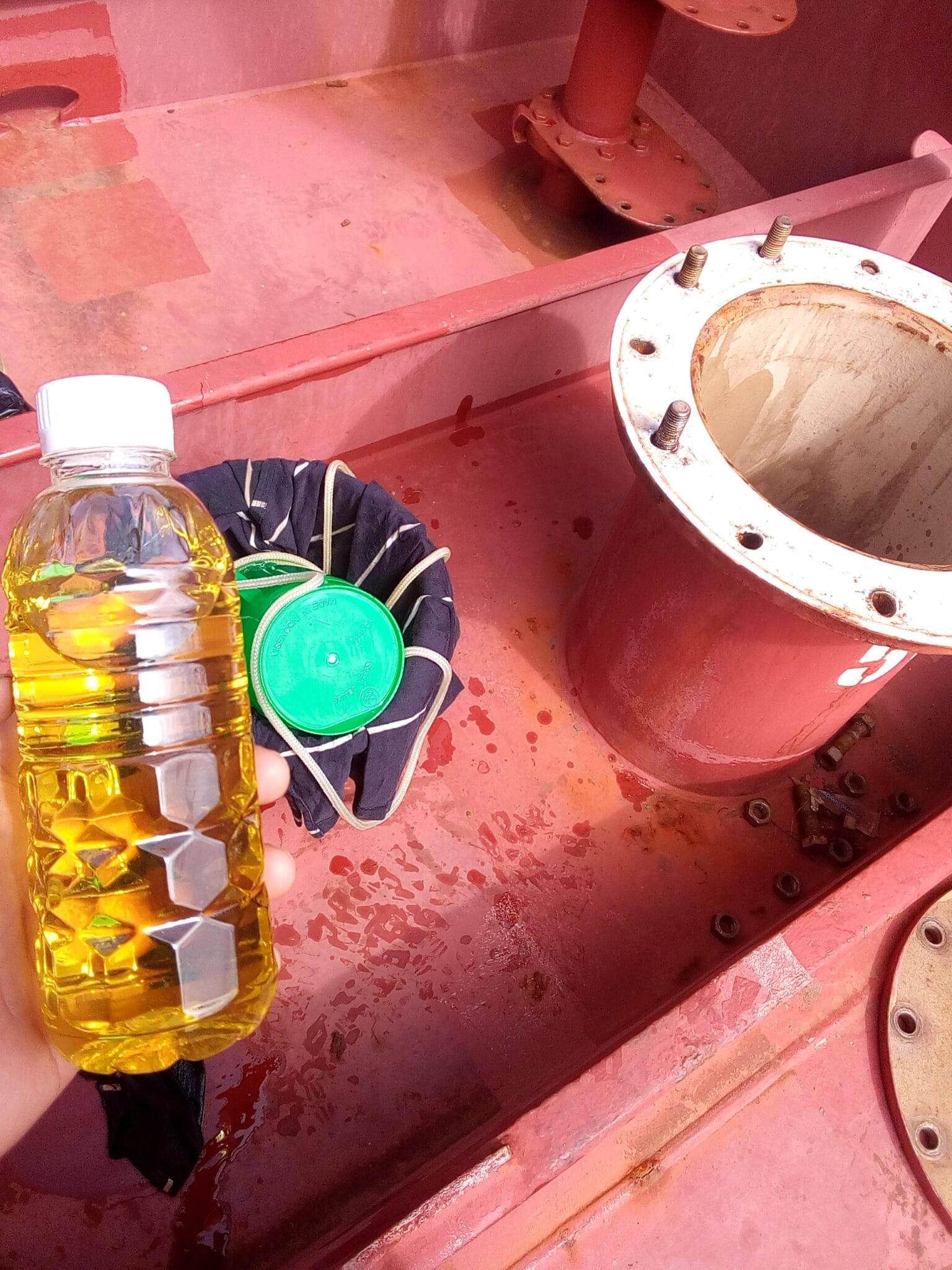
💡 For optimum result, portable tank cleaning machines can also be lowered bottom, middle, and upper part of the tank.
32. Butterworth Hole
Function: Also called a Butterwash, a Butterworth hole is a small, circular opening on deck where blowers are mounted to ventilate the tank. This is also used for open sampling and tank cleaning.
- Secured to airtight/watertight using bolts and nuts.
- Traditional method using portable machines + hoses.
- Named after the original Butterworth design.
33. Slop Tanks
Function: Temporary storage for wash water and residues collected during tank cleaning.
These tanks are critical for preventing marine pollution and are part of the ship’s MARPOL-compliant waste management system.
Emergencies
34. Emergency Deck Shower
Function: Provide first aid relief whenever a crew member comes in contact with chemicals anywhere on his body while on duty.
Also installed with an eyewash system used for rinsing chemicals splashed in the eye.
35. Emergency Shutdown System
Function: Push buttons strategically placed on the catwalk that immediately stops the pump when an emergency takes place.
You can find the emergency stop button on the following locations:
- Inside the CCR
- In front of the accommodation
- Forward and aft part of the port manifold
- Forward and aft part of the starboard manifold
- Forward part of the catwalk
Emergency stops are tested before discharging operation commences.
📋 Conclusion: Mastering Tanker Equipment is a Must
Understanding tanker ship parts and equipment isn’t just for engineers or deck officers- it’s essential for every crew member onboard.
Whether you’re a cadet learning the ropes or an officer preparing for vetting inspections, knowing your tanker inside out improves cargo safety, operational efficiency, and crew protection.
🧠 Keep this guide bookmarked as your go-to reference for tanker systems. It’s your anchor in mastering ship-specific knowledge!
❓ FAQs About Tanker Ship Parts and Equipment
❓ What is the purpose of an inert gas system on tankers?
To prevent explosion by reducing oxygen concentration in cargo tanks using inert gases.
❓ How do slop tanks differ from ballast tanks?
Slop tanks store cargo residues and wash water, while ballast tanks manage vessel stability and trim.
❓ What is the difference between cargo piping and stripping lines?
Cargo piping is for bulk transfer; stripping lines remove the last remaining cargo or residues from tanks.
❓ Are all tankers equipped with the same equipment?
No. Equipment varies based on tanker type (LNG, crude, product, chemical) and the nature of the cargo.
❓ What is a vapor return line used for?
It allows safe return of cargo vapors to the shore during loading, preventing overpressure and pollution.
📢 Call to Action
Ready to join a tanker or aiming for a promotion? Start by mastering the ship’s parts and their interrelated functions.
Bookmark this guide, share it with your crewmates, and keep learning with CaptainsMode- your go-to resource for maritime knowledge ⚓.
May the winds be in your favor.
Leave a Reply