



From social media posts of exotic ports to stories shared in seaside towns, life at sea often looks glamorous.
Many believe seafarers are wealthy, carefree, and constantly on vacation. But these assumptions are far from the truth.
In reality, maritime life demands hard work, discipline, and sacrifice- much of it unseen by those ashore.
Misconceptions arise from incomplete information, sensational news, and the polished images posted online.
This guide breaks down the most common myths about seafarers and replaces them with the realities faced by those working in the merchant navy.
Myth 1: Seafarers Are Like Walking ATM Machines 💵
The Misconception
Ask a random person what comes to mind when they hear “seafarer” and you might get one answer- money.
The assumption is that seamen earn huge salaries and have endless cash to spend.
This belief often leads to unrealistic expectations:
- Friends nominate them to cover group expenses.
- Distant relatives suddenly reconnect with requests for financial help.
- The tradition of pasalubong (bringing home gifts) becomes mandatory, not optional.
Common remarks include:
“You take care of our expenses since you’re a seafarer!”
“Seaman with no money!? Impossible!”
The Reality
While merchant mariners may earn more than many land-based workers, they are far from “cash dispensers.”
Their income supports not just immediate family, but also extended relatives, education for children, and long-term financial goals like building a house or funding business ventures.
At sea, every dollar is earned through months of continuous work, often in hazardous conditions.
A single contract can span 7–9 months, with no weekends off. Each paycheck represents long hours, physical labor, and time away from loved ones.
Maritime Perspective:
- Average Contract Length: 6–9 months away from home.
- Financial Priorities: Education, family support, home building, savings for training and certifications.
- IMO Context: Seafarers are governed by the Maritime Labour Convention (MLC), which ensures fair wages but does not make them “rich.”
The myth of the “walking ATM” oversimplifies a profession that demands discipline in both work and money management.

Myth 2: “Every Port, Report and Every Place, Replace” ⚓
The Misconception
Stories circulate about seafarers having a girlfriend in every country or spending shore leave in bars with strangers.
Spouses and partners may hear gossip like:
“He’s in Brazil now, probably with a beautiful blonde.”
“What else would you expect? He’s a sailor! Of course he’s with someone!”
These rumors portray seafarers as habitual womanizers, using foreign ports as opportunities for romantic escapades.
The Reality
Modern shipping is highly regulated, and port stays are shorter than ever.
Many vessels spend only a few hours alongside, often far from city centers
In many cases:
- Shore leave is restricted due to security regulations, port authority rules, or company policies.
- Crew members stay onboard for inspections, cargo operations, or maintenance.
- Fatigue from long work hours means rest, not nightlife, is the priority.
When seafarers do go ashore, it’s usually for practical reasons- buying internet SIM cards, essential items, or simply stretching their legs.
The joke among mariners today is:
“Every port, report to the wife. Every place, replace the SIM card.”
Maritime Perspective:
- Port Restrictions: ISPS Code limits free access to ports for security.
- Workload: Continuous operations, mooring duties, and safety checks during port calls.
- Crew Wellbeing: Limited shore leave is often used to maintain mental health, not for reckless activities.
The reality is far from the romanticized stereotype. Shore leave is a rare luxury, not a daily occurrence.

Myth 3: Seafarers Have a Relaxed Job with Huge Pay 💼
The Misconception
From the outside, seafaring looks like a high-paying job with minimal effort- just steering the ship and enjoying the view.
The lighter skin tone some seafarers develop from being away from the tropical sun reinforces the “easy life” image.
New houses, cars, and branded clothes at home further fuel the assumption.
The Reality
Every dollar a seafarer earns comes with long working hours, strict schedules, and constant safety risks.
Tasks can range from navigating through storms to handling heavy machinery in extreme weather.
A seafarer’s work environment includes:
- Physical Risks: Heavy lifting, machinery operation, exposure to toxic gases and hazardous materials.
- Weather Challenges: Navigating through typhoons, blizzards, or sweltering heat.
- Mental Strain: Long-term separation from family and friends.
Maritime Perspective:
- Training & Certification: Officers and crew must meet STCW requirements and pass regular safety drills.
- Work Schedule: Commonly 8–12 hours a day, often split into watches, with additional overtime.
- Hazards: From rough seas to mechanical failures, seafaring is classified as a high-risk profession.
Why the “Big Belly” Stereotype Exists
Seafarers often gain weight onboard due to the “work–eat–sleep” cycle.
Limited gym facilities, high-calorie meals, and irregular schedules make physical fitness a challenge at sea.
The truth is clear: seafarers earn higher pay not because the job is easy, but because it is demanding, risky, and physically exhausting.

Myth 4: Seafarers Are Greedy with Their Money 💰
The Misconception
Because seafarers earn higher-than-average wages, people often assume they have endless funds and should be generous with everyone.
This leads to:
- Friends or relatives expecting gifts or loans.
- Criticism if requests for money are declined.
- Assumptions that seafarers “value money more than relationships.”
When a seafarer says “no,” the backlash can be quick such as accusations of being selfish, stingy, or having “changed” after earning dollars abroad.
The Reality
Yes, merchant mariners are generally better paid than land-based workers in many countries, but that does not mean they have an obligation to fund others’ lifestyles.
Many have financial responsibilities that outsiders don’t see:
- Paying off student or training debts.
- Building a family home.
- Supporting siblings’ or relatives’ education.
- Saving for future maritime certifications and courses.
Maritime Perspective:
- Cost of Career Maintenance: Courses, medical exams, and certifications required under STCW and MLC can be expensive.
- Financial Planning: Seafarers often budget months ahead due to long contracts and unpredictable return schedules.
- Opportunity Cost: Every dollar given away can delay important personal or family goals.
Generosity exists in the maritime community, but like any profession, seafarers must prioritize their own obligations first.

Myth 5: Seafarers’ Life is Easy and Glamorous 🌍
The Misconception
From Instagram photos in foreign ports to stories about eating exotic dishes, many imagine a seafarer’s life as constant travel and leisure.
The narrative is:
- Visit a new country every week.
- Eat international cuisine daily.
- Spend shore leave exploring tourist attractions.
The Reality
While seafarers may travel to multiple countries in a single contract, the reality is that most of their time is spent onboard the vessel, not sightseeing.
The ship is both workplace and home, and duties come first:
- Cargo loading/unloading.
- Maintenance and safety checks.
- Navigational watches day and night.
Maritime Perspective:
- Shore Leave Limitations: The ISPS Code, short port stays, and remote terminals often mean crews never step off the ship.
- Mental & Emotional Strain: Long months at sea with the same small group of people can be mentally exhausting.
- Family Time: Even “vacation” is shortened by mandatory training and early re-embarkation calls from crewing agencies.
Reality Check:
In a typical year, a seafarer might spend less than three full months at home.
That precious time is often filled with catching up on family life, rest, and professional requirements.
The glamorous images are real. But they represent the highlights, not the daily grind.
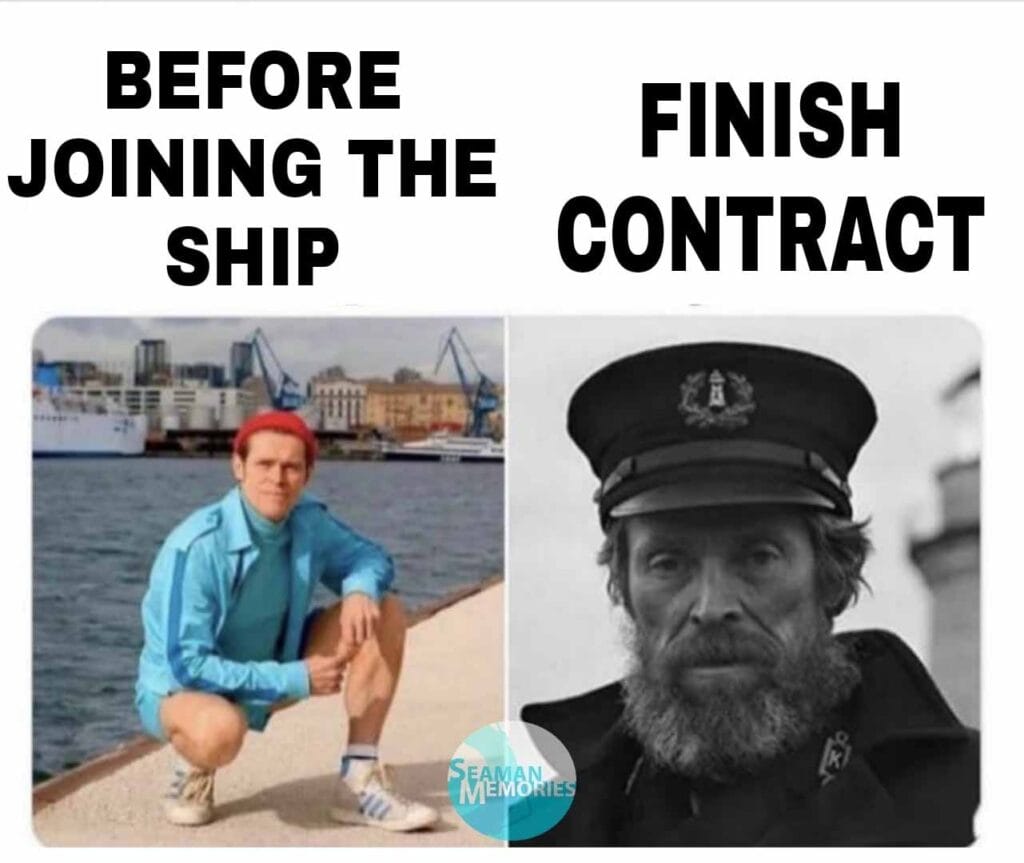
Myth 6: All Seafarers Are Excellent Swimmers 🏊♂️
The Misconception
Because seafarers work at sea, many assume they are all expert swimmers, able to survive long hours in open water if needed.
Some even believe swimming is part of daily life onboard.
The Reality
Surprisingly, many professional mariners are not strong swimmers. Some don’t know how to swim at all!
Seafarers are trained in personal survival techniques under the STCW Convention, which focuses on:
- Using lifejackets and immersion suits.
- Entering the water safely during emergencies.
- Conserving body heat and energy until rescue.
Maritime Perspective:
No Routine Swimming: Onboard operations do not require being in the water; in fact, falling overboard is a life-threatening emergency.
- Risks at Sea: Hypothermia, exhaustion, and strong currents are far greater dangers than lack of swimming skill.
- Survival Strategy: Clinging to floating debris or life rafts is safer than attempting to swim long distances.
The workplace of a seafarer is the ship itself- not the water surrounding it. The skill that truly matters is knowing how to survive, not how far you can swim.
Myth 7: Seafarers Are Constantly at Risk from Pirates 🚢🏴☠️
The Misconception
Popular films like Captain Phillips and sensational news reports create the image that piracy is a daily danger for all ships.
This fuels fears among families that every voyage is a hostage situation waiting to happen.
The Reality
Piracy is a genuine maritime threat, but it is not universal. Attacks are concentrated in specific regions, such as:
- Gulf of Aden & Somali Coast (historically high risk)
- Gulf of Guinea, West Africa (known for violent kidnappings)
Maritime Perspective:
- Preventive Measures: Ships transiting high-risk zones follow strict anti-piracy protocols such as razor wire barriers, water cannons, enhanced watchkeeping, and in some cases, private armed security teams.
- International Cooperation: The International Maritime Organization (IMO) and regional navies coordinate patrols to deter attacks.
- Declining Trends: Global piracy incidents have decreased in recent years due to improved security measures.
While piracy remains a concern in certain hotspots, the majority of merchant voyages are completed without incident.
The myth persists because even a single attack attracts global headlines.

Conclusion ⚓
Seafarers are not superhuman adventurers or cash machines. They are skilled professionals working in one of the most challenging industries in the world.
Life at sea demands discipline, sacrifice, and resilience.
False myths often arise from selective social media snapshots, outdated stereotypes, and exaggerated stories.
By understanding the realities of seafaring, we not only correct misconceptions but also show respect for those who keep global trade moving.
Frequently Asked Questions (FAQ) ❓
1. Why do people think seafarers are rich?
Because seafarers earn higher wages than many land-based jobs, there’s a public perception of unlimited wealth. In reality, much of their income goes toward family support, savings, and career expenses.
2. Do seafarers have a lot of free time?
No. Shipboard schedules involve long working hours, often exceeding 10–12 hours a day, including weekends and holidays.
3. Are shore leaves common today?
Not as much as before. Security regulations, short port stays, and remote terminals often limit or cancel shore leave.
4. Do all seafarers know how to swim?
No. Survival training focuses more on lifejackets, liferafts, and energy conservation rather than swimming skills.
5. Is piracy still a major threat to seafarers?
It exists in specific regions but has declined globally due to coordinated naval patrols and onboard security measures.
May the winds be in your favor.
Leave a Reply