


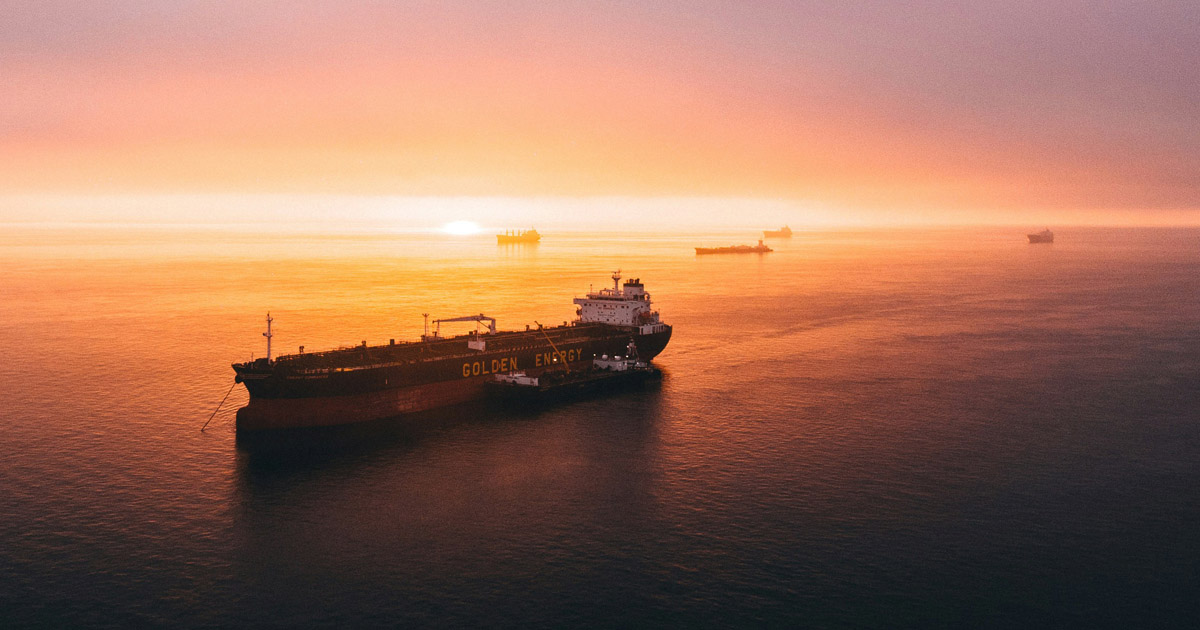
Anchoring is a fundamental operation in ship navigation, but when the seabed lies beyond 50 meters deep, the risks escalate sharply.
Most vessels prefer anchoring in depths under 50 meters. Going beyond that presents challenges not addressed by standard anchoring practices.
This guide explains why anchoring in deep water is generally discouraged, the situations where it becomes necessary, and how to do it safely using proper anchoring scope, planning, and equipment limitations.
⚠️ Why Deep Water Anchoring Is Risky for Ships
Anchoring beyond standard depths is generally avoided in merchant shipping due to increased operational strain, higher equipment failure risks, and limited holding reliability.
Below are the key reasons why anchoring in deep waters (typically >50 meters) is discouraged:
1. ⛓️ Excessive Anchor Chain Requirements
To maintain a safe holding angle, ships use an anchor scope of 5 to 8 times the water depth.
In deep waters, this means deploying nearly all available chain- e.g., in 70 meters depth, you’d need 350 to 560 meters (around 12–20 shackles!) for at least a scope of 5.
This places strain on the windlass, reduces maneuvering flexibility, and may limit the ability to recover the anchor.
2. ⚙️ Windlass and Retrieval Limitations
Most ship windlasses are designed to handle a maximum anchoring depth of 80 to 100 meters, or 3 to 4 shackles.
Beyond this, the weight of the chain combined with sea movement makes retrieval difficult especially in adverse weather.
Free-hanging chain from greater depths can damage the gypsy, brakes, or motor.
3. 😞 Poor Anchor Holding in Deep Seabeds
Deep seabed conditions may consist of rock, gravel, or coral- reducing the anchor’s ability to bite and hold.
Combined with long chain length, this can cause the anchor to drag, placing the vessel at risk of drifting off station.
4. 🌊 Increased Dynamic Forces on Chain and Fittings
Longer chains in deep water mean greater horizontal movement and surge, amplifying wind, wave, and current effects on the anchor system.
This can lead to shock loading, windlass fatigue, or chain failure especially during strong tidal set or swell.
5. 🔧 High Risk of Equipment Damage
In deep anchorages, the entire anchoring system– from chain stoppers to winches, is under greater strain.
Continuous load may deform equipment, shear pins, or cause the loss of anchor and chain altogether.
6. 📏 Insufficient Anchor Scope
Even with 12 or 13 shackles onboard, anchoring in 70+ meters of water may result in inadequate scope.
For instance:
- At 70 meters × 5 scope = 350m = 12.7 shackles (at the limit!)
- At 70 meters × 8 scope = 560m = 20.4 shackles (exceeds capacity!)
In such cases, compromise on scope reduces holding power and increases dragging risk.

🛑 When Is Anchoring in Deep Waters Necessary?
Despite the hazards, deep water anchoring may be unavoidable in specific circumstances:
1. ⚠️ Emergency Situations
Anchoring in deep water may be the only option during:
- Main engine failure
- Steering loss
- Drift towards hazards
It’s used to temporarily secure the vessel while awaiting assistance or restoring propulsion.
2. 🚢 Congested or Deep Port Approaches
Some ports (e.g., fjords or steep coastal shelves) have deep anchorages within 3–5 nautical miles from shore.
When inner anchorages are full, vessels may anchor in deeper waters while awaiting berthing instructions.
3. 🛠️ Maintenance and Repair Stops
Vessels needing emergency repair, fuel line inspection, or auxiliary engine work may anchor where drifting is unsafe.
In such cases, the crew must assess if anchoring is safer than holding position by engine.

4. 🌐 Oceanographic or Survey Operations
Research or seismic vessels often deploy anchors to stabilize the ship during:
- Equipment calibration
- Deep water sampling
- Seafloor mapping
Unlike merchant vessels, these ships are equipped for deep anchoring scenarios.
⚓ Safe Anchoring Procedures in Deep Water Conditions
If deep water anchoring is necessary, strict procedures must be followed to minimize risk.
Below is a step-by-step guide for anchoring in depths exceeding 50 meters:
✅ Step 1: Pre-Anchoring Preparations
🗺️ Survey the Area
- Use updated nautical charts, radar overlays, and echo sounders to check for underwater hazards.
- Confirm that the holding ground is suitable– preferably soft mud or sand. Avoid rock, coral, or uneven seabeds.
🌊 Check Water Depth and Tidal Variations
- Assess maximum depth at high tide and plan for chain slack.
- Consider tidal streams, set, and drift forces to determine if the anchor will hold once deployed.
🔗 Calculate Anchor Scope
- Use a scope ratio of 3:1 to 5:1 based on depth and conditions.
Example:- Depth: 70m
- Scope 3:1 = 210m = ~7.6 shackles
- Scope 5:1 = 350m = ~12.7 shackles (at the limit)
- Master’s discretion may apply when chain is insufficient- compensate with slower approach, better seabed, and minimal movement.
✅ Step 2: Vessel Positioning Before Anchor Drop
🧭 Approach with Precision
- Approach the anchoring location slowly, ideally into the wind or current to stabilize heading.
- Keep the vessel’s speed under 0.5 knots to prevent excessive momentum on the chain and anchor system.
📐 Align for Controlled Drop
Position the bow slightly upstream (or upwind), allowing the vessel to naturally fall back over the anchor after deployment.
✅ Step 3: Controlled Anchor Deployment
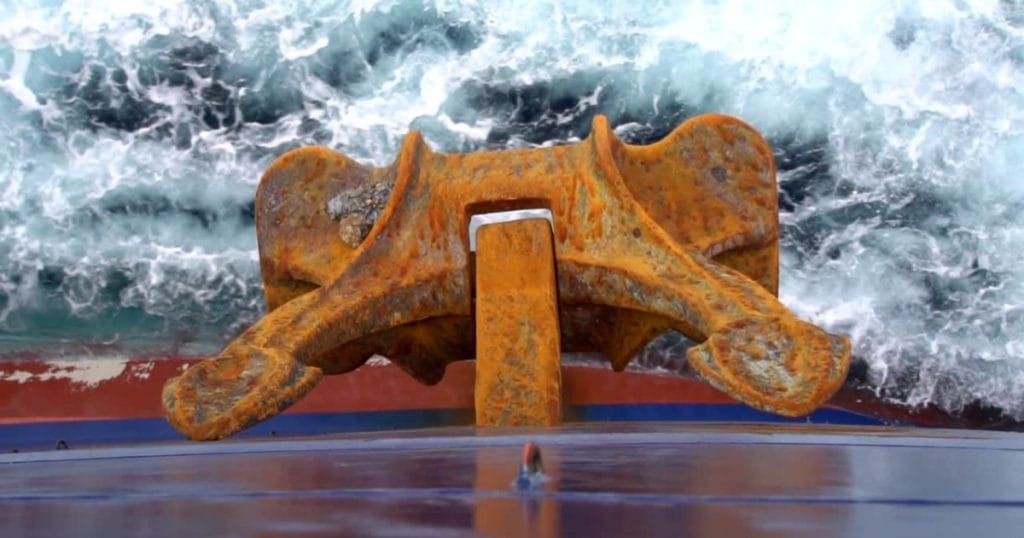
⚙️ Use Windlass—Do Not Free-Fall
- Free-falling the anchor from height can:
- Damage the brake system
- Shock-load the windlass
- Cause chain surging
- Instead, Walk Back the anchor. Lower the anchor slowly using the windlass motor for full control.
🛑 Respect Windlass Load Limits
- Windlass payout speed is typically 9 meters/minute.
- Vessel movement must remain under 0.3 knots during chain release.
Exceeding this can:- Force the vessel to pull the chain out
- Overload the windlass motor
- Snap brake pads or deformation of fittings
✅ Step 4: Setting the Anchor
⛓️ Allow Natural Drag to Set Anchor
- Once the anchor reaches the seabed, let the vessel drift back under the influence of current or minimal astern propulsion.
- This tension will help the anchor dig into the seabed and improve holding power.
📡 Monitor Chain Tension and Angle
- Watch for:
- Sudden tautness in chain (indicates setting)
- Slack pickup or abnormal surges (may indicate dragging)
- Use bridge equipment and deck team coordination during this phase.
✅ Step 5: Monitoring, Anchor Watch, and Heaving Up
🛰️ Monitor for Anchor Drag
- Use GPS position plotting, parallel indexing, or visual bearings to verify anchor holding.
- Any sign of dragging? Prepare to heave up and relocate immediately.
🕴️ Maintain Anchor Watch
- Assign a dedicated team to monitor:
- Log position checks at regular intervals (e.g., every 15 minutes).
🛠️ Safe Anchor Retrieval
- When departing:
- Heave up slowly with the vessel aligned over the chain.
- Bring the chain to the up-and-down position before final retrieval.
- Avoid sudden jolts or overloading the windlass.
❓ Frequently Asked Questions (FAQ)
What is the maximum safe anchoring depth for most merchant ships?
Most windlasses are designed for up to 100 meters of depth (3–4 shackles). Beyond this, anchoring becomes risky and may damage equipment.
How many shackles are needed to anchor in 70 meters of water?
To maintain a scope of 3:1, you need at least 7.6 shackles. For 5:1, over 12.7 shackles- which is at the limit on board.
Why do vessels avoid anchoring in deep waters?
Because it increases strain on the windlass, reduces holding power, and elevates the risk of anchor loss or chain damage.
Can I anchor in deep water during an emergency?
Yes. If drifting presents more danger (e.g., rocks, traffic lanes), deep water anchoring may be the safest short-term solution.
🧭 Conclusion
Anchoring in deep waters is a complex and high-risk procedure, best avoided unless absolutely necessary.
However, with proper scope planning, environmental assessment, and windlass control, it can be executed safely.
Always adhere to your ship’s anchor handling limits and keep an experienced watch on duty.
The ocean is unforgiving, but good seamanship keeps your vessel secure even in depths few dare to anchor.
May the winds be in your favor.
Leave a Reply