


Anchoring is a vital shipboard operation that ensures vessel safety while holding position at sea or during mooring.
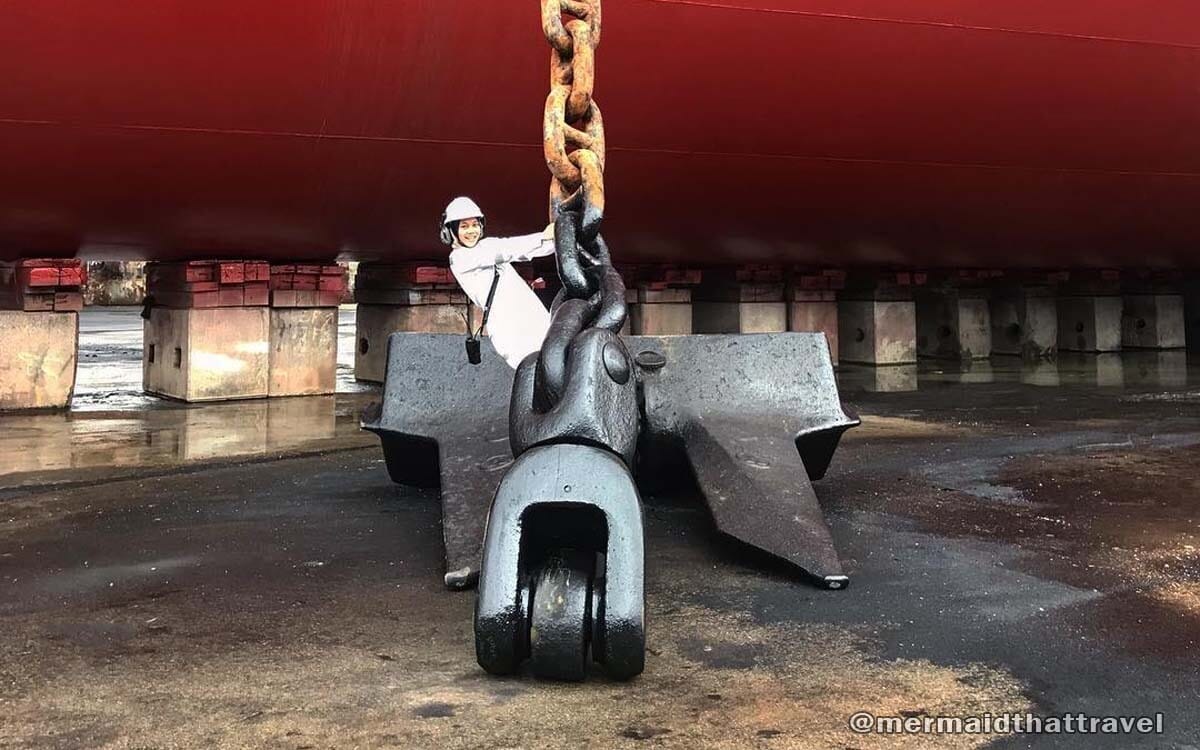
A reliable anchoring system depends on the proper function of its parts- anchor, chain, windlass, and securing gear.
Seafarers must be familiar with each component to perform pre-departure checks, conduct safe anchoring, and identify faults before they lead to costly failure.
Understanding how these parts interact builds technical confidence and improves anchoring operations.
🧩 Parts of an Anchor and Their Functions
Although anchor designs vary, most follow the same basic structure.
Below are the standard components of a typical stockless anchor, which is the most common type used aboard modern merchant ships.
1. 🔩 Crown Shackle (D-Shackle)
Also called the ring or D-shackle, this fitting connects the anchor shank to the anchor chain. It transfers the pulling force from the cable to the anchor body.
2. 🪝 Shank
The shank is the main vertical shaft of the anchor. It connects the crown shackle to the flukes and provides structural support during anchoring and retrieval.
3. 🌊 Fluke (Palm)
The fluke is the broad, flat plate that digs into the seabed to generate holding power. Its design ensures maximum surface contact with the ground for better grip.
4. ⚓ Pea or Bill
Located at the tip of the fluke, the pea or bill initiates seabed penetration.
Once it embeds into the bottom, it helps rotate and bury the fluke for stronger holding.
5. 🧭 Stock
A horizontal bar placed near the anchor crown and perpendicular to the shank. It ensures one fluke always orients downward to embed into the seabed.
🛑 Note: Most modern merchant ships use stockless anchors, which do not have this component.
6. 🧷 Crown
Found at the lower end of the shank, the crown helps direct the anchor’s movement when setting. It’s located where the arms or tripping palms connect.
7. 🔧 Arm (Tripping Palm)
Arms are the curved portions of the anchor that connect the shank to the flukes. In stockless anchors, the arms assist in tilting the fluke into the seabed.
This action, or “tripping,” ensures the fluke penetrates effectively.

⛓️ Anchor Chain: Key Components and Purpose
Also known as the anchor cable, the anchor chain connects the anchor to the ship and transmits holding force to the vessel’s hull.
It also acts as a shock absorber during heaving seas, reducing stress on the anchor and winch system.
The required chain length depends on:
- Water depth
- Seabed type
- Weather conditions
- Vessel size
📌 Pro Tip: In rough weather, increase the chain scope to improve anchor holding and reduce yawing.
1. 🔗 Anchor Link
A smaller D-shackle that connects the crown shackle to the first link of the anchor chain.
2. 🔄 Swivel
The swivel prevents twisting or fouling of the cable when the vessel swings or turns with wind and current around its swinging circle.
It also helps the anchor align properly while setting or recovering.
3. 🔩 Common Links
Standard chain links form the main length of the anchor cable and come in two types:
- Studded Link: Contains a central bar (stud) to prevent deformation under load. Used for added strength and longevity.
- Open Link (Studless Link): No central bar. Typically used in mooring lines and some anchor chains for larger vessels.
4. ➕ Enlarged Link
A reinforced studded link installed before and after the swivel to improve load distribution. It also aids in chain flexibility near the swivel joint.
5. 🔚 End Link
The final studless link that connects either to the enlarged link or directly to the swivel.
It completes the chain assembly from the anchor to the ship.
6. 🛠️ Kenter Shackle
A special type of joining shackle used to connect two lengths of chain. Its detachable design makes it ideal for chain maintenance and length adjustments.
✅ Bonus Function: Kenter shackles are typically marked and used to count how many shackles have been let out during anchoring.
⚙️ Anchor Windlass Arrangement: Components and Function
The anchor windlass is a heavy-duty deck machinery used for controlling the anchor cable during both letting go and heaving up.
It ensures safe, mechanical handling of the chain under tension.
🚢 Hawse Pipe
A curved pipe on the ship’s bow that guides the chain from the windlass to the anchor outside the hull.
Designed for stockless anchors to stow flush with the hull.
🌀 Guide Roller
Located before the gypsy wheel, this roller aligns the cable as it runs through the hawse pipe, reducing wear and friction.
🛑 Brake
A manual or hydraulic system that regulates the movement of the chain.
It’s vital for controlling chain speed during anchor lowering and for halting the cable in an emergency.
🔒 Chain Stopper (Bow Stopper)
Also called Cable Stopper, Guillotine Stopper, or Bow Stopper, this device secures the anchor chain independently of the windlass.
It absorbs the full tension from the cable, especially while at anchor, and protects the windlass.
🧲 Gypsy Wheel (Anchor Winch or Wildcat)
The core rotating drum of the windlass with notches that match the chain links. It grips the cable during heaving or lowering, ensuring smooth operations.
🧵 Spurling Pipe
A vertical pipe that leads the chain from the windlass down into the chain locker.
📦 Chain Locker
A below-deck compartment where the anchor chain is stored. Each anchor typically has its own dedicated locker to prevent entanglement.
🚧 Bitter End
The last link of the anchor cable secured to a strong point inside the chain locker.
🧠 Seafarer Insight: The maritime term “bitter end” is derived from “bitts” or bollards– where mooring lines are fastened. It’s a critical safety point when handling full-length anchor chain.

🛡️ Anchor Lashings: Securing the Anchor at Sea
Anchor lashings are safety restraints that prevent the anchor from accidentally deploying during sea passage.
These are typically made of:
- Turnbuckles
- Wire ropes or heavy-duty chains
- D-shackles or pad eyes
They secure the anchor flush into the hawse pipe or a designated seating bracket, especially during heavy weather or high-speed transits.
Properly tensioned lashings are essential to:
- Avoid unintended anchor drop
- Prevent damage to the bow shell plating
- Comply with Class and Flag State requirements
⚠️ Check lashings before arrival or departure to avoid anchor dragging incidents.
⚠️ Anchor Designs and Arrangements Vary
Not all vessels use the same anchor type or configuration. Variations exist due to:
- Ship type and design
- Anchor manufacturer
- Operational trade
- Class requirements
Common Anchor Types in Use:
- Stockless Bower Anchor (most modern ships)
- Danforth Anchor (flat flukes, excellent holding in mud/sand)
- Hall Anchor (similar to stockless but heavier arms)
- Admiralty Anchor (traditional stock anchor with long shank and flukes)
Each anchor type may require different handling techniques, lashings, and chain arrangements.
📌 Seafarer Tip: Despite standardization across fleets, always familiarize yourself with your vessel’s specific anchor type, dimensions, and windlass arrangement during handover or pre-departure checks.
👨🔧 Anchor Inspection Tips for Deck Officers and Crew
Routine checks of anchor components help prevent failure during anchoring or heaving operations.
These inspections should be conducted:
- Prior to arrival or departure
- During anchoring or heaving-up operations
- During maintenance rounds
Key Inspection Points:
- 🔍 Common Links – Look for deformation or corrosion
- 🔍 Swivel & Kenter Shackles – Ensure proper rotation and tightness
- 🔍 Bow Stopper & Securing Pin – Confirm pins are greased and not bent
- 🔍 Gypsy Wheel & Brake – Check for smooth function and wear
- 🔍 Anchor Lashings – Ensure tight fit and no slack
- 🔍 Bitter End – Verify it’s secured inside the chain locker
- 🔍 General Greasing Points – Apply marine-grade lubricant where needed
🧠 Tips for Chief Mate: Use inspections to familiarize cadets and new crew with key anchor system parts.
✅ Summary: Know Your Anchor System to Anchor Safely
A well-maintained anchor system is critical to ship safety.
Understanding each component- from the fluke to the bitter end, allows seafarers to:
- Anchor more confidently
- Prevent gear failures
- Perform accurate inspections
- Ensure compliance with maritime regulations
⚓ Mastering your vessel’s anchoring system is more than knowledge- it’s seamanship.
❓ Frequently Asked Questions (FAQs)
1. What are the main parts of a ship’s anchor?
Key parts include the shank, fluke (palm), crown, crown shackle, pea or bill, stock (if present), and tripping palm.
2. What does the anchor chain do?
The anchor chain connects the ship to the anchor, transmits tension loads, and acts as a shock absorber in heavy seas.
3. What is a Kenter Shackle?
A Kenter shackle is a detachable joining link used to connect two chain lengths. It’s often used to count how many shackles are paid out.
4. What is the bitter end?
The bitter end is the final link of the anchor chain, secured inside the chain locker to prevent full loss of the cable.
5. Why are anchor lashings important?
Anchor lashings prevent accidental anchor deployment during rough weather or high-speed sailing, protecting both the ship and nearby vessels.
📣 Call to Action
Now that you know your anchor system inside and out, share this guide with your crewmates, cadets, or juniors.
Mastering anchor components is foundational knowledge for every seafarer. 🧭
May the winds be in your favor.
Leave a Reply