


Crossing the Equator may seem like a simple geographical milestone, but for seafarers, it carries a deeper meaning.
Known as the Line-Crossing Ceremony, this centuries-old maritime tradition transforms first-time crossers- called Polliwogs, into Trusty Shellbacks, recognized by none other than King Neptune, the mythical ruler of the seas.
This isn’t just another day at sea.
It’s a rite of passage, a test of courage, and an unforgettable moment for anyone sailing the open oceans for the first time.
🐢 What Is the Equator Crossing Ceremony?
For hundreds of years, sailors have honored this ancient ritual when crossing 0° latitude.
Historically, the ceremony began with naval fleets but has since become a staple across merchant ships, naval vessels, and research expeditions.
The heart of the tradition lies in Neptune’s Court.
When a vessel crosses the Equator, King Neptune and his entourage- including his queen Amphitrite, the trickster Davy Jones, and other sea creatures- “board” the ship to judge the unworthy Polliwogs.
Those who haven’t crossed before must prove themselves through a series of rituals, tests, and lighthearted challenges.
Upon completion, they’re baptized as Trusty Shellbacks, forever recognized as “Sons and Daughters of Neptune.”
Polliwogs, Shellbacks & Neptune’s Court
Before the ceremony, the crew is divided into two groups:
- Polliwogs 🐟 → First-time crossers who must undergo the rites.
- Shellbacks 🐢 → Seafarers who’ve crossed before and now help conduct the ceremony.
It doesn’t matter if you’re a cadet, officer, or captain- if it’s your first Equator crossing, you’re still a Polliwog.
During the event, Neptune’s Court stages a playful trial, with King Neptune presiding as judge.
The goal isn’t humiliation- it’s camaraderie, teamwork, and welcoming new sailors into the seafaring community.

The Rituals & Rites of Passage ⚓
Each ship has its own style, but the traditions are strikingly similar across the world.
The ceremony blends symbolism, maritime folklore, and fun:
- Shaving Ritual 🪒 → A symbolic cleansing of the “old self.”
- Magical Drink 🥤 → A strange concoction said to “purify from within.”
- Ice-Water Baptism ❄️ → Represents rebirth and resilience at sea.
- Team Challenges 🤝 → Tying and untying ropes, crawling through obstacles, or enduring harmless pranks.
Every act has meaning. Getting splashed by seawater reminds sailors to respect the ocean.
Working together on tasks builds team spirit, which is vital on long voyages.
My First Line-Crossing Experience
After more than 11 years at sea, my time finally came.
We were crossing the Atlantic Ocean, and for most of the crew- including myself, it was our very first Equator crossing.
Excitement and nervous laughter filled the ship days before the event.
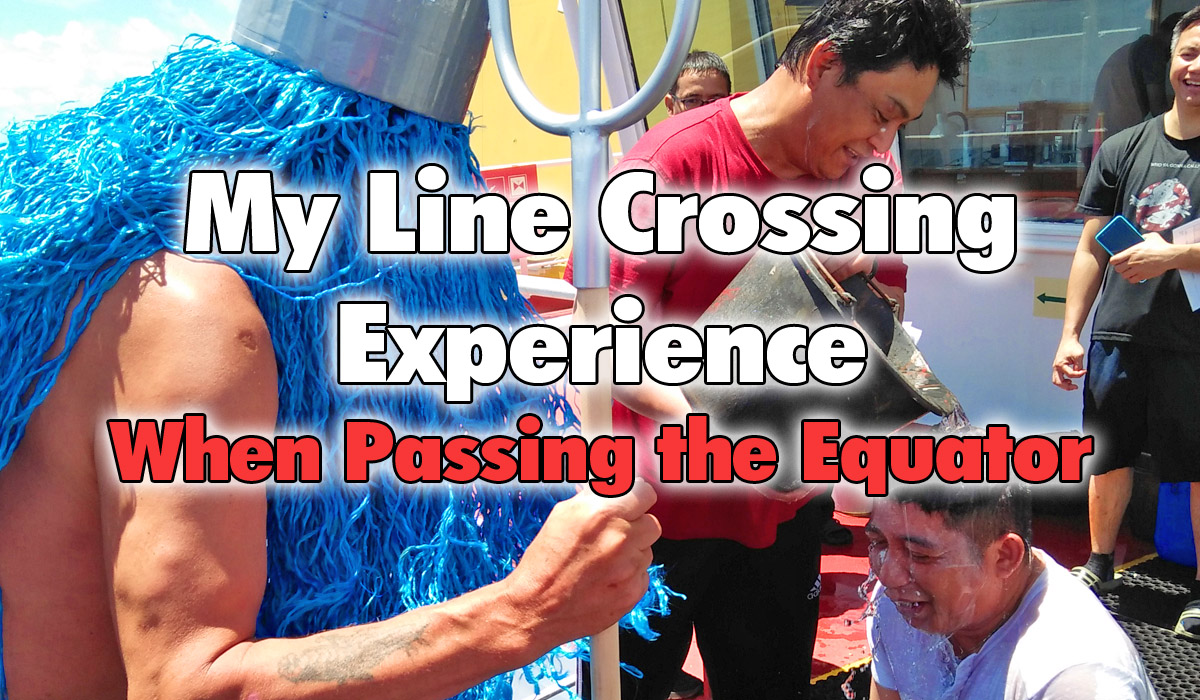
At 13:00H, we were summoned to the bridge. As the ceremony began, King Poseidon appeared on the starboard wing, trident in hand, sunglasses on, his beard like seaweed flowing in the breeze.
His presence was commanding, his arrival greeted with buckets of ice-cold seawater- the first signal that the real test had begun.
The Shaving Ritual 🪒
The first test began with the infamous shaving ceremony.
Our faces were smeared with a strange, thick “cream”- rumored to be 500 years old and guarded by sea creatures from the deepest trenches.
The sacred razor, said to have touched millions of sailors before us, “cleansed” us of our old selves.
This wasn’t about humiliation- it was a symbolic rebirth as sailors worthy to cross Neptune’s realm.

The Magical Drink 🥤
Next came the mysterious “magical drink”, a strange mixture said to be brewed in the darkest depths of the ocean.
The taste? Imagine olive oil, saltwater, and pepper- all shaken into one bizarre concoction.
According to legend, this “potion” purifies Polliwogs from within, making us spiritually prepared for life on the open seas.

The Ice-Water Baptism ❄️
Finally, came the most dramatic rite- the baptismal bath.
Kneeling before King Poseidon, buckets of ice-cold seawater were poured over us, said to come from the farthest poles of the earth.
The shock was unforgettable- thousands of icy needles pierced my skin as the ocean embraced us.
In that moment, every Polliwog shed their “landlubber ways” and became Trusty Shellbacks, officially welcomed into Neptune’s realm.

🐢 From Polliwogs to Trusty Shellbacks
Once the trials were complete, King Neptune himself declared us Sons and Daughters of the Sea.
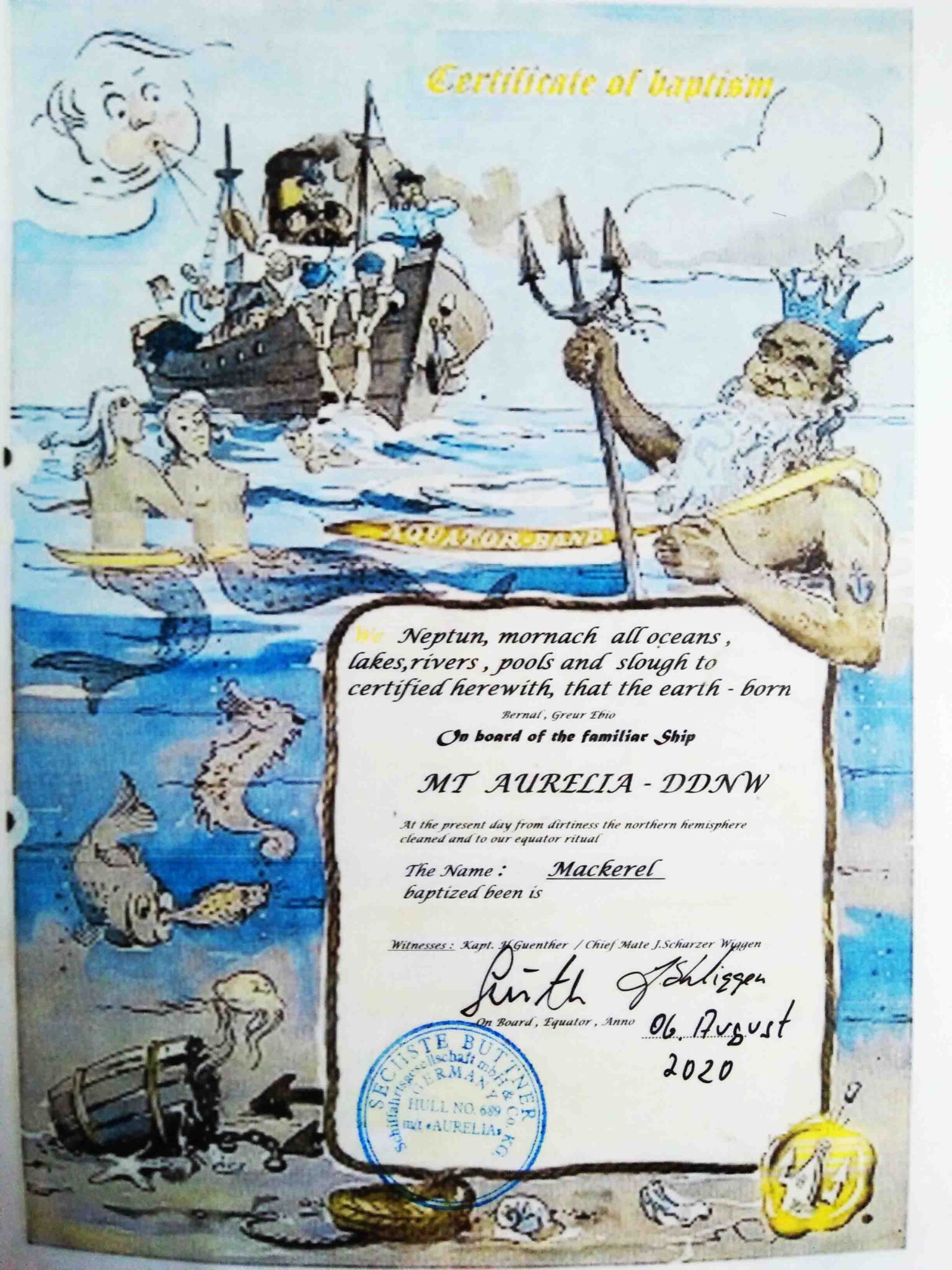
Each new Shellback received a unique maritime name– mine forever etched in the Line-Crossing Certificate that I still keep today.
Some were called “Electric Eel,” “Turtle,” “Mackerel,” or “Oil Sardine.” These names symbolize our rebirth as seafarers who have passed Neptune’s test.
Certificates, Tattoos & Maritime Pride
After the ceremony, we received our Line-Crossing Certificates, marking the exact date, ship, and position of our baptism.
In older times, when certificates weren’t issued, sailor tattoos were their COCs.
Many seafarers tattooed a Shellback turtle on their arm or leg- a lifelong badge proving they survived Neptune’s judgment and earned safe passage across the seas.
For us, it wasn’t just about tradition. It was about camaraderie, teamwork, and pride in being part of a global brotherhood of seafarers.
Why This Tradition Matters Today
Even on modern merchant vessels equipped with GPS, AI, and satellite navigation, the Equator Crossing Ceremony still holds value.
It builds crew morale, strengthens team bonds, and connects sailors to the centuries-old traditions that define life at sea.
For seafarers, becoming a Trusty Shellback isn’t just a title- it’s a reminder that the ocean demands respect, resilience, and unity.
FAQ: Equator Crossing Ceremony 🧭
Q1. What is the purpose of the Equator Crossing Ceremony?
It’s a centuries-old maritime tradition where first-time crossers (Polliwogs) undergo rituals before becoming Trusty Shellbacks.
Q2. Who is King Neptune in the ceremony?
King Neptune symbolizes the God of the Seas and presides over the rites, granting Polliwogs safe passage and acceptance as Shellbacks.
Q3. Do all ships celebrate the crossing?
No, but many merchant ships, naval vessels, and research expeditions maintain this tradition as part of seafaring culture.
Q4. What is a Line-Crossing Certificate?
A certificate awarded after completing the ceremony, recording your name, aquatic nickname, ship details, and baptism date.
Q5. Why do some sailors get Shellback tattoos?
Traditionally, a turtle tattoo served as proof of completing the ceremony and as a good-luck charm for safe voyages.
Final Thoughts & Call-to-Action
Crossing the Equator isn’t just about latitude and longitude- it’s about embracing the spirit of the sea, the bond among sailors, and the enduring traditions that make life onboard unique.
Have you crossed the Equator yet? Are you a Trusty Shellback or still a Rusty Wog?
💬 Share your experience in the comments and let fellow seafarers know your story!
May the winds be in your favor
Leave a Reply