


Tattoos were once a sailor’s badge of honor etched into skin instead of stamped in a seaman’s book.
Before paper certificates and plastic IDs, seafarers used ink to tell their story.
Each design held powerful meaning: milestones crossed, oceans conquered, and dangers survived.
These weren’t just decorations. They were symbols of experience, superstition, and belonging in a harsh maritime world.
From anchors to dragons, every tattoo had a tale to tell.
Today, modern sailors may lean toward fashion over tradition. But these classic marks remind us of the culture and grit of old sea dogs who wore their history with pride.
⚓ A Brief History of Sailor Tattoos
Long before tattoo guns buzzed inside modern parlors, indigenous tribes in Polynesia were already marking their bodies with symbolic ink.
It was during Captain James Cook’s 18th-century voyage to the South Pacific that his crew encountered these tattooed islanders leading to the start of maritime body art among Europeans.
Seafarers, known for collecting souvenirs from every port, began tattooing themselves as living records of their travels.
Over time, it became a full-blown tradition among sailors, merchant mariners, and naval men alike.
By World War II, tattoos were a staple among Navy personnel serving as talismans of luck, loyalty, and survival.
A hula girl inked in Hawaii, for example, wasn’t just pretty art. It meant you’d made landfall in paradise and lived to tell the tale.
🌊 Why Did Sailors Get Tattoos?
Seafaring life was uncertain and unforgiving. Ships sank. Storms raged. Land was months away.
Sailors turned to tattoos not just for expression, but as symbols of protection, identity, and spiritual hope.
Tattoos served many purposes:
- 🔮 Superstitious beliefs: Designs like swallows or stars were believed to bring good luck or ensure safe passage.
- 📍 Visual logbook: A quick glance at a sailor’s ink could reveal how far they’d traveled or where they’d been stationed.
- ⚔️ Rank and role: Crossed anchors, dragons, or specific ship tattoos marked rank, vessel type, or duty.
- 🧭 Directional faith: Symbols like the compass rose and nautical star represented the sailor’s wish to always find their way home.
Much like today’s Certificate of Proficiency (COP) or Certificate of Competency (COC), these tattoos served as unofficial credentials but with deeper emotional weight.
“Sailors, often at the mercy of the elements, felt the need to mark their flesh with symbols of divine favor, good fortune, and homecoming.”
🔟 Best Traditional Sailor Tattoo Designs and Their Meanings
1. ⚓ Anchor – Symbol of Stability and Atlantic Crossings
The anchor is one of the most iconic sailor tattoos marking both a milestone and a mindset.
Historically, it was inked after crossing the Atlantic Ocean, signifying a major seafaring achievement.
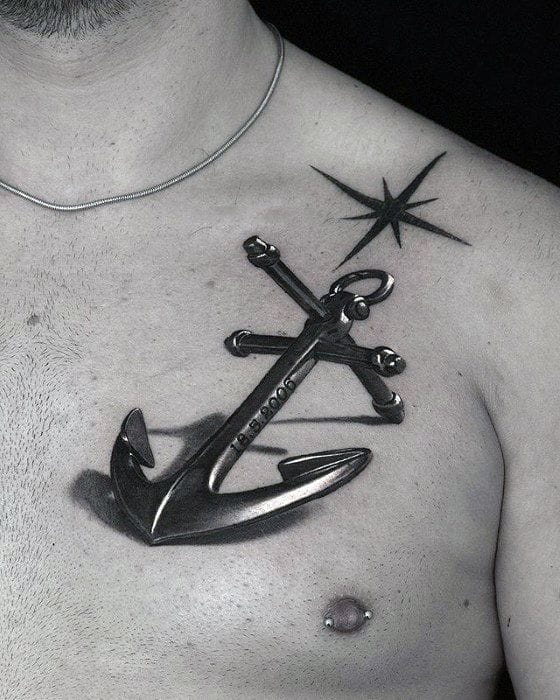
But it carried deeper meaning:
- Stability during chaos, just like how an anchor holds a ship in place.
- Grounding in values and belief, especially during long and dangerous voyages.
In some navies, crossed anchors tattooed on the forearms signified rank typically the mark of a Boatswain, a crewman in charge of deck gear and rigging.
📍 Modern meaning: Staying grounded, committed, or connected to home no matter where the current takes you.
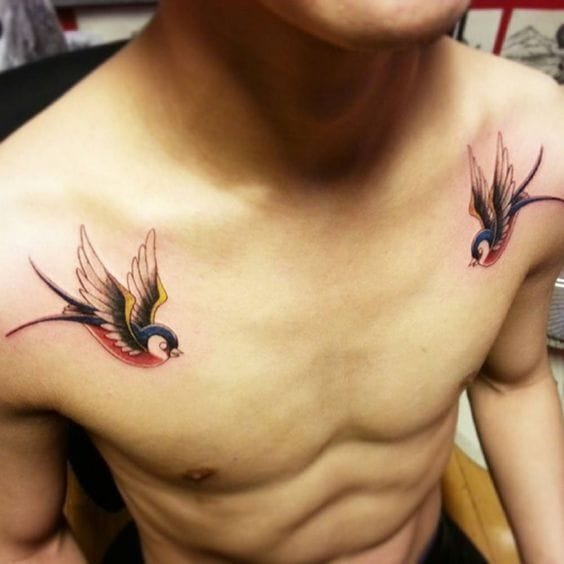
2. 🐦 Swallow – Loyalty, Return, and Nautical Mileage
Swallow tattoos weren’t for aesthetics. They were earned.
A single swallow ink meant a sailor had traveled 5,000 nautical miles– a massive feat in the days of wooden hulls and celestial navigation.
Key meanings include:
- Safe return – Swallows always return home to the same nesting site.
- Distance earned – Two swallows meant 10,000 NM traveled.
- Spiritual protection – Legend says swallows carried the souls of drowned sailors to heaven.
These birds were often tattooed on the chest or collarbone close to the heart.
A living symbol of survival and journey, the swallow became a respected ink among sea dogs.
📏 Distance context: 5,000 NM is like sailing from New York to Alexandria, Egypt.
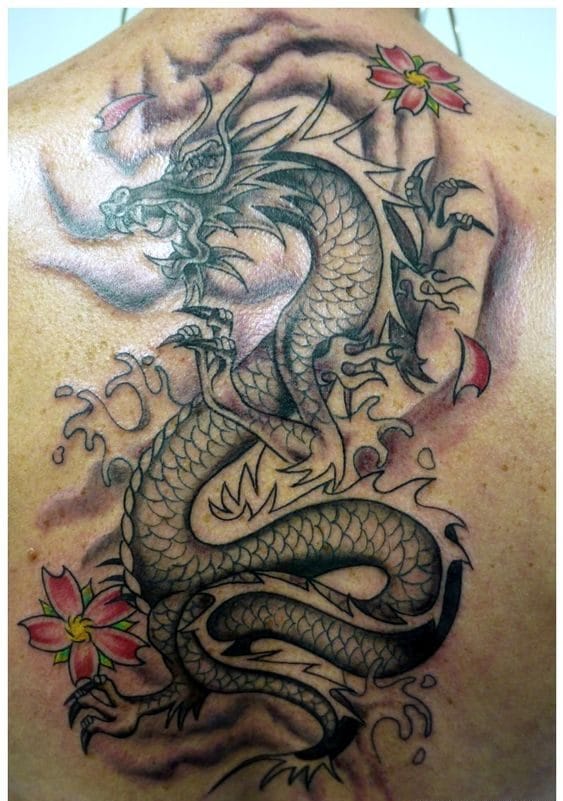
3. 🐉 Dragon – Service in the Orient
A dragon tattoo indicated the sailor had sailed to Chinese ports or served in the Far East.
This legendary creature is closely tied to Chinese folklore, imperial power, and the mystique of Asia.
For Western sailors:
- The dragon became a badge of having “seen the world.”
- It was linked to the China Station or any voyage into East Asia.
- Among Navy circles, it also implied trading experience or long deployments abroad.
🌍 Fun fact: Since ancient times, No other place is quite synonymous with a dragon than China
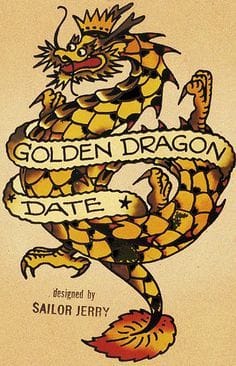
4. 🐲 Golden Dragon – Crossing the International Date Line
A rarer ink, the Golden Dragon marked a sailor’s passage across the International Date Line (IDL).
IDL Crossing is a symbolic gateway into the “Domain of the Golden Dragon,” as it was called by mariners of the Pacific.
Symbolism includes:
- World traveler status
- Crossing from one calendar day into another
- A rite of passage on Pacific routes
Often accompanied by certificates or awards, the Golden Dragon tattoo separated ordinary sailors from those who had traversed the 180th meridian and gone to the other side of the world.
🏅 Similar to: The “Shellback” honor for crossing the Equator.
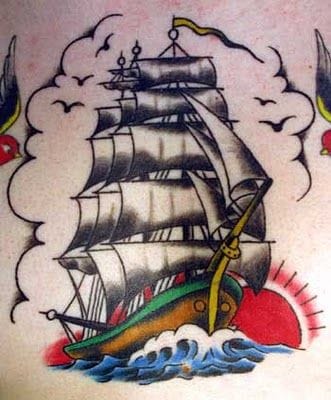
5. ⛵ Fully-Rigged Ship – Conqueror of Cape Horn
A tattoo of a fully-rigged ship represented a major maritime milestone: sailing around Cape Horn, one of the most dangerous passages on Earth.
Cape Horn lies at the southern tip of South America, where the Atlantic and Pacific Oceans clash.
Conditions are brutal:
- Gale-force winds
- Rogue waves
- Icebergs
- High casualty rates
Thus, a ship tattoo wasn’t just decorative- it was proof of survival.
The odd-numbered mast design (three or five masts) was considered lucky and added further meaning to this bold mark.
⚠️ Maritime lore: Cape Horn has claimed more lives than Everest due to its unforgiving seas.
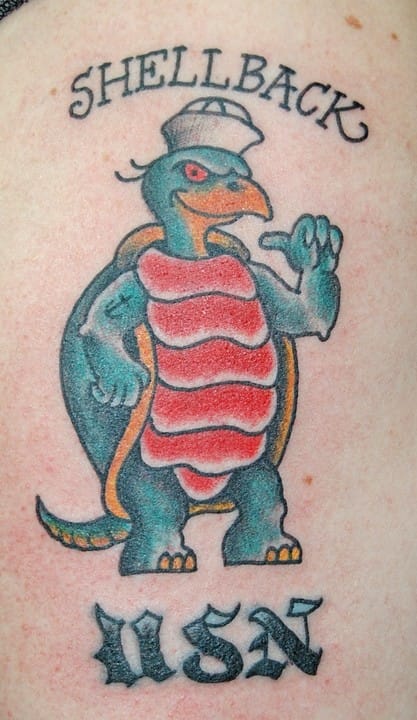
6. 🐢 Shellback Turtle – Crossing the Equator and King Neptune’s Blessing
The Shellback Turtle tattoo is earned after a sailor crosses the Equator, marking their initiation into the ancient maritime rite known as the Line-Crossing Ceremony.
Before receiving this mark, a sailor must face Neptune’s Court– a traditional hazing ceremony where uninitiated crew (called Polliwogs) are tested for worthiness.
Once completed, they become Shellbacks, officially recognized as Sons (or Daughters) of Neptune.
Symbolism includes:
- 🌊 Proof of crossing the Equator
- 🛡️ Good luck and protection granted by the God of the Sea
- 🧭 Brotherhood and shared tradition among global mariners
🐢 Did you know? The line crossing ceremony is still being held by seafarers when they cross the equator even on today’s modern times.
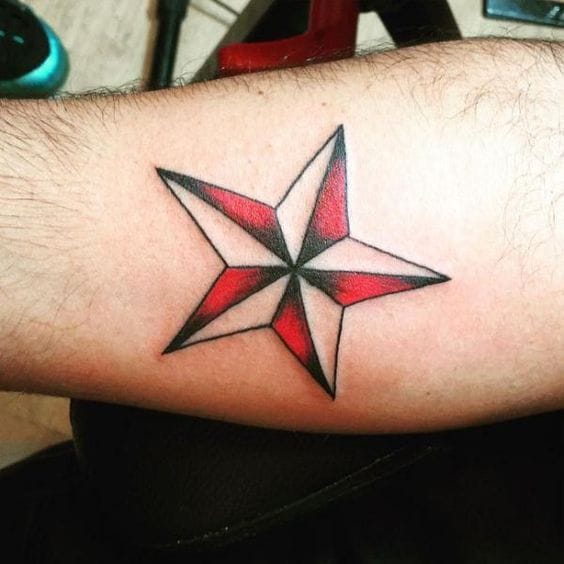
7. 🌟 Nautical Star – Guiding Light Across the Open Sea
The Nautical Star, often resembling the North Star (Polaris), is one of the oldest and most widely recognized tattoos among sailors.
Before GPS, mariners relied on the stars- especially the North Star, for navigation.
This tattoo symbolized:
- 🧭 Guidance and direction, even when lost
- 🔆 Hope and protection in uncertain waters
- 🏠 Safe passage and return home
Early seafarers, highly superstitious by nature, believed tattooing the star onto their body would keep them from straying too far- physically or spiritually.
🌌 Location tip: Typically inked on the chest or forearms- places closest to the sailor’s compass.
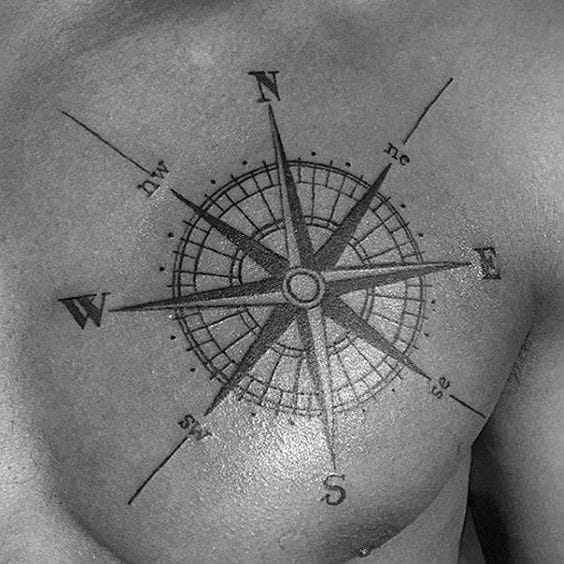
8. 🧭 Compass Rose – Finding the Right Path
Like the nautical star, the compass rose tattoo was a spiritual GPS.
In times of fog or personal doubt, sailors believed this symbol would lead them in the right direction both literally and metaphorically.
Its meanings include:
- 🧭 Staying on course through life’s storms
- 🛡️ Navigational protection at sea
- 🏡 Reassurance that they’ll always find their way back home
Some designs incorporate the nautical star at the center of the compass rose doubling down on protection and guidance.
💡 Tattoo variation: Combining compass and anchor symbols represents both direction and stability.
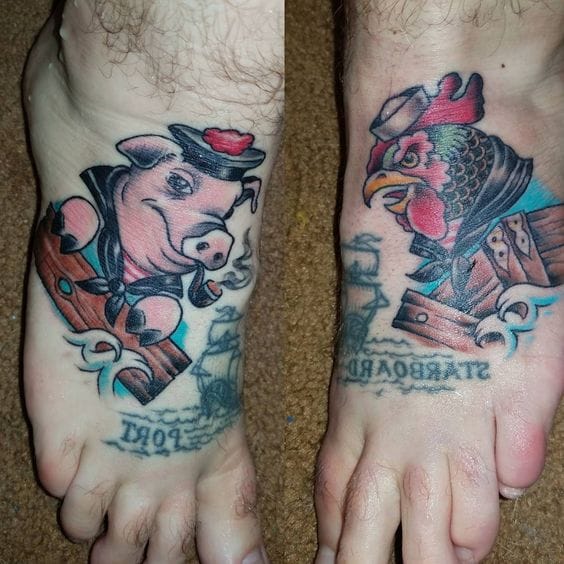
9. 🐖🐓 Pig and Rooster – Symbols of Survival in Shipwrecks
These quirky animals may seem like odd tattoo choices, but they’re deeply respected in old maritime lore.
Why pigs and roosters?
- 🪵 In early seafaring days, they were transported in wooden crates on deck.
- ⛴️ When ships sank, the crates often floated, allowing pigs and roosters to survive shipwrecks.
- 💬 Sailors believed tattooing a pig on one foot and a rooster on the other would help them survive if they ever went overboard.
These tattoos were considered lucky charms against drowning especially useful in the unpredictable life at sea.
🦶 Placement tip: Commonly inked on the tops of sailors’ feet for maximum symbolic power.
10. ✊ “Hold Fast” – Strength in the Storm
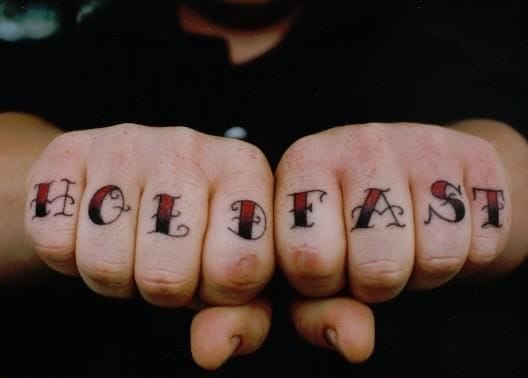
The phrase “Hold Fast” inked across the knuckles was more than a motivational quote- it was a sailor’s battle cry during violent storms.
When rigging tore and sails failed, sailors had to manually hold the lines, sometimes for hours, to prevent catastrophe.
This tattoo represented:
- 🪢 Grip strength-literal and emotional
- 💪 Courage and resilience during rough weather
- ⚓ A promise to never let go, no matter what
It’s one of the most enduring sailor tattoos and remains popular today- especially among deckhands and old salts who’ve weathered real storms.
🌀 Sailor’s superstition: The tattoo was thought to imbue strength during near-death situations at sea.
PS. Most images are taken from Pinterest.com
🧵 More Than Ink: The Cultural Legacy of Seafarer Tattoos
For centuries, tattoos were a sailor’s personal logbook etched in skin rather than paper.
These marks told stories of survival, honor, heartbreak, and miles conquered.
In bars, ports, and shipyards, a quick glance at another sailor’s ink could reveal:
- Where they’ve been
- What they’ve survived
- What rank or duty they held
- Who or what they loved
A dragon? He’s been to the Orient.
A shellback turtle? He crossed the Equator and passed Neptune’s test.
A pair of swallows? That sailor’s logged serious miles.
Every tattoo meant something. No words needed.
⚓ Do Sailors Still Get These Tattoos Today?
While modern seafarers may not always follow old traditions, many still choose tattoos that honor their maritime roots.
Today’s ink may be more artistic or minimalistic but those who know the history recognize their deeper meaning.
Unfortunately, some of these timeless designs are fading as new generations forget the stories behind them.
But for those who still brave the oceans, reviving these symbols is a way to connect with the past and wear seafaring pride on your skin.
✍️ Planning to get one? Choose a design that reflects your journey, your role, or your resilience. You’re not just getting inked, you’re claiming your place in maritime tradition.
❓FAQs: Traditional Seaman Tattoos
Q: Do sailors still get traditional tattoos today?
Yes. While styles have modernized, many seafarers choose tattoos with classic maritime symbolism to honor tradition and experience.
Q: What does the swallow tattoo mean for sailors?
It symbolizes 5,000 NM traveled, loyalty, and a promise of safe return. Two swallows = 10,000 NM and deep respect in old seafaring circles.
Q: What tattoo do you get after crossing the Equator?
A Shellback Turtle tattoo represents successful initiation into Neptune’s Court after crossing the Equator.
Q: Why do sailors tattoo pigs and roosters on their feet?
Because they were often the only survivors of shipwrecks (thanks to floating crates), these animals symbolize protection from drowning.
Q: What does “Hold Fast” tattooed on knuckles mean?
It’s a reminder to grip the lines and never let go symbolizing strength and determination during rough seas.
🧭 Final Thoughts: A Mark of Identity, Not Just Art
Traditional sailor tattoos aren’t just skin deep. They’re rich with maritime heritage, personal symbolism, and navigational folklore.
So, if you’re thinking of your next tattoo, consider one that tells your story- your crossings, storms, miles, and missions.
Because every inked sailor is part of a legacy that’s been sailing strong for centuries. ⚓
✅ Call to Action
Planning to get your first nautical tattoo- or already have one with meaning?
Share your design or story in the comments for more inspiration on maritime ink tradition.
May the winds be in your favor
Leave a Reply