


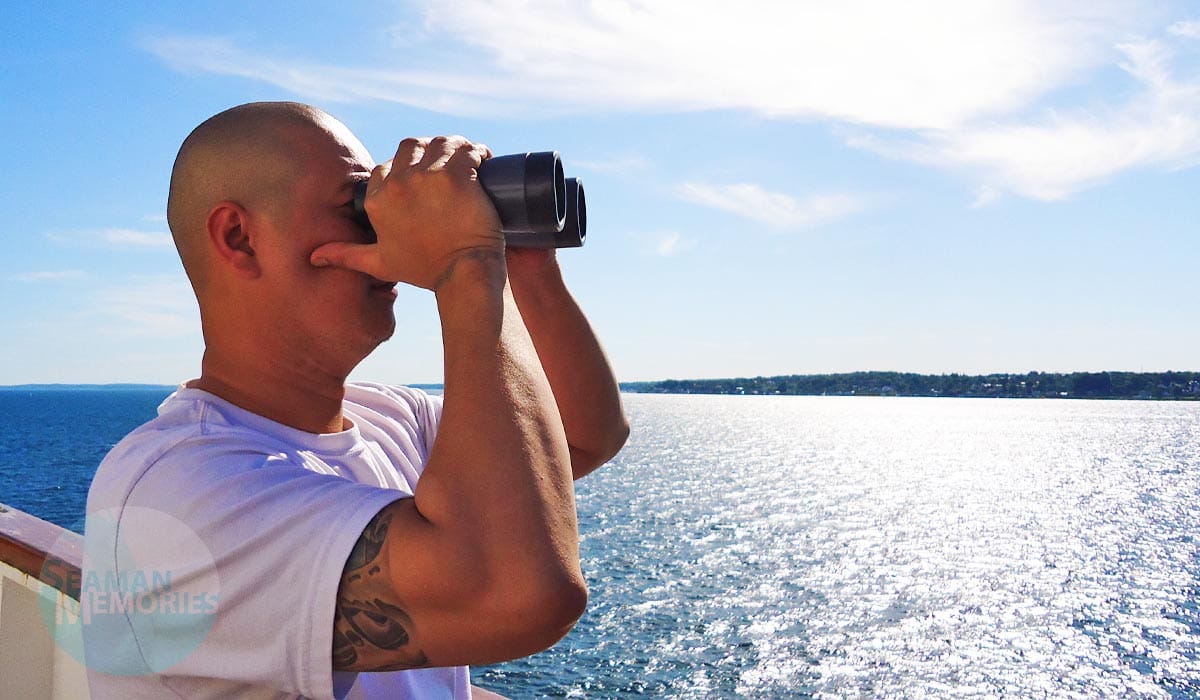
Maintaining a proper look-out is one of the core duties of a bridge watchkeeper.
Under COLREG Rule 5, every vessel must always observe its surroundings using sight, hearing, and all available means to avoid collisions and navigate safely.
Whether you’re in open waters, port approaches, or high-traffic areas, the lookout’s role is non-negotiable.
It’s the foundation of collision avoidance and situational awareness onboard.
⚓ What Is a Proper Look-Out?
A look-out is a trained crew member responsible for constant monitoring of a vessel’s surroundings to detect and report:
- 🛥️ Other vessels
- 🪝 Buoys and navigational marks
- 🗿 Fixed objects or obstructions
- ⚠️ Floating debris
- 🌦️ Sudden changes in weather or visibility
- 🌊 Sea state and wave conditions
- 📉 Decreasing water depth
Keeping a proper look-out means more than just looking out the window.
It involves using visual observation, sound detection, and navigational tools such as radar and AIS to maintain safe navigation in all conditions.
📜 Rule 5 of the COLREGs – The Look-Out Rule
“Every vessel shall at all times maintain a proper look-out by sight and hearing as well as by all available means appropriate in the prevailing circumstances and conditions so as to make a full appraisal of the situation and of the risk of collision.”
This regulation requires constant vigilance and the use of every navigational resource, not just human senses but also electronic systems and bridge equipment, to avoid accidents.
🧭 Tools for Maintaining a Proper Look-Out
In addition to sight, hearing, and seamanship, the following tools support efficient look-out procedures:
🛠️ Primary Tools:
- 👀 Naked eye observation
- 👂 Listening for sound signals
- 🧠 Common sense and seamanship
🧰 Bridge Equipment & Navigation Aids:
- 🔭 Binoculars – For identifying distant vessels and buoys
- 📡 Radar – Detects targets in all weather and at night
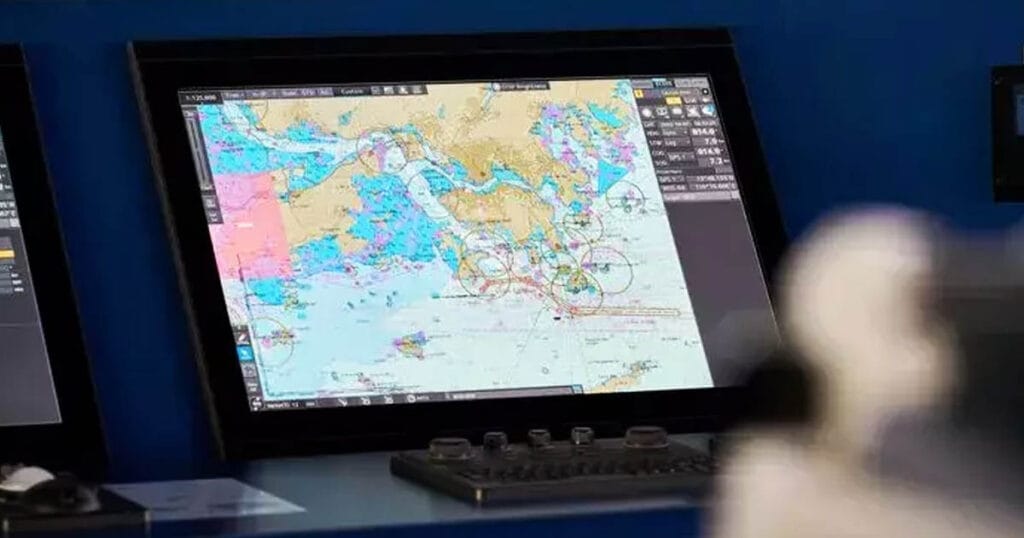
- 🗺️ Nautical Charts / ECDIS – Situational plotting and hazard awareness
- 🧭 Pelorus – Relative bearing assessment
- 📶 AIS (Automatic Identification System) – Identifies nearby vessels
- 📞 VHF Radio – Communicates with other ships and shore stations
- 🌙 Night Vision Devices – Enhances detection in low light
- 🔊 NavTex & Weather Fax – Broadcasts navigational warnings and weather reports
- 📏 Echo Sounder – Detects shallow waters and underwater hazards
Each tool enhances navigational awareness, especially in restricted visibility, congested areas, or unfamiliar waters.
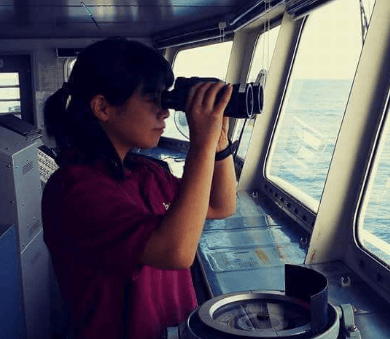
👨✈️ STCW-Compliant Look-Out Duties
To ensure compliance with STCW and bridge resource management (BRM) principles, the following rules must be observed during look-out operations:
- Dedicated Look-Out: The person assigned must have no conflicting duties.
- OOW Vigilance: The Officer of the Watch (OOW) may briefly visit the chartroom, but only if safe and a proper look-out is maintained.
- Separate Duties: The helmsman is not the look-out. These are distinct responsibilities.
- Solo Watch (Daylight Only): The OOW may act as the sole look-out in daylight under low-risk conditions.
- Assess Environmental Factors: Consider weather, visibility, traffic, and navigational hazards at all times.
- Seek Assistance if Needed: The OOW must summon help if solo watch becomes unsafe.
- Blind Spot Awareness: Look-outs must be aware of and monitor bridge blind spots and stern areas.
🕒 When Should a Look-Out Be Posted?
Proper timing is crucial. The look-out must be posted during the following navigational scenarios:
- ⚓ Entering or departing port
- 🌫️ In restricted or reduced visibility
- 🛳️ In high traffic or near Traffic Separation Schemes (TSS)
- 🌅 From sunset to sunrise (night watches)
- ⚠️ At any time as ordered by the Master
The number of look-outs can increase in special circumstances such as:
- Transiting piracy-prone areas
- Heavy weather or poor visibility
- High-concentration vessel traffic
- Conducting man overboard drills or emergency maneuvers
❌ Common Look-Out Mistakes to Avoid
Even experienced seafarers can become complacent.
Here are dangerous errors that compromise bridge safety:
- 🛰️ Over-reliance on radar or AIS
- 📱 Using mobile phones while on watch
- 🤹♂️ Multi-tasking instead of focusing on the horizon
- 🚫 Not looking through bridge windows
- 🌊 Neglecting stern and blind spots
- 👂 Ignoring sound signals in fog or restricted visibility
- 💤 Performing look-out duty while fatigued or under the influence
- 🔦 Failing to recognize light and sound signals
- 🧍 Assuming small vessels don’t pose a risk
- 🧭 Relying solely on one piece of equipment
- 📡 Assuming other vessels will follow COLREGS
📋 Final Look-Out Requirements Under STCW
Before taking over look-out duties, the seafarer must:
- ✅ Hold appropriate STCW certification for watchkeeping
- ✅ Be physically and mentally fit for duty
- ✅ Be briefed by the outgoing look-out or officer
- ✅ Understand the ship’s navigation plan, traffic density, and weather forecast
Under the STCW Code (Section A-VIII/2), look-outs must remain alert, responsive, and properly positioned at all times.
Solo watches are permitted only if risk is minimal and full situational awareness is maintained.
📚 FAQs – Keeping a Proper Look-Out
🔹 What does COLREG Rule 5 say about look-outs?
Rule 5 requires vessels to maintain a proper look-out using sight, hearing, and all available means to appraise the situation and avoid collisions.
🔹 Can the OOW act as the look-out?
Yes, but only in daylight and under safe conditions. The OOW must be ready to summon assistance when necessary.
🔹 What are the best tools to enhance look-out duties?
Radar, AIS, ECDIS, binoculars, echo sounder, VHF, and weather alerts like NavTex are crucial tools for maintaining situational awareness.
🔹 Can the helmsman also be the look-out?
No. Steering and look-out are separate tasks under COLREGS and STCW to avoid divided attention.
⚓ Final Thoughts: Look-Out Is Your First Line of Defense
A proper look-out is more than just a regulation, it’s your first layer of bridge defense against maritime accidents.
Whether you’re sailing in open seas or approaching a congested anchorage, effective look-out procedures guided by COLREG Rule 5 and the STCW Code will help you safeguard lives, cargo, and vessel.
“Stay alert, trust your instruments, but never ignore your eyes and ears.”
📢 Call to Action
📌 Bookmark this guide or share it with fellow bridge watchkeepers and cadets.
📧 Got a question or situation to discuss? Drop a comment below. We’d love to hear your stories from the watch!
May the winds be in your favor.
Leave a Reply