

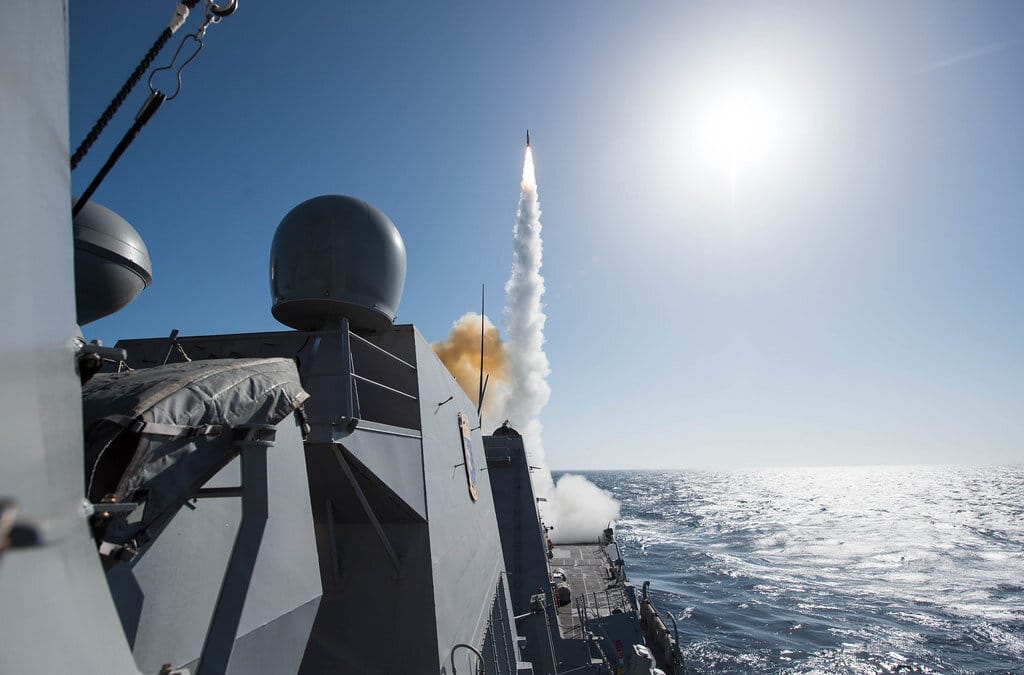
Warships are the backbone of every nation’s naval defense.
Built for combat, protection, and projection of power, these military vessels operate across the sea, under it, and even in the air.
From aircraft carriers to corvettes, every warship plays a unique role in safeguarding national sovereignty and maritime interests.
🛡️ What Is a Warship?
A warship is a naval vessel designed, constructed, and armed by a sovereign government for military purposes.
Unlike merchant ships that carry cargo and goods, warships are engineered to:
- Engage in naval warfare
- Conduct maritime surveillance
- Protect territorial waters
- Escort convoys and allied ships
- Launch or defend against aerial, surface, or submarine threats
Warships operate under strict military command and often restrict port calls to allied or strategic locations.
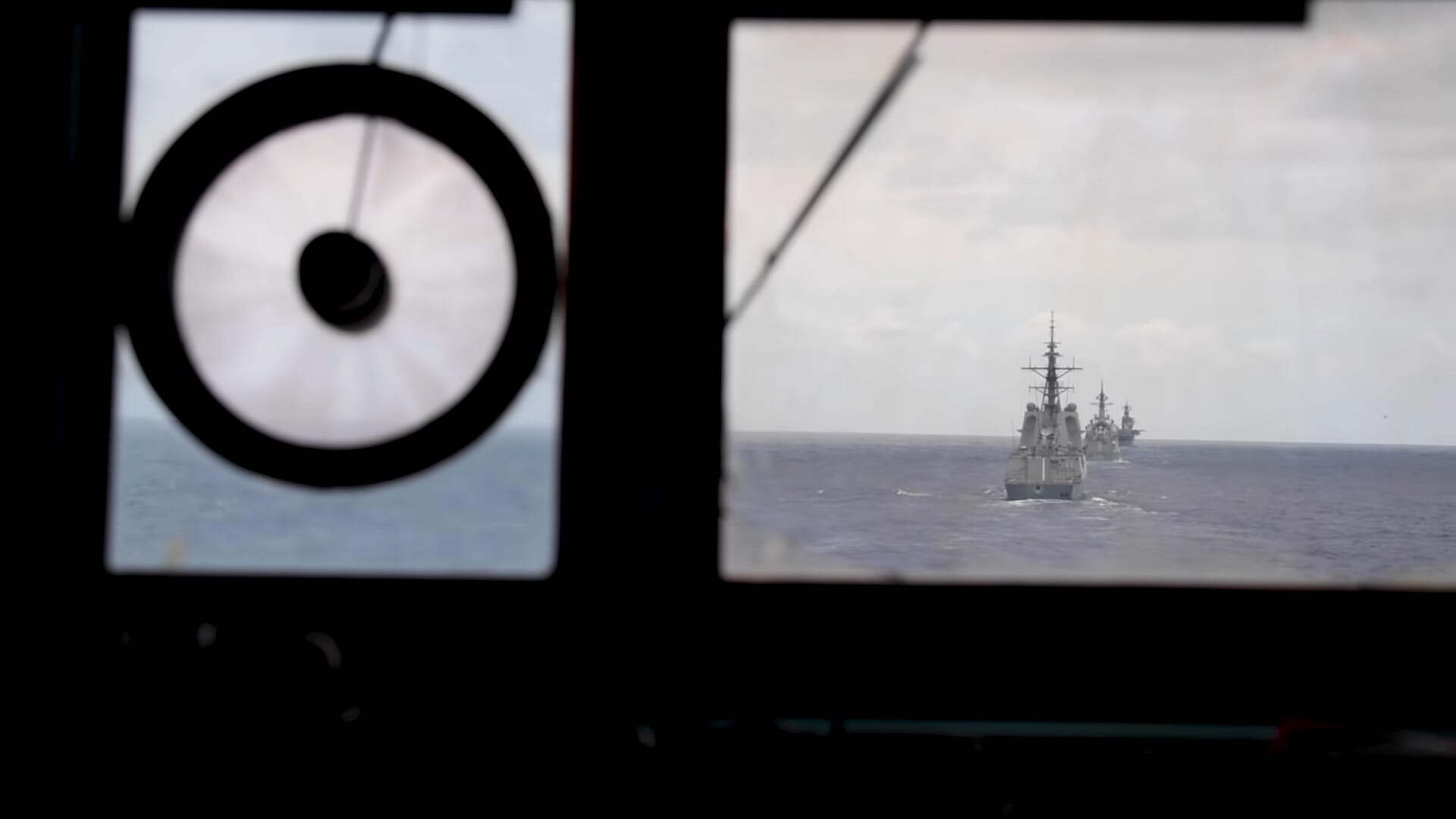
⚓ Warships vs. Merchant Ships: What’s the Difference?
| Feature | Warships | Merchant Ships |
|---|---|---|
| Purpose | Military combat, defense | Transport of goods and commodities |
| Design | Stealth, armor, maneuverability | Stability, cargo optimization |
| Construction | State-funded (government-owned) | Commercially built and operated |
| Armament | Equipped with weapons | Generally unarmed |
| AIS Usage | Can be switched off for security | Always active for safety |
| Port Access | Strategic or allied ports only | Commercial ports worldwide |
🔍 Example: During a voyage in the Mediterranean, a warship hailed our vessel’s name via VHF radio even when our AIS was turned off for security. It was a clear reminder of how warships monitor and secure territorial waters with advanced surveillance systems.
🚢 Types of Warships in a Naval Fleet
Naval fleets are made up of various warships, each designed for specific functions.
Some vessels dominate the sea with air power, while others defend convoys or conduct stealth operations.
Here are the main types of warships used by modern navies:
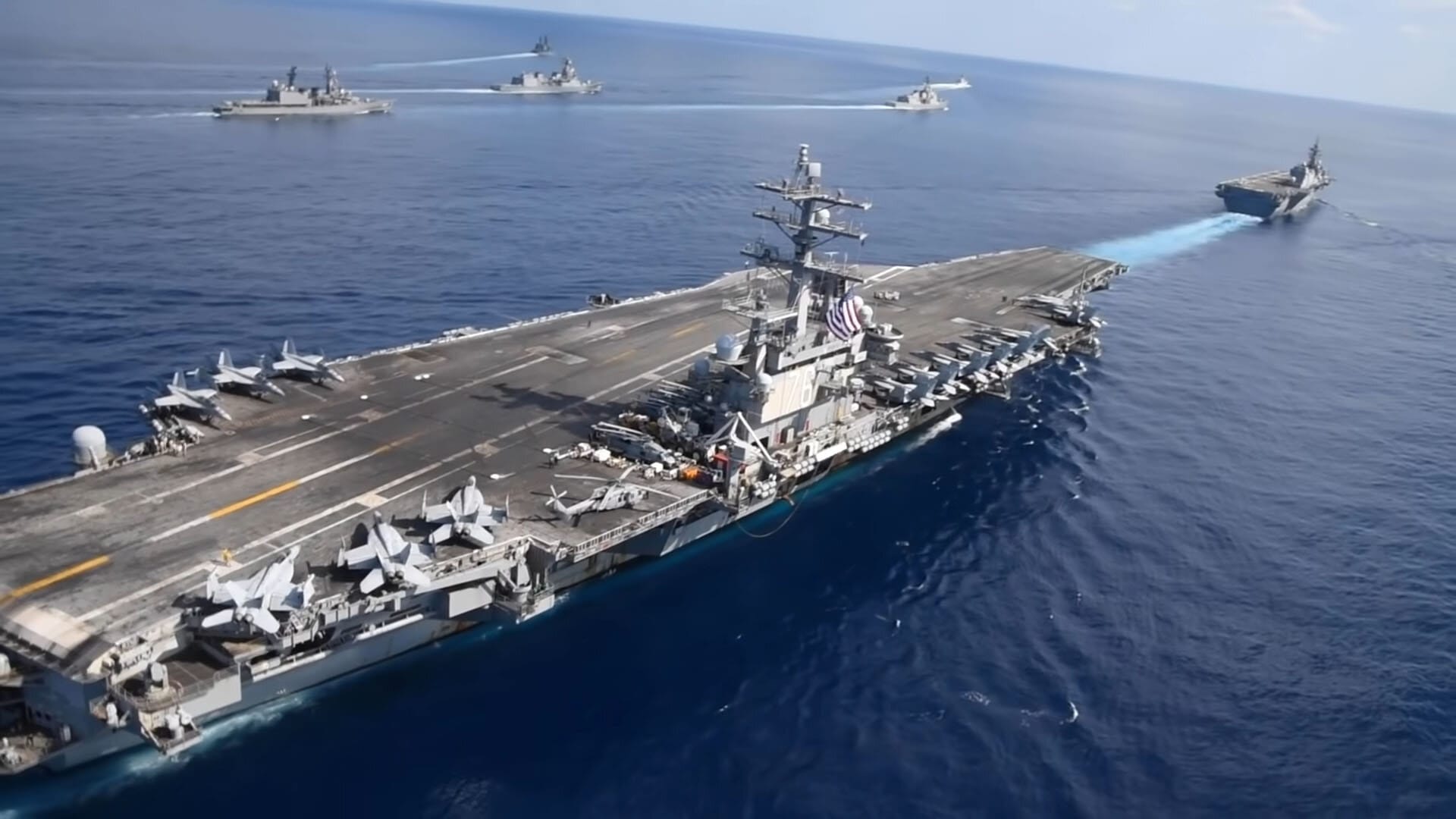
1. 🛫 Aircraft Carriers: The Floating Airbases
Aircraft carriers are the most powerful and iconic warships in any navy. They serve as mobile airbases, projecting force across oceans.
Key Features:
- Long flat deck for aircraft take-off and landing
- Houses fighter jets, helicopters, drones
- Equipped with radar, missile defenses, and control towers
- Carries aviation fuel, munitions, and support crew
- Surrounded by escort ships (Destroyers, Frigates)
Why They Matter:
Aircraft carriers enable naval forces to establish air superiority in regions far from home bases.
They symbolize military dominance and are often the centerpiece of a naval strike group.
2. 🚀 Cruisers: Multi-Role Powerhouses
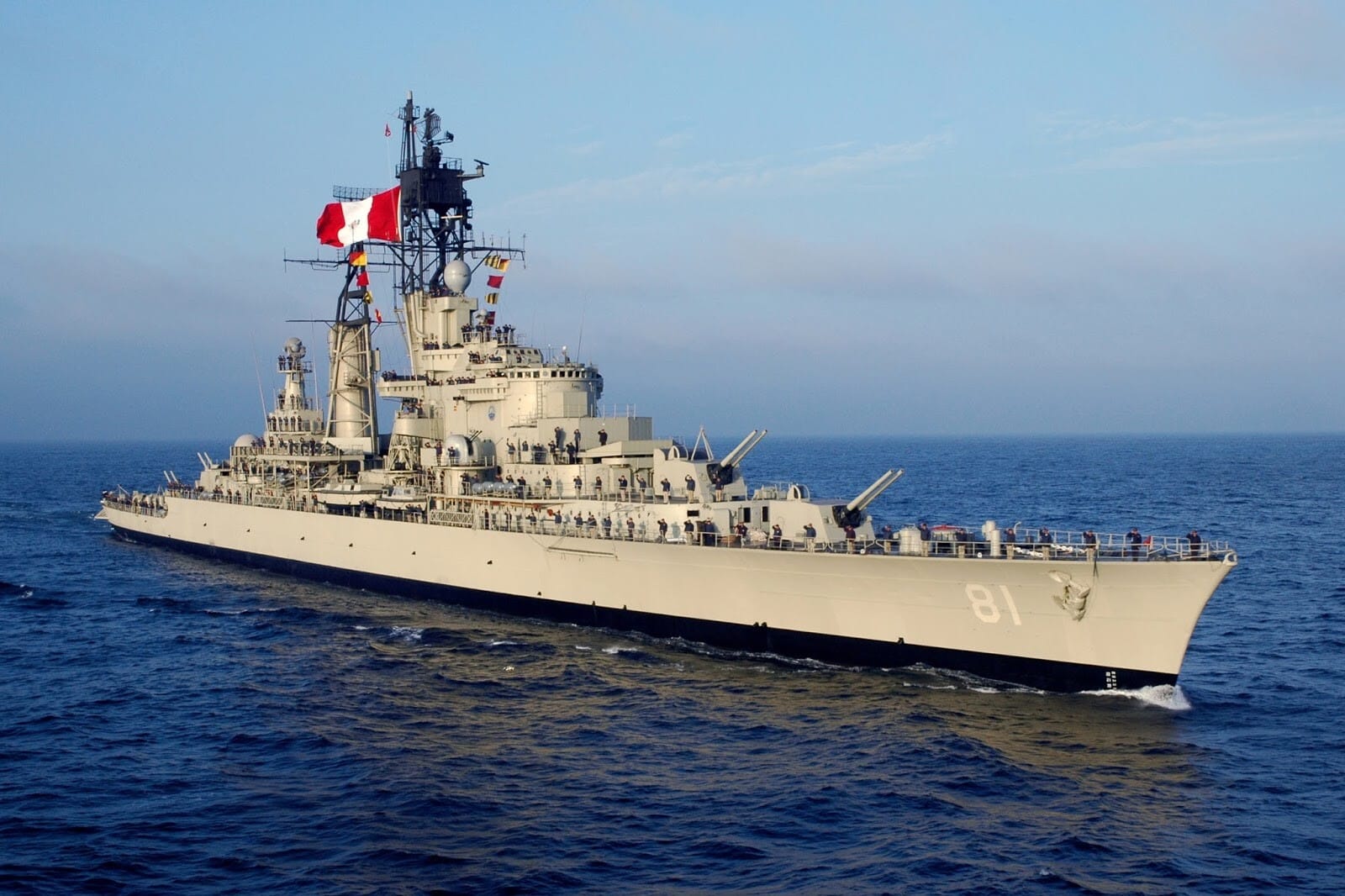
Cruisers are versatile warships capable of offensive and defensive operations.
Their size and speed make them suitable for independent missions or fleet support.
Key Features:
- Larger than Destroyers, smaller than Aircraft Carriers
- Heavily armed with missiles, guns, and radar systems
- Can operate alone or within strike groups
- Built for extended missions without needing escorts
Notable Fact:
Under the London Naval Conference, 1930, Cruisers were limited to 323,500 tons for the United States.
However, that limit was often exceeded during major wars.
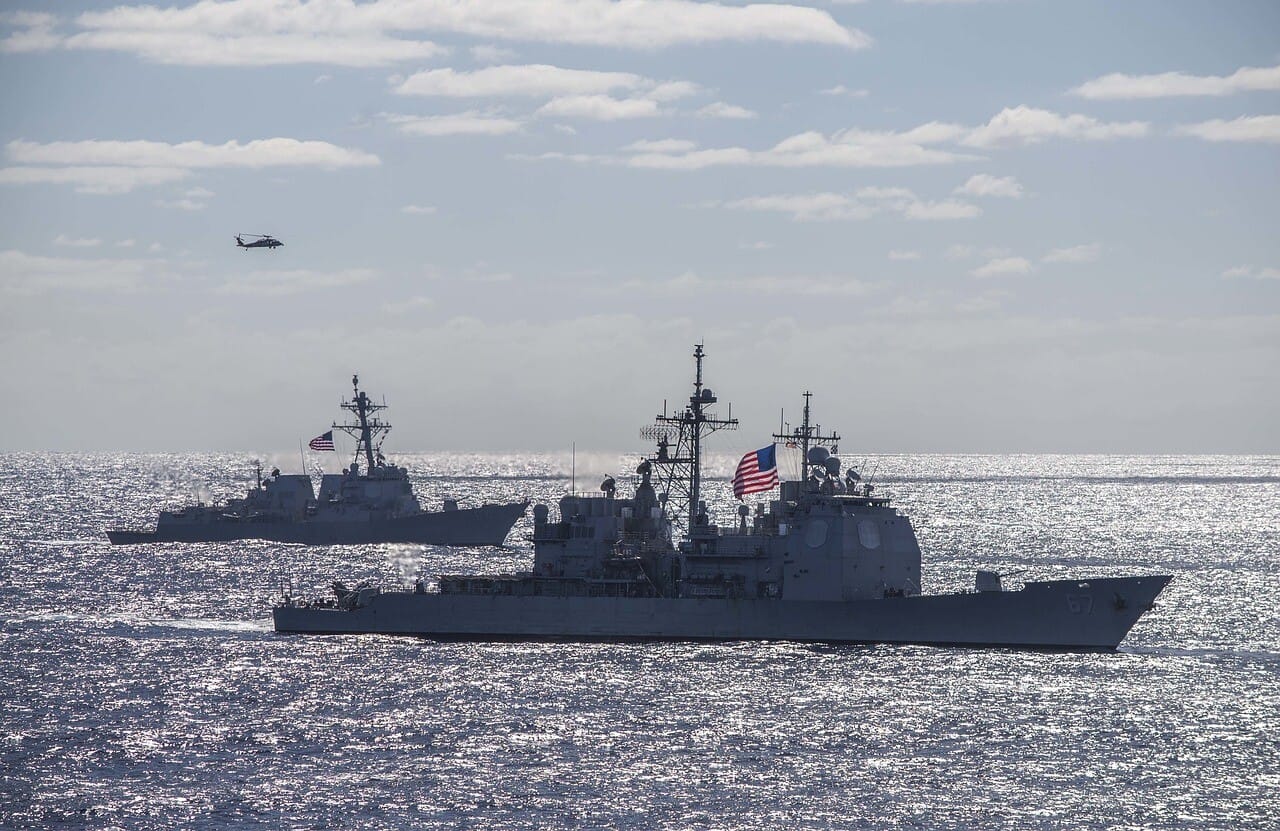
3. ⚔️ Destroyers: The Escort Specialists
Destroyers are fast, agile, and heavily armed. Originally developed as torpedo boat destroyers, they’ve evolved into frontline multi-role vessels.
Primary Roles:
- Anti-submarine warfare
- Anti-aircraft and anti-surface missions
- Convoy and carrier escort
- Rapid threat response
Example in Pop Culture:
In Greyhound movie, Tom Hanks commands a U.S. Navy Destroyer protecting merchant ships during WWII. This highlights their historical and ongoing role in escort operations.
4. 🛡️ Frigates: The Submarine Hunters
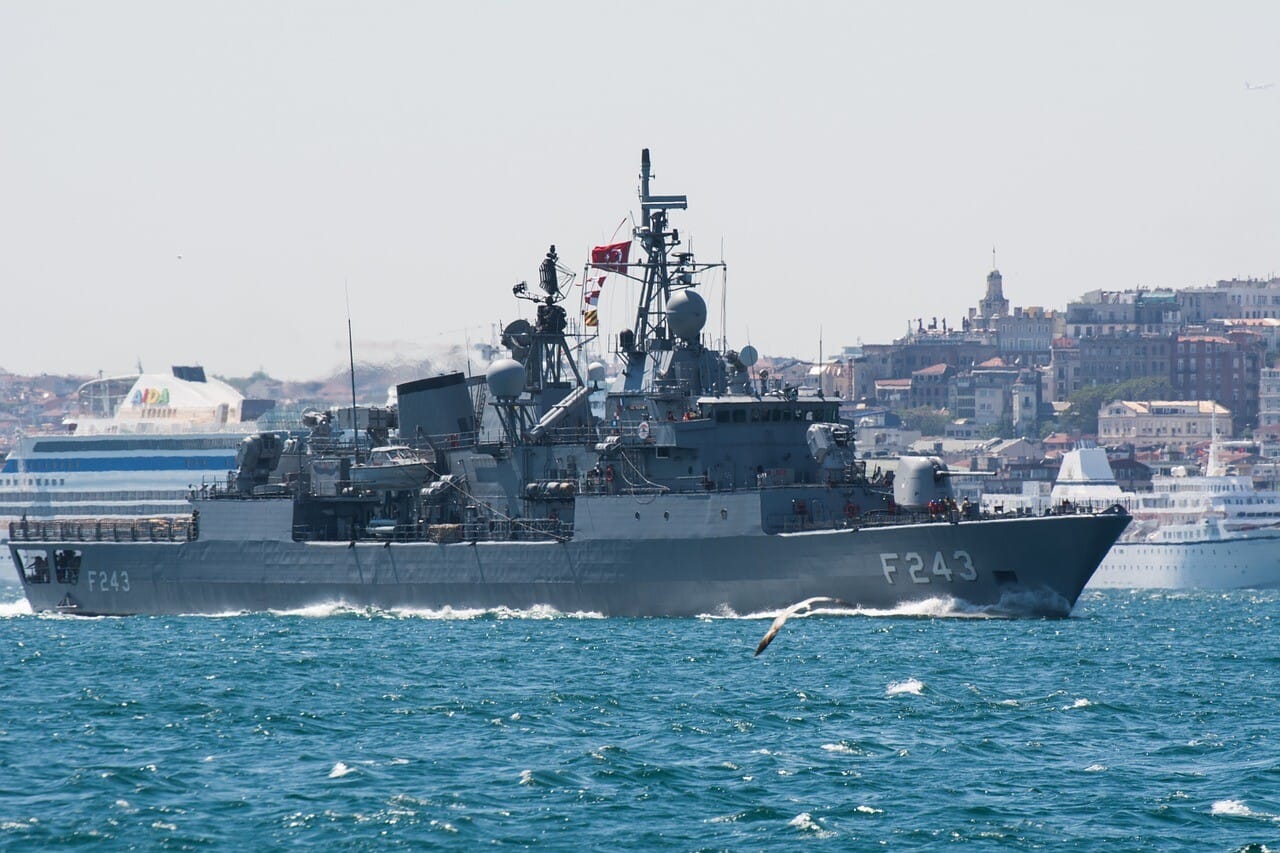
Frigates are slightly smaller than Destroyers but optimized for anti-submarine warfare (ASW).
They are cost-effective and suitable for patrols and convoy defense.
Key Functions:
- ASW operations with sonar and torpedoes
- Fast attack against small surface targets
- Escort merchant and naval convoys
- Deployable in coastal or open-sea missions
Note: Frigates were once mid-sized between Cruisers and Destroyers, but modern naval classification now places them below Destroyers in size and capability.
5. 🚤 Corvettes: Coastal Patrol and Inshore Defenders
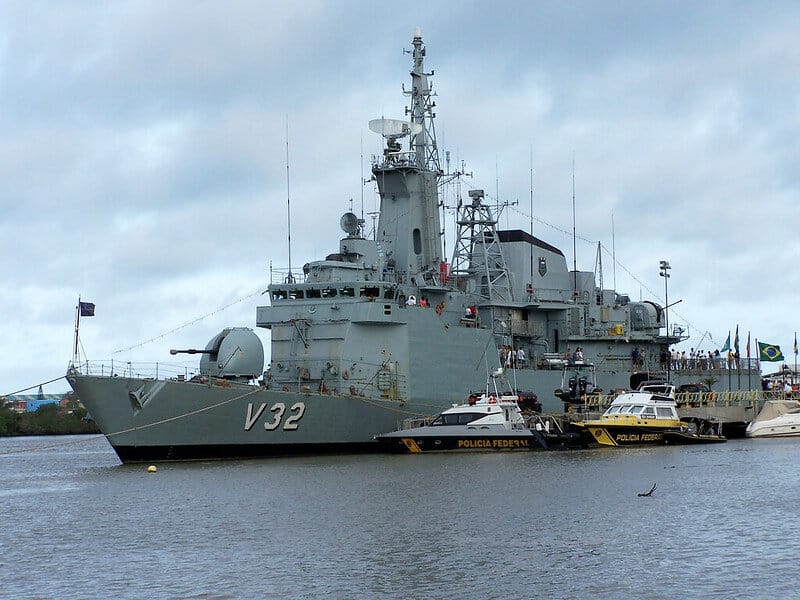
Corvettes are the smallest classification of true warships, designed for coastal defense and short-range missions.
Though compact, they are agile and well-armed for their size.
Key Characteristics:
- Displacement: ~500 to 3,000 tons
- Short-range patrol and surveillance near territorial waters
- Armed with missiles, machine guns, and ASW systems
- Smaller crew and simpler onboard systems
- Often operate in piracy-prone or sensitive zones
Operational Use:
Corvettes patrol Exclusive Economic Zones (EEZs) and are often deployed in anti-piracy missions, such as escorting merchant vessels through the Gulf of Aden or Strait of Malacca.
6. 🚁 Amphibious Warships: From Sea to Shore
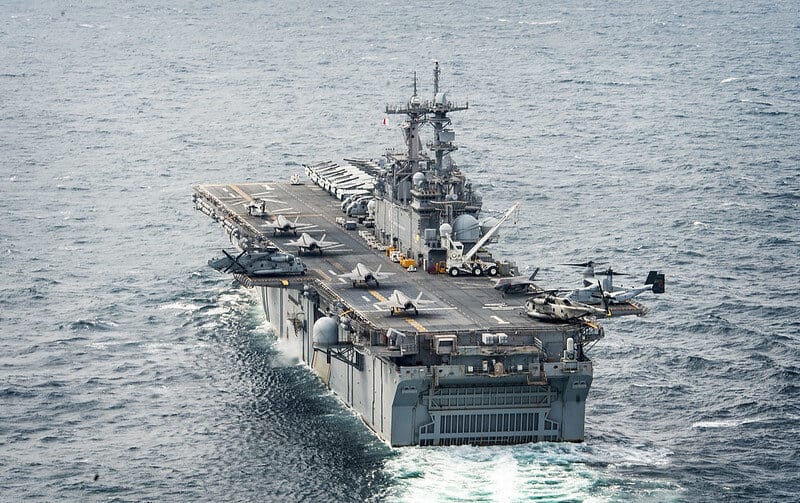
Amphibious warships are specialized naval platforms built to launch and support amphibious assaults.
These ships deploy troops, vehicles, and aircraft during littoral warfare.
Key Functions:
- Deploy marines via amphibious landing craft or helicopters
- Launch transport aircraft, drones, and utility helicopters
- Equipped with well decks (floodable areas for boat launch)
- Carry vehicles, tanks, and logistical supplies
- Provide mobile command and control during landing operations
Two Main Types:
- Amphibious Assault Ships (e.g., USS Wasp) – Resemble small aircraft carriers
- Landing Platform Docks (LPDs) – Focus on troop deployment and vehicle transfer
Defensive Capabilities:
These ships are armed with missile systems, CIWS (Close-In Weapon Systems), and automated countermeasures for fleet protection.
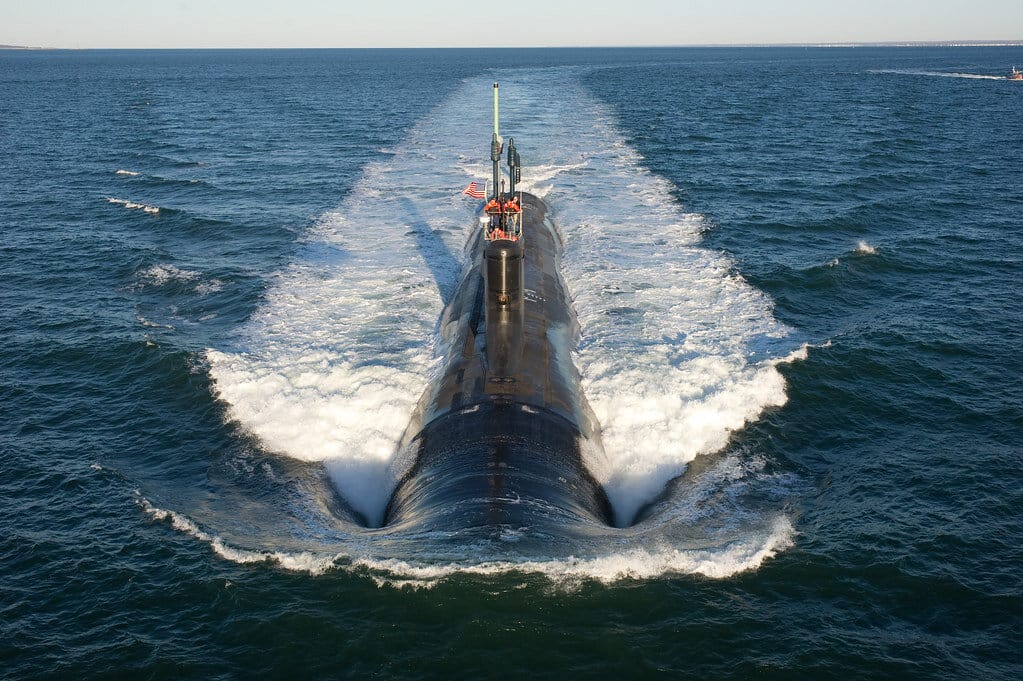
7. 🐋 Submarines: The Silent Predators of the Sea
Submarines are stealthy, submersible warships that can operate undetected below the ocean’s surface for extended durations.
They are among the most strategic and feared assets of any navy.
Core Attributes:
- Operate submerged to avoid detection
- Use sonar, periscopes, and acoustic sensors for tracking
- Armed with torpedoes and ballistic or cruise missiles
- Can perform reconnaissance, intelligence gathering, and covert strikes
- Some are nuclear-powered and capable of launching nuclear payloads
Nuclear Submarine Fact:
Nuclear submarines can stay underwater for months. Their only true limitation is food supply.
Many carry provisions for up to 90 days of submerged deployment.
Strategic Roles:
- Anti-surface warfare and anti-submarine warfare (ASuW & ASW)
- Deterrence and second-strike capability
- Maritime interdiction
- Special forces insertion
🔧 Auxiliary Ships: The Fleet’s Unsung Workhorses
While not designed for combat, auxiliary ships are essential to sustaining naval operations.
These vessels provide logistical, medical, and operational support to frontline warships.
Types of Auxiliary Ships:
- Replenishment Ships – Fuel, food, and ammunition supply
- Hospital Ships – Medical aid and casualty evacuation
- Repair Ships – On-site maintenance and technical assistance
- Transport Vessels – Personnel, vehicles, or cargo
- Research & Survey Ships – Naval oceanography, testing, and data collection
Even commercial tankers or cargo vessels can be commissioned as auxiliaries during national emergencies or war mobilization.
🧭 Conclusion: Power, Strategy, and Seamanship at Sea
Every warship in a naval fleet serves a specialized function- from the air-dominating aircraft carrier to the stealthy submarine, down to the agile corvette patrolling near shorelines.
Together, they form a cohesive force that protects maritime sovereignty, responds to global threats, and maintains freedom of navigation across the world’s oceans.
Understanding these vessel types is essential for any seafarer, maritime professional, or naval enthusiast.
❓ Frequently Asked Questions (FAQ)
What is the most powerful type of warship?
The aircraft carrier is the most powerful due to its ability to project air power globally and serve as a floating military base.
Are merchant ships ever used as warships?
Not directly, but they can be converted into auxiliary vessels during emergencies or wartime for logistics, transport, or refueling.
What warships are best for anti-submarine warfare?
Frigates and Destroyers are specialized for ASW, equipped with sonar, depth charges, and torpedoes. Corvettes also perform this role in littoral zones.
Why do warships switch off their AIS?
For security and stealth, warships often turn off their AIS (Automatic Identification System) to avoid detection by adversaries or pirates.
⚓ Final Note & CTA
Now that you know the roles of different warships in a modern naval fleet, explore how merchant ships interact with them in strategic waterways and why your AIS might attract the attention of a passing warship.
🔗 Want to learn more about merchant ship types and their roles? Read our guide on merchant vessel classifications.
May the winds be in your favor.
Leave a Reply