


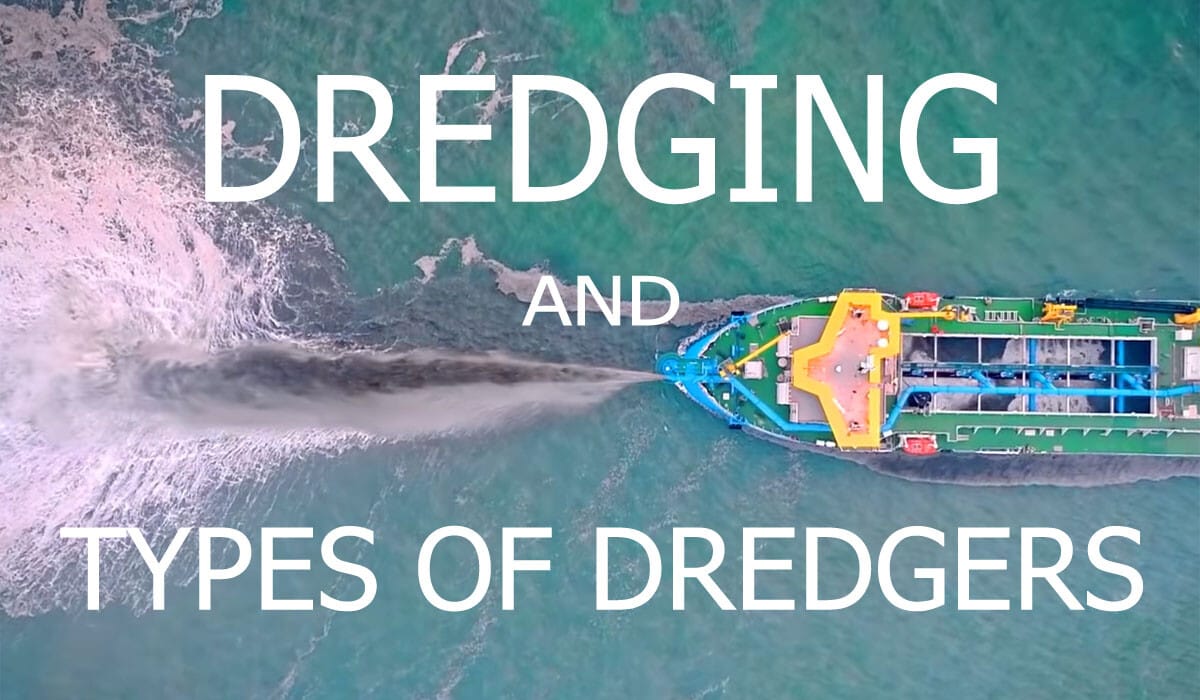
Dredging is the underwater excavation process of removing sediments like silt, sand, mud, and debris from the seabed and transferring them elsewhere.
It plays a critical role in maritime operations by keeping harbors navigable, deepening shipping lanes, laying subsea pipelines, and even extracting construction materials.
Most dredging operations occur in ports, rivers, canals, and coastal waters, using specialized vessels called dredgers.
These machines come in various types depending on the method of extraction and discharge.
In this guide, you’ll learn what dredging is, why it’s vital to maritime activities, and the different dredgers that make it possible. ⚙️🌎
⚓ What is Dredging in Maritime Operations?
Dredging refers to the controlled removal of accumulated sediments from the bottom of water bodies such as seas, harbors, rivers, and estuaries.
It is usually carried out using specialized vessels or equipment known as dredgers, which extract, transport, and discharge the collected material.
🔎 Key Materials Removed During Dredging:
- Silt, clay, and mud
- Sand and gravel
- Debris and trash
- Marine organisms or wreckage
- Rock and mineral-rich seabed
Though some dredging can be done on land (e.g., lagoons or mining pits), this article focuses on marine and inland water dredging that involves seafarers and shipboard dredgers.
🚢 Why Dredging is Important for Maritime Safety and Infrastructure
Dredging isn’t just about digging.
It’s a fundamental process that supports port development, offshore projects, environmental management, and even ship safety.
✅ 1. Ensuring Safe Navigation
Sediment buildup in waterways poses a grounding risk to vessels. Dredging deepens access channels and berths so ships can move safely without hitting bottom.
✅ 2. Port and Canal Construction
Before large vessels can access a new port or canal, dredging prepares the area by creating sufficient depth and width for maneuvering.
✅ 3. Subsea Pipeline and Cable Laying
Dredgers create trenches to bury underwater pipelines and fiber-optic cables used in oil, gas, and telecommunications.
✅ 4. Offshore Infrastructure
Dredging prepares seabeds for supporting structures like offshore wind turbines, oil platforms, and bridges by stabilizing their foundations.
✅ 5. Mineral Recovery & Marine Mining
Dredging also enables the retrieval of valuable materials such as:
- Gold, tin, or rare earth elements
- Sand and gravel for construction
- Historical shipwrecks and artifacts
✅ 6. Environmental Cleanup & Restoration
Dredging removes contaminated sediments, plastics, and marine debris, helping restore natural flow, shorelines, and ecosystems.
⚙️ Types of Dredgers Used in Maritime Operations
Dredgers are classified based on how they extract and discharge seabed material.
The two primary categories are Mechanical Dredgers and Hydraulic Dredgers, with a third category for specialized types.
🛠️ 1. Mechanical Dredgers
Mechanical dredgers use buckets, grabs, or scoops to excavate seabed materials through physical force.
These machines are highly effective in handling cohesive soils like clay, gravel, and compact sediment- making them ideal for harbors, rivers, and canal maintenance.
They are commonly mounted on barges and often require additional vessels like tugboats or hopper barges for sediment transport.
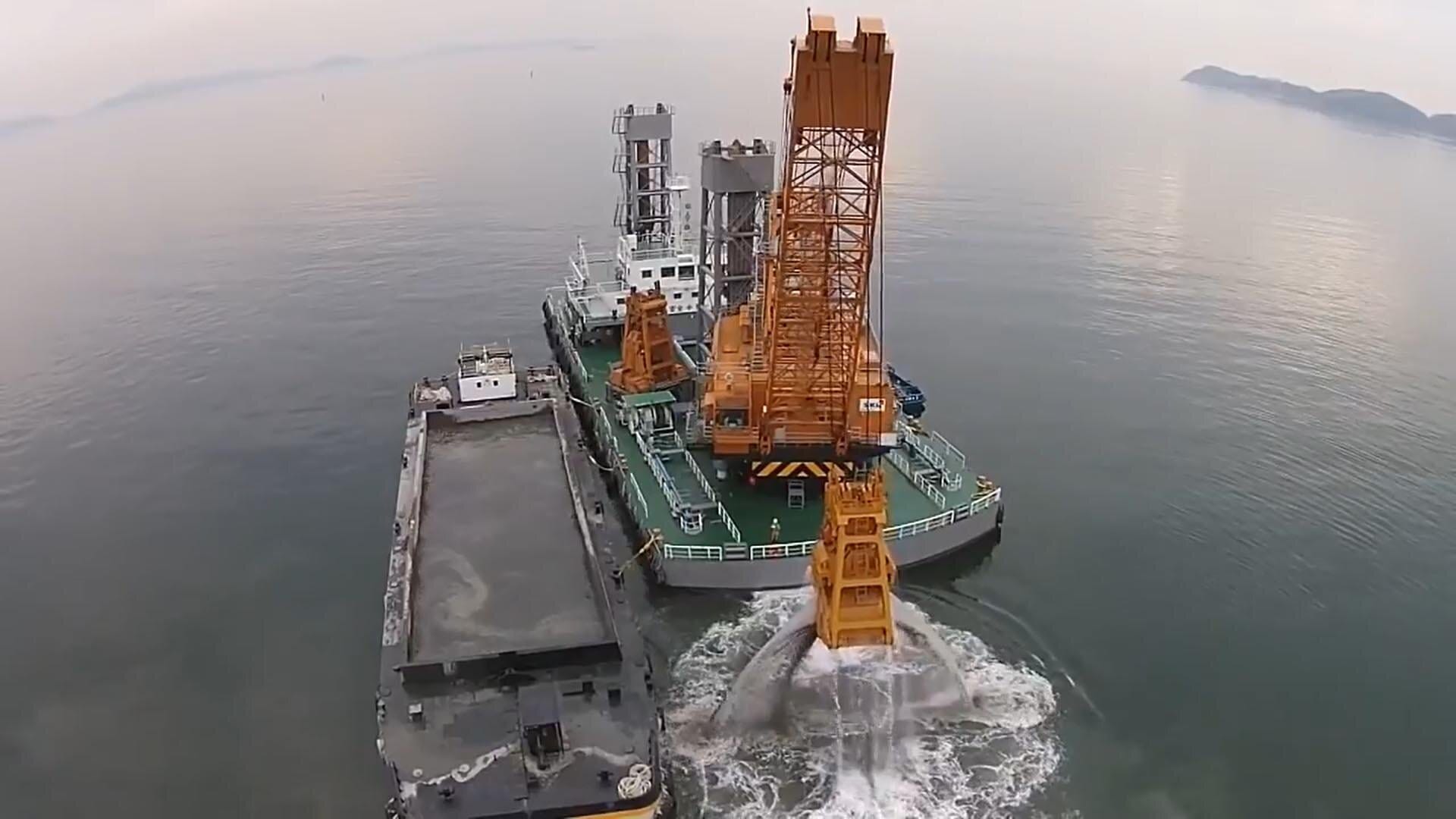
a. 🦀 Grab / Clamshell Dredger
This type uses a clamshell or two-jaw grab suspended by a wire. When lowered into the seabed, it clamps onto material and hauls it up.
🧱 Key Uses:
- Precise dredging in deep or confined waters
- Suitable for clay, gravel, and coarse material
- Inefficient in fine silts due to material loss
🛳️ Vessel Setup:
Mounted on barges or pontoons, with a separate barge for sediment collection.
b. ⛏️ Dipper Dredger
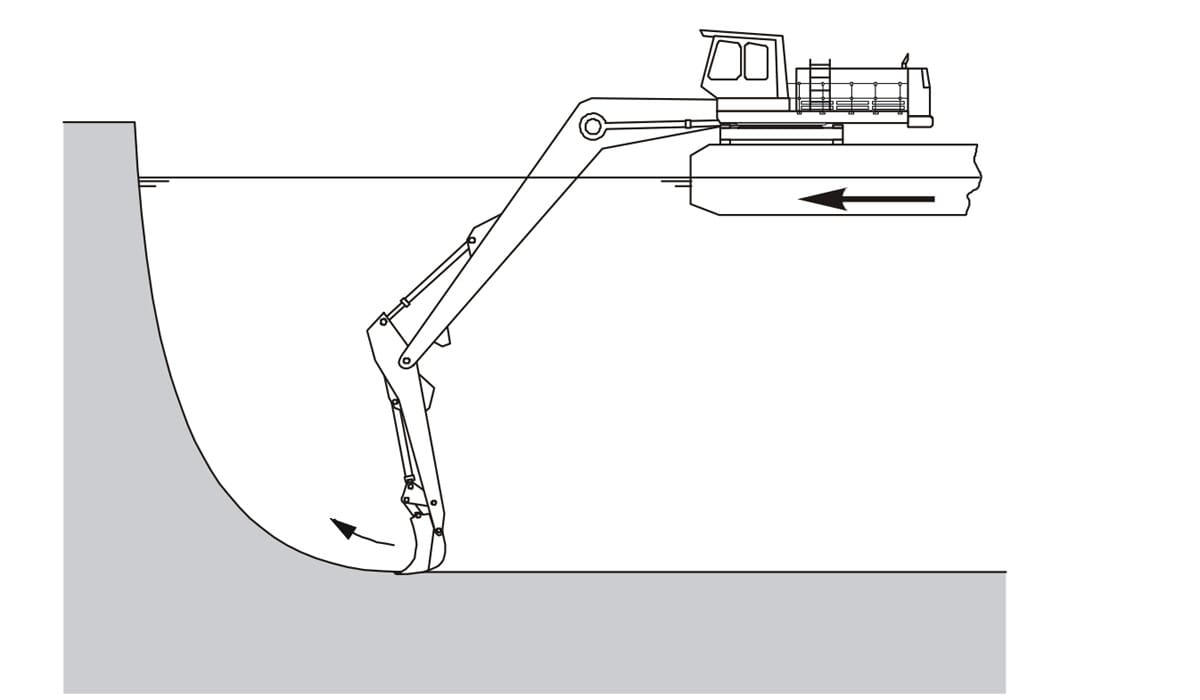
Dipper dredgers are barge-mounted machines similar to land excavators. They dig using forward thrust, like a shovel.
🧱 Key Uses:
- Ideal for shallow waters and confined ports
- Excels in compact material and rocky seabeds
⚓ Stability Feature:
Equipped with spuds– vertical stakes that anchor the dredger while in operation.
c. Backhoe Drc. 🔙 Backhoe Dredger (BHD)
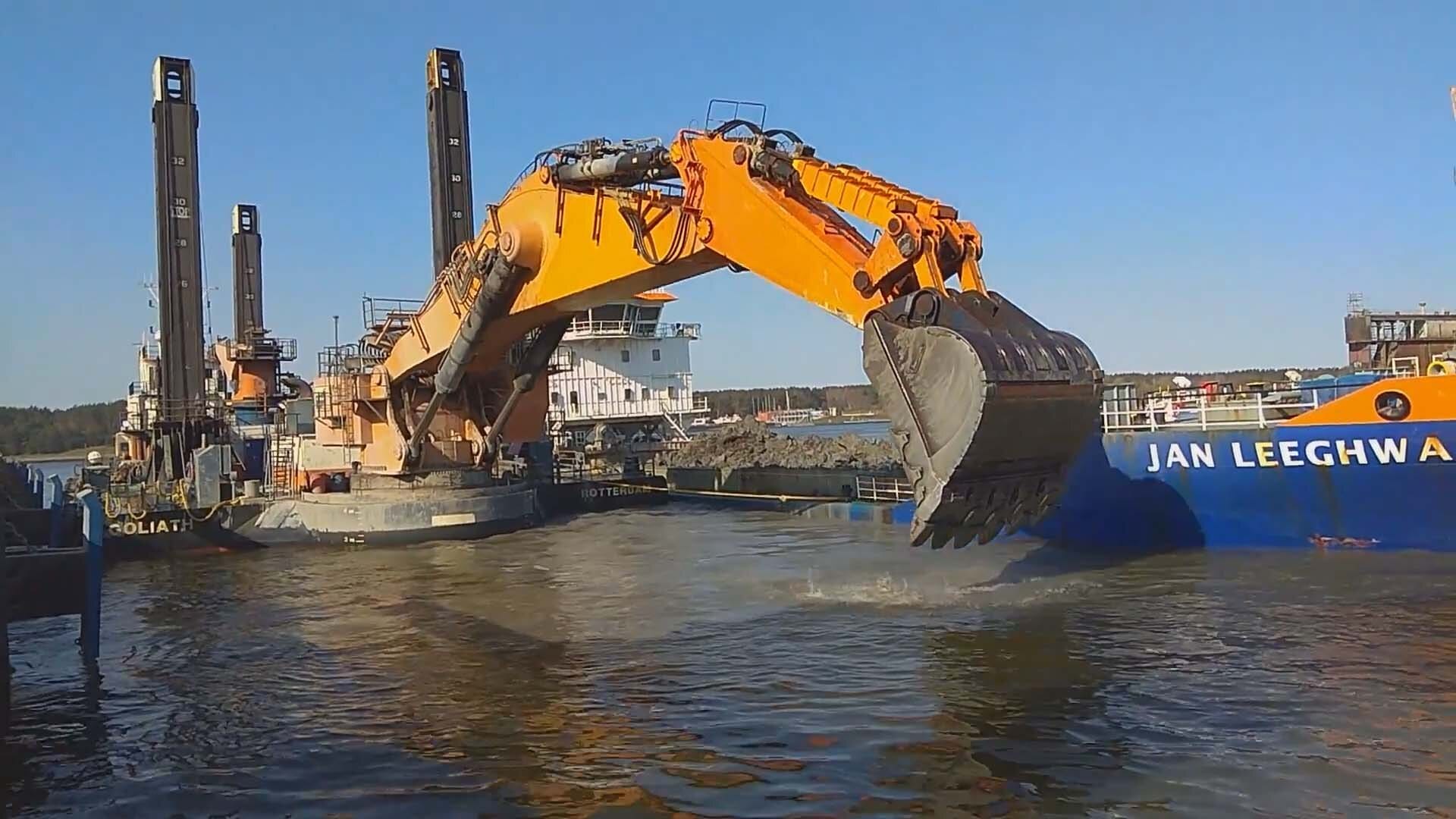
Backhoe dredgers resemble land-based hydraulic excavators but operate from barges. Unlike dipper dredgers, they dig through backward motion.
🧱 Key Uses:
- Efficient in medium-depth port dredging
- Works best with gravel, clay, and mixed materials
🛠️ Common Practice:
Operates alongside a hopper barge where dredged material is transferred.
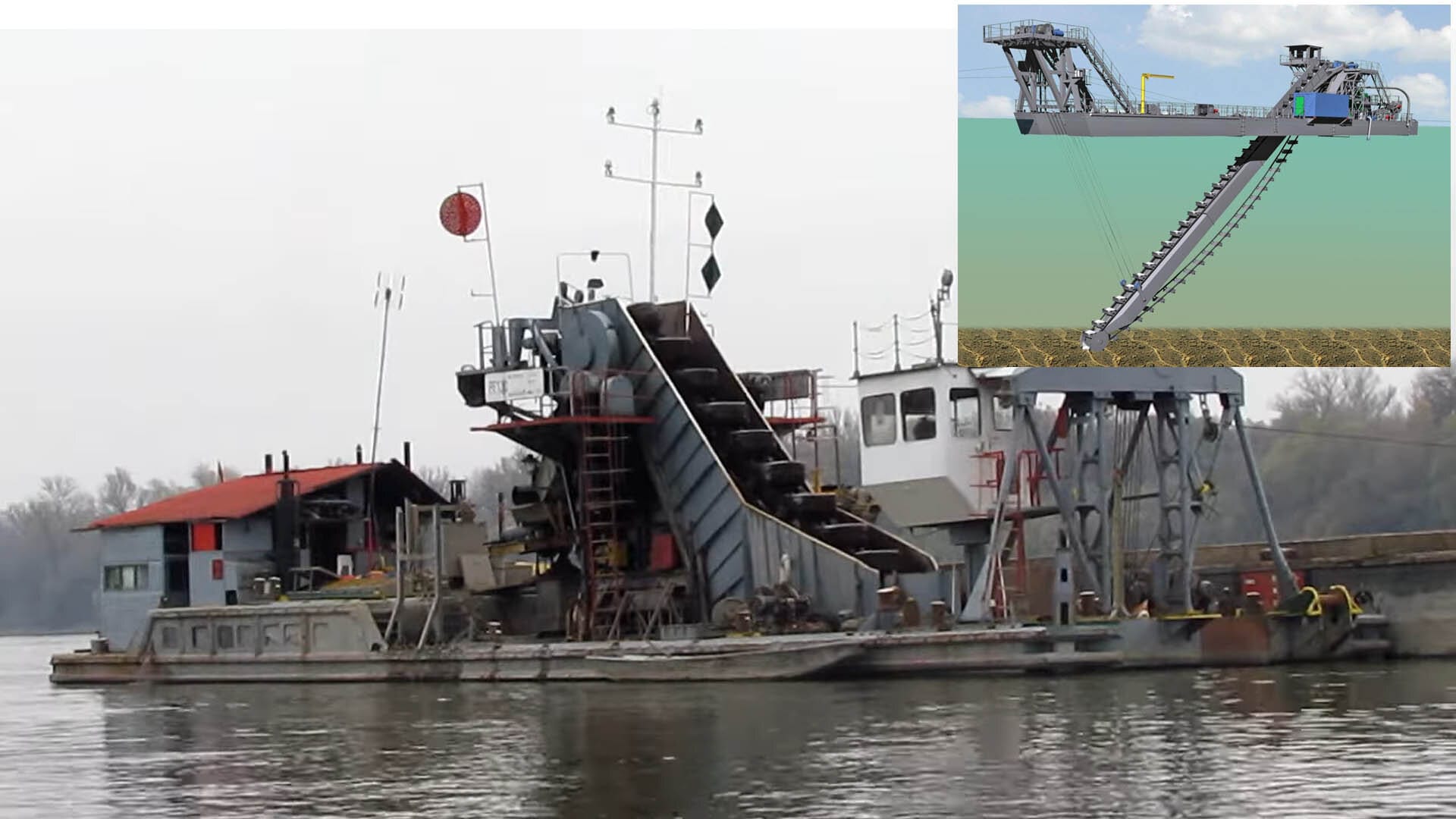
d. 🔁 Bucket Ladder Dredger
This dredger features an endless chain of buckets mounted on a ladder-like structure.
Buckets scoop the seabed material and deposit it into chutes for disposal.
🧱 Key Uses:
- Efficient for continuous large-scale excavation
- Suitable for compact and dense seabeds
⚙️ Unique Design:
- Used in maintenance and capital dredging
- High production rate
💧 2. Hydraulic Dredgers
Hydraulic dredgers use powerful suction pumps and pipelines to remove sediments from the seabed.
They operate by creating a water-sediment slurry, which is pumped through pipes and either deposited into barges or discharged directly to disposal sites.
These dredgers are ideal for non-cohesive materials such as sand, silt, and fine gravel, making them commonly used in beach nourishment, land reclamation, and harbor maintenance.
Also known as suction dredgers, they come in several variations:
a. 🌀 Plain Suction Dredger (PSD)
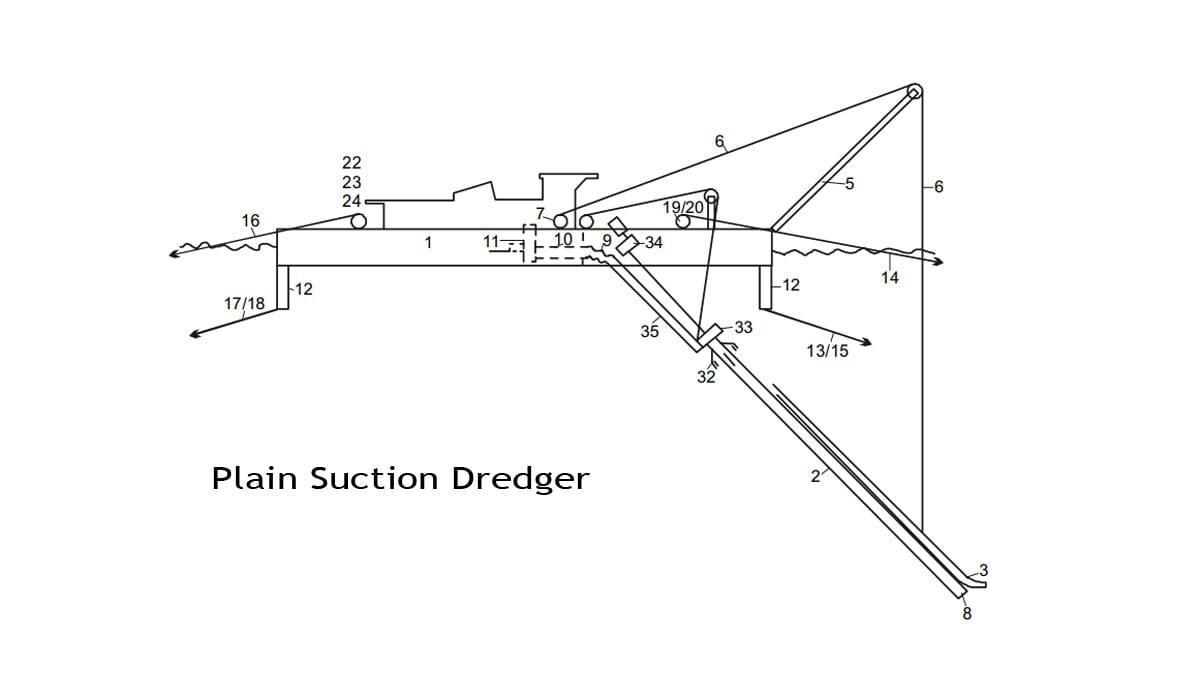
A Plain Suction Dredger consists of a suction pipe connected to a dredge pump mounted on a pontoon or barge.
It does not include any cutting tool- relying on water jetting to loosen sediment.
🔧 How It Works:
- A suction pipe is lowered to the seabed
- A high-pressure water jet fluidizes the sediment
- The dredge pump transports the slurry to a barge or disposal site via pipeline
✅ Best For:
- Maintenance dredging in ports and inland waterways
- Soft materials: sand, silt, loose gravel
b. ✂️ Cutter Suction Dredger (CSD)
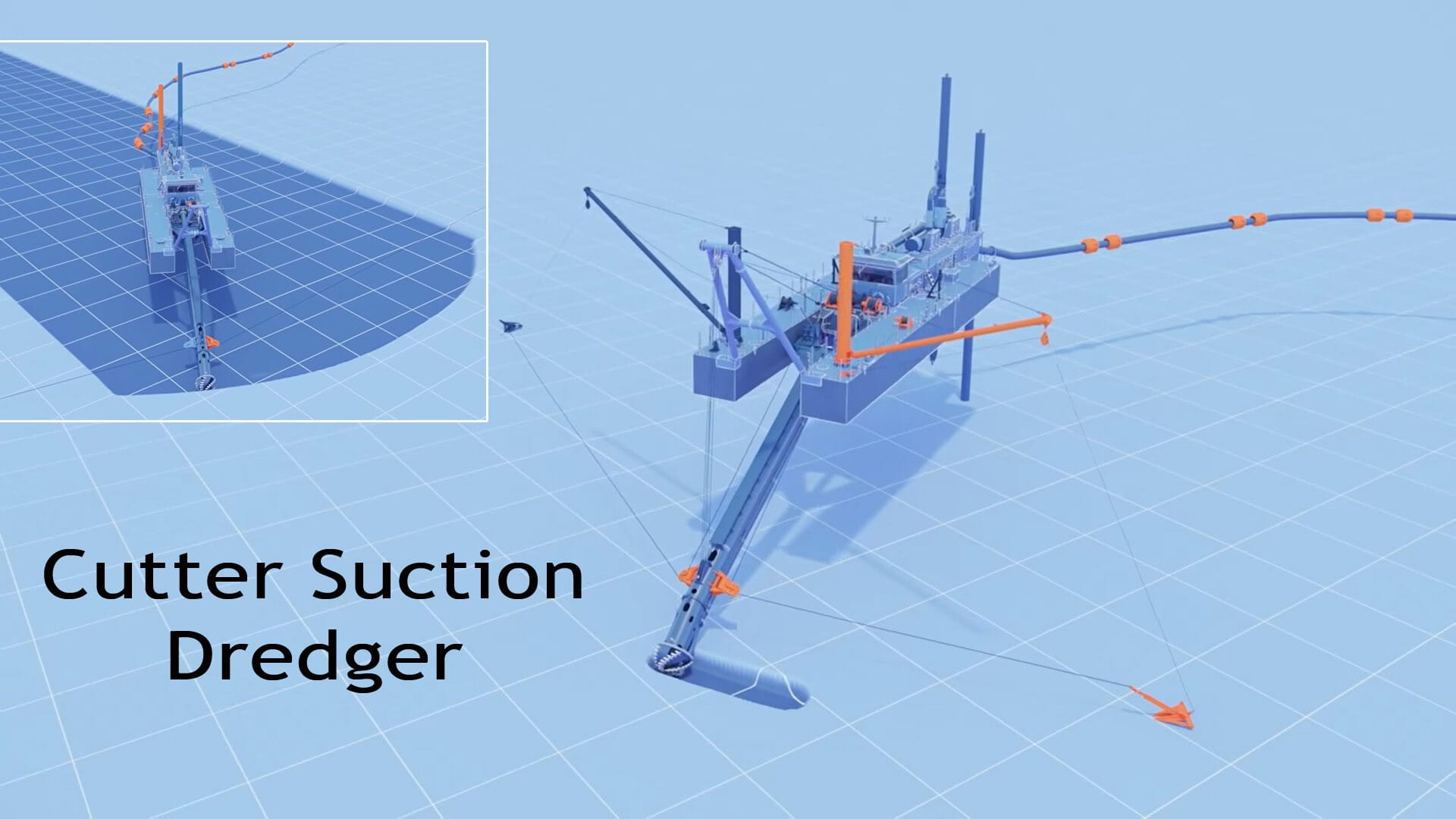
Cutter Suction Dredgers are more advanced than PSDs.
hey feature a rotating cutter head at the suction inlet, enabling them to break up compacted material before suction.
🔧 How It Works:
- Cutter head loosens seabed material
- Pump creates suction to draw up slurry
- Sediment is discharged through floating pipelines
⚓ Positioning:
- Uses spuds and side anchors to pivot during operations
- Moves side-to-side in a sweeping motion
✅ Best For:
- Land reclamation and port construction
- Dredging in compacted soils or clay
c. 🚢 Trailing Suction Hopper Dredger (TSHD)
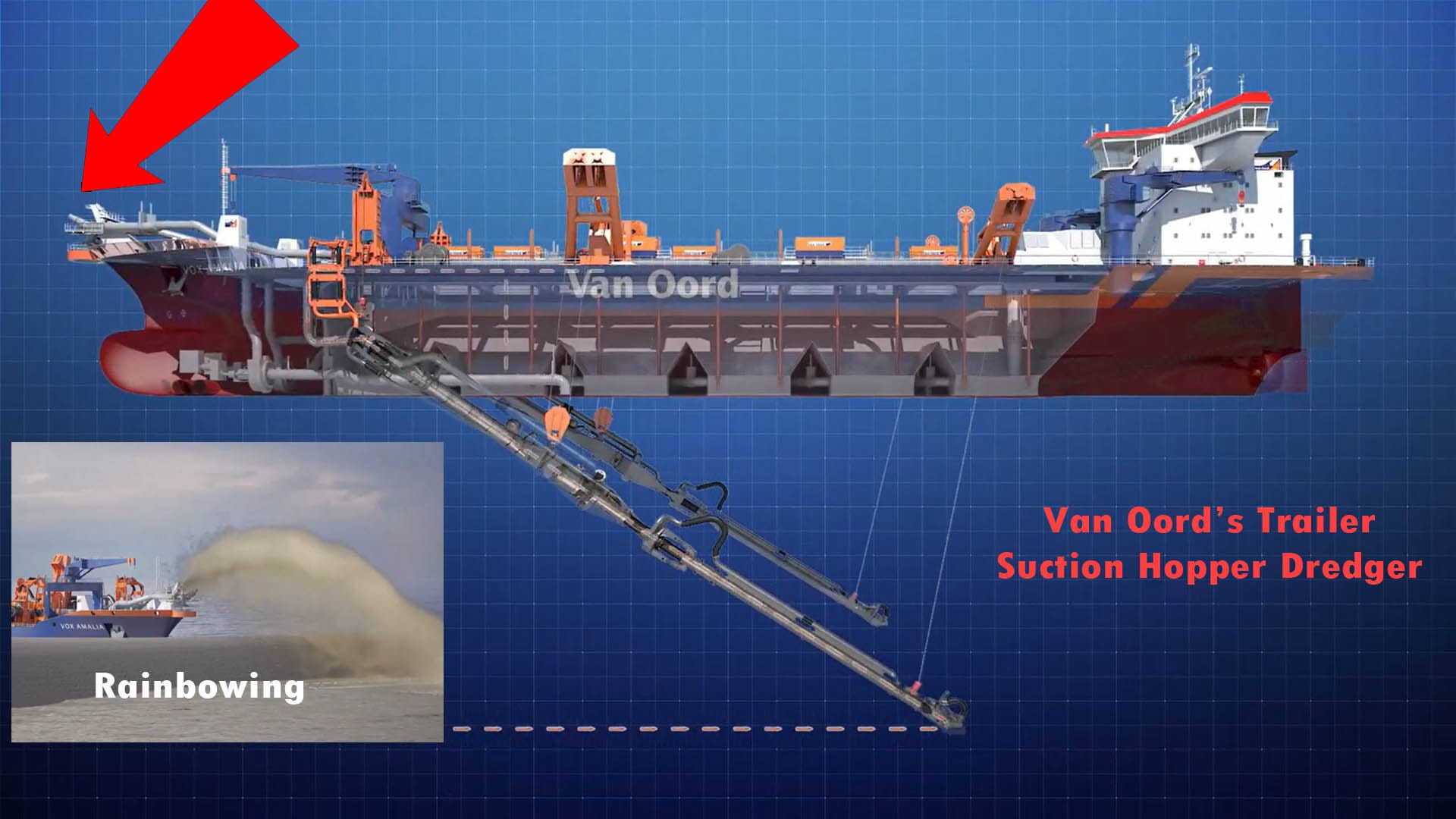
The TSHD is a self-propelled, seagoing dredger that travels while dredging.
It’s equipped with one or more trailing suction arms that drag along the seabed.
🔧 How It Works:
- Suction arm collects sediment while ship is underway
- Dredged material is stored in onboard hopper tanks
- Discharge options: bottom door release, pipeline, or “rainbowing”
🌈 Rainbowing:
Sprays dredged material through the air to fill shallow areas or reclaim land.
✅ Best For:
- Capital and maintenance dredging
- Deep-water operations
- Offshore sand extraction
👷 Crew Opportunity:
TSHDs require seafarers and operate under full maritime crew complement making them ideal for career opportunities.
🧪 3. Other Types of Dredgers
Some dredgers don’t fully fall under mechanical or hydraulic categories due to their specialized mechanisms or hybrid functions.
These units are often compact, mobile, and used in shallow waters like rivers, ponds, swamps, or lakes.
They are generally unmanned or remotely operated and not common in large-scale maritime projects, but they remain relevant for environmental dredging, aquaculture, and inland waterway maintenance.
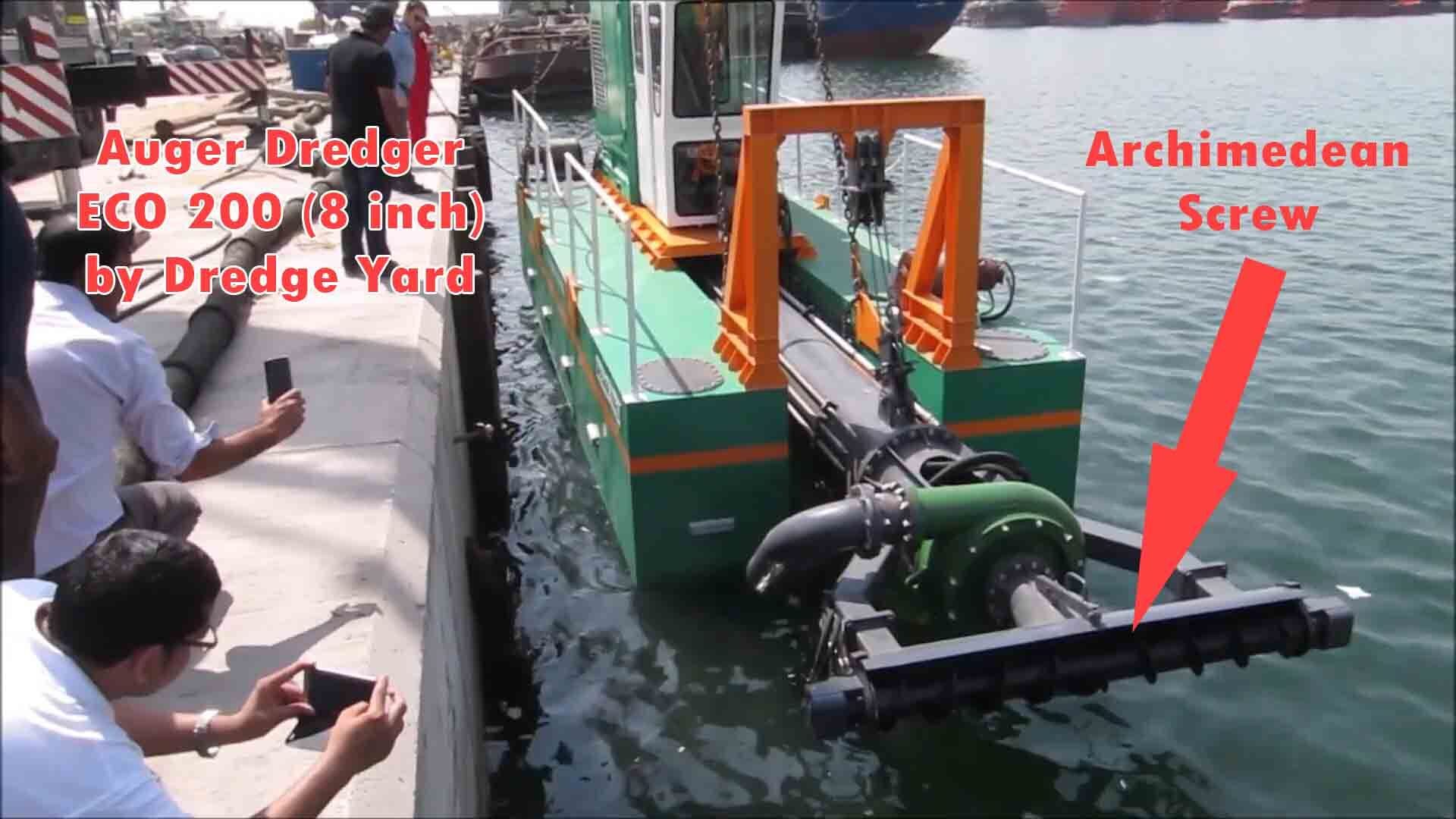
a. ⚙️ Auger Suction Dredger (ASD)
Auger suction dredgers operate similarly to cutter suction dredgers but use a horizontal Archimedean screw (auger) instead of rotating blades.
🔧 How It Works:
- The auger rotates and guides sediment to the center
- A suction pipe pumps the slurry to a barge or shore
- Moves in a straight line like plowing a field
✅ Best For:
- Shallow water and small-scale operations
- Soft seabeds like silt or fine sand
b. 💨 Jet-Lift Dredger
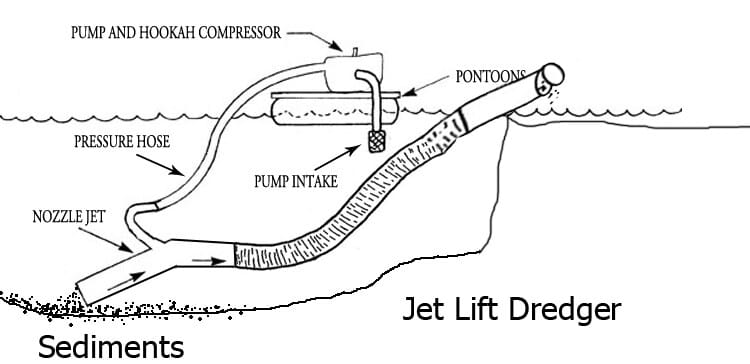
Jet-lift dredgers use the Venturi effect rather than pumps. High-speed water jets create a suction force that lifts sediment into a pipe.
🔧 How It Works:
- High-pressure water creates a vacuum inside the suction pipe
- Pulls in nearby water and sediments
- No mechanical parts in the suction head
✅ Best For:
- Sensitive environmental areas
- Fine sediments
c. 🌪️ Air-Lift Dredger
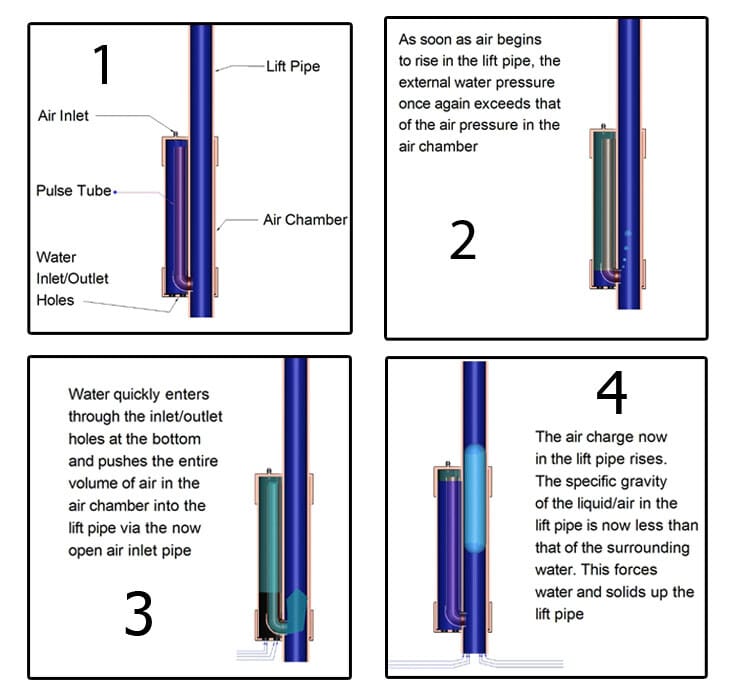
Air-lift dredgers work on compressed air injection.
Air is pulsed into a vertical pipe, creating bubbles that lift water and sediments to the surface.
🔧 How It Works:
- Air is injected in short bursts
- Bubbles displace water, reducing density inside the lift pipe
- Sediment-laden water is drawn upward by buoyant force
✅ Best For:
- Archaeological or low-impact dredging
- Deep, narrow excavation
d. 🚜 Amphibious Dredger
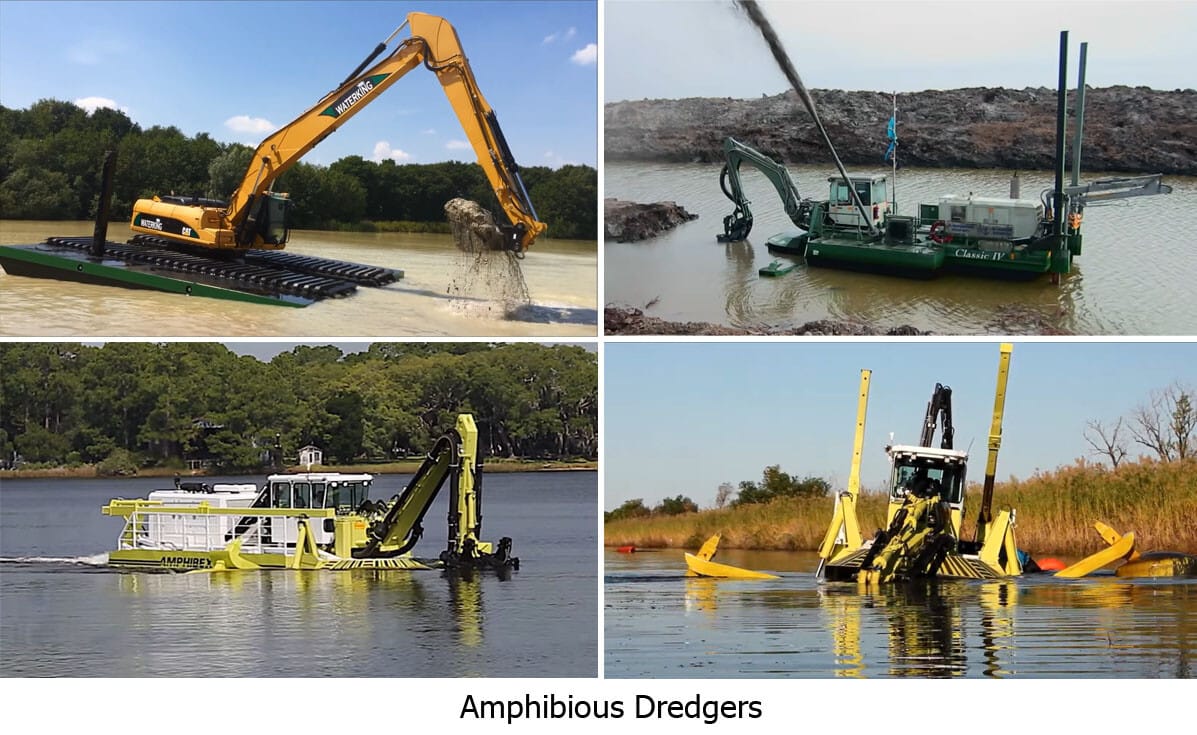
Amphibious dredgers are land-water hybrids, typically built from excavators modified with floatation pontoons, legs, or tracks.
🔧 Features:
- Can “walk,” “float,” or “stand” on soft terrain
- Operates in areas inaccessible to standard dredgers
✅ Best For:
- Environmental or emergency dredging
- Swamps, marshes, shallow lakes
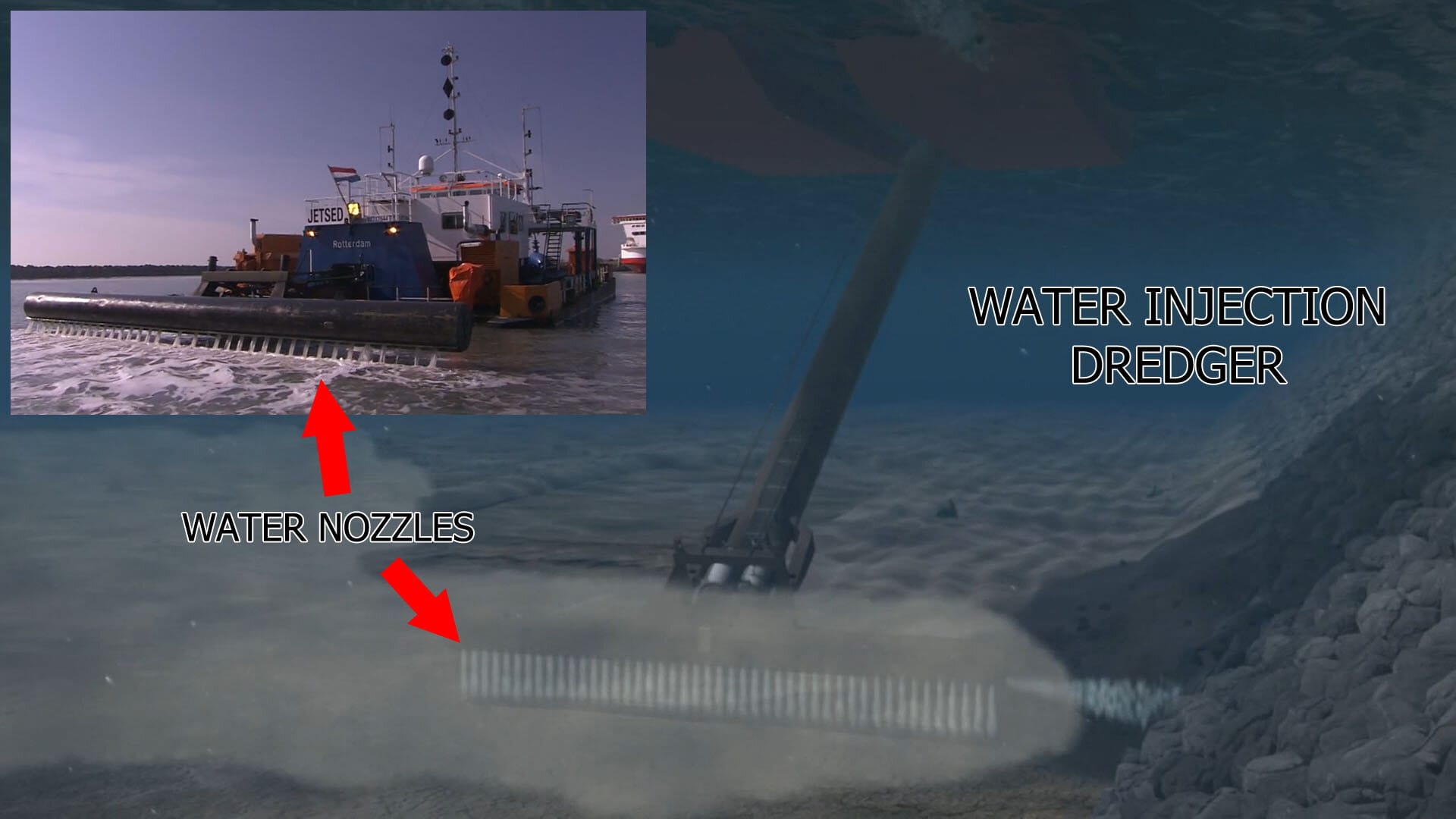
e. 🌊 Water Injection Dredger (WID)
WIDs don’t extract sediment for disposal. Instead, they fluidize the seabed using low-pressure water jets.
This causes sediment to flow naturally to deeper areas, mimicking tidal erosion.
🔧 How It Works:
- A horizontal jet bar is lowered to the seabed
- Water jets disturb the sediment, creating a fluid layer
- Sediment is carried away by tidal currents or seabed slope
✅ Best For:
- Natural sediment relocation
- Maintenance dredging without removing material
🧪 Also Known As:
“Natural Dredging” because it uses gravity and currents instead of mechanical removal.
📚 Summary: Understanding Dredgers in Maritime Operations
Dredging is a critical maritime process that enables safe navigation, port expansion, offshore construction, and seabed resource recovery.
Seafarers are often needed on self-propelled dredgers such as Trailing Suction Hopper Dredgers (TSHDs) and Cutter Suction Dredgers (CSDs).
Whether maintaining shipping channels or supporting offshore wind farms, dredgers are essential tools in shaping the maritime landscape. ⚓🌊
👨✈️ Do Dredger Ships Require Seafarers?
Yes! Many types of dredgers, particularly seagoing and self-propelled units, require certified seafarers.
🛳️ Vessels Needing Seafarers:
- Trailing Suction Hopper Dredgers (TSHD)
- Cutter Suction Dredgers (CSD)
- Some Backhoe and Mechanical Dredgers on floating platforms
👷 Crew Roles May Include:
- Master and deck officers
- Marine engineers
- DPOs (Dynamic Positioning Operators)
- Dredge masters and surveyors
- Fitters and deck ratings
Shipping companies such as Van Oord, Boskalis, DEME, and Jan De Nul regularly hire maritime professionals for dredger fleets.
❓ Frequently Asked Questions (FAQs)
1. 🧐 What is dredging used for in maritime operations?
Dredging ensures safe navigation by deepening ports, clearing silted waterways, and supporting offshore projects like pipelines and wind farms.
2. 🔧 What are the two main types of dredgers?
Dredgers are classified as mechanical (e.g., backhoe, clamshell) and hydraulic (e.g., suction, cutter suction).
Some hybrid or specialized dredgers exist for unique operations.
3. 🛠️ Which dredgers are used in ports?
Clamshell, backhoe, and TSHDs are commonly used in port and harbor dredging due to their precision, mobility, and large-volume handling.
4. 👨✈️ Can seafarers work aboard dredgers?
Yes. Dredger ships that are self-propelled or operate offshore typically have full marine crews similar to merchant vessels.
5. 🌍 Who are the major dredging companies that hire seafarers?
Top global dredging companies include Van Oord, Boskalis, DEME, and Jan De Nul, all of which operate large seagoing dredgers and offer maritime job opportunities.
🧭 Conclusion: Is Dredging Your Next Career Course?
Dredging is more than just excavation.
It’s a vital part of the maritime industry that supports global trade, infrastructure, and environmental restoration.
With various types of dredgers operating in coastal and offshore waters, there are plenty of opportunities for trained seafarers to join this specialized field.
May the winds be in your favor.
Leave a Reply