


Even with autopilot and modern nav systems, many Captains rely on manual steering during pilotage, berthing, and narrow channels where precision matters most.
But steering by hand leaves room for error. A delayed or wrong rudder response can quickly escalate into a grounding or collision.
Whether you’re a seasoned helmsman or a cadet on the bridge, these are 10 common helming mistakes and how to avoid them.
⚠️ 1. Executing the Rudder Command in the Wrong Direction
The helmsman puts the wheel to starboard when the order was for port or keeps adding rudder to the wrong side despite being told otherwise.
This misstep can lead to grounding or collisions, especially during tight maneuvers.
Such wrong helm execution has resulted in accidents like grounding as reported by the Nautical Institute.
✅ How to Avoid This Mistake:
🧠 Use mental association:
For the helmsman, associate left = port, right = starboard every time you take the wheel.
💡 Tip: Some helmsmen touch their left hand for port and right hand for starboard as an anchor point.
📣 Repeat the command clearly:
Use closed-loop communication:
- “Port 10.” (command)
- “Port 10, Sir.” (executing)
- “Port 10 applied, Sir.” (confirming)
👀 Bridge team support:
The OOW should always monitor if helm orders are carried out correctly.

⚠️ 2. Following the Pilot Instead of the Captain
Confusion arises when the Pilot and Master give conflicting helm orders.
Some helmsmen, unsure of whom to follow, respond to the Pilot’s command even though the Captain overrides it.
📌 This mistake can trigger sudden course changes, distrust on the bridge, or unsafe maneuvers.
✅ How to Avoid This Mistake:
- 🧭 Always follow the Master’s command.
The Captain holds overriding authority on the bridge even during pilotage. The Pilot serves only in an advisory capacity. - 🎯 Clarify conflicting orders immediately.
If unsure, say:
“Sir, I received two conflicting helm orders. Please confirm.” - 🛡️ Protect your responsibility:
As the helmsman, you’re not just turning the wheel. You’re upholding the bridge’s chain of command.

⚠️ 3. Not Repeating the Command After Execution
Some helmsmen skip repeating helm orders after executing them because they sailed the place many times before and that the Pilot at that time told them not to repeat the order.
This breaks closed-loop communication, a core safety practice on the bridge.
Failing to confirm executed orders can cause confusion during investigations, as all bridge conversations are recorded via the VDR (Voyage Data Recorder).
✅ How to Avoid This Mistake:
- 🔁 Repeat every rudder order twice:
- First after hearing it: “Port 10, Sir.”
- Then after applying: “Port 10 now , Sir.”
- 📋 Follow standard protocol unless told otherwise:
Only skip repetition if the Captain approves and gives clear instruction. - 🌐 Closed-loop comms are vital in multi-national crews to ensure clarity and accountability.
⚠️ 4. Responding with a Weak or Unclear Voice
Soft or unclear helm responses can be misheard especially in a noisy bridge or during high-traffic situations.
It also gives the impression of uncertainty or fatigue.
✅ How to Avoid This Mistake:
- 📢 Speak clearly and confidently– not loud, just firm. It keeps you alert and helps the bridge team stay in sync.
- 🔄 If you mishear the command, repeat it back confidently. The Pilot or Captain will quickly correct any misunderstanding.
- 🔊 Clear communication promotes alertness in yourself and others.
⚠️ 5. Losing Focus While Steering
Helmsmen can lose concentration due to fatigue, boredom, or distraction (e.g. chatting with the OOW or watching the coast).
This leads to course drift, late rudder response, or forgetting helm orders.
✅ How to Avoid This Mistake:
- 🛑 Limit casual conversation while at the wheel especially in confined waters or heavy traffic.
- 🎯 Focus on how the ship responds to your steering observe rudder angles, rate of turn, and how the vessel feels under your control.
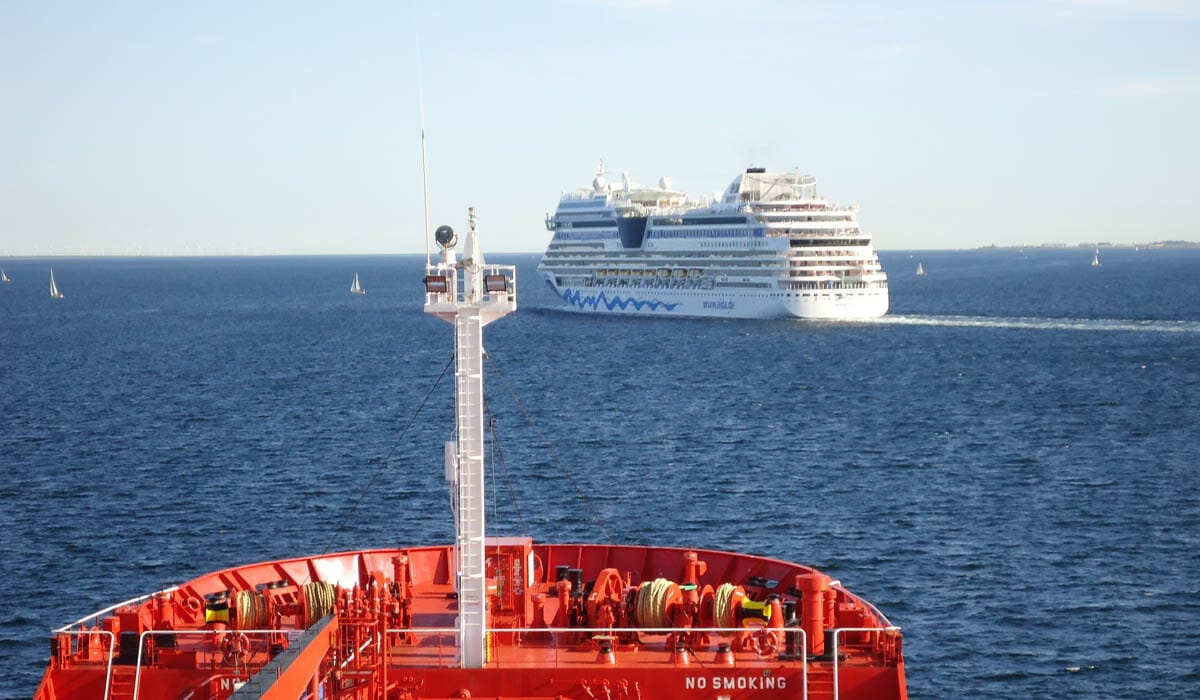
- 🌊 Mentally engage: Watch the forward mast, compare compass headings, and anticipate course corrections.
⚠️ 6. Micro-Sleeping While at the Helm
Helmsmen under extreme fatigue may experience micro-sleep episodes– short, involuntary lapses in consciousness lasting a few seconds.
Even brief drowsiness can be catastrophic during manual steering, especially in pilotage or congested areas.
✅ How to Avoid This Mistake:
- 📢 Notify the OOW immediately if you feel unfit to steer. It’s better to be replaced temporarily than to risk an accident.
- 💤 Prioritize rest before wheel duty. Avoid taking the helm if you’re dangerously tired.
- ☕ Take caffeine before your watch if sleep wasn’t sufficient.
- 🧍♂️ Steer while standing with your back straight. This posture helps keep your brain alert and reduces the chance of dozing off.
⚠️ 7. Acting as Lookout While Steering
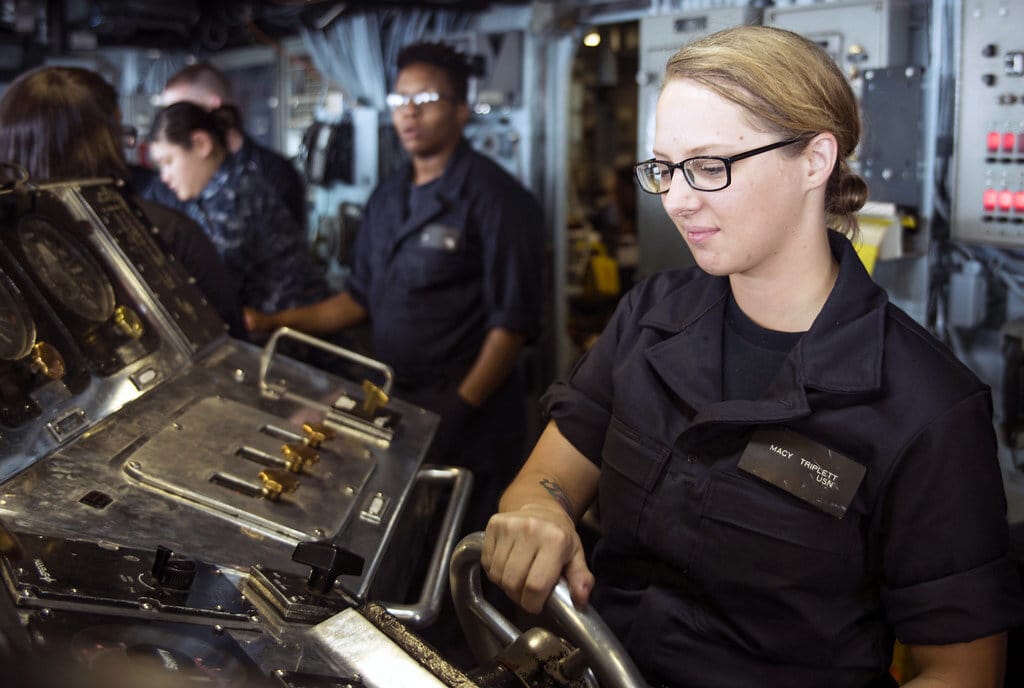
Some helmsmen try to act as lookout while steering, reporting targets or hazards.
While well-intentioned, this splits attention and compromises both roles especially dangerous in traffic or restricted waters.
✅ How to Avoid This Mistake:
- 🎯 Your only job is to steer and execute helm orders accurately. Let the lookout do the observing.
- 🗣️ If you notice something unusual, say:
“Heading steady on 1-8-5, Mr. Pilot.”
This subtly signals you’re still focused and may prompt the Master or Pilot to double-check the situation. - 🤫 Avoid excessive talking. It disrupts concentration and creates unnecessary bridge chatter.
⚠️ 8. Not Knowing Rudder Limits and Helm Orders
Each ship has its own rudder design and angle limitations.
Some helmsmen assume all vessels have a 35° hard rudder, only to discover their current ship responds differently.
Others are unfamiliar with standard helm orders used in bridge communication.
✅ How to Avoid This Mistake:
- 🧠 Anticipate how your ship handles: High block-coefficient vessels may react slowly or roll with large rudder inputs especially in shallow water.
- ⚙️ Ask about the rudder type and limits when joining a vessel. Some ships have high-angle rudders (e.g., 65°), while others may have reduced angles.
- 📘 Study helm orders from the IMO’s Standard Marine Communication Phrases. Know the difference between commands like:
- “Midships”
- “Hard-a-port”
- “Steady as she goes”
⚠️ 9. Misunderstanding “Steady As She Goes”
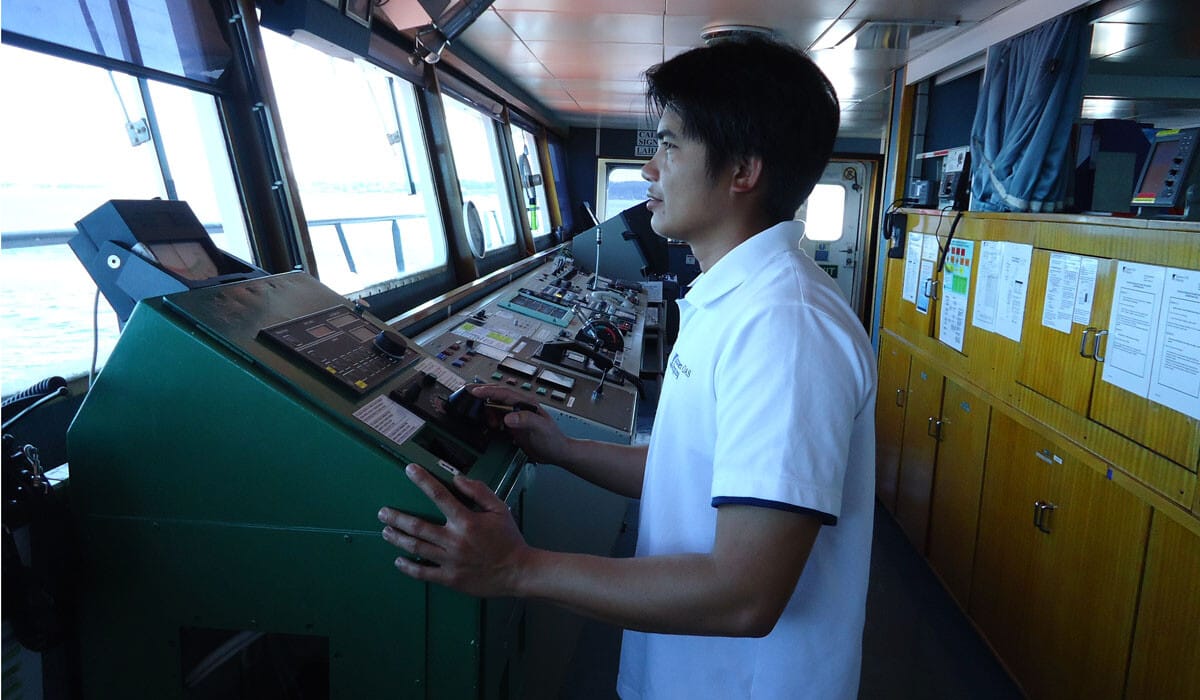
Some helmsmen incorrectly interpret the command “Steady as she goes” as keeping the rudder at midships and not allow her to swing or turn.
But its true meaning is to maintain the ship’s current heading at the time the command is given, even if the ship is still swinging.
✅ How to Avoid This Mistake:
- 🔄 Be alert for the pilot’s instructions. This command is usually given after the command, “Steady”.
- 🗨️ When given this command, check the compass course at that moment and steer to hold it.
- 🧭 Repeat the compass course that you’re going to steady into. Example: “Steady as she goes 2-1-5!”
⚠️ 10. Failing to Communicate Clearly with the Officer of the Watch (OOW)
Some helmsmen repeat helm orders poorly or fail to report status clearly leading to miscommunication, especially during high-stress maneuvers or in multi-language bridges.
✅ How to Avoid This Mistake:
- 🗣️ Always repeat helm orders word-for-word, e.g.,
“Port ten, port ten, sir.” - 📢 Announce completion of each order, e.g.,
“Port ten completed, wheel’s amidships, steady on one-eight-five.” - 🧑✈️ Use standard English bridge phrases even on bilingual ships. The IMO’s SMCP standardizes this for safety and consistency.
⚓ Conclusion: Your Hands Steer the Ship, Literally
As a helmsman, you don’t just “turn the wheel” you safeguard the ship, cargo, crew, and environment with every helm order you execute.
By avoiding these common mistakes and mastering bridge communication, you’ll gain the trust of your officers and become a true asset during critical operations.
✅ What To Do Next:
- 🧠 Review the IMO Standard Marine Communication Phrases (SMCP).
- 📚 Brush up on your ship’s steering system, rudder type, and helm console.
- 🗺️ Study pilotage areas, turning basins, and emergency rudder use.
📌 FAQ – Common Questions from Cadets and New Helmsmen
Q: Can I steer without a license or training?
🅰️ No. You must be properly trained and qualified, typically holding an STCW-compliant rating certificate or undergoing supervised training as a cadet.
Q: What’s the difference between “Midships” and “Steady”?
🅰️ “Midships” returns the wheel to center (0° rudder). “Steady” means hold the vessel’s current course.
Q: Do all ships have the same rudder limits?
🅰️ No. Rudder limits vary by vessel types and designs. Some ships may limit helm angles due to stability or turning characteristics.
May the winds be in your favor.
Leave a Reply