



Pressure/vacuum (P/V) valves are essential safety devices installed on tanker ships of various sizes to protect cargo tanks from dangerous over- or under-pressurization.
Without these valves, no oil or product tanker can operate safely or compliantly under international maritime regulations.
These valves are designed to automatically respond to changes in tank pressure- relieving excess pressure or allowing air to enter during vacuum conditions.
This self-regulating function helps cargo tanks “breathe” safely during operations like loading, discharging, or temperature fluctuations.
🔍 What Are P/V Valves?
P/V valves- also called pressure/vacuum relief valves or high-velocity P/V valves, are primary venting systems fitted on cargo oil tanks (COTs) of oil, product, and chemical tankers.
As one of the most important parts of tankers, their main purpose is two-fold:
- Prevent over-pressurization by venting excess pressure.
- Prevent implosion (under-pressure) by allowing atmospheric air or inert gas into the tank.
These valves operate automatically, requiring no electrical or pneumatic source. Instead, they rely on calibrated pressure settings to open or close.
📌 Alternate names:
- Pressure/ Vacuum Relief Valve
- Pressure/ Vacuum Valve
- High Velocity Pressure/ Vacuum Valve

🧠 How Do P/V Valves Work?
Tanker cargo tanks undergo constant pressure variation due to:
- Cargo loading and discharging
- Inert gas displacement
- Thermal expansion or contraction
- Ship movement in rough seas
The P/V valve responds to these changes by:
- Opening the pressure unit when the internal tank pressure rises above a preset limit.
- Opening the vacuum unit when internal pressure drops below a safe threshold.
This dual action allows for controlled tank venting and ensures compliance with SOLAS Convention and IMO regulations.
🧪 Key principle: P/V valves maintain the internal pressure within safe design limits- usually between -350 mmWG (vacuum) and 1,400 mmWG (positive pressure), to prevent tank deformation or explosion.
⚠️ Real-Life Relevance: A Costly Lesson
During one of my early contracts on a product tanker, we experienced a catastrophic P/V valve failure during a high-capacity loading operation.
The cargo tank became over-pressurized, resulting in structural damage to the tank top.
That incident cost the company over €3.5 million in shipyard repairs- and weeks off-hire.
Fortunately, no one was injured. But it served as a painful reminder of how critical P/V valves are for safety and compliance.

📏 IMO and SOLAS Requirements for P/V Valve Installation
P/V valves must comply with international safety standards, including those set by SOLAS Chapter II-2, IMO regulations, and Classification Societies.
Key requirements include:
- Tank Pressure Control: The venting system must prevent tank pressure or vacuum from exceeding design parameters.
- Height Placement: Valves must be at least 2 meters above the tank deck to allow safe vapor dispersion.
- Ignition Hazard Distance: They must be placed at least 5 meters away from air intakes, machinery, or electrical equipment.
- Forward Hazard: Winches, windlasses, and similar deck gear are ignition hazards. Valves on forward tanks (e.g., 1P/1S) are positioned to avoid these areas.
⚙️ When Do P/V Valves Operate?
Here are the main scenarios that trigger P/V valve operation on tankers:
1. 🛢️ During Cargo Loading
As cargo enters the tank, it displaces inert gas, increasing internal pressure.
The pressure unit of the P/V valve automatically opens to release this gas into the atmosphere or IG venting system.
2. 🌊 During Heavy Rolling at Sea
Ship movement in rough seas causes the liquid cargo to surge, creating pressure spikes or vacuums inside the tank.
This sudden imbalance triggers the P/V valve to stabilize internal pressure.
3. 🌡️ During Temperature Changes
- In hot climates, liquid and vapor inside tanks expand, raising pressure.
- In cold climates, contraction creates negative pressure or vacuum.
P/V valves open accordingly to compensate and prevent structural damage to cargo tanks.
📌 Note: In some tanker operations, manual intervention is attempted when P/V valves fail to activate- like tying the lifting handle open. This is dangerous and non-compliant, as discussed later.
⚙️ Working Principle of P/V Valves
Cargo tanks experience pressure fluctuations throughout a voyage- especially during cargo operations.
If these pressure differentials are not properly controlled, they can lead to tank deformation, rupture, or implosion.
P/V valves provide an automatic safeguard. Let’s explore how the pressure and vacuum components work.
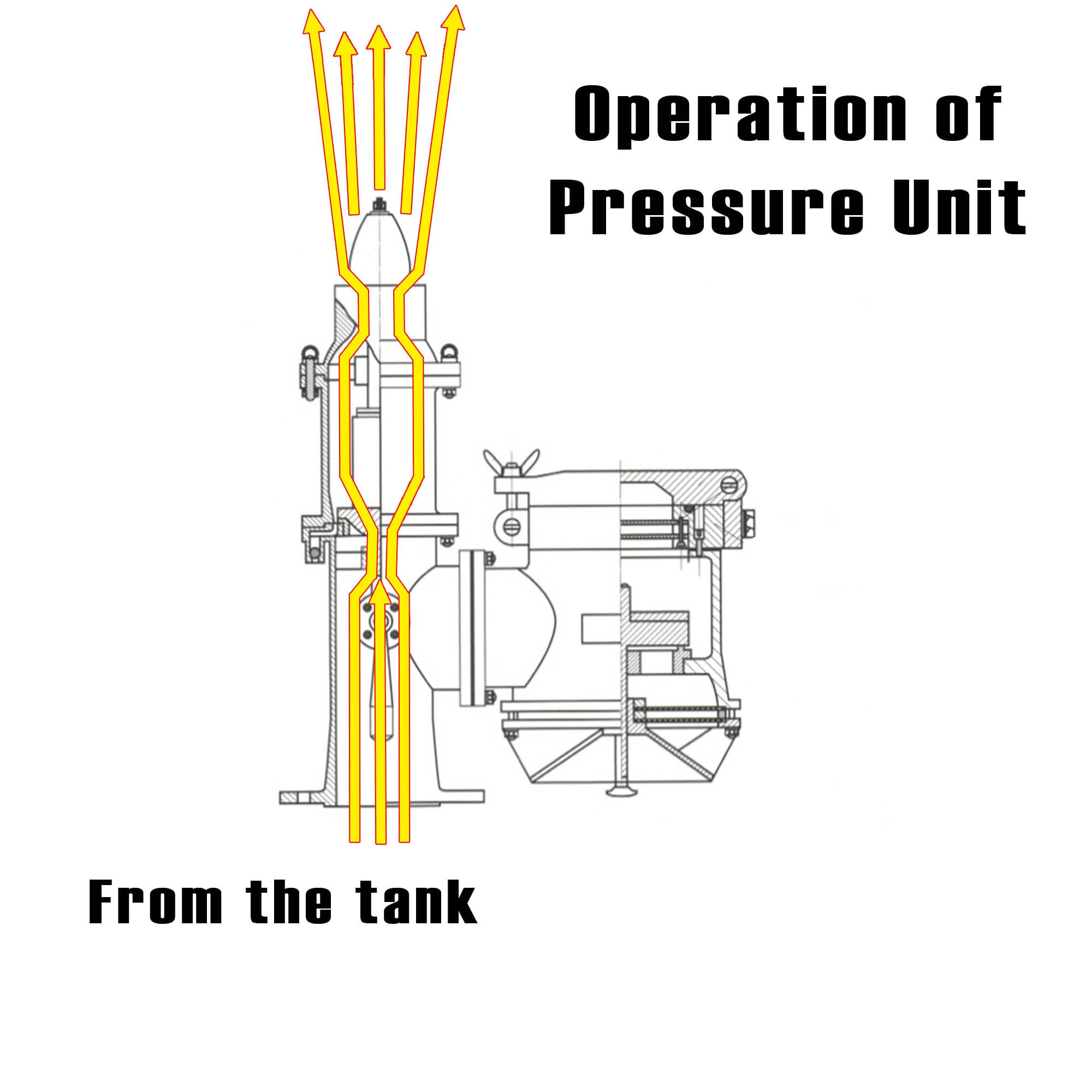
🔺 Pressure Unit Operation
The pressure unit of a P/V valve activates when the internal pressure in the cargo tank exceeds safe limits.
It vents excess gas into the atmosphere, preventing tank over-pressurization.
📌 Position: Located at the top of the high-velocity P/V valve. It resembles a rocket nozzle and is easy to spot.
📏 Pressure Settings:
| Type | Value (mmWG) | Value (bar) |
|---|---|---|
| Normal Tank Pressure | 700–800 mmWG | 0.0686–0.0785 bar |
| Valve Activation Point | 1,400 mmWG | 0.1373 bar |
| Tank Design Pressure | 2,500 mmWG | 0.245 bar |
When this unit opens, it releases flammable gases at high speed- approximately 30 meters per second (m/s), promoting safe atmospheric dispersion.
🔻 Vacuum Unit Operation
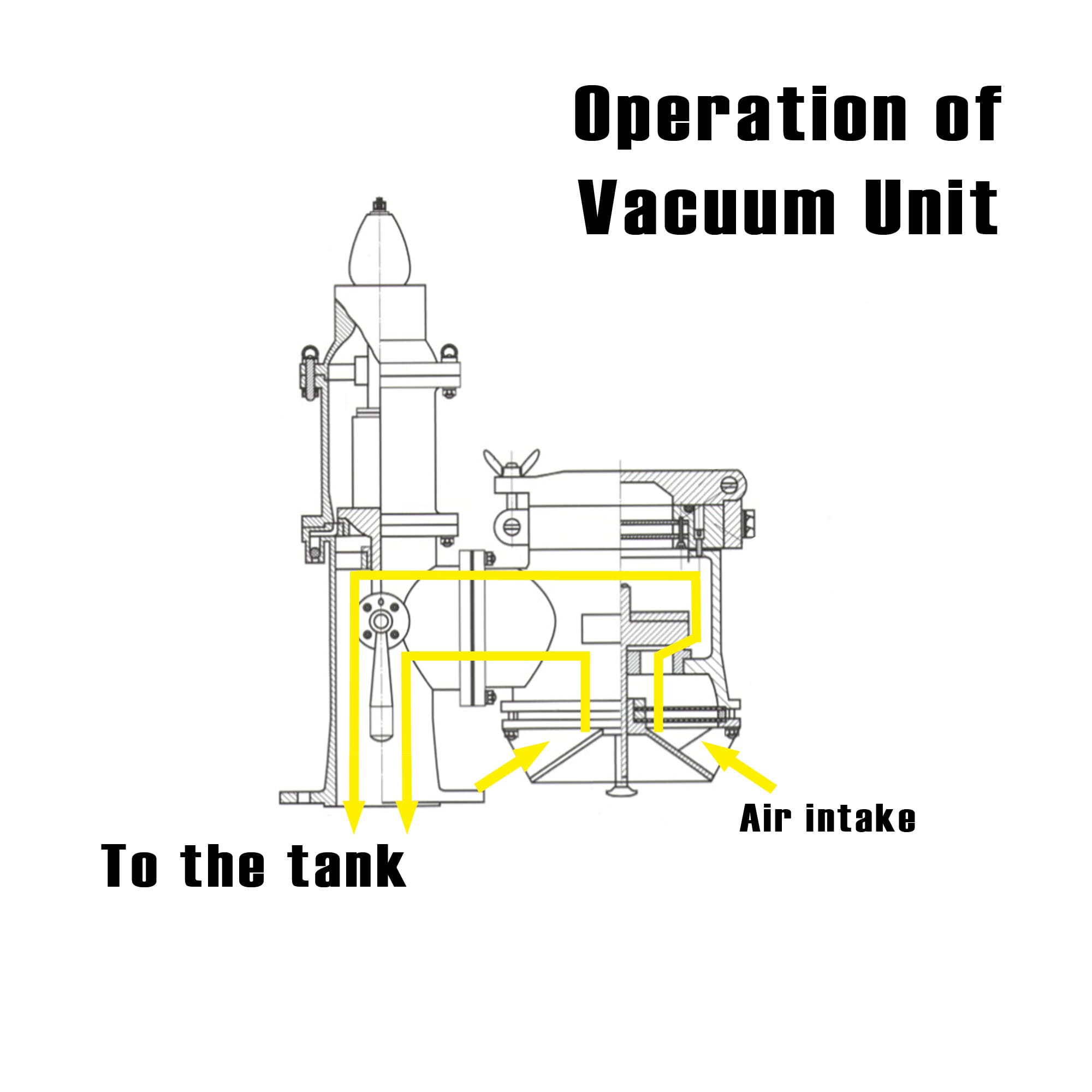
The vacuum unit opens when internal tank pressure drops below a preset limit.
This prevents implosion by allowing atmospheric air or preferably inert gas to enter the tank.
📌 Important: During discharge of flammable cargo, atmospheric air must not be drawn into the tank. Instead, the vacuum must be balanced using inert gas to avoid oxygen entry.
📏 Vacuum Settings:
| Type | Value (mmWG) | Value (bar) |
|---|---|---|
| Valve Activation Point | -250 to -350 mmWG | -0.0245 to -0.0343 bar |
| Tank Design Vacuum Limit | -700 mmWG | -0.0686 bar |
❓ Why Not Use a Single Valve for Both Pressure and Vacuum?
Though both units operate through the same valve body, they are mechanically separated for safety.
Here’s why:
- The pressure unit releases gas at ~30 m/s. If ignited, the flame can not travel back into the tank.
- The velocity of flame propagation in air is only ~10 m/s.
This means the expelled gas moves faster than fire can travel, preventing backflow ignition into the tank.
Additionally:
- The vacuum unit draws air inward. A flame screen at the intake prevents ignition from reaching inside the tank.
🔒 This dual-chamber design ensures flame arresting, controlled venting, and compliance with IGC and SOLAS standards.
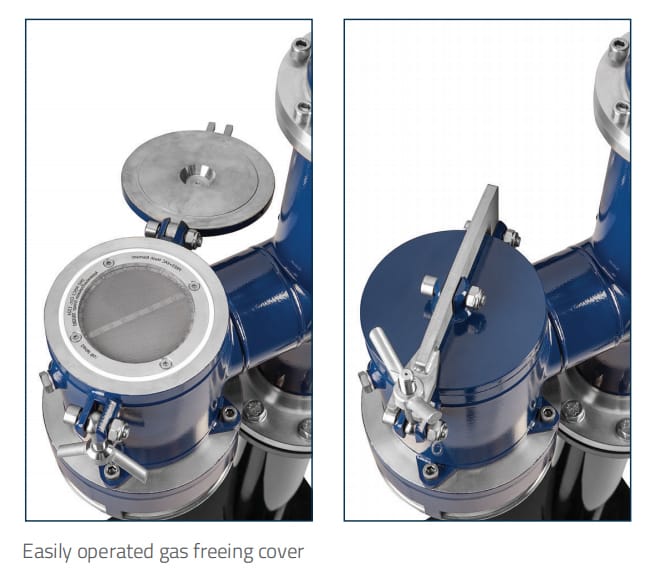
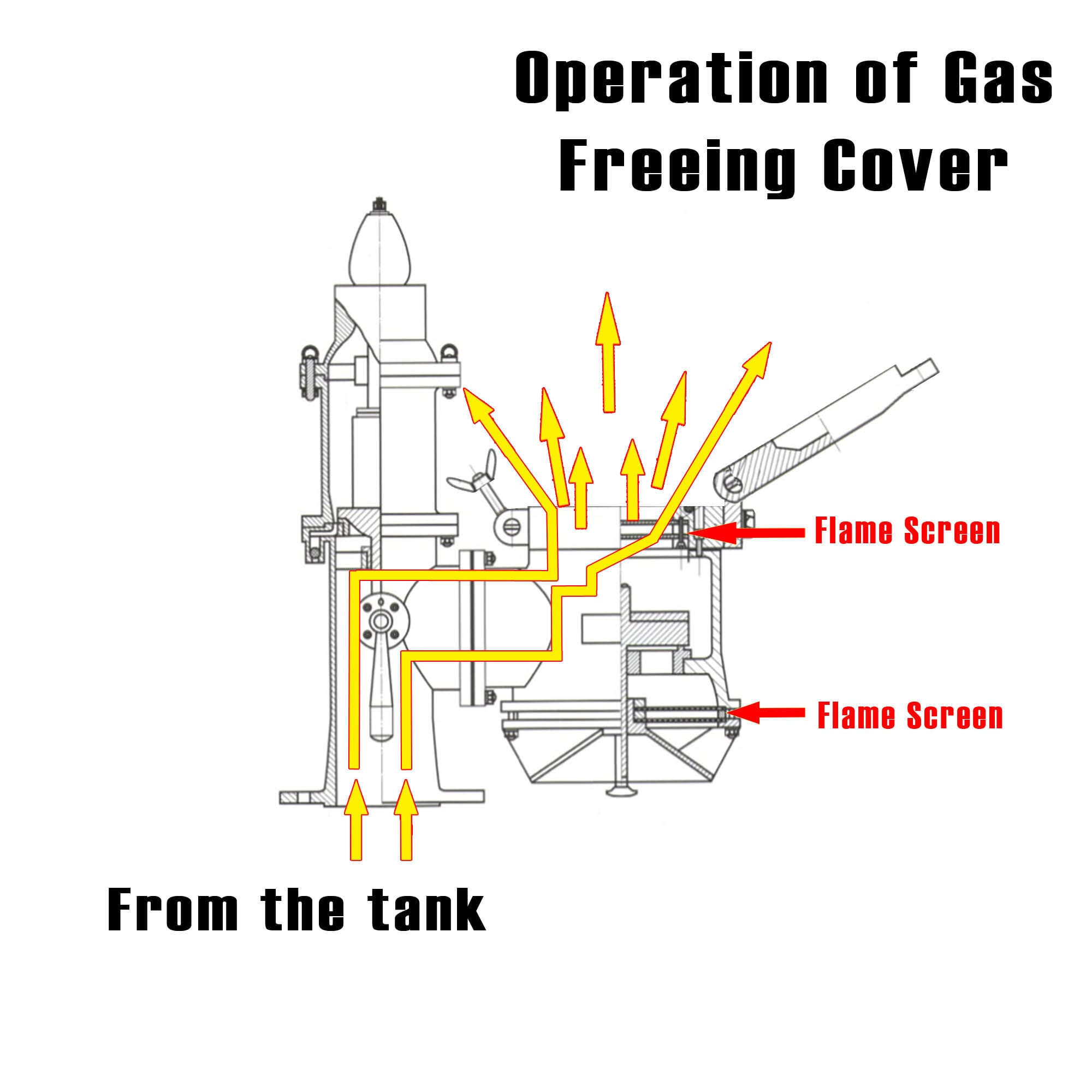
🌬️ Gas Freeing Covers: Direct Venting with Safety
Many P/V valves include a gas freeing cover– a manual venting device used during:
- Tank purging
- Inerting
- Gas freeing operations
📌 Location: Fitted above the vacuum unit.
📌 Design: Opens upward for better dispersion and is equipped with a flame screen to prevent flashback.
🛑 Warning: Never tie open the pressure unit with a rope or use vapor locks as a substitute. These are unsafe practices that bypass flame protection mechanisms.
⚠️ Real-World Mistakes to Avoid
Here are unsafe practices observed on some vessels:
- Tying the pressure unit open for extended purging.
- Using vapor locks instead of flame-screened gas-freeing covers.
- Misplacing P/V valves too close to deck equipment, violating SOLAS minimum clearances.
Each of these practices increases fire and explosion risk, compromises compliance, and could void insurance coverage.
✅ Summary: P/V Valves Keep Tankers Safe and Compliant
Pressure/vacuum valves are more than just passive equipment, they are first-line safety devices that protect cargo tanks from catastrophic failure.
✅ Key Takeaways:
- P/V valves work automatically without power sources.
- They manage tank pressure during loading, discharging, and transit.
- Pressure and vacuum units are separated for safety and flame protection.
- Gas freeing covers are the safe and compliant method for direct tank venting.
- Follow all IMO, SOLAS, and Class Society standards for installation and use.
❓ FAQs About P/V Valves on Tanker Ships
1. What does a P/V valve do on a tanker ship?
It prevents overpressure and vacuum inside cargo tanks by releasing or admitting gases automatically.
2. When do P/V valves open?
They activate during cargo loading, heavy rolling at sea, and significant temperature changes.
3. Why are pressure and vacuum units separated?
To prevent flame flashback during venting and ensure safer operation under IMO regulations.
4. What is the typical setting for P/V valves?
Pressure: ~1,400 mmWG; Vacuum: ~-250 to -350 mmWG.
5. Is it safe to tie open the P/V valve for purging?
No. Always use the gas-freeing cover with flame screen for manual venting operations.
📣 Final Thought
Whether you’re a deck officer, cadet, or aspiring master, understanding how P/V valves work- and how to use them properly, is essential to safe cargo operations on tankers.
Don’t underestimate these “silent protectors” on deck.
May the winds be in your favor.
Leave a Reply