



Steering a ship isn’t just about turning the wheel.
It’s about precision, timing, and awareness of forces acting on the vessel- elements every helmsman must master.
From deck cadets to ordinary seamen preparing for their first bridge watch, this guide delivers the real-world insights you need to sharpen your skills and boost your confidence on the helm.
⚓ What Makes Steering a Ship So Different?
Unlike driving a car where the road is fixed and response is immediate, steering a vessel involves unique challenges:
- Different rudder types used.
- Delayed rudder response due to vessel inertia.
- Environmental forces like wind, swell, and currents.
- Draft and loading conditions that affect maneuverability.
- No fixed lanes – you’re navigating a dynamic ocean.
A skilled helmsman must account for all these variables while listening carefully to helm orders and monitoring navigation instruments.
1️⃣ Practice in All Conditions
“Practice doesn’t make perfect – perfect practice does.”
Ship steering is a skill built through hands-on experience, not just theory.
As a beginner, you’ll usually start under supervision, steering in open waters with light traffic and favorable weather.
But to truly grow, you must:
- Steer in bad weather, poor visibility, and rough seas.
- Handle different ship types– from ballast to fully loaded.
- Practice during day and night watches.
- Experience varied speeds (e.g., 6 knots vs. 12 knots).
Each of these helps you understand how rudder response, wind drift, and ship behavior change under different conditions- key knowledge for any future bridge officer.
🧠 Pro tip: Use every opportunity on the helm as a training moment, even if it seems routine. Every turn builds your skill.

2️⃣ Stay Focused at the Helm
Focus is your greatest tool while steering a ship.
You must remain alert to:
- Helm orders from the Pilot or Officer of the Watch (OOW).
- Bridge instruments like:
- Rudder angle indicator
- Rate of turn indicator (ROTI)
- Speed log
- Under-keel clearance monitor
Understanding these instruments helps you visualize the ship’s behavior and react accordingly.
You also need to stay ahead mentally:
- Anticipate rudder adjustments based on current, draft, or speed.
- Listen closely for upcoming course changes.
- Stay calm during tight maneuvers, especially in port or congested waters.
👁️ Observation = Anticipation. The more you watch how the vessel reacts to helm input, the faster you’ll learn to steer proactively, not reactively.
3️⃣ Learn From Experienced Helmsmen
One of the smartest ways to improve is to observe and learn from senior helmsmen.
When I was a young OS, I’d go to the bridge early just to watch the Able Seaman at the wheel.
I’d pay attention to:
- How they adjusted the rudder in ballast vs. loaded conditions
- When they used large rudder angles and why
- Their coordination with the Pilot and bridge team
On one occasion, I watched a helmsman confidently apply a large rudder angle to stop a vessel’s swing during port approach.
The result? A smooth correction and a nod of approval from the Pilot.
🧭 Tip: Ask questions after the maneuver. Most senior helmsmen are happy to share their tips and you might avoid mistakes by learning from theirs.

4️⃣ Visualize Scenarios in Your Mind (Mental Rehearsals)
Great helmsmen don’t just practice on the bridge, they rehearse in their minds.
Like “shadow boxing” in martial arts, try “shadow steering” when off-duty:
- Picture yourself on the wheel.
- Imagine receiving helm orders in rapid sequence.
- Mentally adjust rudder angles and visualize the ship’s response.
- Think through “what-if” situations like sudden wind gusts or steering failure.
This mental training sharpens your reaction time and builds muscle memory, even without touching the wheel.
💡 Mental drills boost real-world performance especially under pressure during pilotage, docking, or narrow channel navigation.
5️⃣ Review and Refine Your Steering Techniques
Even experienced helmsmen make mistakes. What separates the best is their ability to reflect and improve.
After your steering watch:
- Recall moments when the ship’s swing was delayed or overcorrected.
- Review what you did right and what you could’ve done better.
- Ask the OOW or senior helmsman for feedback.
Keep a logbook or journal of your bridge experience. Revisiting it helps you:
- Identify patterns in ship behavior.
- Understand how different forces affect steering.
- Adjust your techniques over time.
📝 Tip: Reviewing your steering sessions- even mentally, will reveal small errors you can fine-tune next time.
6️⃣ Memorize Standard Helm Orders From the SMCP Manual
If you want to steer like a pro, you must speak the language of the sea.
Standard Marine Communication Phrases (SMCP) include internationally recognized helm orders used between the OOW, Pilot, and helmsman.
These phrases eliminate confusion during critical maneuvers especially in multinational bridge teams.
📌 Why memorize standard helm orders?
- ✅ Universal understanding – Used by ships worldwide regardless of nationality.
- ✅ Reduces miscommunication – Clear, concise, and repeatable commands.
- ✅ Enhances bridge discipline – Reinforces a structured chain of communication.
- ✅ Increases situational awareness – Helps you anticipate what’s coming next.
- ✅ Required under STCW – Part of your training as a certified watchkeeper.
📖 Examples of standard helm orders:
- “Port 10”
- “Starboard 15”
- “Midships”
- “Steady as she goes”
- “Nothing to port”
- “Ease to 5”
- “Hard to starboard”
- “Meet her”
🧠 Tip: During your off-watch time, review helm commands in the SMCP manual. Pair them with hand movements or visuals to build memory. Practice giving and repeating orders with fellow cadets or mentors.
🗣️ Always repeat the order aloud, then confirm once executed- e.g.,
“Port 10.” → “Port 10, Sir.” → “Port 10 now, Sir.”
7️⃣ Share What You Learn With Others
One of the best ways to solidify your understanding is by teaching it.
When you guide cadets or junior ratings:
- You reinforce what you’ve learned.
- You gain new perspectives from their questions.
- You contribute to a safer and more competent bridge team.
Sometimes, their “out-of-the-box” queries even make you rethink your own techniques which leads to better awareness and adaptability.
🗣️ A smart helmsman mentors others because knowledge shared is safety multiplied.
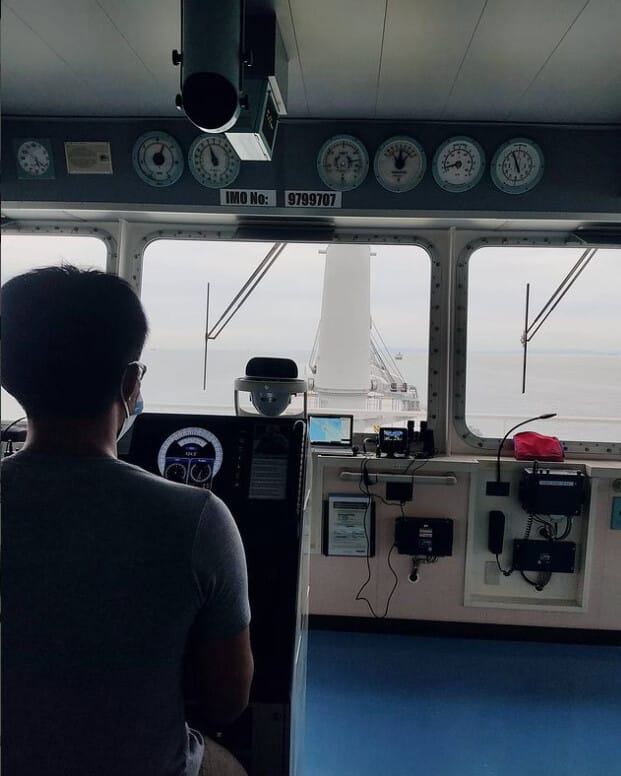
8️⃣ Repeat, Refine, and Revisit
Mastery comes from consistent repetition.
Just like steering drills during training, repeat these habits:
- Focus every time you’re on the helm.
- Practice in different ship and sea conditions.
- Reflect after each watch.
- Teach others when you can.
Over time, these steps become second nature.
You’ll build not only skill, but confidence, precision, and situational awareness– the hallmarks of a dependable helmsman.
🚢 Conclusion: Steer With Skill and Confidence
Steering a ship is more than just holding the wheel, it’s about reading the sea, understanding your vessel, and applying steady control even in high-pressure situations.
By practicing these 7 tips consistently, you’ll become a reliable, confident, and safety-focused helmsman and a valued member of any bridge team.
❓ Frequently Asked Questions
✅ What are the duties of a helmsman on a ship?
A helmsman’s primary duty is to steer the vessel according to helm orders from the Officer of the Watch or Pilot, maintain course, and ensure safety during maneuvering or watchkeeping.
✅ How do I improve my ship steering skills?
You can improve by practicing regularly, staying focused, learning from experienced helmsmen, reviewing your performance, and mentally rehearsing real-world scenarios.
✅ What instruments help a helmsman steer better?
Essential bridge instruments include the rudder angle indicator, rate of turn (ROT) indicator, speed log, and compass.
Familiarity with these tools enhances precision.
✅ Why is ship steering delayed compared to land vehicles?
Ships have massive inertia and are affected by external forces like wind, current, and draft.
This causes delayed response after applying rudder, unlike instant steering in cars.
📣 Call to Action
If you found this guide helpful, share it with your fellow deck cadets or ratings preparing for bridge duty.
For more expert tips on seafaring life, helm duties, and bridge watchkeeping, follow Captain’s Mode– your trusted maritime resource 🌍⚓.
May the winds be in your favor.
Leave a Reply