



Starting your first contract as an Ordinary Seaman (OS) can feel overwhelming.
You might wonder what your duties are, how to fit in, or if you’ll measure up to the expectations of seasoned crew members.
Don’t worry. everyone starts somewhere!
This guide will help you understand your job, what senior crew expect from you, and how to gain respect and confidence during your first weeks on board.
🔧 Key Duties of an Ordinary Seaman (OS)
Before you even think about impressing anyone, you need to know what your actual job is.
If you’ve already reviewed your duties in the muster list, that’s a good start.
Now let’s break down your day-to-day responsibilities as an OS:
🧹 1. Keep the Ship Clean and Safe
- Maintain the general cleanliness and hygiene of the ship’s decks and accommodations.
- Clean and organize working areas, including the deck store, paint locker, and passageways.
⚓ 2. Assist with Mooring and Unmooring
- Participate in mooring and unmooring operations.
- Handle mooring ropes and wires under the direction of the Bosun during arrival and departure.
- Keep a close watch on line tension while the vessel is alongside.
🎨 3. Perform Routine Maintenance
- Maintain paintwork, remove rust, and clean steel surfaces especially on open decks, masts, and equipment.
- Look after rigging, lifeboats, cranes, and cargo gear when instructed.
⏱️ 4. Stand Watch Duties
- Assist with lookout and gangway watches at sea and in port as directed by the duty officer.
- Remain alert and responsive, especially during night watches or rough weather.
🛢️ 5. Support Cargo and Bunker Operations
- Help in loading and discharging cargo, ballasting and deballasting, and tank cleaning (especially on tankers or bulk carriers).
- Participate in COW (Crude Oil Washing), inerting, and hose connection/disconnection if applicable.
- Assist in bunkering and follow Oil Transfer Procedures closely.
🚨 6. Join Drills and Safety Exercises
- Always wear required PPE during drills and real scenarios.
- Know your emergency duties by heart.
- Participate actively in abandon ship, fire, and oil spill drills.
🧠 What the Crew Really Thinks About You (and Why That’s Okay)
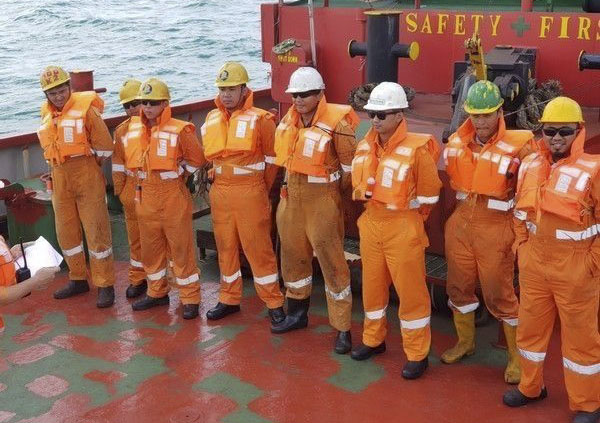
Here’s the truth: experienced seafarers don’t expect much from a first-time OS- but that’s actually good news.
You’re not supposed to be perfect. You’re expected to observe, learn, and improve.
1. They Think You’re Green (Because You Are)
You’re new, and that means limited ship experience. No one expects you to be an expert.
What they hope is that you’re teachable and willing to work.
2. They Hope You’re Not a Problem
Every crew dreads working with someone lazy, arrogant, or dishonest.
So when you join, they quietly hope you’re cooperative, respectful, and responsible.
3. They Expect You to Ask Questions and Learn
Your first few weeks are for learning the ropes- literally and figuratively. Don’t pretend to know things. Show eagerness to learn and improve daily.
✅ Pro tip: The faster you adapt, the more likely you’ll earn their respect and maybe even a promotion to AB later.
✅ How to Excel as a First-Time OS at Sea
Once you understand what’s expected of you, the next step is to prove you belong.
Here’s how to make a strong impression and earn trust during your first contract.
👷 1. Follow Orders and Stay Visible
Always be on time, follow instructions carefully, and never hide after finishing a task.
Finished early?
Report back to the Bosun or Chief Mate and ask what’s next.
💡 Staying visible shows initiative and builds your reputation as dependable crew.
📚 2. Show Eagerness to Learn
Ask questions.
Observe how Able Seamen (ABs) do their tasks. Learn from everyone around you especially the experienced hands.
Never be afraid to ask,
“Bosun, can you show me how to do this properly?”
🪢 3. Master Basic Knot Tying
Knot tying is a must-have skill on deck
Practice daily using a short rope during downtime or while on gangway watch.
Start with these basic knots:
- Clove Hitch
- Bowline
- Figure-of-Eight Knot
- Sheet Bend
- Timber Hitch
🧠 Bonus: Practice until you can tie them with your eyes closed.
🚨 4. Know Your Emergency Duties
Memorize your emergency station and role during abandon ship, fire, and oil spill drills.
Don’t wait to be told. Instead, ask about your emergency duties early. Show enthusiasm during drills.
🧵 5. Inspect Mooring Ropes
Learn to check line tension and look for signs of wear, damage, or poor stowage.
Start by observing ABs do it, then volunteer to inspect under supervision. Always report findings to the Cargo Control Room.
⚠️ 6. Report Near Misses and Hazards
If you see something unsafe, say something.
Examples:
- A loose drum rolling on deck
- Tools falling from above
- Slippery surfaces without warning signs
🚩 Reporting near misses shows safety awareness and professionalism.
🖊️ 7. Bring a Pen and Notebook
Write down new tasks, instructions, knot diagrams, or crew names. This shows initiative and it helps you learn faster.
❌ What NOT to Do as a First-Time OS
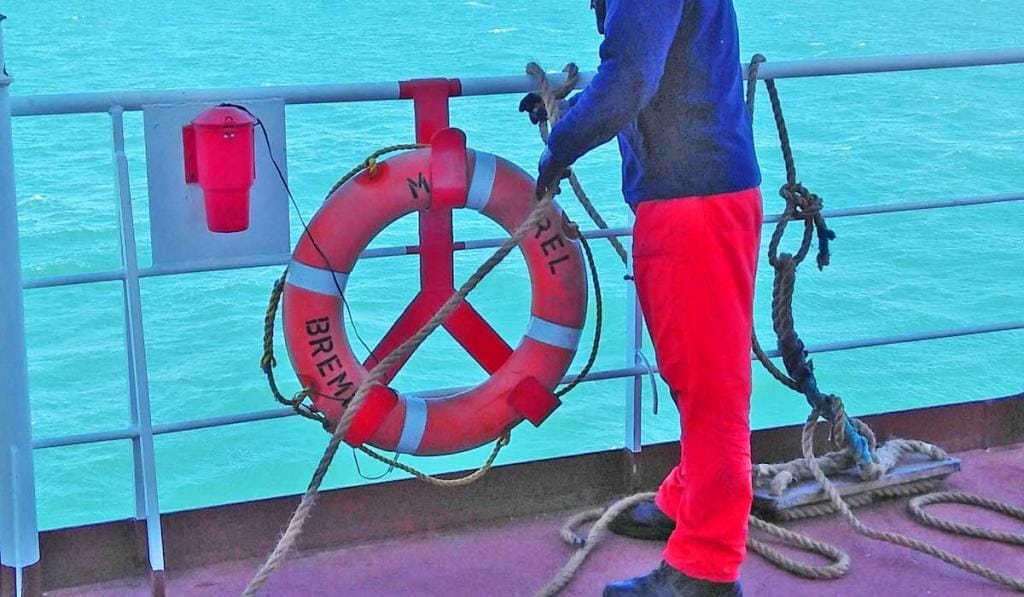
Even if you work hard, certain habits can ruin your reputation quickly.
Avoid these common mistakes:
😬 1. Don’t Say “I Know”
Never cut off a senior crew member by saying “Yes, I know!” when they’re explaining something.
Even if you do know, listen fully and respectfully.
Otherwise, they may give you the task without full instructions then blame you when it’s done wrong.
🕵️ 2. Don’t Hide After Finishing a Job
Some OS try to sneak away after completing a task. Bad move.
The crew will notice and label you lazy. Worse, it could affect your evaluation and chances for promotion.
🦸 3. Don’t Be a Hero
If experienced ABs or the Bosun refuse a job due to danger- don’t volunteer to do it.
Prioritize safety. You won’t get extra pay for taking unnecessary risks.

🧭 Conclusion: Build a Solid Foundation Early
Your first time on board as an Ordinary Seaman is about more than just learning ropes and cleaning decks.
It’s your chance to earn trust, prove your attitude, and set the tone for a successful maritime career.
Set a clear goal: by the end of your contract, you should be capable of handling most tasks assigned to an Able Seaman.
⚓ Keep learning. Stay humble. The sea respects those who respect the job. May the winds be in your favor.
May the winds be in your favor.


Leave a Reply