


Maritime navigation lights, shapes, and sound signals are essential tools for preventing collisions at sea, especially in conditions where visibility is limited or judgment must be made quickly.
While Electronic Chart Display and Information Systems (ECDIS), RADAR, and AIS offer real-time situational awareness, International Regulations for Preventing Collisions at Sea (COLREGS) remain the legal standard for navigation conduct.
This guide breaks down the visual and auditory signals by vessel type- so you can easily recognize, interpret, and apply the right signals as required by the COLREGS Part C (Lights and Shapes) and Part D (Sound and Light Signals).
⚓ Power-Driven Vessels Underway
COLREGS Rule 23
A power-driven vessel (PDV) is any ship propelled by machinery and not anchored, aground, or moored to a fixed structure.
This includes most merchant ships and tugs operating independently.
🔴 Navigation Lights (Nighttime)
At night, power-driven vessels display the following navigational lights:
- Masthead light(s) forward (white)
- Second masthead light aft and higher than the forward one (for vessels ≥50 meters)
- Sidelights (port: red, starboard: green)
- Sternlight (white)
⚠️ Vessels <50 meters may use one masthead light instead of two.

⚫ Day Shapes (Daytime)
No day shapes are required for PDVs underway.
Their silhouette, wake, and absence of sails or signals indicate their operational status.

🔊 Sound Signals (Restricted Visibility)
In fog or reduced visibility, a power-driven vessel shall sound:
🔉 One prolonged blast every 2 minutes
This is a key signal used during blind navigation and bridge watchkeeping.
⛵ Sailing Vessels Under Sail
COLREGS Rule 25
Sailing vessels are defined as ships propelled solely by wind, without engine assistance.
Since they have limited maneuverability, they are given special right-of-way considerations under the COLREGS.
🔴 Navigation Lights (Nighttime)
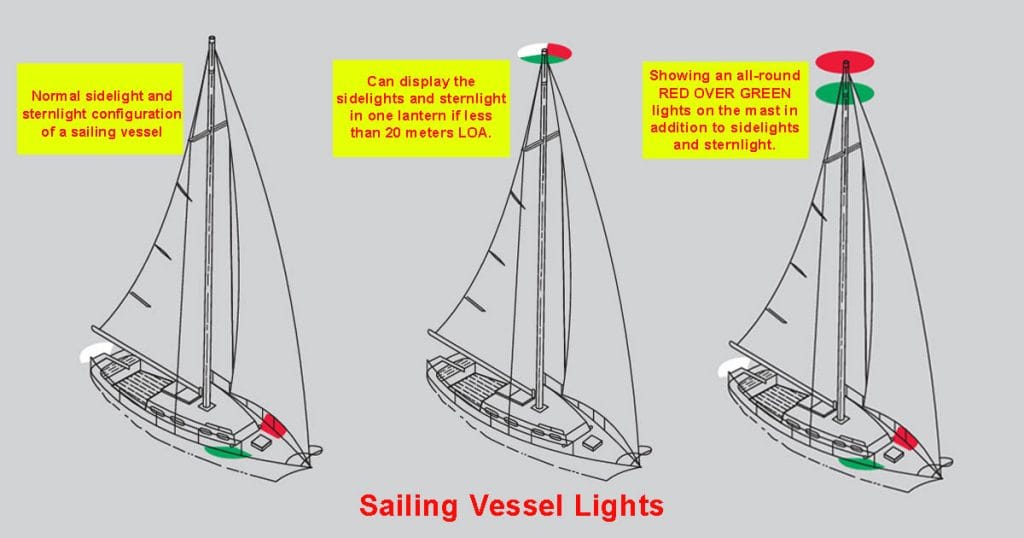
A sailing vessel under sail alone must exhibit:
- Sidelights (red and green)
- Sternlight (white)
Optional but commonly used:
- Red over green all-round lights at the top of the mast
- Mnemonic: “Red over green, sailing machine”
If under both sail and engine power, she must be considered a power-driven vessel and exhibit PDV lights instead.
⚫ Day Shapes (Daytime)
If the vessel is under sail only, no day shape is needed.
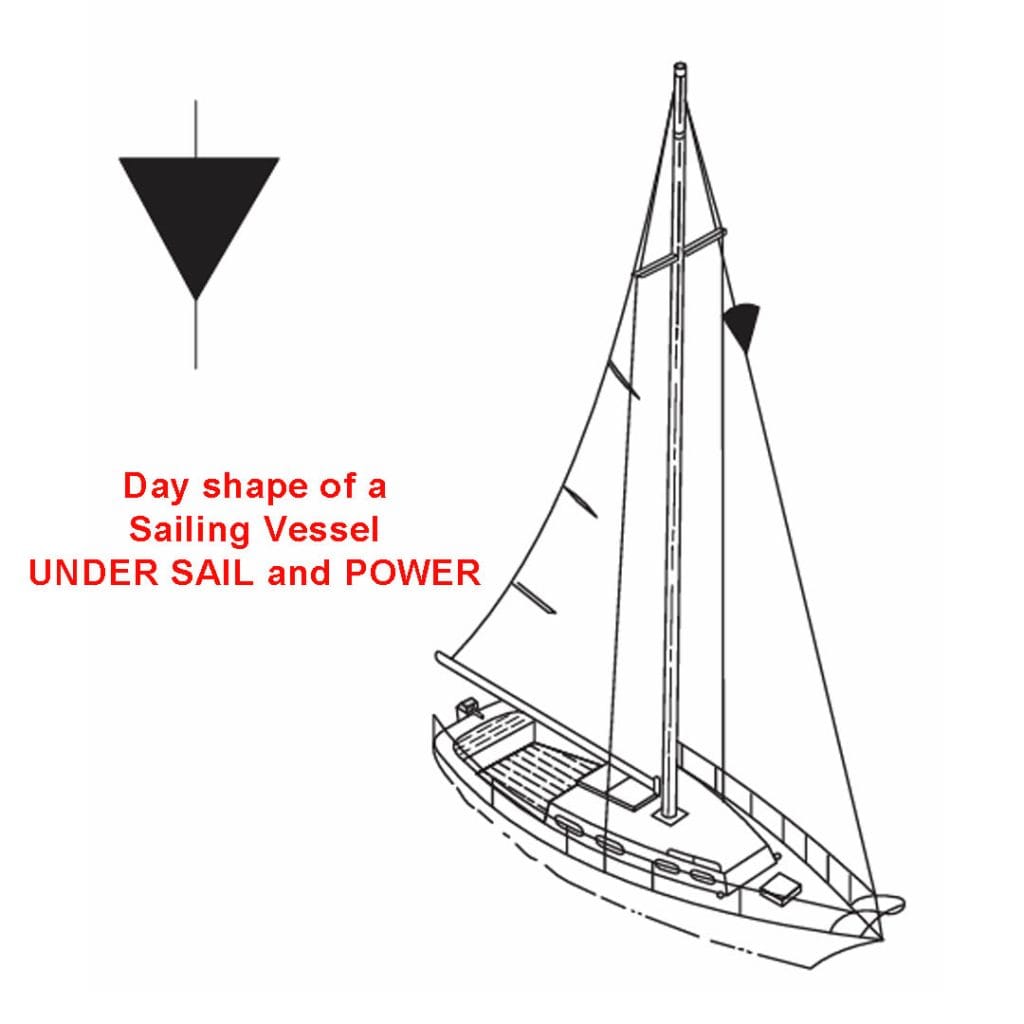
If the vessel is also using engine power, it must display:
🔻 One black cone, apex downward, where it can best be seen.
This warns others that the ship is no longer under sail alone and should be treated as a PDV.
🔊 Sound Signals (Restricted Visibility)
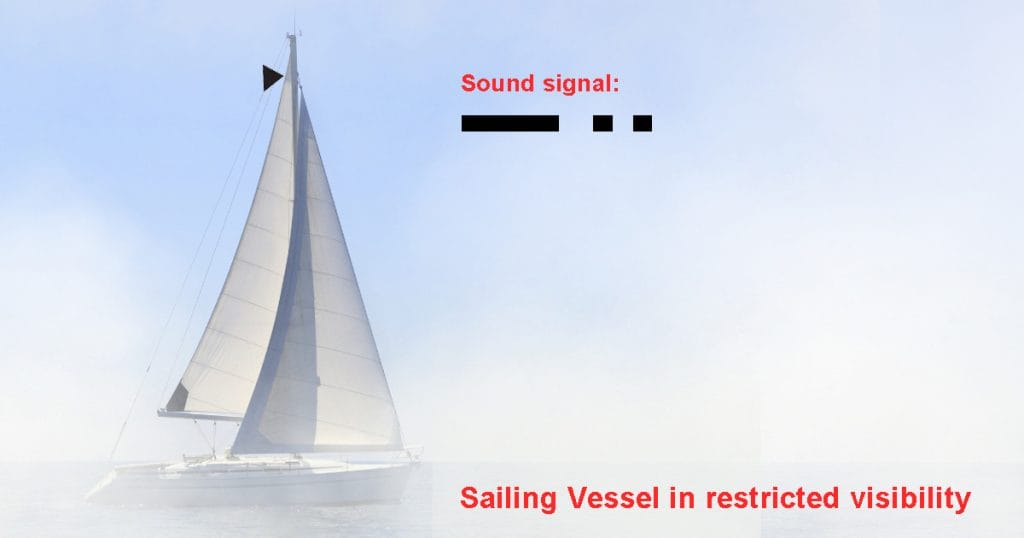
In fog or poor visibility, sailing vessels must sound:
🔉 One prolonged blast + two short blasts every 2 minutes
This pattern is also the Morse Code for ‘D’ (Delta) meaning:
“Keep clear of me; I am maneuvering with difficulty.”
🎣 Fishing Vessels (Trawling and Non-Trawling)
COLREGS Rule 26
Fishing vessels are divided into two main types under COLREGS:
- Engaged in trawling (using a trawl net)
- Engaged in other fishing methods (e.g., longlines, gillnets, jiggers)
Both types display unique light configurations and share the same day shapes and sound signals.
🐟 Fishing Vessels Engaged in Trawling
These vessels drag nets, dredges, or similar gear through the water.
🔴 Navigation Lights (Nighttime)
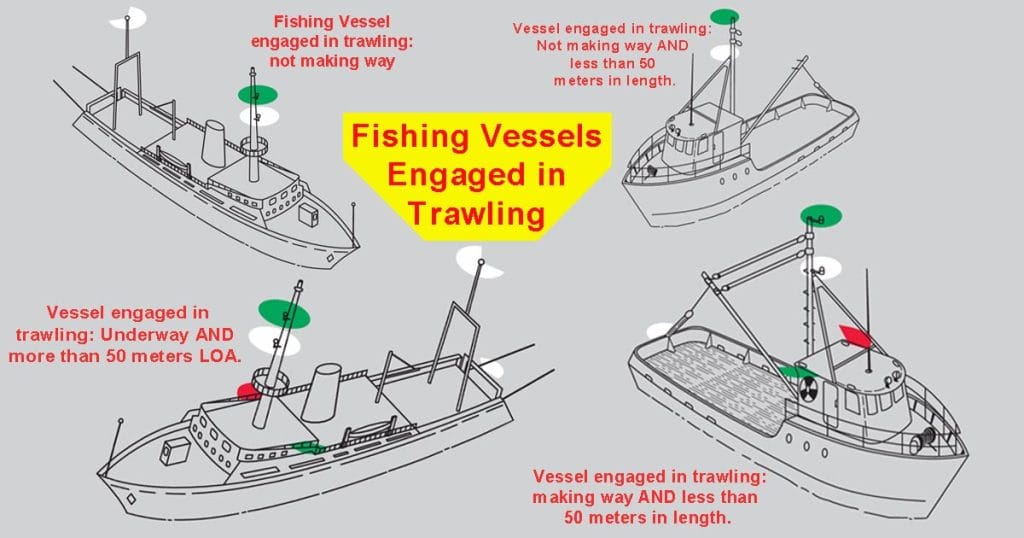
Trawlers must show:
- All-round green over white lights (vertical line)
- Mnemonic: “Green over white, trawling at night.”
- Sidelights and sternlight if underway
- Masthead light if making way
⚠️ Pair trawling or gear extending far may require additional lights or RAM signals.
⚫ Day Shapes (Daytime)
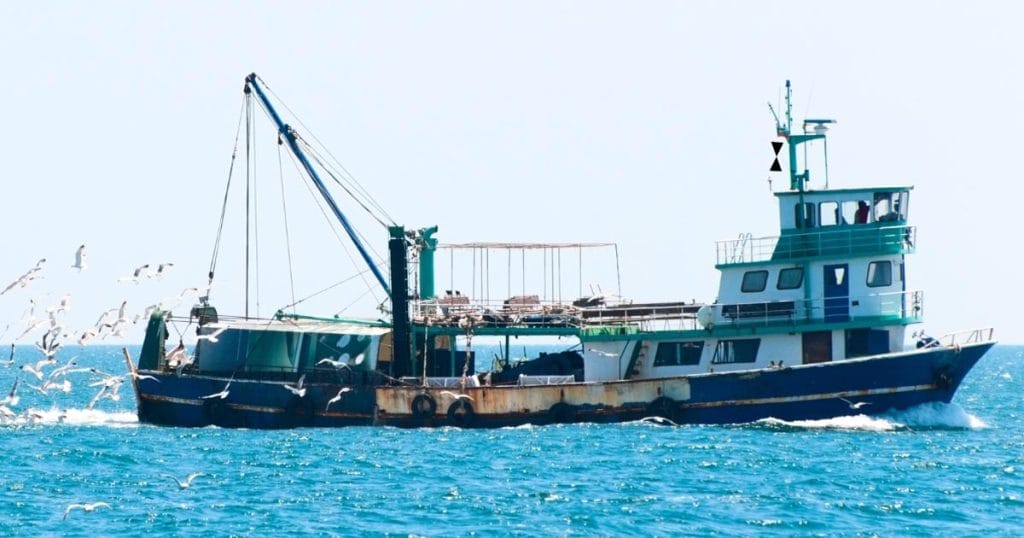
All fishing vessels must display:
⏳ Two black cones with apexes together, one above the other
This indicates fishing gear is deployed and maneuvering is restricted.
🔊 Sound Signals
Same as other restricted vessels:
🔉 One prolonged blast + two short blasts every 2 minutes
🎣 Fishing Vessels Other Than Trawling
These include vessels using purse seines, longlines, gillnets, jiggers, etc.
🔴 Navigation Lights (Nighttime)
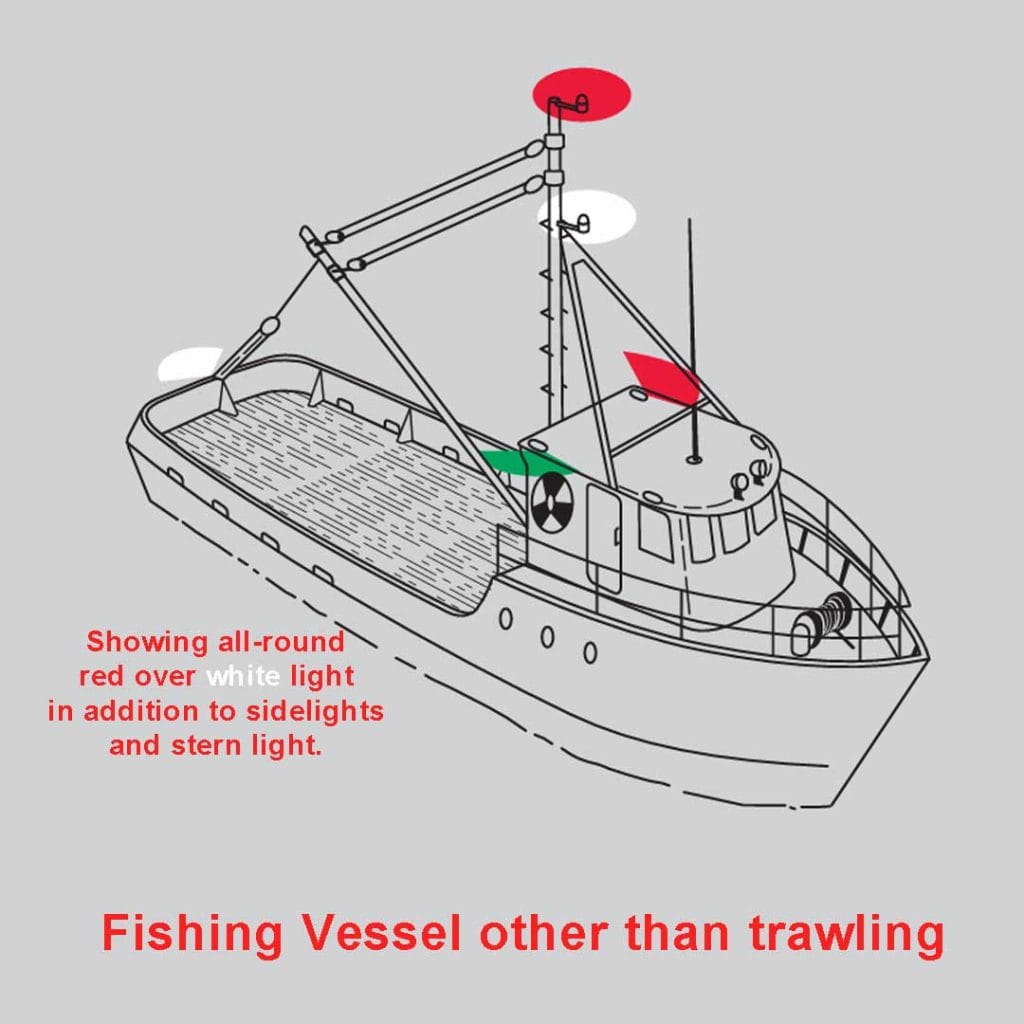
These vessels show:
- All-round red over white lights (vertical line)
- Mnemonic: “Red over white, fishing at night.”
- Plus: sidelights, sternlight, and applicable masthead lights
⚫ Day Shapes (Daytime)
Same as trawling vessels:
⏳ Two black cones, apexes together, in vertical line
🔊 Sound Signals
🔉 One prolonged + two short blasts every 2 minutes
Used in fog, heavy rain, or any condition with restricted visibility.
❌ Vessels Not Under Command (NUC)
COLREGS Rule 27
A vessel not under command (NUC) is unable to maneuver due to an exceptional circumstance- such as engine failure, rudder damage, blackout, or flooding, and cannot keep out of the way of other vessels.
🔴 Navigation Lights (Nighttime)
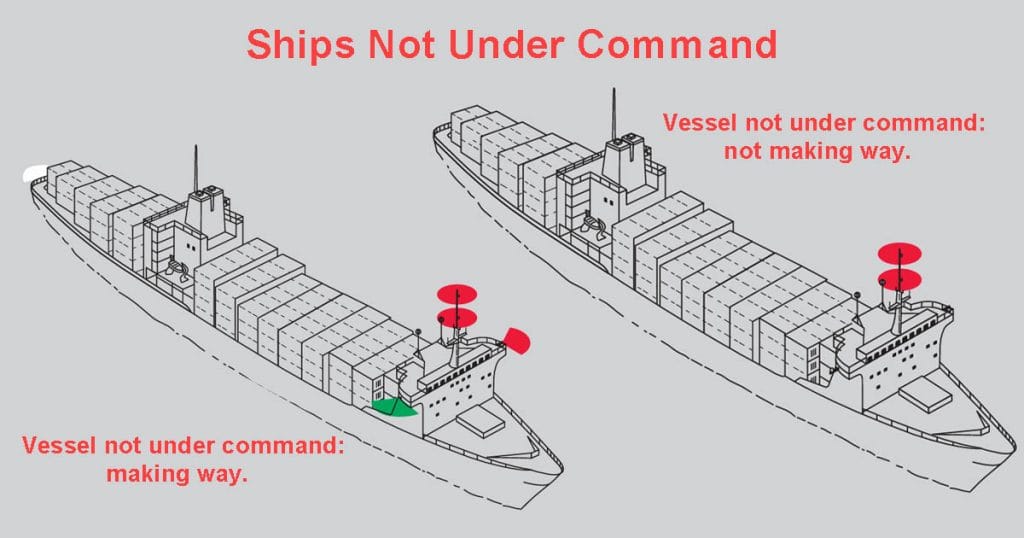
NUC vessels must exhibit:
- Two all-round red lights in vertical alignment
- Mnemonic: “Red over red, Captain’s dead.”
- Sidelights and sternlight if making way
⚫ Day Shapes (Daytime)
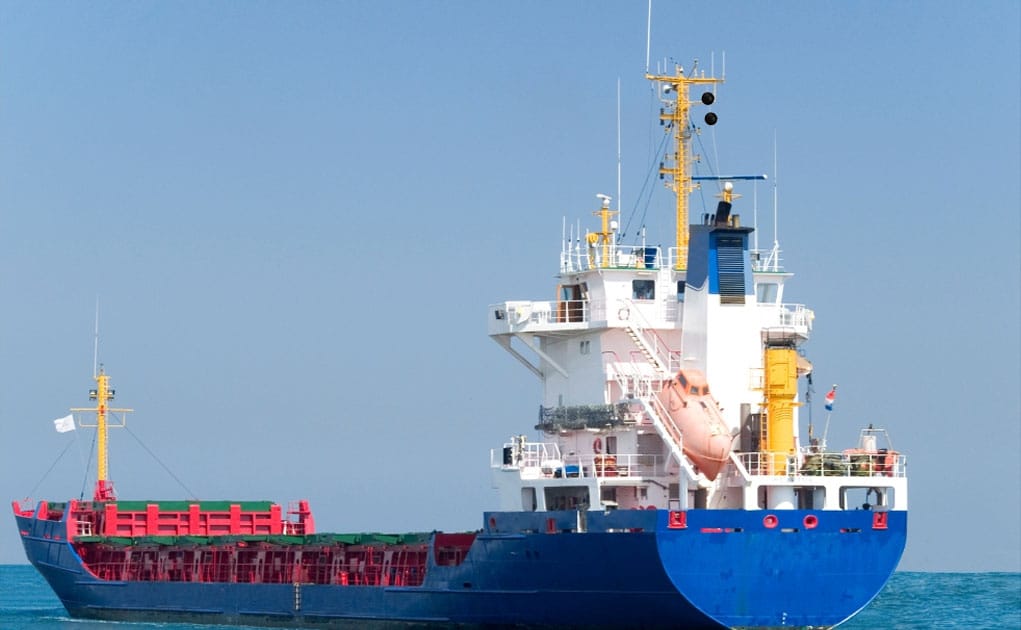
NUC ships must hoist:
⚫ Two black balls, one above the other, where most visible
🔊 Sound Signals
Same standard signal for maneuvering-restricted vessels:
🔉 One prolonged + two short blasts every 2 minutes
⚒️ Vessels Restricted in Their Ability to Maneuver (RAM)
COLREGS Rule 27(b)
A RAM vessel is restricted due to the nature of her work. Examples include:
- Dredgers
- Buoy tenders
- Tugs with tow not easily altered
- Vessels conducting underwater operations
- Ships transferring cargo/personnel at sea
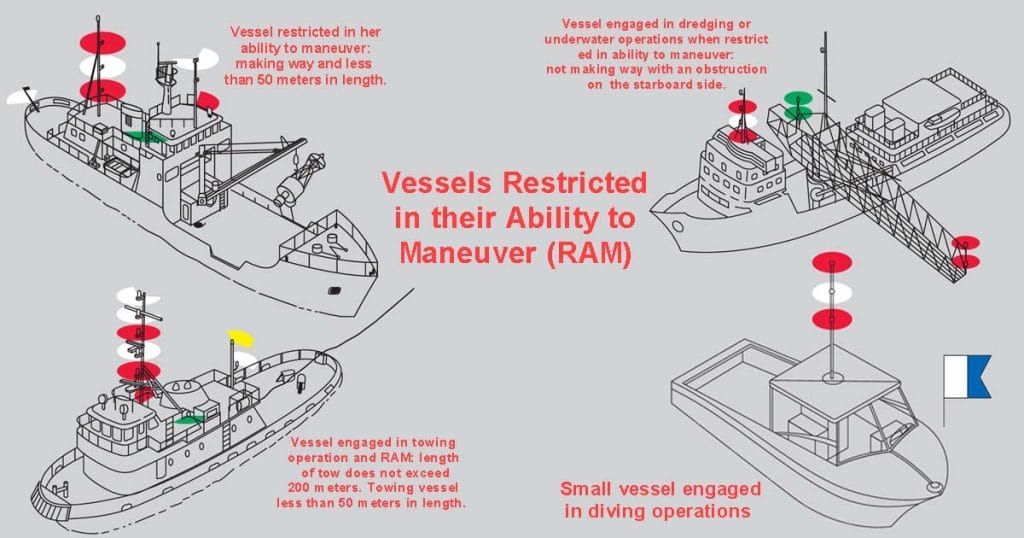
🔴 Navigation Lights (Nighttime)
Display three all-round lights in a vertical line:
- Red over white over red
- Mnemonic: “Red-white-red, can’t go ahead.”
Also display:
- Sidelights, sternlight
- Masthead lights if making way
⚫ Day Shapes (Daytime)
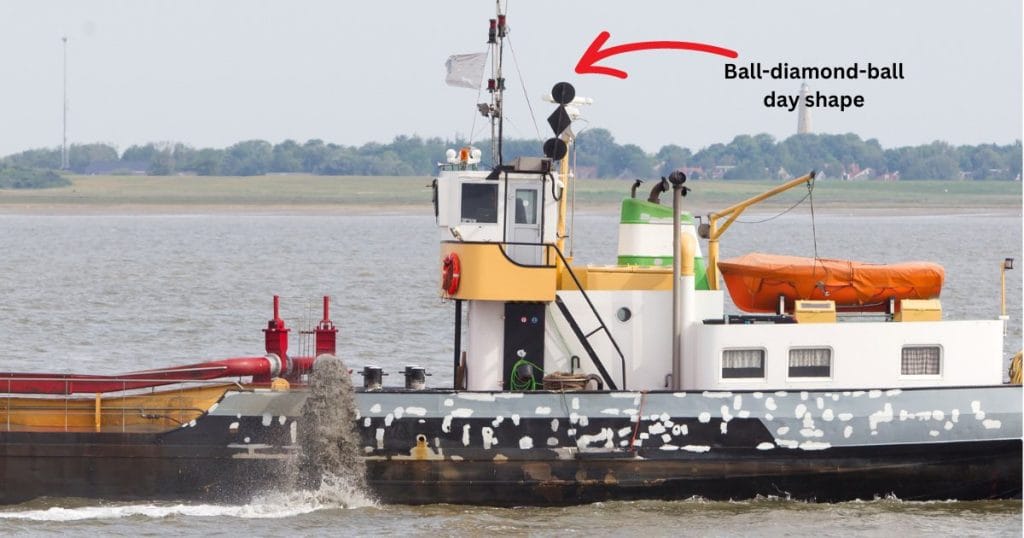
Hoist these three shapes vertically:
- ⚫ Ball (top)
- ◇ Diamond (middle)
- ⚫ Ball (bottom)
This ball-diamond-ball configuration is specific to RAM vessels.
🔊 Sound Signals
🔉 One prolonged + two short blasts every 2 minutes
Used across all types of restricted-movement vessels.
⚠️ Vessels Constrained by Their Draft
COLREGS Rule 28
A vessel constrained by her draft (CBD) has limited maneuverability due to her deep draft and restricted water depth.
This is common with large tankers and bulk carriers in shallow or narrow fairways.
🔴 Navigation Lights (Nighttime)
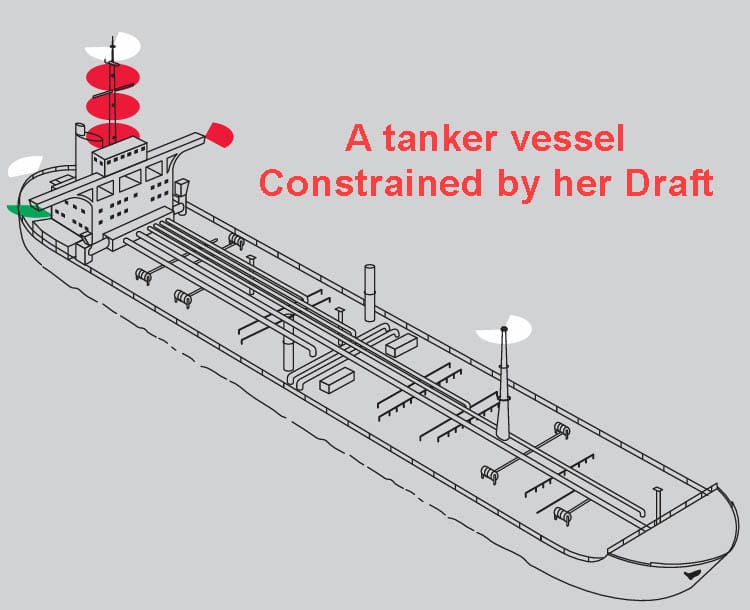
A CBD vessel displays:
- Three all-round red lights in a vertical line
- Mnemonic: “Three reds in a row, she can’t go.”
- PLUS all lights prescribed for a power-driven vessel (masthead lights, sidelights, sternlight)
⚫ Day Shapes (Daytime)
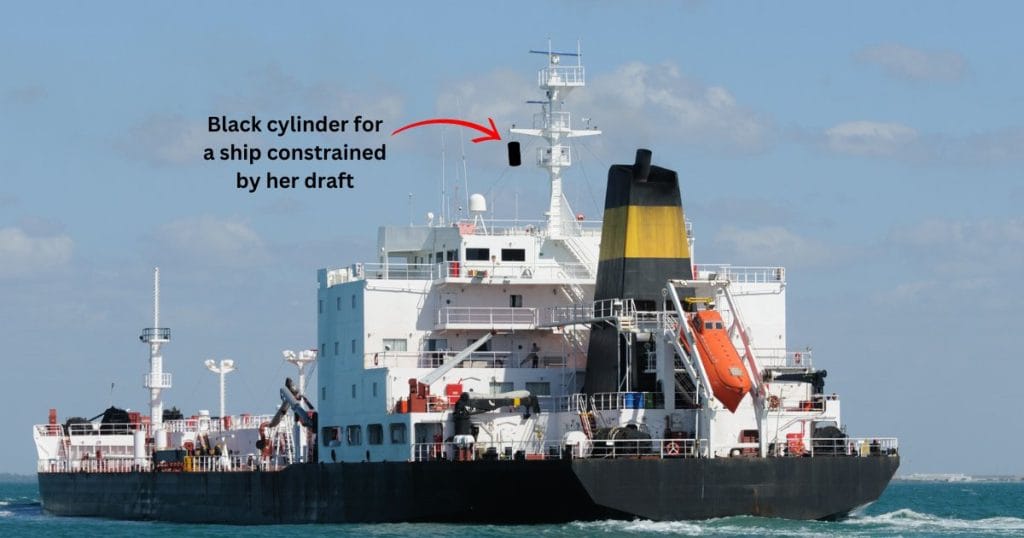
CBD vessels hoist:
⚫ One black cylinder, shown where it’s most visible
This is a unique shape for constrained-by-draft vessels.
🔊 Sound Signals
🔉 One prolonged blast + two short blasts every 2 minutes
🧭 Pilot Vessels on Duty
COLREGS Rule 29
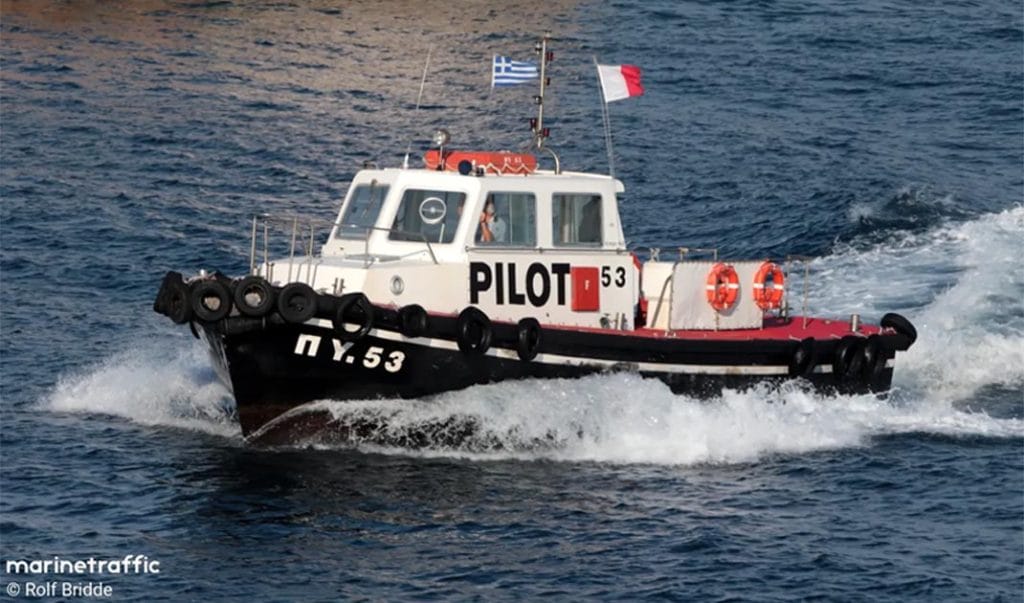
A pilot vessel (or pilot launch) transports marine pilots to/from ships during port entries, departures, or passage through pilotage waters.
🔴 Navigation Lights (Nighttime)
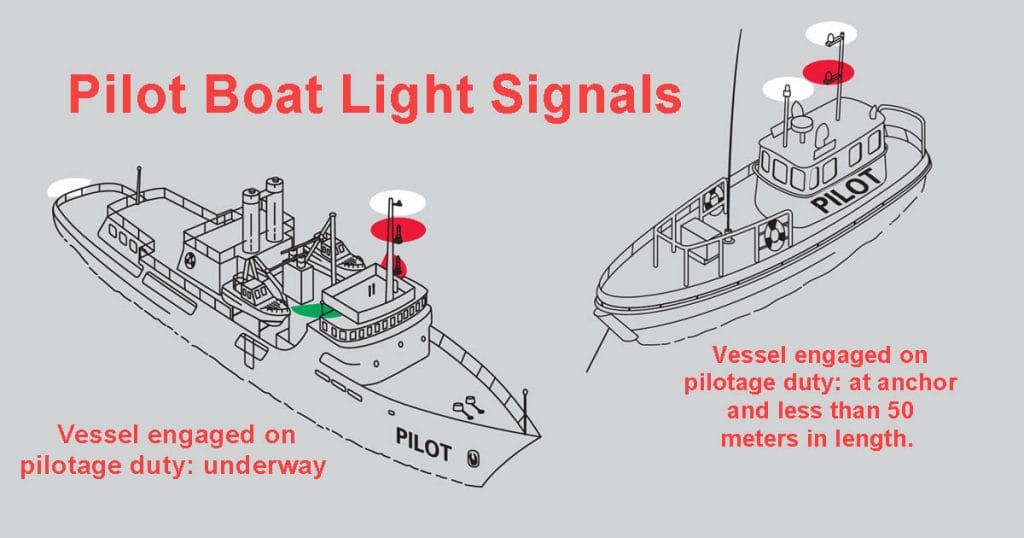
When engaged in pilotage duties, pilot vessels must show:
- White over red all-round lights (vertical)
- Mnemonic: “White over red, pilot ahead.”
- If underway: sidelights, sternlight, masthead light (as a PDV)
⚠️ Do not confuse this with the red-over-white light of fishing vessels not trawling.
⚫ Day Shapes (Daytime)
Pilot vessels hoist:
Nautical (ICS) flag ‘Hotel’ (H)
Meaning: “I have a pilot on board.”
Some vessels also fly national or company flags.
🔊 Sound Signals
🔉 Four short blasts every 2 minutes
This is the Morse signal for ‘H’ or “Hotel,” representing pilotage duties.
⚓ Vessels at Anchor
COLREGS Rule 30(a)
A vessel is at anchor when secured to the seabed by anchor and not making way.
Note: a vessel dragging anchor is considered underway.
🔴 Navigation Lights (Nighttime)
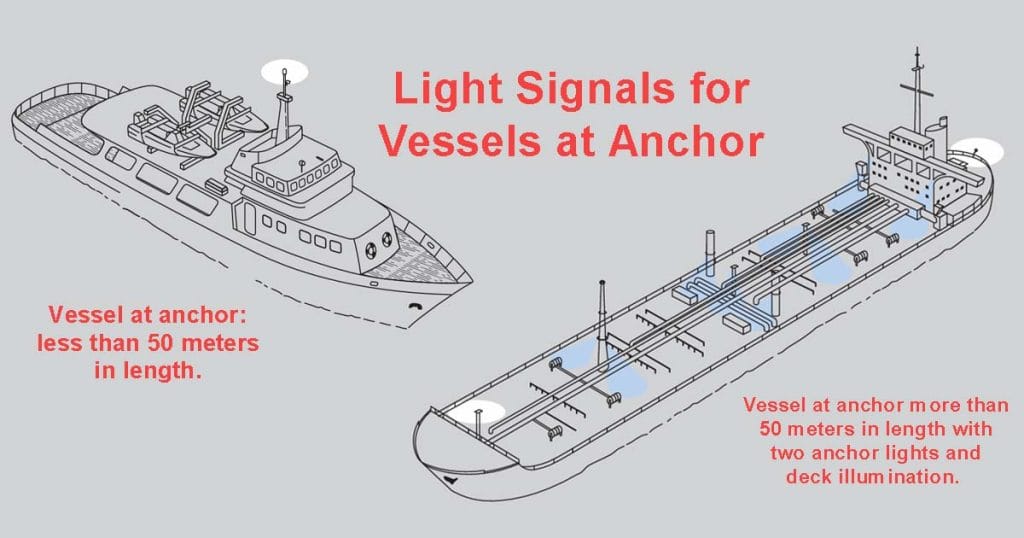
At anchor, a ship must exhibit:
- One all-round white light (for ships <50 meters)
- Two all-round white lights (for ships ≥50 meters):
- Fore part of the ship
- Aft, at a lower level
Large vessels may also illuminate the deck for visibility.
⚫ Day Shapes (Daytime)
All anchored vessels display:
⚫ One black ball, called the anchor ball, usually hoisted forward
🔊 Sound Signals (Restricted Visibility)
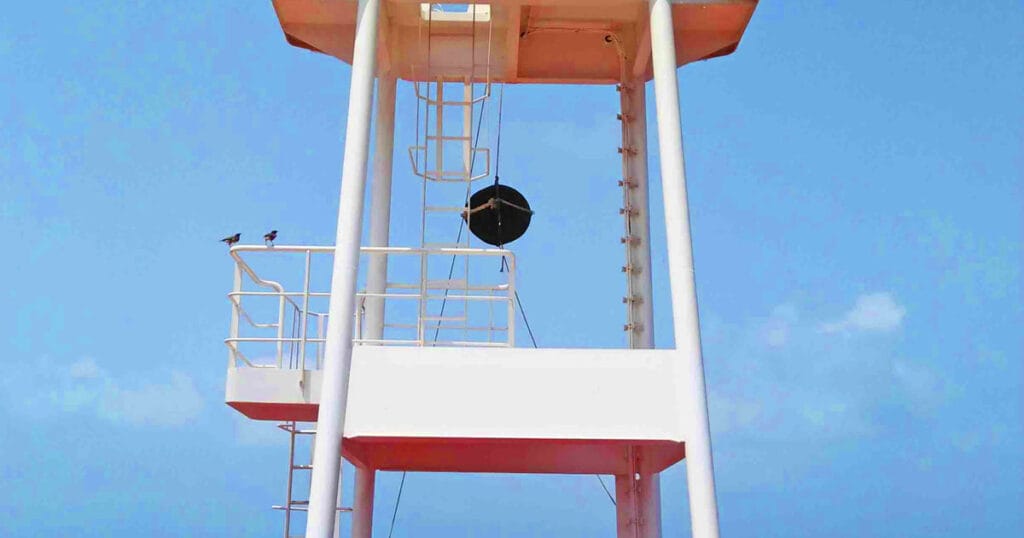
Anchored ships must:
- 🔔 Rapidly ring bell for 5 seconds every 1 minute
- For ships ≥100 meters, bell at bow + gong at stern
- Additionally:
🔉 One short, one prolonged, one short blast to indicate presence
⛔ Vessels Aground
COLREGS Rule 30(d)
A vessel aground is not considered anchored and is treated differently under the rules.
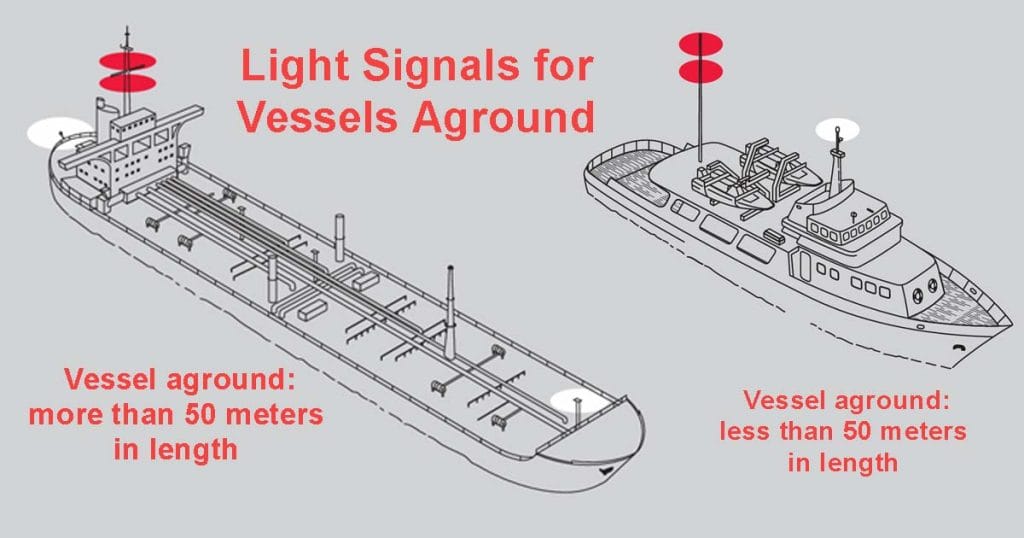
She must display lights and shapes to warn other vessels of her immobility and hazard potential.
🔴 Navigation Lights (Nighttime)
Display:
- Anchor lights appropriate to the vessel’s length
- PLUS: Two all-round red lights (vertical)
This differentiates from regular anchored vessels.
⚫ Day Shapes (Daytime)
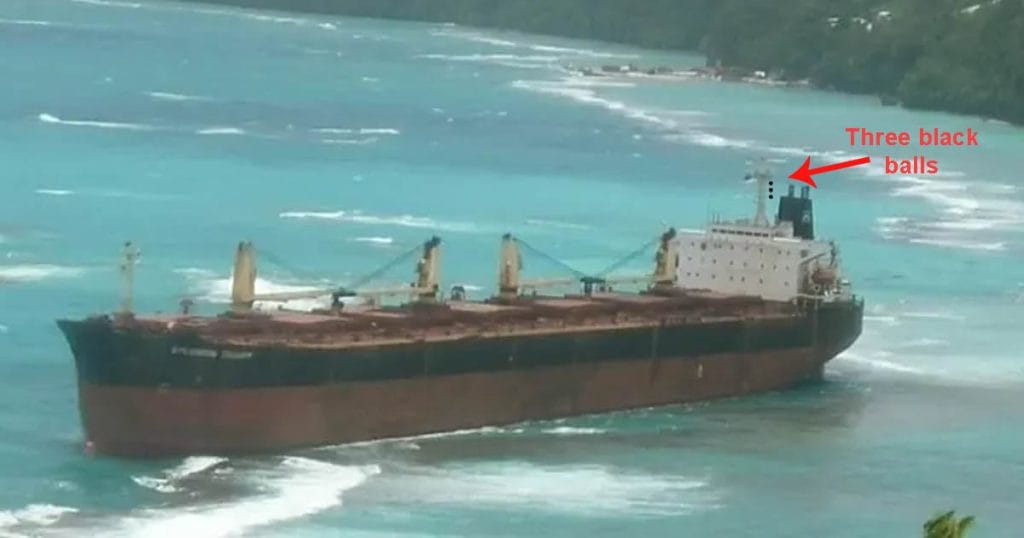
Display:
⚫⚫⚫ Three black balls in a vertical line, where they can best be seen
This is one of the few signals using three day shapes.
🔊 Sound Signals
In restricted visibility, aground vessels must:
- Optional: One short, one prolonged, one short blast
- Ring the bell (like an anchored ship)
- PLUS: Three distinct bell strokes
- Before and after the bell ringing
🚢 Towing and Pushing Vessels
COLREGS Rule 24
Tugs and pushers assist other vessels by towing astern, pushing ahead, or towing alongside.
They must display distinctive signals depending on the length of the tow and method of assistance.
🧯 Towing Vessels (Astern)
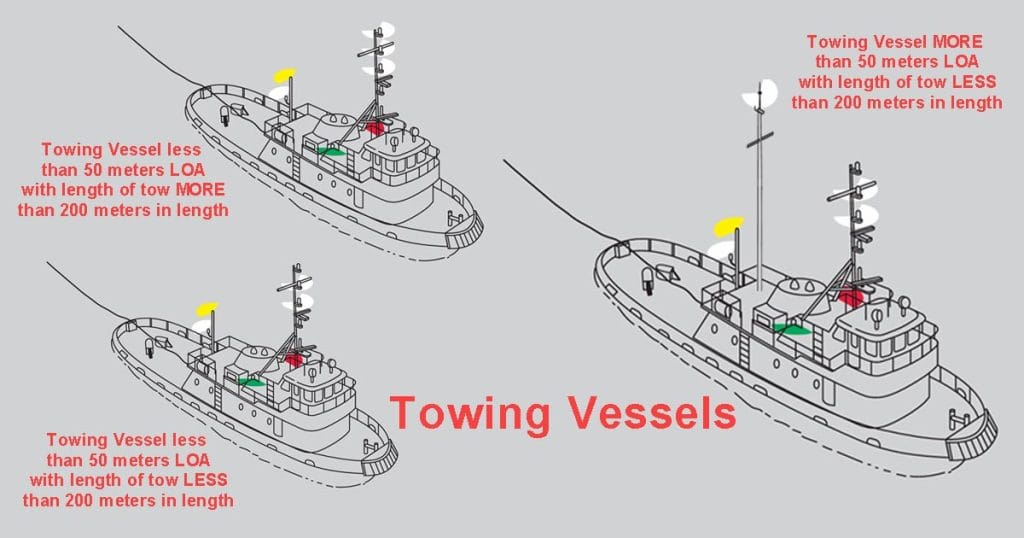
A towing vessel pulling another ship astern must show:
🔴 Navigation Lights (Nighttime)
- Two masthead lights in a vertical line (if tow < 200 meters)
- Three masthead lights (if tow ≥ 200 meters)
- Sidelights, sternlight
- Yellow towing light above sternlight
- Optional RAM lights if maneuverability is restricted
Mnemonic: “Two or three white lights- tow length determines height.”
⚫ Day Shapes (Daytime)
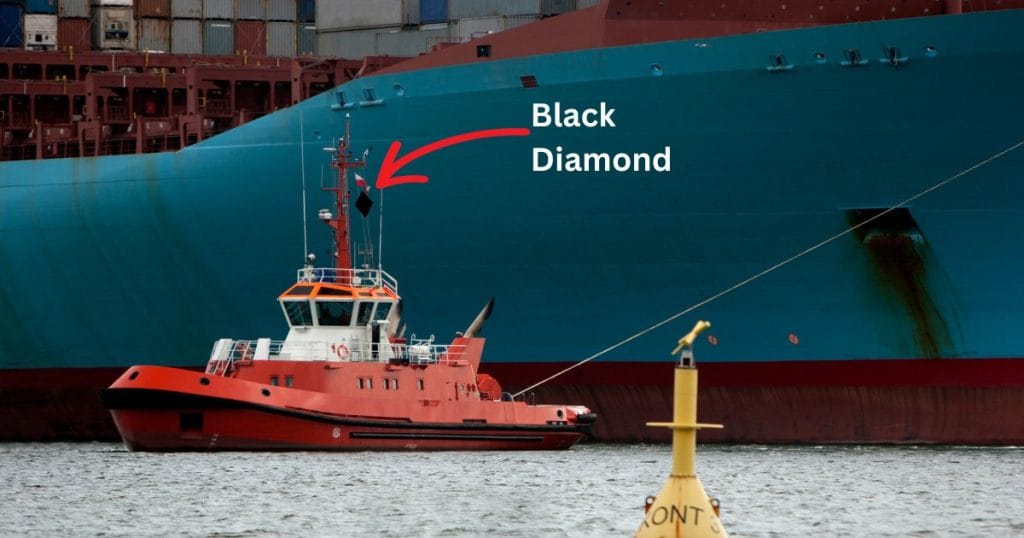
- If the tow exceeds 200 meters:
- ◆ One black diamond shape displayed where visible
- Can also exhibit RAM shapes (ball-diamond-ball) if applicable
🔊 Sound Signals
🔉 One prolonged + two short blasts every 2 minutes
Same signal as RAM or restricted vessels.
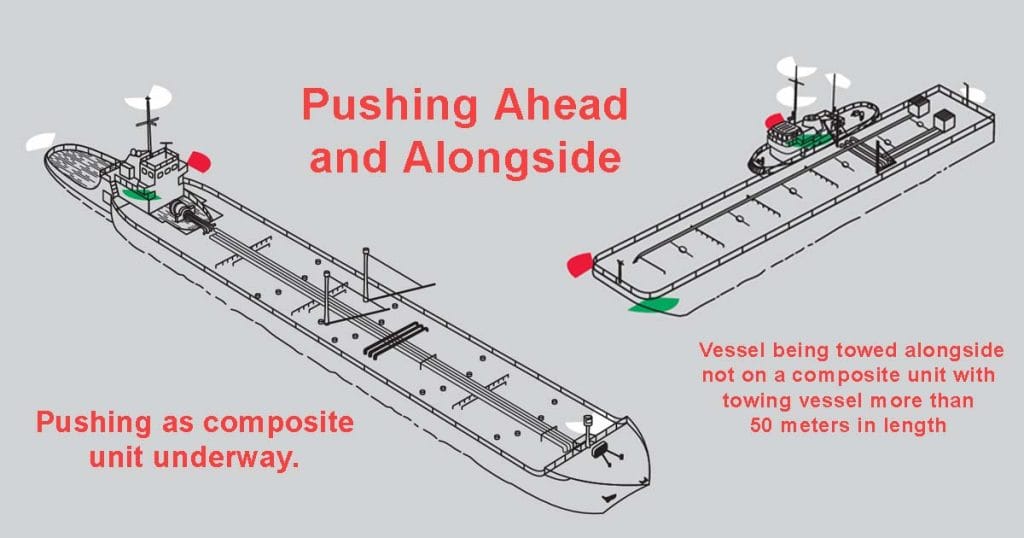
🚛 Pushing Vessels (Ahead or Alongside)
If acting as a composite unit, the vessel and its tow are treated as a single power-driven vessel.
🔴 Navigation Lights (Nighttime)
If not a composite unit, the pushing vessel must show:
- Two masthead lights (vertical line)
- Sidelights
- Sternlight
If vessel ≥50 meters: add a third masthead light aft
⚫ Day Shapes (Daytime)
If the object being pushed or towed alongside extends over 200 meters:
◆ Display a black diamond shape
🔊 Sound Signals
🔉 One prolonged + two short blasts every 2 minutes
Same as towing vessels and other maneuvering-constrained types.
📌 Recap: Maritime Signal Recognition at Sea
Understanding lights, day shapes, and sound signals is vital to:
- Avoid collisions during poor visibility
- Recognize special vessel conditions (NUC, RAM, CBD, Aground)
- Respond appropriately to overtaking, crossing, and head-on scenarios
- Stay COLREGS-compliant during bridge watchkeeping
⚓ Remember: These signals are not just maritime traditions- they’re internationally recognized legal standards under the COLREGS.
❓ Frequently Asked Questions
🔹 What is the day shape of a vessel at anchor?
A single black ball hoisted where most visible, usually on the forward mast.
🔹 What lights indicate a vessel not under command?
Two all-round red lights in a vertical line; “Red over red, Captain’s dead.”
🔹 What sound signal does a sailing vessel use in fog?
One prolonged blast followed by two short blasts every 2 minutes.
🔹 What does red over white mean at sea?
A fishing vessel not engaged in trawling. Mnemonic: “Red over white, fishing at night.”
🔹 When does a vessel show three red lights vertically?
When constrained by draft– common in large tankers in shallow waters.
📣 Final Thoughts: Mastering COLREGS Recognition 🚢
Whether you’re on deck as a cadet, officer, or master, knowing how to visually and audibly identify ship types is non-negotiable.
These signals aren’t optional- they save lives and prevent maritime incidents every single day.
🧭 Bookmark this guide, study the light patterns, and observe day shapes in port and at sea. It’s one of the most practical skills every seafarer must master.
May the winds be in your favor.
Leave a Reply