


Among the many unforgettable experiences in a seafarer’s life, participating in a Search and Rescue (SAR) exercise stands out.
Unlike port calls or crossing major canals, SAREX drills are rare opportunities that place your ship at the heart of simulated rescue operations where SAR helicopters hover, officers rappel down, and emergency coordination is tested in real-time.
These operations can’t happen on land.
You won’t see a rescue chopper coordinating with a truck driver on the highway or a jetliner mid-air.
Only ships on the open sea offer a realistic platform for such dynamic drills. If your vessel gets chosen, you’re witnessing something special.
🌊 What Is a Maritime Search and Rescue Exercise (SAREX)?
A Search and Rescue Exercise (SAREX) is a planned maritime drill designed to simulate real-life emergency response scenarios at sea.
It involves coordination between a ship and SAR assets, often helicopters, to practice life-saving techniques like:
- Aerial winching and lowering of rescue personnel
- Shipboard medical evacuation simulations
- Distress communication testing
- Onboard crew response coordination
These drills are often conducted by national maritime authorities or coast guards and are part of SOLAS and IMO-aligned safety readiness protocols.
For seafarers, joining a SAREX builds confidence, improves ship-crew coordination, and familiarizes everyone with what to expect during a real maritime emergency.

🚨 How Does a SAR Exercise Work Onboard?
Here’s what typically happens during a helicopter-based SAREX:
- Radio Contact Initiation: A distress-simulation call is received, often from a SAR helicopter requesting participation.
- Visual Confirmation: The chopper approaches from astern or abeam. Crew observe and prepare designated landing or rappelling zones often the bridge wing, main deck, or poop deck.
- Precision Maneuvering: As the helicopter hovers, a SAR officer rappels onto the vessel using a winch, sometimes with medical equipment or a stretcher.
- Brief Interaction: The officer may meet the Captain, perform a simulated casualty evacuation, and signal readiness to ascend.
- Winch Retrieval and Departure: Once completed, the officer is winched back, and the helicopter departs, often with a parting salute and thanks.
📸 It’s an exciting moment. Some officers capture it on camera, others simply savor the scene. Even engineers leave their machinery to watch.

🇸🇪 Swedish SAR Helicopter: First Encounter in the Baltic Sea
It started as a quiet summer day while sailing the Baltic Sea. Out of nowhere, a voice crackled over the VHF.
Distorted background noise made it hard to catch, but one thing was clear: we were selected for a Search and Rescue (SAR) exercise.
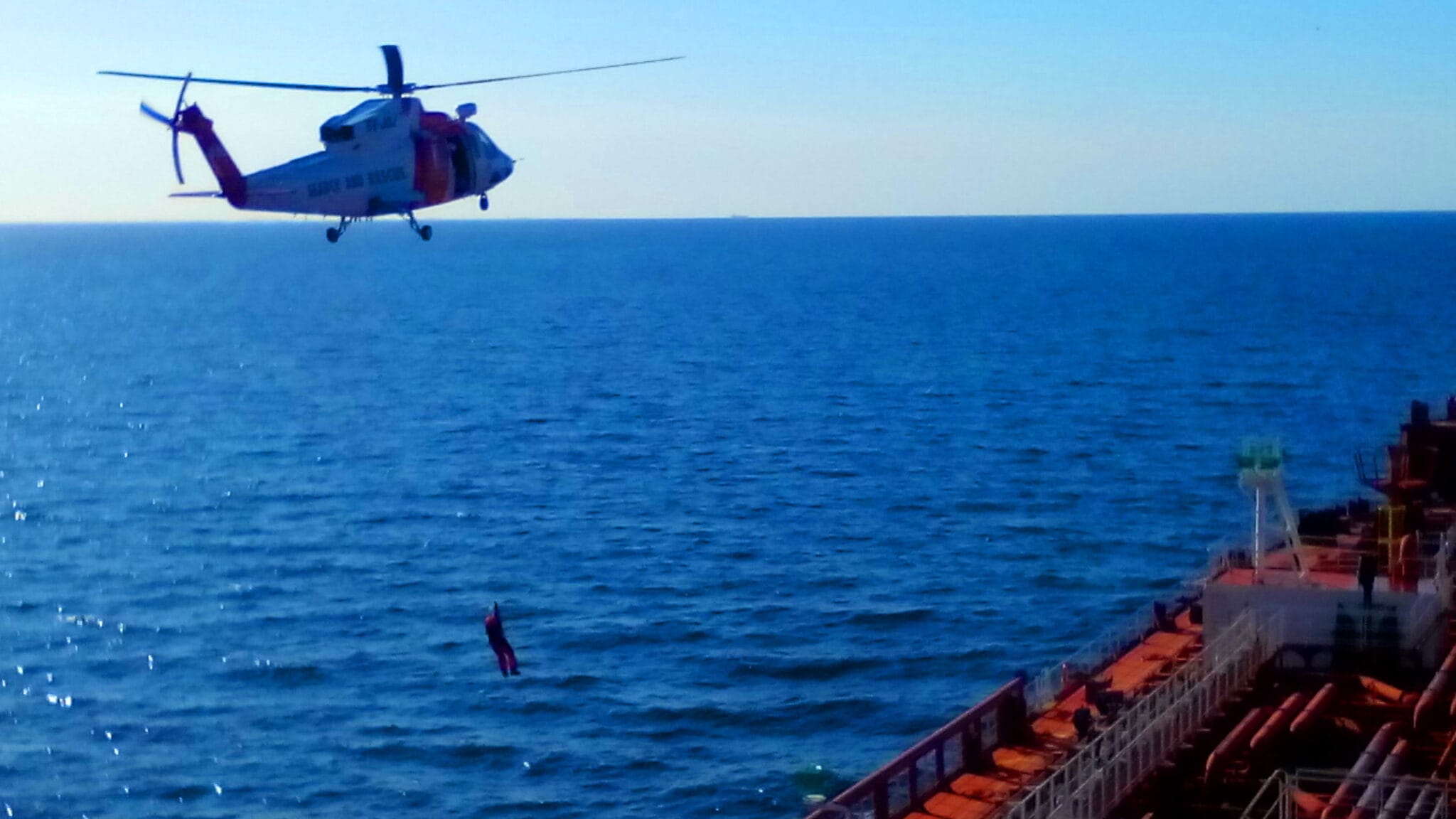
🔭 We scanned the sky. Then, there it was. A Swedish SAR helicopter hovered off our starboard beam, just a few meters away.
🪂 Helicopter Rappelling in Action
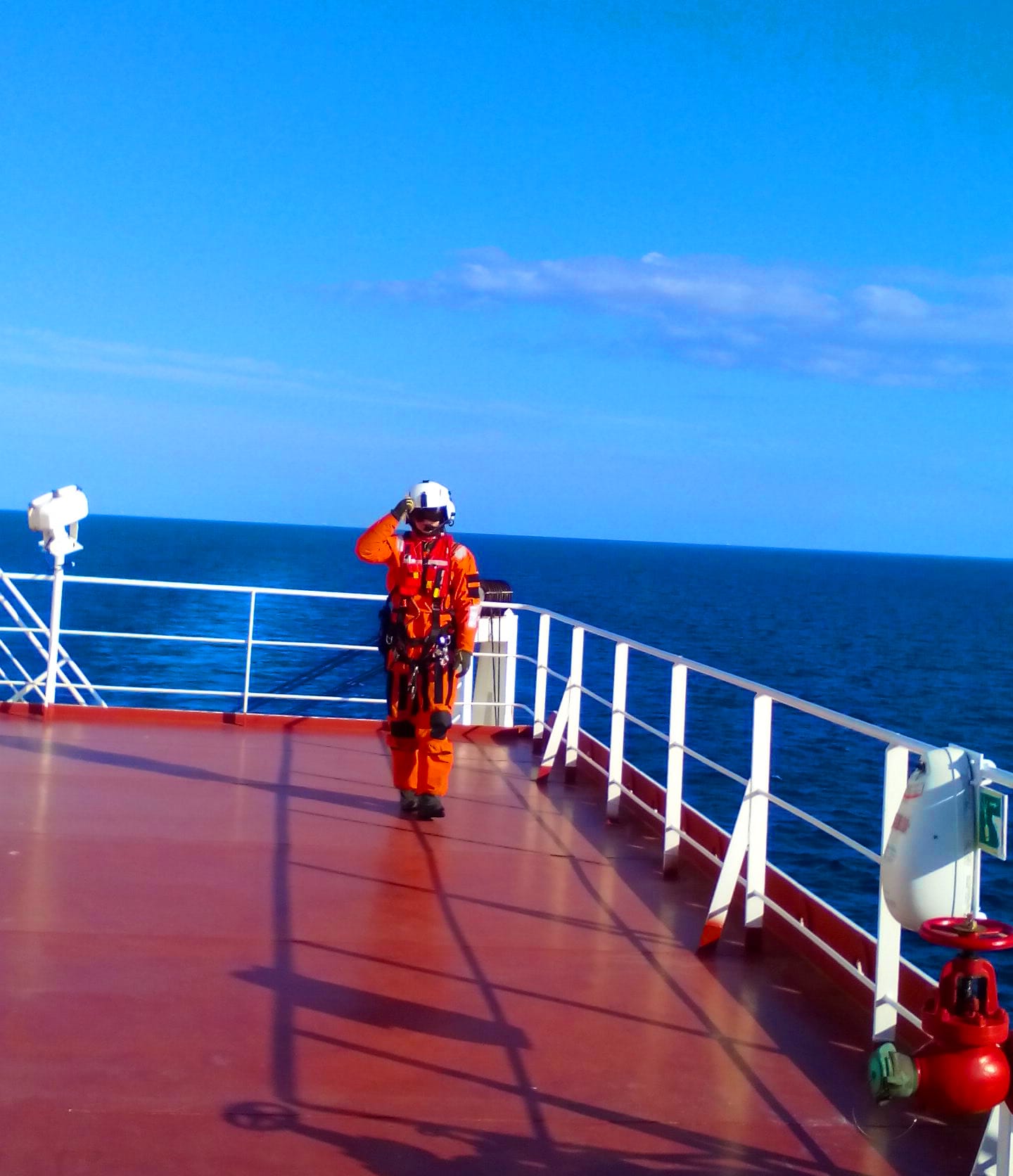
The chopper lowered a rescue officer in full high-visibility gear- orange suit, white helmet using a precision winch system.
He landed on our starboard bridge wing, where only the Master greeted him with a handshake.
📸 Most of the crew gathered on the bridge wing to watch while some snapped photos.
Within minutes, the officer saluted, clipped onto the winch, and was retrieved. The helicopter gave a parting radio call and flew off.
✅ It was a textbook SAREX: quick, clean, professional, and unforgettable.
🌊 Repeated Encounters in Swedish Waters
Over several years, I participated in multiple SAR drills in the Baltic, especially near Swedish territorial waters.
🎧 Usually, it began with a deep mechanical rumble- mistaken by many as failing machinery, until we’d realize: it’s a rescue chopper inbound!
Every time:
- Crews paused their work
- Officers flocked to the bridge
- Everyone watched in silent awe
Even the engine department left their posts to witness the drill. It was that important- and that impressive.
🌙 Night-Time SAR Exercise in Irish Waters
Not all SAREXs happen under ideal conditions.
During a nighttime transit near Ireland, we were approached for another drill. It was cold, visibility was low- but we agreed.
🔦 The Irish SAR helicopter, smaller and more agile, hovered above the forward deck.
From our position, it was hard to see, but we could hear everything. Electronics were prohibited due to tanker safety, so we couldn’t film.
Still, the drill played out efficiently. It reinforced one truth:
Real emergencies don’t wait for good weather or daylight.
📍 SAREX Hotspots: Where Seafarers Often Encounter Drills
Search and Rescue Exercises (SAREX) don’t happen everywhere.
During my years at sea, I observed a few regions where maritime SAR operations were frequent and well-executed.
These are the top SAREX hotspots I personally encountered:
🇸🇪 1. Sweden – The Baltic Sea SAR Giants
Swedish Search and Rescue units are among the most active in Europe.
If your ship passes through the Baltic Sea near Swedish territorial waters, especially in summer, there’s a good chance you’ll be selected.
📌 In my career (2009–2019), I experienced eight SAR drills in this region- more than anywhere else.
👷 Most exercises involve:
- Helicopter rappelling operations
- Drop points on the bridge wing, poop deck, or cargo manifold (common on tankers)
- Winch and retrieval simulations
🎨 Swedish SAR helicopters are easily recognizable:
- White and red fuselage
- Red tail section
- Crews wear international orange flight suits and white helmets
🇸🇪 Entity Tags: Swedish Maritime Administration, Baltic SAR, Sjöfartsverket
🇮🇪 2. Ireland – Night-Time SAR Professionals
Although less frequent, Ireland conducts SAR drills in its surrounding waters sometimes at night.
🌒 Why night drills? Possibly to simulate more realistic, high-stress rescue conditions, especially in low visibility and cold temperatures.
🛑 On one occasion, we were approached by a small SAR helicopter while transiting Irish waters in the evening.
📍 What happened:
- SAR chopper hovered above the forward deck
- Crew maintained visual coordination
- We couldn’t take footage at closer range since we were on a tanker ship
🔍 These drills tested our awareness and communication under limited visibility.
🇵🇹 3. Portugal – Navy-Led SAR Operations
One of the most impressive exercises I’ve experienced took place off the coast of Portugal– and it wasn’t run by coast guards or volunteers.
🇵🇹 Instead, the Portuguese Navy handled the entire operation.
🛩️ The difference was noticeable:
- Military-grade camouflage helicopters
- Thicker, armored airframes
- SAR crew in naval combat uniforms, not high-vis suits
Their SAR approach combined military discipline with life-saving protocols, showcasing Portugal’s readiness for both rescue and tactical response.
📅 These operations usually take place between July and September. We experienced them in August 2017 and again two years later.
⚓ For seafarers, it’s a rare and thrilling sight when a military-grade SAR unit hovers above your ship, especially with stretchers and multiple descending crew.
🇵🇹 Portuguese Navy SAR Exercise: Military Precision at Sea
We were navigating off the Portuguese coast when a navy helicopter suddenly emerged- low, fast, and unmistakably different from civilian SAR units.
🎯 The aircraft approached from our port quarter, its camouflage paint and reinforced body giving it a commanding presence.
Unlike earlier drills, this one had a more intense vibe- like watching a scene from a naval operation.
🪂 Multi-Person Descent Operation
The helicopter deployed three navy officers:
- One descended with a standard harness
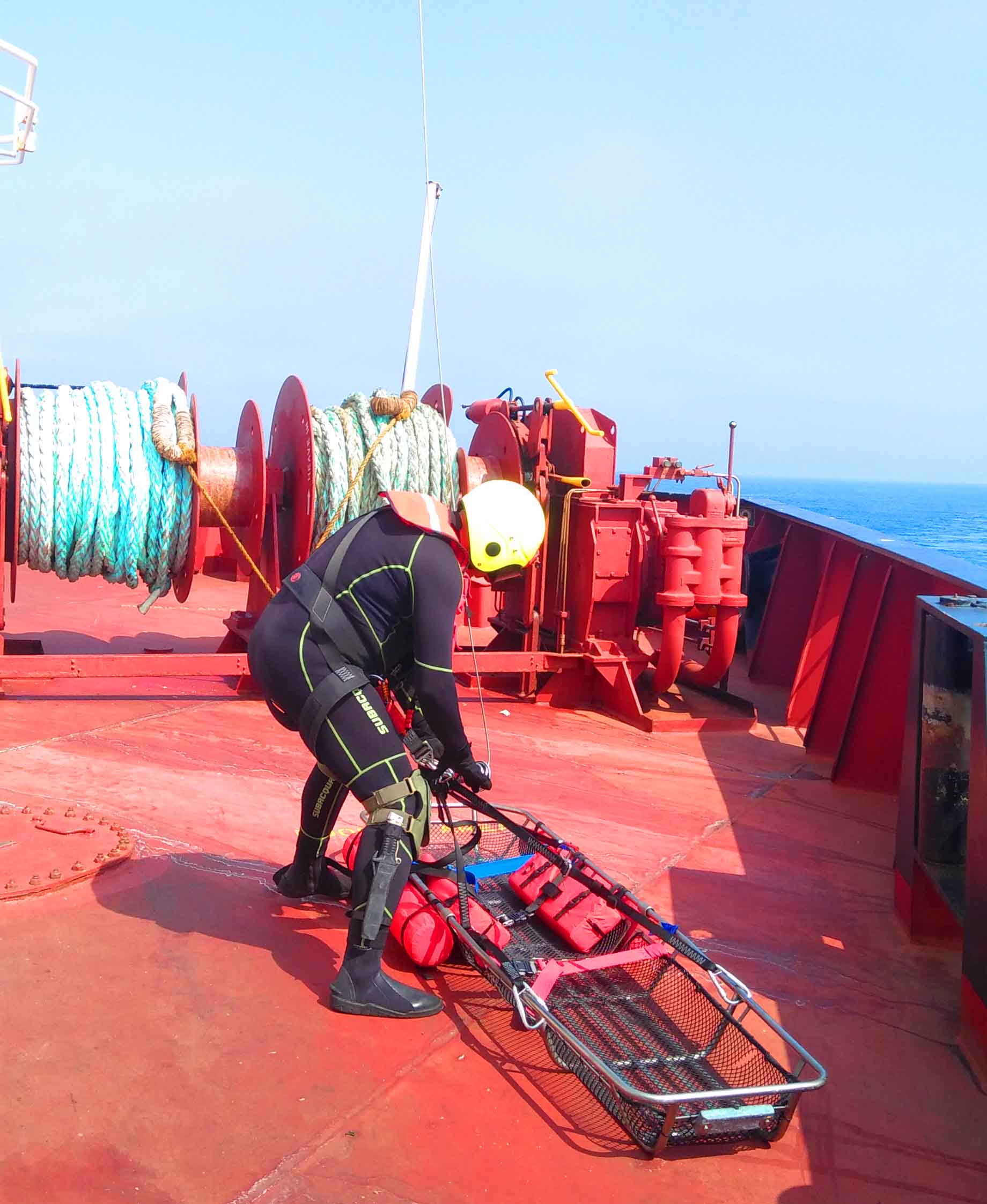
- Another came down carrying a rescue stretcher
- The third rappelled using arms and legs for balance- no winch control
They touched down on our poop deck, where I was working nearby. As the rotor blast whipped through the air, most of the deck crew stopped work to watch.
This drill was faster, louder, and more tactical than any SAREX I’d experienced before.
📸 I rushed to grab my phone and realized I was the only millennial on deck with a camera ready. Everyone else was in awe and totally analog!
🧭 Timing Is Everything: Always Be Ready
The timing couldn’t have been better.
My phone was in my locker- just meters from the scene. I recorded what I could as the officers completed their exercise and lifted off.
👉 Tip for seafarers:
If you’re sailing near Portugal, Sweden, or Ireland, stay alert and keep your gear ready.
You never know when a SAR helicopter will show up- and these moments don’t repeat.
🩺 Why SAREX Matters: It’s About Saving Lives
SAREX isn’t just a spectacle- it’s a life-saving rehearsal.
These drills prepare seafarers and SAR teams to:
- Conduct emergency evacuations
- Coordinate with Maritime Rescue Coordination Centers (MRCCs)
- Handle serious onboard injuries or illnesses
- Execute helicopter winch recoveries under pressure
When real distress strikes, these mock drills can mean the difference between life and death.
⚓ Final Thoughts: Be the Seafarer Who’s Ready
As professional mariners, we don’t just operate ships- we protect lives on board.
Participating in Search and Rescue Exercises isn’t just an honor- it’s our responsibility under SOLAS and STCW.
So next time a helicopter hovers near your vessel, don’t just watch- learn from it.
Capture it. Share it.
And most importantly, be prepared to act when it’s no longer just a drill.
❓ Frequently Asked Questions (FAQ) About Maritime Search and Rescue Exercises
1. What is a maritime Search and Rescue Exercise (SAREX)?
A Search and Rescue Exercise (SAREX) is a simulated emergency drill conducted at sea to train seafarers and SAR personnel in life-saving procedures like helicopter evacuations, winch operations, and distress coordination.
2. Who conducts SAR drills at sea?
SAR drills are typically conducted by national coast guards, maritime authorities, or naval forces.
In Europe, countries like Sweden, Ireland, and Portugal frequently conduct SAREX in their waters.
3. Can merchant vessels refuse participation in SAR drills?
Participation is usually voluntary but highly encouraged.
Most merchant ships accept the request unless safety, operational, or environmental risks are present.
4. Why are SAR exercises important for seafarers?
SAREX drills prepare crews for real-life maritime emergencies, such as medical evacuations, man-overboard situations, and ship-wide distress scenarios.
They enhance safety awareness and readiness.
5. What happens during a SAR helicopter exercise?
A SAR helicopter hovers near the ship, and a rescue officer rappels down onto a designated area often the bridge wing or poop deck.
After a brief interaction, the officer is winched back up, and the chopper departs.
6. What should I do if a SAR drill happens while I’m on watch?
Maintain your navigational duties unless instructed otherwise by the bridge team.
Ensure proper communication and avoid interfering with the operation. Observe and learn from a safe distance.
📣 Call to Action
Have you ever participated in a SAR drill at sea?
Share your story in the comments. Or send us your footage and we might feature it on Captain’s Mode! 🧭🚁
May the winds be in your favor.
Leave a Reply