

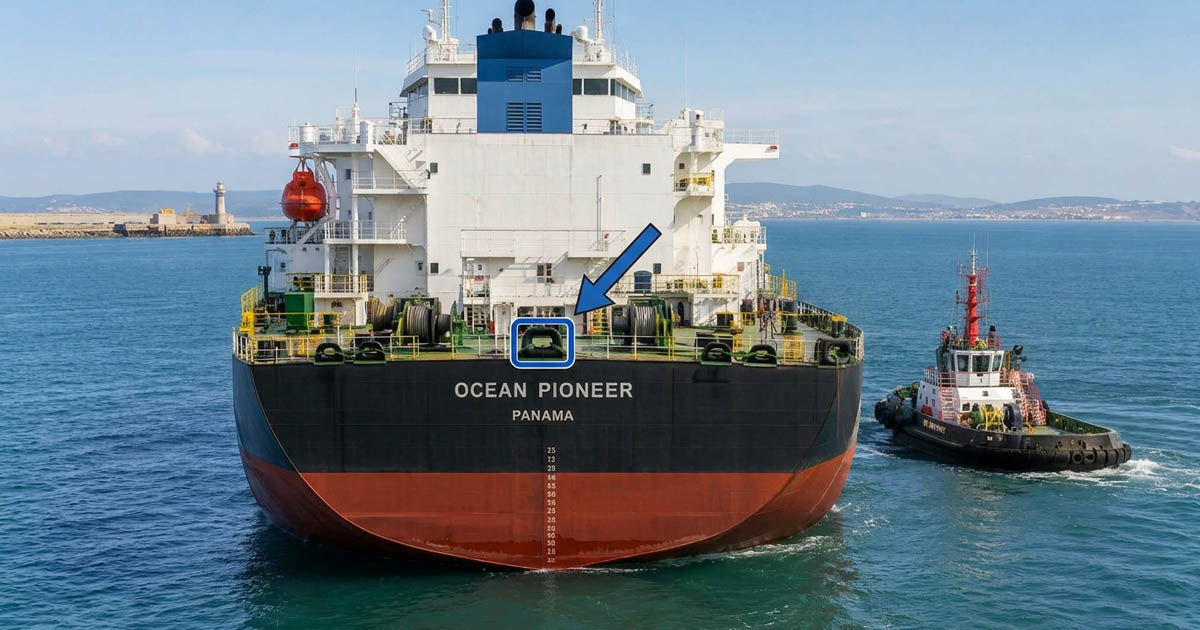
The bridge decides where a tug connects. Not the tug. Not the mooring station.
The tug crew may ask for a heaving line so they can send their messenger or towing line. That does not by itself mean the ship should connect the tug. Confirm the arrangement with the bridge first.
Connecting the tug at the wrong position can cause delays, interfere with the intended maneuver, or create an unsafe line arrangement.
In this guide, we’ll show you who decides, what to ask the bridge, and what to do when the tug disagrees.
✅ Key Takeaway:
Connect the tug at the lead the bridge orders, such as the center lead or the starboard quarter. If the tug sits elsewhere, do not connect. Tell the tug the ordered lead. If it refuses, call the master. The master talks to the pilot, the pilot talks to the tug, and you follow what they agree.
📍 Who Decides Where the Tug Connects?
The bridge decides. The master (captain) gives the mooring station the instruction for where the tug is to be made fast.
The captain is already with the pilot, who is also in contact with the tugboat master. Having three areas in agreement is a solid confirmation that everybody is on the same page.
🧠 Lead: the opening where a line passes over the ship’s side. A fairlead is the fitted opening that guides the line. For basic equipment terms, see the equipment section of the Ultimate Guide to Mooring Operations.
The bridge may specify a particular lead or connection position, depending on the ship’s arrangement and the tug operation.
- Center lead (panama lead): the fairlead on the centerline of the ship located forward or aft.
- Starboard/ Port quarter: the aft part of the vessel on the starboard or port side.
- Main deck aft, near the spring lines: a position at the main deck area near the springs
- Under the accommodation: the lead located under the accommodation of the ship on port or starboard side
📌 Note: The bridge must order the connection first. The rule is in [why you should never connect a tug without bridge confirmation](LINK: 2.3).
🎙️ What Do You Ask When the Bridge Doesn’t Say?
Ask the bridge. Do not guess.
Sometimes the bridge only says, “We will have a tugboat aft.” Then you follow up:
Aft station: Okay, captain. We will have a tugboat aft. Which part are we going to connect the tugboat to?
Or you name the lead yourself:
Aft station: Are we going to connect the tugboat on the center lead?
Bridge: You can connect it on the starboard quarter.
💡 Pro Tip: A question that names a lead is quicker to answer. The bridge only has to say yes or name another lead.
⚠️ What If the Tug and the Bridge Disagree?
When the tug sits at a different position from the ordered lead, do nothing at first. Then follow these steps:
- Do not connect. Not on the ordered lead, not where the tug waits.
- Tell the tugboat the lead the bridge ordered.
- Watch the reply. If the tug accepts, carry on.
- Call the master if the tug signals something else. Relay it plainly: “Captain, the tugboat doesn’t want the connection on the aft center lead. He wants it on the starboard quarter.”
- Wait. If the tug proposes a different connection, report it to the bridge. The master and pilot can then resolve the arrangement with the tug.
- Follow whatever they agree. Then send your heaving line.
Think of it as a chain: mooring station, master, pilot, tug. You are the first link, not the last word.
| Role | Responsibility |
| Bridge | Gives the shipboard instruction |
| Mooring station | Prepares the connection and reports any disagreement |
| Master | Resolves the issue through the bridge/pilot communication |
| Pilot | Coordinates the maneuver with the tug as appropriate |
| Tug | Communicates its operational requirements |
📌 Note: The final lead may differ from the first order. Follow the last agreement.
💬 Firsthand Experience
One time in around 2020, we were arriving in Sines, Portugal with a following tugboat. The bridge told us to make the tug fast on the aft center lead.
The tug positioned itself on the starboard quarter and insisted on connecting there.
I checked with the captain first. He talked to the pilot and came back: the tug would move to the center lead, and we made it fast there.
❌ Common Mistakes
- Connecting where the tug waits instead of where the bridge ordered
- Arguing with the tug crew instead of calling the master
- Guessing the lead when the bridge has not said
- Keeping the first order after the master and pilot agreed a new one
❓ FAQ
Why call the master and not the pilot directly?
The pilot advises the master and talks to the tug. Going through the master keeps one clear voice on the ship. Besides, you don’t have direct contact with the pilot.
Can the lead change after the first order?
Yes, if the master and pilot agree it with the tug. Follow the latest agreement.
What if the tugboat is connected and the bridge calls to change the lead?
Simply inform the captain that the tugboat is already made fast and confirm once again if they want to change it. Then wait for their instructions.
What if the tug accepts the ordered lead straight away?
Carry on and send your heaving line. You only call the master when the tug refuses or signals something else.
🧭 Final Thoughts
You do not pick the lead. You ask, you relay, and you follow what the bridge settles.
✅ Ask when the lead is not named
✅ Do not connect until the lead matches the order
✅ Report any refusal to the master
Related reading
- Mooring commands and responses over ship radio
- Types of Tugboats and Their Functions in Maritime Operations
This article only serves as a guide. ⚠️ Follow your company procedures and local port rules.
💬 Seen a tug ask for a different lead? Tell us in the comments what happened.
May the winds be in your favor. ⚓
Leave a Reply