

If you browse maritime recruitment websites, you may notice something surprising: engine department vacancies often outnumber deck vacancies.
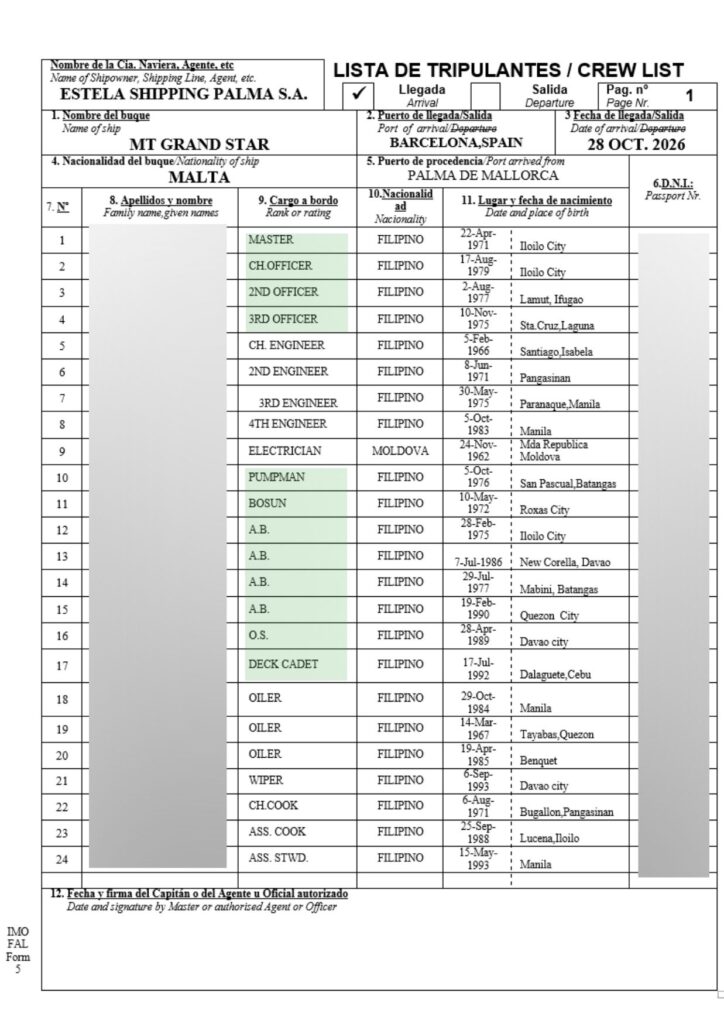
That seems counterintuitive. On many merchant ships, the deck department can have more crew members than the engine department.
Yet job boards frequently display more vacancies for marine engineers, engine officers, ratings, and electrical personnel.
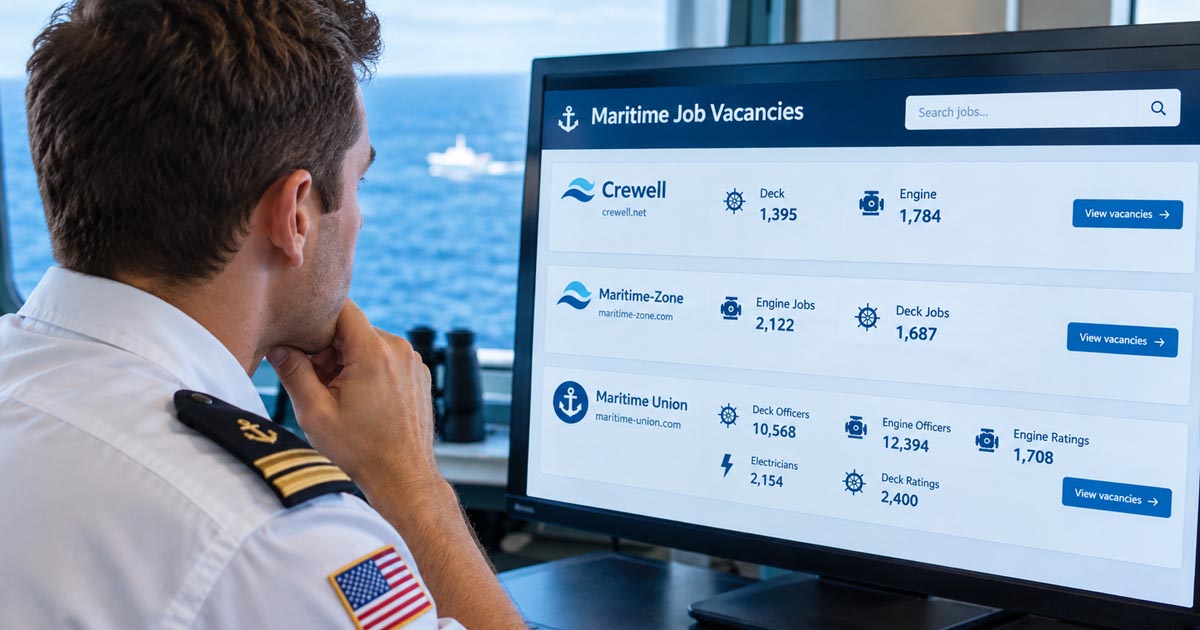
For example, a recent snapshot of several maritime job boards showed:
| Job Board | Deck Jobs | Engine Jobs |
| Crewell | 1,395 | 1,784 |
| Maritime Zone | 1,687 | 2,122 |
| Maritime Union | 10,568 Deck Officers | 12,394 Engine Officers |
These figures do not mean ships employ more engineers than deck officers. Job-board vacancy counts measure recruitment activity, not the actual number of crew members required on board.
Several factors help explain why engine vacancies can appear disproportionately high.
1. Engineering jobs are harder to match
The biggest reason may be the technical specialization required in the engine department.
A marine engineer is not simply being hired based on rank and certificate. Depending on the vessel, the employer may also look for experience with a particular propulsion plant, machinery manufacturer, automation system, electrical installation, vessel type, fuel, or cargo operation.
A candidate may be a qualified Second Engineer but still not be the ideal match for a particular vessel.
Consider the differences between ships using conventional diesel propulsion, dual-fuel engines, methanol, LNG, high-voltage systems, or increasingly sophisticated automation. The engineering environment can vary considerably from one vessel to another.
This creates a technical matching problem: the company needs the right engineer, not simply an engineer.
2. Engine vacancies can remain open longer
This creates an important difference between the number of vacancies posted and the number of people actually needed.
Suppose a company needs a Chief Engineer. It may reject otherwise qualified applicants because they lack the required vessel experience, machinery experience, endorsements, or other company requirements.
The position may therefore remain advertised while the company searches for a suitable candidate.
A deck vacancy can also have strict requirements, particularly on specialized vessels. However, some common deck positions may have a larger pool of candidates who meet the employer’s basic requirements.
As a result, an engine vacancy can accumulate on a job board simply because it takes longer to close.
⚠️ Important: More engine listings can therefore indicate greater recruitment difficulty rather than greater underlying manpower demand.
3. The engine department is becoming more technologically complex
Modern marine engineers are increasingly working with systems that go beyond traditional main engines and auxiliary machinery.
Ships may now involve advanced automation, electronic control systems, high-voltage equipment, sophisticated power management, alternative fuels, and other emerging technologies.
This is particularly relevant as shipping moves toward lower-carbon fuels.
The IMO says seafarers will need appropriate training to operate ships using alternative fuels and new technologies safely. In 2026, IMO work included interim training guidelines for ships using alternative fuel such as methyl/ethyl alcohol and ammonia as fuel.
This growing specialization can make experienced engineering personnel more difficult to replace.
4. ETO and electrical jobs can increase the “engine” numbers
Another factor is job-board categorization.
Some maritime recruitment platforms separate electrical positions from engine jobs, while others may group electricians, Electro-Technical Officers (ETOs), and related technical positions within or alongside the engine category.
That matters because modern ships depend heavily on electrical and automation systems.
The ETO is also a distinct STCW-certified role, so comparing “deck” and “engine” vacancies requires checking exactly what each website includes in its categories.
5. There is a global shortage of qualified officers
The wider maritime labor market also supports the idea that recruitment pressure is real.
The 2026 BIMCO/ICS Seafarer Workforce Report estimates that the global fleet faces a shortage of approximately 39,100 STCW-certified officers in 2026. It also projects that an additional 113,735 officers will be needed by 2030 to operate the world merchant fleet.
Importantly, the report does not describe a simple shortage of every type of seafarer. Its 2026 estimate includes a surplus of 56,890 ratings, showing that the labor problem is concentrated differently across ranks and qualifications.
This distinction is important when interpreting job-board data.
6. Shore-based careers can compete with shipboard engineering
Marine engineering skills are highly transferable to shore-based technical careers.
Experienced engineers can potentially move into technical superintendent positions, shipyards, machinery manufacturers, marine equipment companies, power generation, industrial maintenance, automation, technical service, and other engineering-related industries.
That creates competition between sea-going and shore-based employment.
I know a Second Engineer who transitioned to a shore side job as scrubber technician since his previous ships experience deal with scrubber technology.
⚠️Important: This does not mean engineers automatically leave the sea more often than deck officers. Rather, the availability of shore-based technical careers can create another pathway for experienced engineering personnel.
7. Companies may maintain recruitment pools
Not every job advertisement represents an immediate vacant berth.
Crewing departments and recruitment agencies may maintain candidate pools for difficult-to-fill positions. They may continue advertising certain ranks so that qualified candidates are available when a crew change, emergency replacement, vessel delivery, or unexpected vacancy occurs.
This is particularly useful for specialized engineering positions.
Consequently, a job board can show multiple or long-running engineering vacancies even when the company’s immediate operational requirement is smaller.
This is another reason why vacancy listings should not be treated as a census of open positions on ships.
8. Maritime education can influence the available talent pool
The supply of new seafarers also matters.
In the Philippines, one of the world’s largest sources of maritime labor, available enrollment data shows a significant difference between deck and engine programs.
According to data, an estimated 28,000 students were enrolled in the Bachelor of Science in Marine Transportation (BSMT) program in 2018, compared with just over 11,000 students in Bachelor of Science in Marine Engineering (BSMarE). That means the nautical or deck program had more than twice the enrollment of the marine engineering program.
Career Perception
Career perception may also play a role.
Deck officers are often more visible in maritime education campaigns, while marine engineering is associated with machinery, technical systems and the demanding environment of the engine room.
The Philippine example therefore supports an important point: the number of seafarers available for recruitment is not necessarily distributed evenly between deck and engine careers.
So, Why Are There More Engine Vacancies?
The most likely explanation is not simply that ships need more engineers.
Instead, several factors overlap:
- Engineering positions can be harder to match with the right technical experience.
- Engine vacancies may remain open longer while companies search for suitable candidates.
- New propulsion, fuel, electrical and automation technologies are increasing technical specialization.
- ETO and electrical positions can increase the number of jobs categorized as engine-related.
- Qualified officer shortages are putting pressure on the maritime labor market.
- Shore-based engineering careers can compete for experienced personnel.
- Recruitment pools and evergreen advertisements can keep vacancies visible.
- Job-board categories and duplicate listings can distort direct deck-versus-engine comparisons.
- Maritime institutions pull in more deck enrollees than engines.
The result is an important distinction: a higher number of engine vacancies does not necessarily mean there are more engine positions on ships. It may mean those positions are more difficult to fill and therefore remain visible in the recruitment market for longer.
Learn more about shipboard organization, ranks, duties and salaries.
Frequently Asked Questions
Why do maritime job sites have more engine jobs than deck jobs?
Engine positions can be harder to fill because they often require specific machinery, vessel, fuel, electrical, automation, or technical experience. Longer recruitment periods can make engine vacancies more visible on job boards.
Does this mean there are more marine engineers than deck officers?
No. Job-board listings measure recruitment activity, not the total number of seafarers employed at sea.
Are marine engineers in short supply?
There is a broader shortage of qualified maritime officers. The 2026 BIMCO/ICS report estimates a shortage of 39,100 STCW-certified officers globally in 2026.
Are engine jobs becoming more specialized?
Yes. Alternative fuels, automation, electrical systems and new propulsion technologies are increasing the range of skills required from maritime engineering personnel.
Final Takeaway ⚓
The apparent imbalance between engine and deck vacancies is best understood as a labor-market and recruitment phenomenon, not a simple reflection of shipboard crew numbers.
Ships may have more deck personnel than engine personnel, yet engineering vacancies can still dominate job boards because the right engineer can be more difficult to identify, qualify, match and retain.
If you’re considering a career at sea and a future beyond that, marine engineering offers strong demand and career opportunities. You can also check our broader comparison of maritime careers in the article Deck vs Engine Officer Career Guide.
May the winds be in your favor. ⚓
Leave a Reply