


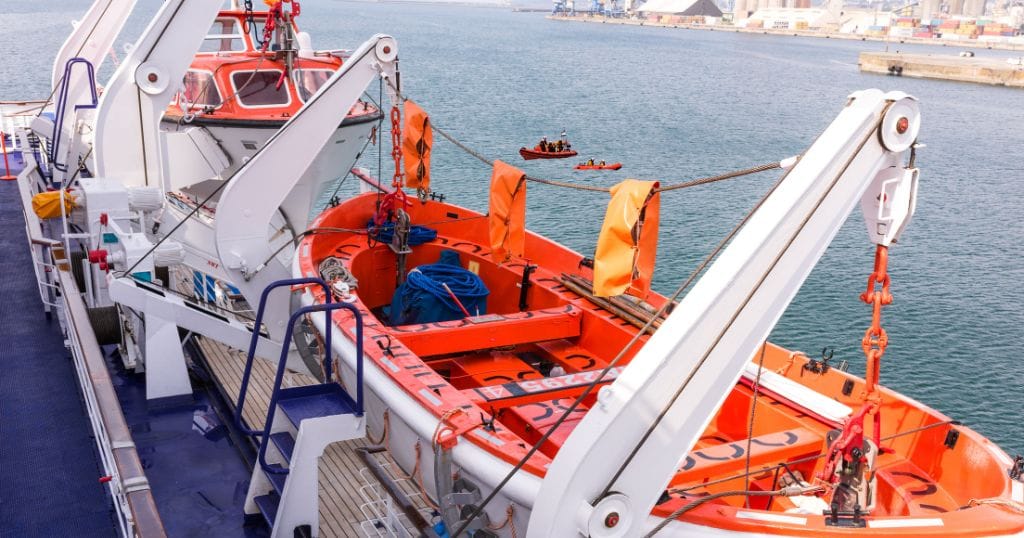
When it comes to maritime safety, life-saving appliances (LSAs) are non-negotiable.
These critical systems protect lives during shipboard emergencies- whether you’re on a tanker, bulk carrier, container ship, or passenger vessel.
Every seafarer must be familiar with these devices, which are mandatory under SOLAS Chapter III and governed globally by the IMO’s Life-Saving Appliance (LSA) Code.
This guide provides a comprehensive breakdown of all life-saving appliances required on board, their functions, and why they are vital for survival at sea.
⚓ What Are Life-Saving Appliances on Board?
Life-saving appliances (LSAs) refer to mandatory shipboard equipment designed to protect human life in emergencies.
These include systems for:
- Evacuation (lifeboats, marine evacuation systems)
- Personal survival (lifejackets, immersion suits)
- Rescue operations (rescue boats, line-throwing devices)
- Distress communication (flares, alarms, PA systems)
All LSAs must comply with the SOLAS Convention (Chapter III) and the technical specifications found in the International Life-Saving Appliance (LSA) Code
This is to ensure global consistency in maritime safety standards.
🧭 Six Primary Categories of Life-Saving Appliances
Under SOLAS, LSAs are grouped into six main categories, each serving a specific function during distress scenarios:
- Personal Life-Saving Appliances
- Visual Signals
- Survival Craft
- Rescue Boats
- Launching and Embarkation Appliances
- Other Life-Saving Appliances
Let’s break them down in detail.
1️⃣ Personal Life-Saving Appliances
These are individual protective items designed to help seafarers survive at sea and await rescue.
🔹 Types of Personal LSAs:
- ⭕ Lifebuoys
Ring-shaped flotation devices used for quick man-overboard (MOB) response. - 🎽 Lifejackets
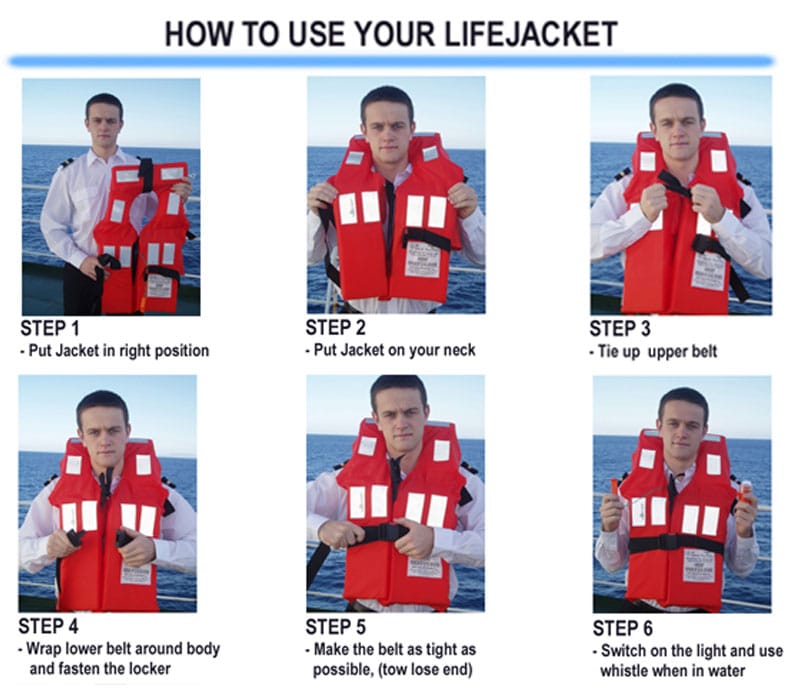
Personal flotation devices that provide buoyancy and visibility. SOLAS-approved lifejackets must turn an unconscious wearer face-up in the water. - 🧥 Immersion Suits
Waterproof suits made to retain body heat and protect against hypothermia during prolonged water exposure. - 🧊 Anti-Exposure Suits
A protective suit designed for use by rescue boat crews and marine evacuation system parties. - 🔥 Thermal Protective Aids (TPA)
Compact, heat-insulating bag or suit made of waterproof material with low thermal conductance.
2️⃣ Visual Signals (Pyrotechnics)
Visual distress signals are essential for alerting nearby vessels or aircraft in emergencies.
These pyrotechnic devices are highly visible and regulated under SOLAS requirements.
🔸 Types of Visual Signals:
- 🚀 Rocket Parachute Flares
Launched to at least 300 meters and burn bright red (≥30,000 candelas) for ≥40 seconds. Ideal for long-range visibility. - 🔥 Hand Flares
Hand-held emergency lights burning at ≥15,000 candelas for ≥60 seconds. Effective during rescue operations. - 💨 Buoyant Smoke Signals
Emit thick orange smoke for at least 3 minutes. Highly visible in daylight and used for position marking.
3️⃣ Survival Craft
Survival crafts are crafts capable of sustaining the lives of persons in distress from the time of abandoning the ship.
These include lifeboats and liferafts, required to be readily available, properly maintained, and periodically tested.
🔸 Types of Survival Craft:
- 🔄 Inflatable Liferafts
Compact units with auto-inflation systems. Stored in canisters and launched manually or automatically. Liferafts contain equipment packs and are designed with weatherproof canopies. - 🛶 Rigid Liferafts
Constructed from buoyant material, always afloat and stowed near deck periphery for quick access. - 🛡️ Partially Enclosed Lifeboats
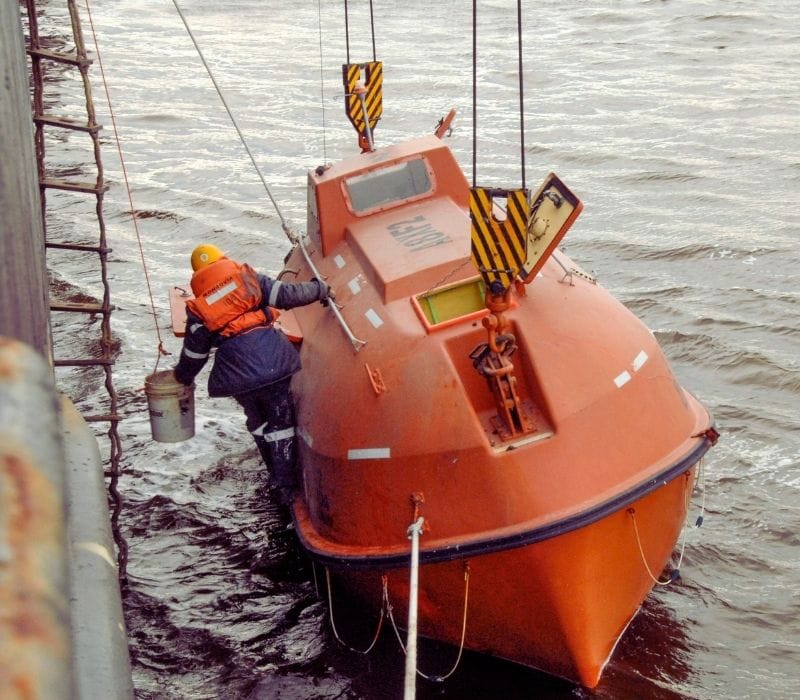
Equipped with rigid covers over bow/stern and foldable canopies to provide partial weather protection. - 🧱 Totally Enclosed Lifeboats
Fully watertight and sealed for complete protection against rain, waves, fire, or smoke. - 📉 Free-Fall Lifeboats
Launched by sliding down a ramp. Feature fire protection and/or air supply systems to survive extreme evacuation scenarios.
💡 Pro Tip: Each vessel’s survival craft requirements depend on ship type, tonnage, and voyage route, as outlined in SOLAS regulations.
4️⃣ 🚤 Rescue Boats
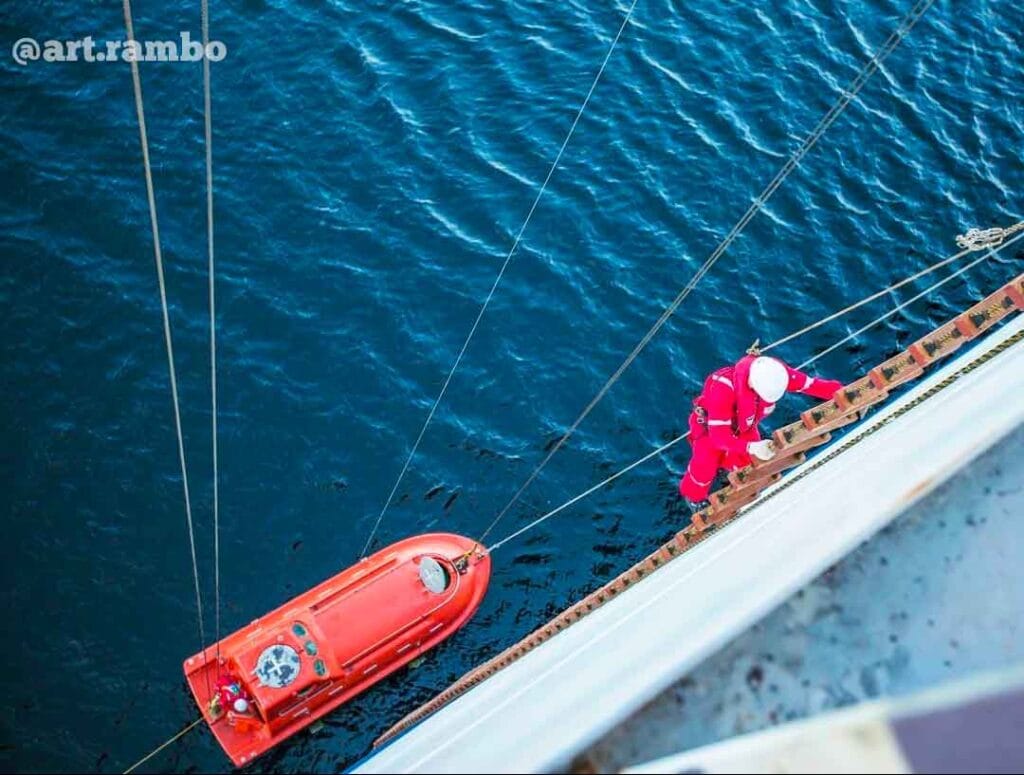
Rescue boats are dedicated craft a boat designed to rescue persons in distress and to marshal survival craft.
While lifeboats can also serve this function, rescue boats must meet the specific requirements set by SOLAS Chapter III, Regulation 31 and LSA Code Chapter V, Regulation 5.1.
🔸 Types of Rescue Boats:
- 🛶 Rigid Rescue Boats
Made with solid, non-inflatable hulls, offering excellent durability, strength, and maneuverability in rough seas. - 🎈 Inflatable Rescue Boats
Built with air-filled buoyancy tubes. Lighter and easier to deploy, especially from smaller vessels. - 🔁 Combination Rescue Boats
Hybrid design that combines a rigid floor with inflatable sides- offering stability and portability. - ⚡ Fast Rescue Boats (FRB)
High-speed boats capable of ≥20 knots. Used for rapid response, search and rescue, or transferring personnel in emergencies.
🔧 Note: FRBs are typically found on passenger ships, tankers, and offshore platforms where speed and maneuverability are crucial.
5️⃣ 目 Launching and Embarkation Appliances
These are mechanical or automated systems that launch and recover survival craft and allow safe embarkation of crew or passengers.
🔸 Types of Launching & Embarkation Equipment:
- 🧯 Launching Appliances with Falls and Winch
Use rope or chain “falls” and powered winches to lower lifeboats or rescue boats smoothly into the water. - 🌊 Float-Free Launching Appliances
A method of launching a survival craft whereby the craft is automatically released from a sinking ship- usually via a hydrostatic release unit (HRU), and is ready for use. - 📉 Free-Fall Lifeboat Launch Systems
A method of launching a lifeboat whereby the craft, with its complement of persons and equipment on board, is released and allowed to fall into the sea without any restraining apparatus. - 🛟 Liferaft Launching Appliances
Cradle and launch inflatable liferafts. May include davits or hydraulic release mechanisms. - 🪜 Embarkation Ladders
Flexible ladders rigged at the embarkation station to assist crew/passengers in boarding survival craft. - ⛑️ Marine Evacuation Systems (MES)
An appliance for the rapid transfer of persons from the embarkation deck of a ship to a floating survival craft
⚠️ Regulatory Reminder: Launching appliances must be tested and maintained as per SOLAS and LSA Code requirements.
6️⃣ 🛑 Other Life-Saving Appliances
Some essential items fall outside the five main categories but are still critical for shipboard emergencies.
🔸 Additional Life-Saving Devices:
- 📦 Line-Throwing Appliances (LTA)
Fire projectiles carrying lines to stranded persons or nearby vessels. Key tool for rescue and ship-to-ship connection. - 🔔 General Alarm System
Audible and visual alarms that notify crew and passengers of onboard emergencies like fire, abandon ship, or MOB. - 🔊 Public Address System (PA)
A network of loudspeakers used to relay emergency instructions or announcements throughout the vessel.
🛠️ These systems are vital for crew coordination and passenger management during evacuation or drills.
🧭 Final Thoughts: Know Your Ship’s LSAs
Every piece of life-saving equipment on board plays a vital role in maritime survival, rescue, and evacuation.
⚓ As a seafarer, your responsibility is to:
- Understand the function of each LSA
- Inspect and maintain equipment as per SOLAS Convention
- Participate in LSA drills and trainings
- Stay updated with the LSA Code and IMO amendments
These devices are not just regulatory checkboxes, they can be the thin line between life and death during real emergencies.
✅ Stay prepared. Know your ship. Know your gear.
❓ FAQ: Life-Saving Appliances on Ships
1. What are life-saving appliances on a ship?
Life-Saving Appliances are mandatory safety equipment like lifeboats, lifejackets, immersion suits, flares, alarms, and rescue systems designed to save lives during emergencies.
2. Are liferafts and lifeboats both considered survival craft?
Yes. SOLAS defines both liferafts and lifeboats as types of survival craft for evacuation during abandon ship.
3. Which SOLAS chapter governs life-saving appliances?
SOLAS Chapter III covers the requirements for all life-saving appliances and arrangements on ships.
4. How often should LSAs be inspected?
Weekly and monthly visual checks, plus annual servicing and certification, are required by IMO and class authorities.
📢 Call to Action
🔍 Want to stay safe and compliant at sea?
Download your vessel’s LSA checklist, join safety drills, and review SOLAS Chapter III regularly.
May the winds be in your favor.
Leave a Reply