



Onboard ships, crew members often hear the terms “slop chest” and “bonded store” used interchangeably.
While both refer to shops on the vessel where seafarers can purchase personal items, they differ significantly in purpose, regulations, and types of goods sold.
This article clarifies the difference between a bonded store and a slop chest, explains what seafarers can buy from each, and highlights why knowing the distinction matters.
This is especially important when dealing with customs officers, onboard inventories, or smuggling laws.
🧼 What Is a Slop Chest on a Ship?
A slop chest is a small store on board where seafarers can buy basic personal items for daily use.
It’s essential for long voyages, allowing the crew to replenish toiletries and snacks without waiting for a port visit.
🔹 Common Items Found in a Slop Chest:
- Shampoo, toothpaste, toothbrush
- Soap, lotion, deodorant
- Shaving kits, cotton buds
- Chips, chocolates, cookies, Oreos
- Soft drinks and bottled water
- Socks and undergarments (on some ships)
Basically, you can buy most of the toiletries listed in our seafarer packing list here.
⚓ Did you know? The term slop chest dates back to the 16th century, originally referring to cheap, ready-made clothing sold to sailors.
Today, most slop chests no longer carry clothing.
On modern vessels, especially tankers and bulk carriers, they primarily stock toiletries, snacks, and light essentials.

🍾 What Is a Bonded Store on Ships?
A bonded store (also called bond store) is another shipboard shop. But it exclusively carries duty-free items, particularly alcohol and tobacco.
These goods are subject to strict customs control because they are heavily taxed in most ports.
To avoid customs violations, bonded stores are often locked and sealed when a ship is in port.
The captain may only open it while at sea or with permission from port authorities.
🔹 Common Bonded Store Items:
- Cigarettes
- Cigars
- Liquor and spirits (rum, whiskey, vodka, etc.)
- Wine and beer
These items are usually cheaper than shore prices because they are sold duty-free, but they are strictly for crew consumption only.
🚫 Important: Selling bonded items to shore personnel is illegal and considered smuggling, subject to hefty fines or vessel detention.

⚖️ Bonded Store vs. Slop Chest: Quick Comparison Table
| Feature | Slop Chest 🧼 | Bonded Store 🍾 |
|---|---|---|
| Main Items Sold | Toiletries, snacks, etc. | Alcohol, tobacco |
| Customs Restrictions | None | Heavily regulated |
| Duty-Free | No | Yes |
| Access in Port | Always open | Locked/sealed |
| Purpose | Daily essentials | Personal leisure use |
| Managed By | Captain or delegate | Captain or delegate |
🤔 Why Are Slop Chest and Bonded Store Confused?
Despite having different roles, many seafarers use the terms “slop chest” and “bonded store” interchangeably.
This confusion comes from three key factors:
🔸 1. Shared Storage Area
Most ships store slop chest items and bonded goods in the same room, often locked behind one door.
Visually, they appear to be part of the same store- even though they serve different purposes.
🔸 2. Overlapping History
Historically, slop chests included alcohol and tobacco before port customs tightened restrictions.
When bonded warehouses became the norm for regulating dutiable goods, shipboard stores separated their inventories- but the old terminology stuck.
🔸 3. Informal Usage
Onboard announcements, reports, and even email correspondence with ship chandlers or agents often use “slop chest” or “bonded store” interchangeably.
For example:
- “Slop chest will be open tonight” might include cigarettes and liquor.
- Reports and inventories sometimes label bonded items under the slop chest list.
This fluid usage adds to the confusion, especially for new seafarers and cadets.
🚫 Why Are Bonded Stores Locked in Port?
Bonded stores must be sealed and locked while in port due to international customs regulations.
Items like cigarettes and alcohol are heavily taxed in most countries, and unauthorized access can lead to:
- Fines and penalties
- Vessel detention
- Crew disciplinary actions
⚠️ Example:
In some European ports, a single 20-stick cigarette pack costs up to $15 ashore.
Onboard, a box containing 10 to 20 packs may cost the same amount- or less, because they’re duty-free.
Some crew members have attempted to sell these items to shore personnel, making illegal profits of €20–€25.
This practice is considered smuggling and is strictly prohibited.
Even minor mismatches in inventory can trigger inspections and fines. That’s why captains are cautious in handling bonded stores during port stays.
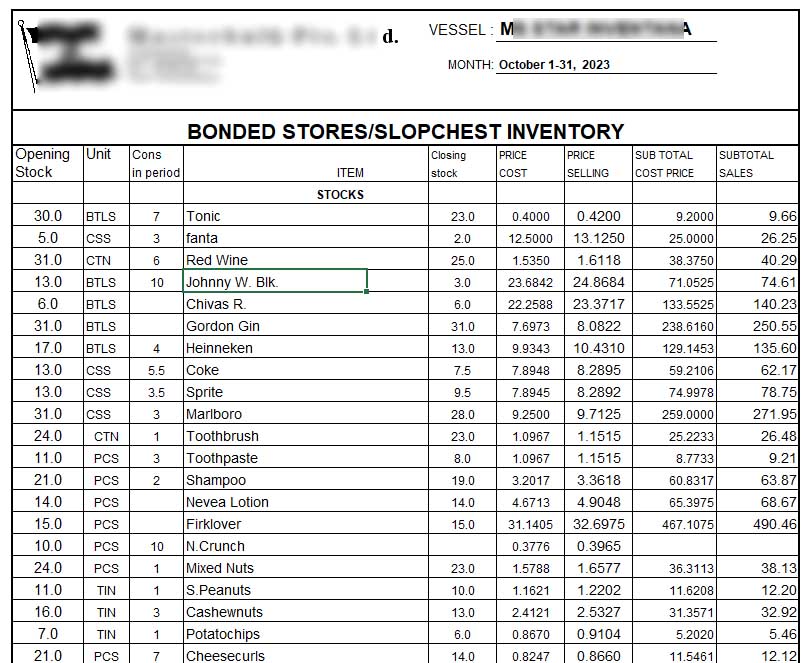
👨✈️ Who Manages the Slop Chest and Bonded Store Onboard?
The Master (Captain) holds ultimate responsibility for both the slop chest and bonded store.
However, day-to-day management may be delegated to:
- 3rd Officer / Third Mate
- Messman
- Deck Cadet (on some vessels)
Only the designated personnel and the captain usually have access to the keys and inventory records.
Prices onboard often include a markup of 10% or more, which helps cover shipping and administrative costs.
💰 How Do Seafarers Buy from These Stores?
Buying items onboard is a straightforward process, though it may vary by company.
🛍️ Common Purchase Methods:
- Self-service: Crew lists the items they take in a ledger.
- Cash purchase: Some captains prefer cash-only to simplify accounting.
- Payroll deduction: Items are recorded monthly and deducted from salaries.
- Order by request: Crew submits a list, and items are delivered to cabins.
Sales usually occur after dinner or during off-watch hours, when all crew are inside the accommodation block.
❓ FAQs: Bonded Store and Slop Chest on Ships
🔸 What is the slop chest in shipping?
A slop chest is a small onboard shop where seafarers can buy personal items like toiletries, snacks, and hygiene products.
🔸 Can you buy alcohol and cigarettes on ships?
Yes, but only from the bonded store, and typically only while at sea due to port restrictions.
🔸 Are slop chest and bonded store the same?
No. While often stored in the same location, they differ by item type and customs regulation.
🔸 Who controls the bonded store onboard?
The Master is responsible but may delegate it to an officer or messman.
🔸 Are items duty-free in the slop chest?
No. Only items in the bonded store (e.g., tobacco and alcohol) are duty-free.
✅ Conclusion: Know the Difference, Avoid the Fine
For seafarers, understanding the difference between a bonded store and a slop chest is more than just shipboard trivia, it can help you avoid customs violations, track your purchases accurately, and better understand your rights and responsibilities onboard.
Whether you’re a cadet buying shampoo or a chief mate checking inventory, clarity on these shipboard shops ensures smooth operations and compliance with regulations.
May the winds be in your favor.
Leave a Reply