

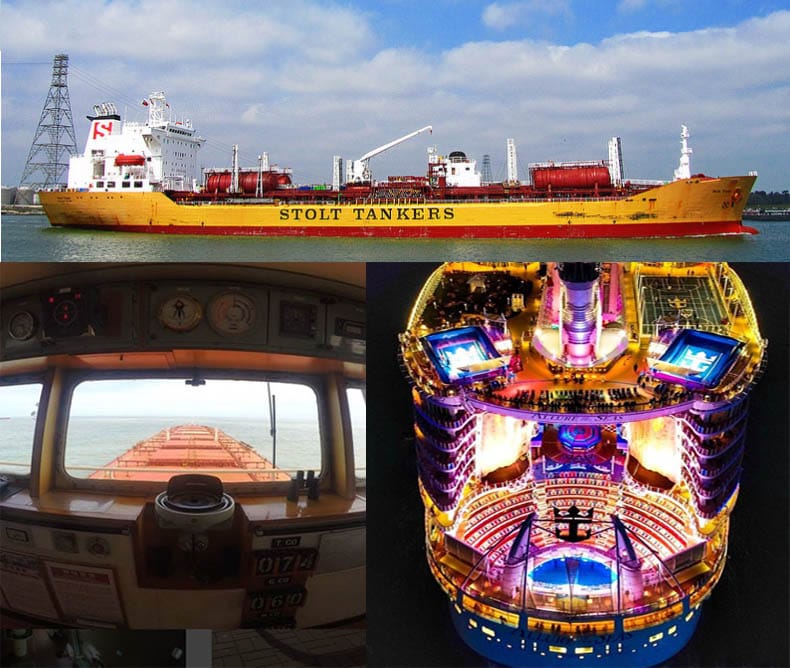
Choosing the best type of ship to work on isn’t easy- and there’s no one-size-fits-all answer.
Whether you prefer tankers, bulk carriers, or cruise ships depends on your career goals, priorities, and even personal preferences.
Some seafarers prioritize safety and job security. Others look at salary, work-life balance, or even the prestige of the vessel.
In the end, the best ship for you is the one that aligns with your lifestyle, values, and experience.
In this guide, we’ll objectively compare tankers, cruise ships, and bulk carriers based on the following:
- 🔐 Safety and ship loss rates
- 💵 Salary potential (Captains and ABs)
- ⚙️ Workload and onboard environment
Let’s start with what matters most- safety.
🚨 Safety Comparison Between Ship Types
Safety is the highest priority on any ship. It’s more than just a slogan- it’s a critical factor that affects your career, life, and livelihood at sea.
While all ships follow international safety standards (SOLAS, ISM Code, etc.), actual ship loss statistics reveal which types of vessels are historically more prone to accidents.
📉 Ship Losses (2008–2017)
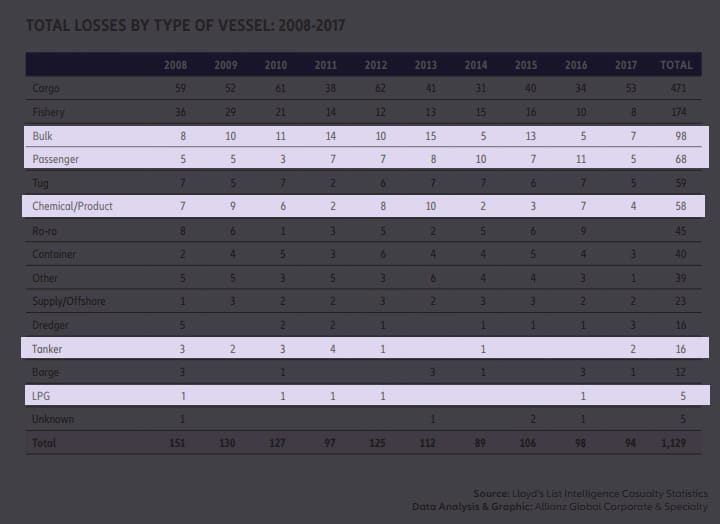
According to industry data from 2008 to 2017, the number of ship losses were:
- Bulk Carriers: 98 losses
- Tankers: 79 losses
- Passenger Ships (including Cruise Ships): 17 losses
At first glance, bulk carriers appear to be the most accident-prone. But we need to compare these losses to the total number of ships in each category.
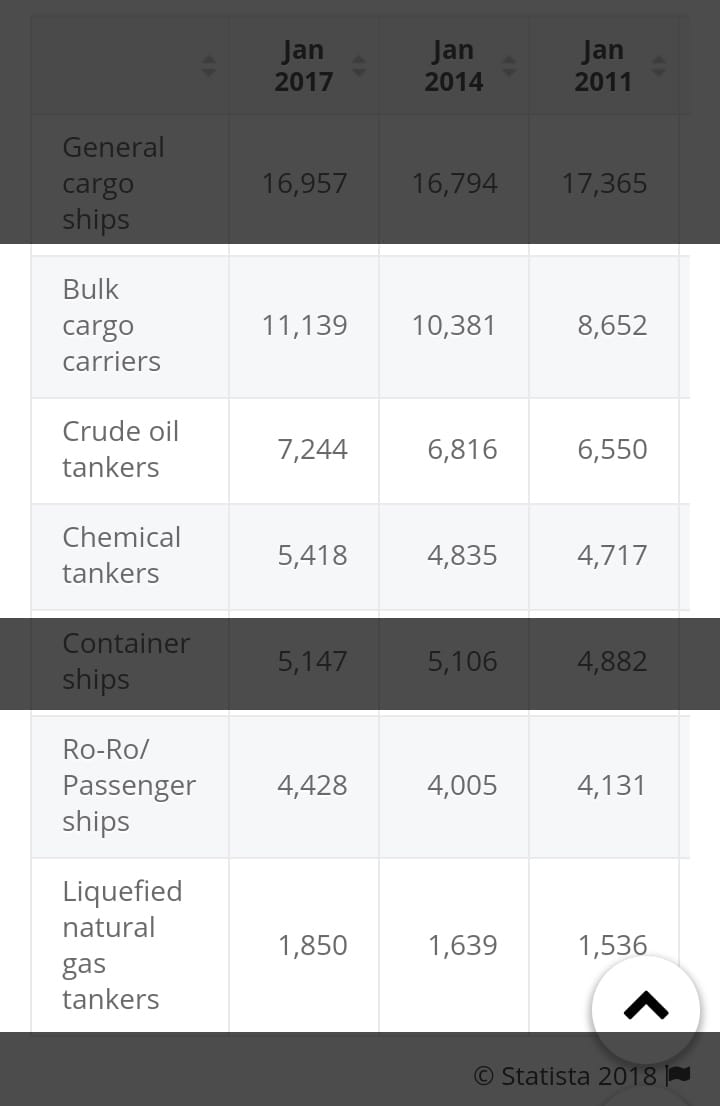
📊 Ship Population (as of 2017):
- Tankers: 14,512 vessels
- Bulk Carriers: 11,125 vessels
- Passenger Ships: 1,131 vessels
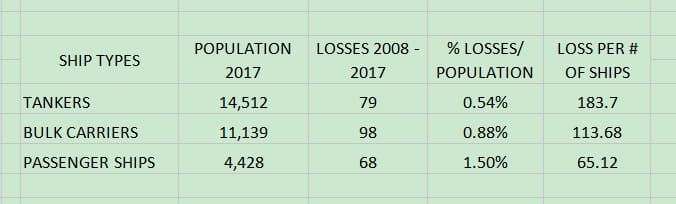
📈 Ship Loss Ratio (Losses per Ship Type):
- Passenger Ships: 1.5% (1 in 65 ships lost)
- Tankers: 0.54% (1 in 184 ships lost)
- Bulk Carriers: 0.88% (1 in 114 ships lost)
✅ Result:
Tankers are statistically the safest ship type based on loss-to-population ratio.
Despite perceptions of danger due to flammable cargoes, tanker vessels have stricter safety protocols, advanced firefighting systems, and highly regulated cargo operations resulting in lower overall losses.
💰 Salary Comparison: Tanker vs. Cruise Ship vs. Bulk Carrier
While safety is essential, let’s face it, the seafarer’s salary often becomes the deciding factor when choosing your next vessel.
Whether you’re a cadet planning your career or a seasoned officer reviewing job offers, understanding pay differences across ship types is vital.
Let’s compare how much Captains and Able-Bodied Seamen (ABs) earn onboard tankers, cruise ships, and bulk carriers.
🧭 Captain’s Salary by Ship Type
Captains hold the highest position onboard and carry the most responsibility. But the paycheck varies significantly depending on the ship type.
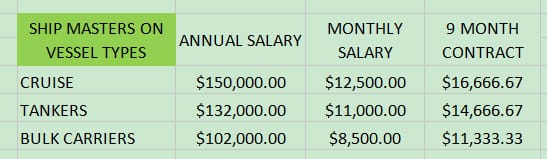
| Ship Type | Average Monthly Salary (Captain) |
|---|---|
| Cruise Ship | ~ $12,500+ |
| Tanker | ~ $11,000+ |
| Bulk Carrier | ~$8,500+ |
📌 Observation: Cruise ship Captains earn the highest among the three. This reflects their dual role as both master mariner and hospitality leader- managing passengers, staff, safety, and public relations.
Cruise Captains often engage with guests, host onboard events, and act as brand ambassadors while navigating complex international itineraries.
Their job demands more than just seamanship. It requires charisma, diplomacy, and leadership.
⚓ AB’s Salary by Ship Type
Let’s also examine the wages of Able-Bodied Seamen, one of the most common and critical ratings onboard.
| Ship Type | Average Monthly Salary (AB) |
|---|---|
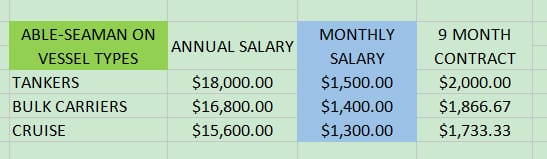
| Tanker | $1,500 – $1,800 |
| Bulk Carrier | $1,300 – $1,600 |
| Cruise Ship | $1,200 – $1,600 (excluding tips) |
📌 Observation: On paper, tanker ABs typically earn slightly more. However, cruise ship ABs may exceed this range due to:
- 💸 Overtime pay
- 💁♀️ Guest service tips
- 🧹 Extra duties (e.g., crowd control, cabin assistance)
⚠️ Key Considerations:
- Bulk carriers tend to have simpler operations and fewer passengers to worry about but the work is often more manual and physically demanding.
- Tanker vessels offer consistent pay and fewer external variables.
- Cruise ships provide more income opportunities through variable compensation.
⚙️ Work Environment and Onboard Experience
Salary and safety are just part of the equation.
The workload, onboard culture, and environment also greatly impact seafarers’ satisfaction.
Let’s compare the everyday experience of working on tankers, bulk carriers, and cruise ships.
🛢️ Tankers: Clean Decks, Strict Protocols
Tanker operations are highly regulated, requiring discipline and routine checks. Daily life involves:
- Monitoring for gas leaks and vapor hazards
- Strict enclosed space entry protocols
- Periodic deck inspections during cargo ops
- Reduced physical strain compared to dry cargo handling
While exposure to toxic fumes is a concern, advanced safety systems, tank cleaning processes, and PPE significantly reduce long-term health risks.
🧑✈️ One AB who switched from bulk carriers to tankers described it as “shockingly relaxing”- port watch during loading often involved sitting down except for routine inspections.
⚒️ Bulk Carriers: Dust, Grains, and Heavy Sweeping
Bulk carriers often carry coal, grain, ore, or fertilizers. Daily operations can be physically demanding:
- Sweeping dusty decks after grabs unload cargo
- Cleaning holds and coamings between cargoes
- Dealing with cargo residues like rust, sulfur, or cement
💨 Dust exposure and slip hazards are common issues. Cargo watches are intense, especially in ports with quick turnaround times.
🛳️ Cruise Ships: Service with a Smile
Life on cruise ships is a different world.
Crew members not only manage ship operations but also ensure a smooth guest experience.
Unique challenges include:
- Dealing with demanding or unruly passengers
- Upholding high standards of customer service
- Working under constant supervision and SOPs
- Participating in drills, events, and guest activities
😅 While there may be no heavy cargo, crew are expected to deliver top-tier service at all times- even during long contracts and tight schedules.
Also, passengers are considered “live cargo”, and handling them requires emotional labor, communication skills, and patience.
🏁 Final Verdict – Which Ship Type Is Best?
There is no absolute “best” ship type. It all comes down to what you prioritize as a seafarer:
| Priority | Best Ship Type |
|---|---|
| 🛡️ Safety | Tanker |
| 💸 High Officer Pay | Cruise Ship |
| 💰 Overtime + Tips | Cruise Ship |
| 🤑 Hold Allowance | Bulk Carrier |
| 💪 Hands-On Work | Bulk Carrier |
| ⚙️ Structured Routines | Tanker |
| 🤝 People Interaction | Cruise Ship |
| 🏙️ Shoreleave Ports | Cruise Ship |
Each vessel is designed for different demands in the global economy and each offers a unique lifestyle onboard.
Ultimately, the best ship type is the one that aligns with your career goals, personal values, and comfort level.
For some, it’s about high pay. For others, it’s peace of mind, routine, or crew camaraderie.
⛵ Whatever vessel you’re on, we all sail the same seas.
🙋♂️ FAQ: Seafarers Also Ask
❓What is the safest type of ship for seafarers?
Tanker ships have the lowest ship loss percentage among major vessel types due to stringent regulations and operational safety protocols.
❓Which ship type pays the most for Captains?
Cruise ships offer the highest monthly salaries for Captains, often exceeding $10,000 due to their dual responsibilities in navigation and hospitality.
❓Are bulk carriers harder to work on?
Bulk carriers involve more manual labor, especially during cargo ops, with dusty environments and time-sensitive tasks.
❓Is life easier on cruise ships?
Cruise ship crew don’t handle cargo but face emotional labor, strict guest service protocols, and long working hours with less privacy.
📣 Call to Action
🔗 Ready to choose your next ship type? Whether you’re aiming for higher pay, safer routines, or dynamic guest interaction, use this guide to help you decide.
📬 Want more insights like this? Subscribe to Captain’s Mode and stay updated with career guides, ship comparisons, and real seafarer stories.
May the winds be in your favor.
Leave a Reply