


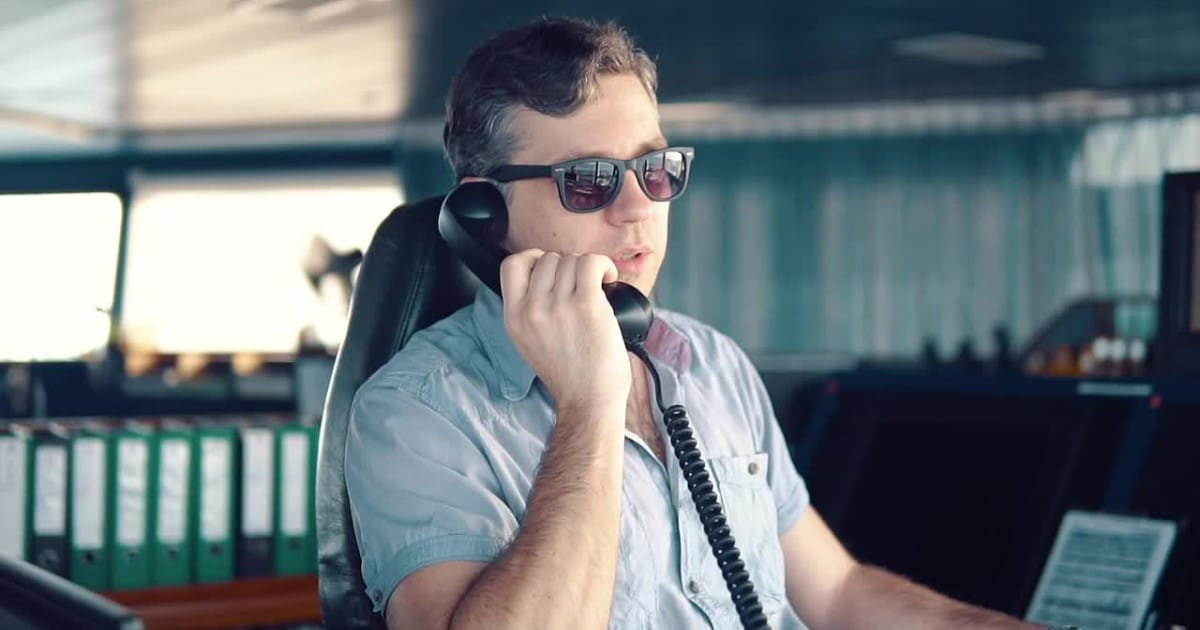
Knowing when to call the Master is one of the most important responsibilities of any Officer on Watch (OOW).
Whether you’re navigating through heavy traffic, facing an equipment failure, or simply unsure about the vessel’s situation, the Bridge Standing Orders and good seamanship both emphasize one thing:
If in doubt, call the Master. ⚓
This isn’t a sign of incompetence- it’s a mark of professional judgment and situational awareness.
By alerting the Master early, you demonstrate your commitment to navigational safety and uphold your duty to protect the ship, crew, and cargo.
📋 Situations That Require the Master’s Presence
Shipboard operations are dynamic.
While you’re expected to make sound decisions, there are critical scenarios where the Master’s immediate involvement is essential.
These are often outlined in the Night Order Book or Company SMS Procedures, but not all cases are explicitly written.
Below is a comprehensive list of scenarios, grouped into categories, where OOWs are expected to notify or call the Master.
⚠️ A. General Situations (Always Call the Master)
These are non-negotiable circumstances where contacting the Master is mandatory:
- Whenever there is doubt– about anything.
- If Bridge Standing Orders cannot be maintained.
- When the ship’s condition is endangered (navigationally, mechanically, or operationally).
- As required by the Master’s Bridge Standing Orders.
- As instructed in the Master’s Night Orders.
📝 Tip: The Master’s Night Order Book is updated daily. Always read it before taking over your navigational watch.
⚙️ B. Equipment Failures and Malfunctions
Mechanical or electronic failures affect ship safety and must be reported immediately:
- Any failure or malfunction of critical equipment (machinery, radar, ECDIS, steering gear, etc.).
- GMDSS or communication equipment becomes faulty or inoperative.
- Doubt about the accuracy of navigational equipment (GPS, gyro, AIS, echo sounder).
- Engine speed is unexpectedly reduced.
- Main engine, steering gear, or essential navigation equipment breakdown.
🛑 Even a minor glitch in primary systems may escalate quickly. Call early, never after the damage is done.
🧭 C. Navigation-Related Situations
Navigational risks often evolve rapidly. The following events require immediate notification to the Master:
- When navigating through ice that requires major and continuous course alterations.
- Sightings of distress signals– EPIRBs, SART, orange smoke, SOS, flares, etc.
- Encountering navigational hazards– rocks, reefs, icebergs, or derelict vessels.
- Suspicious floating objects in known piracy or high-risk areas.
- Large discrepancy between observed and expected ship position.
- Passage plan amendments that need urgent approval.
- Suspicious vessel or boat approaching your ship.
- OOW is unsure of the proper action to take regardless of the reason.
- A “give-way vessel” approaches within 15 minutes CPA without a change in bearing and cannot be contacted.
- Land or navigation marks are not sighted at their expected time.
- Echo sounder readings deviate significantly from expected depth.
- Uncharted navigational hazards are identified visually or via radar.
- Sudden reduction in visibility– fog, heavy rain, or sandstorms.
- Heavy traffic or erratic movements of nearby vessels.
- Difficulty in maintaining the planned course due to steering, wind, or current.
- Heavy weather or risk of weather damage is suspected.
- Pre-marked positions on the chart requiring the Master’s presence.
- Missing navigational marks or doubt about the vessel’s position.
- Receipt of a new voyage or routing order.
- Any distress call received over VHF, MF/HF, Inmarsat, or GMDSS.
- Any “special circumstance” under COLREGS Rule 2, not listed above.
🔍 Remember: COLREGS emphasizes proactive avoidance of danger. The Master expects to be informed before- not during, a critical incident.
🚨 If the Master is Unreachable
Occasionally, the Master might be away from the bridge or his cabin- working out, conducting inspections, or briefly resting somewhere.
If their immediate presence is required but they cannot be located:
- 🔔 Sound two short rings on the ship’s general alarm system (if permitted by company policy).
- 🎙️ Call him via the ship’s Public Address System.
- 📚 Refer to your vessel’s Safety Management System (SMS) or standing orders for approved bridge alarm signals.
💡 Final Advice to All Watchkeepers
Calling the Master is not a sign of weakness- it’s a demonstration of good bridge resource management (BRM) and sound judgment.
The OOW has full authority to act decisively, but the Master must be kept informed of:
- Sudden developments that impact the safety of navigation
- Any situation that may escalate into an emergency
- All changes that warrant command-level decisions
✅ When in doubt, call early and call often. Better safe than sorry.
❓ Frequently Asked Questions (FAQs)
🔹 Can I be penalized for calling the Master too often?
No.
In fact, many captains prefer you call too early rather than too late. Frequent communication builds trust.
🔹 What if I’m not sure whether to wake the Master?
Call anyway.
If the issue doesn’t require immediate action, the Master will tell you so and you’ll learn from it.
🔹 Is this list final?
No.
Each vessel or company may have additional requirements. Always check your Bridge Standing Orders, SMS procedures, and the Master’s Night Order Book.
📢 Conclusion
Knowing when to call the Master is a fundamental part of safe watchkeeping.
The list above offers a minimum benchmark, not an exhaustive one. Stay alert, use your judgment, and when in doubt: make the call.
May the winds be in your favor.
Leave a Reply