


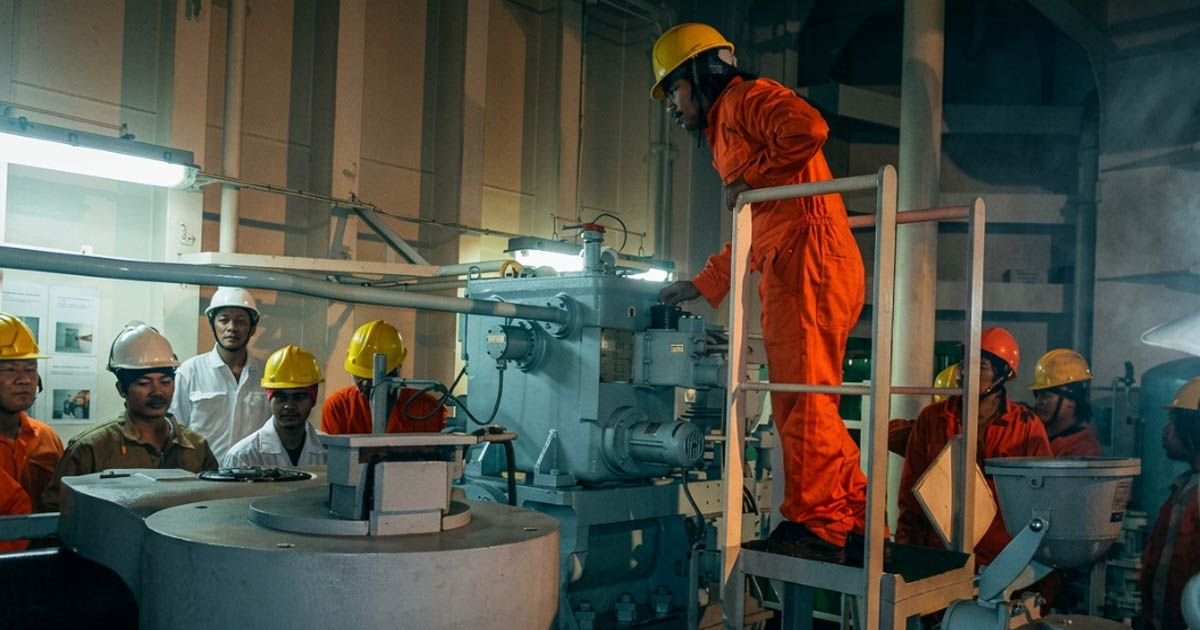
An emergency steering changeover is the controlled transfer of rudder control from the bridge to an alternative steering position, usually local control in the steering gear compartment.
Picture it: 0215H, a loaded bulk carrier entering a traffic separation scheme. The wheel stops responding. Follow-up steering is gone, and the standby arrangement does not restore normal control. The bridge now needs to establish an alternative means of steering, man the steering flat, establish communication, and confirm that the rudder still responds.
That is what this drill prepares the crew for.
Here is how an emergency steering drill generally works, from loss of normal control to restoring bridge steering authority. ⚓
⚓ Trigger Points for Emergency Steering Activation
Emergency steering is not a maintenance exercise. You activate it when the primary control chain fails, and the decision must be immediate.
- Rudder fails to answer: Helm applied, no movement on the rudder angle indicator within seconds.
- Follow-up control failure: Non-follow-up works but follow-up is dead, or the wheel has no effect on either pump station.
- Control system failure: A fault affects the normal bridge steering control while the steering gear itself remains available.
- Power unit or system failure: An alternative steering arrangement is required under the ship’s emergency procedures.
The immediate action is to send a helmsman (or the most available crew) to the steering gear room to prepare for emergency steering and steer the ship from the steering flat.
Bridge vs. Steering Flat Authority
Command never leaves the bridge. The Master or OOW remains the conning authority; the person in the steering flat executes helm orders exactly as received.
The steering flat is an execution station, not a decision station. Nobody down there alters course on their own judgment.
A gyro course repeater is in the steering gear room for the helmsman to use in executing commands from the bridge.
SOLAS Compliance & Drill Frequency
Under SOLAS Chapter V, Regulation 26, every ship must have emergency steering capability operable from the steering gear compartment, with drills held at least once every three months. Log each drill with date, participants, and duration.
STCW Code Table A-II/1 makes emergency steering competence mandatory for OOW certification, so expect a PSC officer or SIRE 2.0 vetting inspector to ask a junior officer to walk through the changeover from memory. Drill records showing the same two ABs every quarter will not impress anyone.
💡 Pro Tip: Do not limit emergency steering drills to deck personnel. Include engineers and engine ratings in the hands-on operation of the steering gear, as they may be closest to the steering gear room during a failure. They should know how to operate the local control levers, follow helm orders from the bridge, and use both the primary and backup communication systems, including the sound-powered telephone.
📣 Bridge-to-Steering Flat Communication Protocol
Pre-Changeover Notification
The bridge initiates everything. Before anyone touches a switch, the bridge announces intent on the designated internal communication: sound-powered telephone, designated UHF or VHF channel, or the pre-agreed fallback.
A clean exchange sounds like this:
- Bridge: “Steering flat, bridge. Stand by for emergency steering changeover.”
- Steering flat: “Bridge, steering flat. Standing by.”
- Bridge: “Steering flat, take the helm. Changeover to local control.”
- Steering flat: “Local control engaged. Rudder midships.”
Establishing the Helm Order Loop
Once local steering is in operation, use closed-loop communication.
The bridge gives the order. The steering flat repeats it, executes it, and reports when the ordered rudder angle has been reached.
For example:
- Bridge: “Port twenty.”
- Steering flat: “Port twenty.”
- Steering flat: “Port twenty on.”
Keep communication clear and continuous throughout the operation. And just like steering the ship from the bridge, use standard helm orders and execution.
⚠️ Caution: Never assume the steering flat can see the traffic. The person on the local lever is blind to everything except the rudder angle in front of them. The bridge owns the picture; report it.
⚙️ Executing the Local Control Changeover Sequence
Here is the honest truth: there is no universal emergency steering changeover sequence.
Different ships use different steering gear systems, pumps, selectors, electrical circuits, hydraulic arrangements, and backup controls.
It’s different from changing from automatic to manual steering, but the procedure is similar.
Your ship’s steering gear operating instructions, posted diagrams, manufacturer’s manual, and SMS procedure are the authoritative references.
Isolating Bridge Control Systems
In general, the changeover may involve:
- Confirming that the steering gear compartment is manned and communication is established.
- Selecting the required alternative or local steering mode.
- Confirming the relevant power unit or steering arrangement is available.
- Reporting the changeover status to the bridge.
- Testing actual rudder response.
The exact switches, breakers, valves, and interlocks will vary from ship to ship.
Engaging Local Hydraulic & Electrical Controls
Local operation means an electrical control lever driving the pump solenoids, or a manual backup arrangement per classification rules. Before energizing anything, run the safety sweep.
- Check for personnel: Keep hands, tools, and personnel clear of moving parts.
- Check hydraulic condition: Look for abnormal leaks and verify the steering gear is in a safe operating condition.
- Confirm the power unit: Verify that the required steering gear power unit is available.
- Confirm the control mode: Ensure the correct steering mode has been selected according to the ship’s instructions.
- Check the arrangement: Do not alter valve positions unless required by the approved procedure.
📌 Note: Your SMS should contain the ship-specific changeover procedure. If the posted diagram and the SMS disagree, raise it with the C/E and Master before the drill, not during it.
🔄 Verifying Rudder Response & Returning Control
The changeover is not complete simply because a switch has been moved.
The crew must confirm that the rudder responds correctly to the alternative steering control.
Testing Rudder Movement & Angle Indication
A typical test may include:
| Step | Order | What You Verify |
| 1 | Midships | Local indicator reads zero and matches the bridge repeater |
| 2 | 20° port | Smooth movement, no hunting, correct direction |
| 3 | 20° starboard | Full swing, angle holds, no drift |
| 4 | Return to midships | Rudder settles on zero without overshoot |
| 5 | Additional small corrections | Communication and steering response remain satisfactory |
The exact rudder angles and test sequence should follow the ship’s approved procedure.
Cross-check available rudder angle indications. If there is a discrepancy, report it immediately and use the ship’s approved method to verify actual rudder position.
Restoring Bridge Authority
Returning control to the bridge is a separate part of the procedure and requires positive confirmation.
- The bridge confirms that conditions are suitable for restoring normal control.
- Both stations confirm the current rudder position.
- The steering flat transfers control back to the bridge or designated remote steering mode.
- The bridge tests rudder response.
- The bridge confirms that normal steering control has been restored.
- The steering flat remains manned until released.
Only stand down after both stations have confirmed that the bridge has effective steering control.
💡 Pro Tip: Practice the return to bridge control as seriously as the initial changeover. A successful emergency steering drill includes the complete sequence, not just getting control into the steering flat.
❓ Frequently Asked Questions
Can you operate emergency steering while underway?
Yes. Emergency or alternative steering arrangements are intended to provide a means of maintaining or restoring rudder control when normal steering fails. The Master should take appropriate action based on the situation, including reducing speed when safe and practicable.
What should you check after changing to emergency steering?
After changing to emergency steering, confirm that the rudder responds correctly to helm commands, the rudder angle indication agrees with the actual rudder movement, and communication between the steering flat and bridge is working properly. The responsible crew should also verify that the steering gear is operating normally and report any abnormal noise, vibration, leakage, or other indication of a problem.
What if rudder angle indication fails locally?
Use the available alternative means of verifying rudder position in accordance with the ship’s steering gear arrangement and emergency procedures. Report the failure to the bridge immediately.
Who is qualified to operate local steering control?
Crew members assigned to emergency steering must be trained and familiar with the local controls under the ship’s SMS. This should include both deck and engine personnel, especially engineers and engine ratings who may reach the steering gear compartment first. Anyone assigned to operate the controls should have practically operated them during drills, not just read the procedure.
📣 What’s Your Experience?
When did your crew last run the full bridge-to-steering flat changeover, and how long did it really take?
💬 Share your experience in the comments!
May the winds be in your favor. ⚓
Leave a Reply