


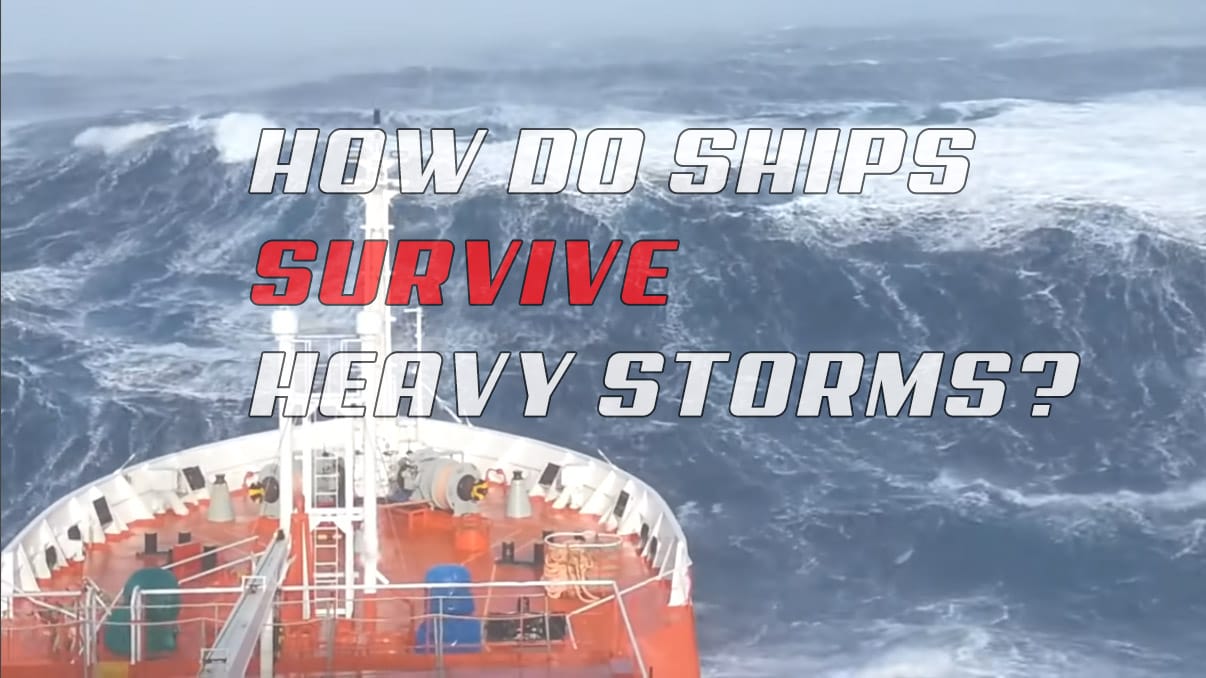
Yes, modern ships are engineered to survive extreme weather.
But surviving a storm at sea isn’t just about design- it’s about smart seamanship, proactive navigation, and onboard preparedness.
From merchant vessels to cruise liners, ships have faced the fury of hurricanes and typhoons.
Behind every survival story is a crew following key storm protocols: maintaining propulsion, facing waves head-on, and adjusting ballast for stability.
This guide breaks down what happens during a storm, what crews do to stay afloat, and why the open sea, not the harbor, is often the safest place during a hurricane.
⚠️ What Happens During a Heavy Storm at Sea?
Storms at sea cause violent waves, intense ship movements, and potentially dangerous conditions onboard.
These conditions can last for hours or even days.
Imagine being in a vehicle on a violently bumpy road- only at sea, the road is made of 15-meter-high waves, hurricane-force winds, and horizontal rain.
Crews experience:
- Extreme pitching (up and down movement) and rolling (side-to-side movement).
- Sudden gravity changes, causing feelings of weightlessness.
- Disrupted sleep, difficulty moving, and unsafe cooking or eating.
👉 Life onboard becomes a test of endurance, not just for the ship but for every seafarer onboard.
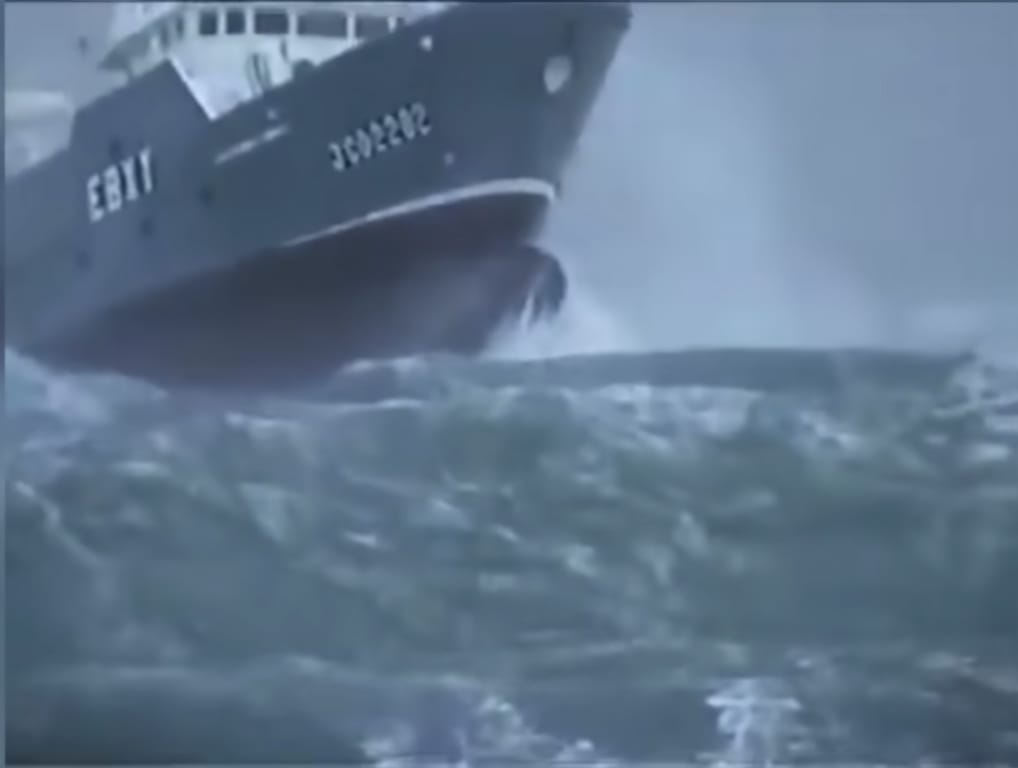
⚙️ Why Stopping the Ship Is the Worst Thing to Do
Rule #1: Never lose propulsion in a storm.
A vessel with no engine power or steering is at the mercy of the sea- what seafarers call a “dead ship.”
Here’s what happens:
- The vessel drifts sideways, presenting its broadside to the waves- the most dangerous position.
- Severe rolling and pounding increase stress on the hull.
- Without control, the ship risks capsizing or grounding.
Keeping the engine and rudder active allows the crew to navigate into the waves, reducing roll and avoiding structural damage.
“A powerless ship in a storm is as good as gone.”
🛡️ Why Facing the Bow Into the Waves Is Crucial
The bow, the forward-most part of the ship, is the strongest structurally. In shipbuilding, this area has:
- Closely spaced frames for extra reinforcement.
- A sharp profile to cut through waves.
When facing the bow into the swell:
- The vessel pitches, like a seesaw.
- This is less dangerous than rolling and more predictable.
- It reduces hull stress.
By contrast, side-on waves cause violent rolling, lead to seasickness, and can throw people or cargo around.
👉 Professional storm handling always involves “bow to swell” maneuvers– it’s the golden rule in ship navigation during heavy weather.
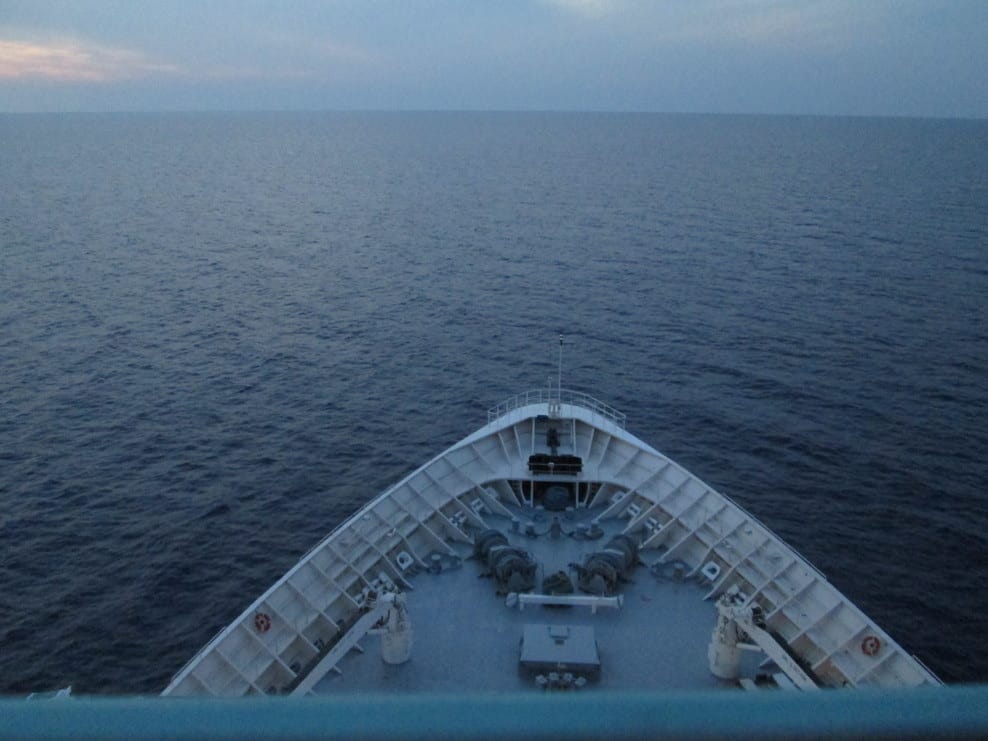
🧭 Inside the Ship: What Seafarers Experience
When the storm hits, the crew implements heavy weather protocols:
- All loose items- inside and out, must be secured.
- Crew members wear lifejackets and minimize unnecessary movement.
- The Bosun and deck team secure lashings and inspect moorings if in port.
Inside the accommodation:
- Sleep is unpredictable. One moment you’re in bed, the next you’re on the deck.
- Moving becomes difficult; crew rely on railings to maintain balance.
- Cooking and eating are nearly impossible. Food slides off tables, stoves become dangerous.
🚢 Heavy Storms While Alongside Port: Is It Safe?
Surprisingly, many ships ride out heavy storms while berthed– but only under controlled conditions.
When staying alongside:
- Extra mooring lines are added.
- Tugboats are sometimes kept on standby.
- Continuous safety rounds are performed, especially during Force 8 or 9 winds.
Force 9 at Berth
I’ve been on board where we stayed alongside during a Force 9 weather (Beaufort Scale). It didn’t happen once but twice.
On two separate occasions, we were in Foynes, Ireland, and Bordeaux, France. After receiving the forecast, our captain decided that we wait for the out storm while berthed.
The terminal allowed us with our plans even if our operation was completed. We only added more mooring ropes and increased the frequency of safety rounds.
💪 Enduring Storms at Anchorage
Anchoring during a storm may sound like poor seamanship, but it’s sometimes a calculated decision.
As long as the anchor holds and the crew maintains vigilance, some vessels choose to stay put.
Personal experience riding out a Force 8 gale while anchored:
- Other vessels started dragging, but our ship held firm.
- The decision to remain anchored was driven by fuel conservation during a financial crisis.
- Despite the storm, we maintained full control and weathered it safely.
Key factors in anchoring during heavy weather:
- Holding power of the seabed.
- Anchor scope (length of chain).
- Windage of the vessel.
- Constant position monitoring via GPS, radar, and visual bearings.
⚠️ Note: If anchor drag is detected, immediate action is required, often weighing anchor and heading out to sea where the vessel can maneuver freely.
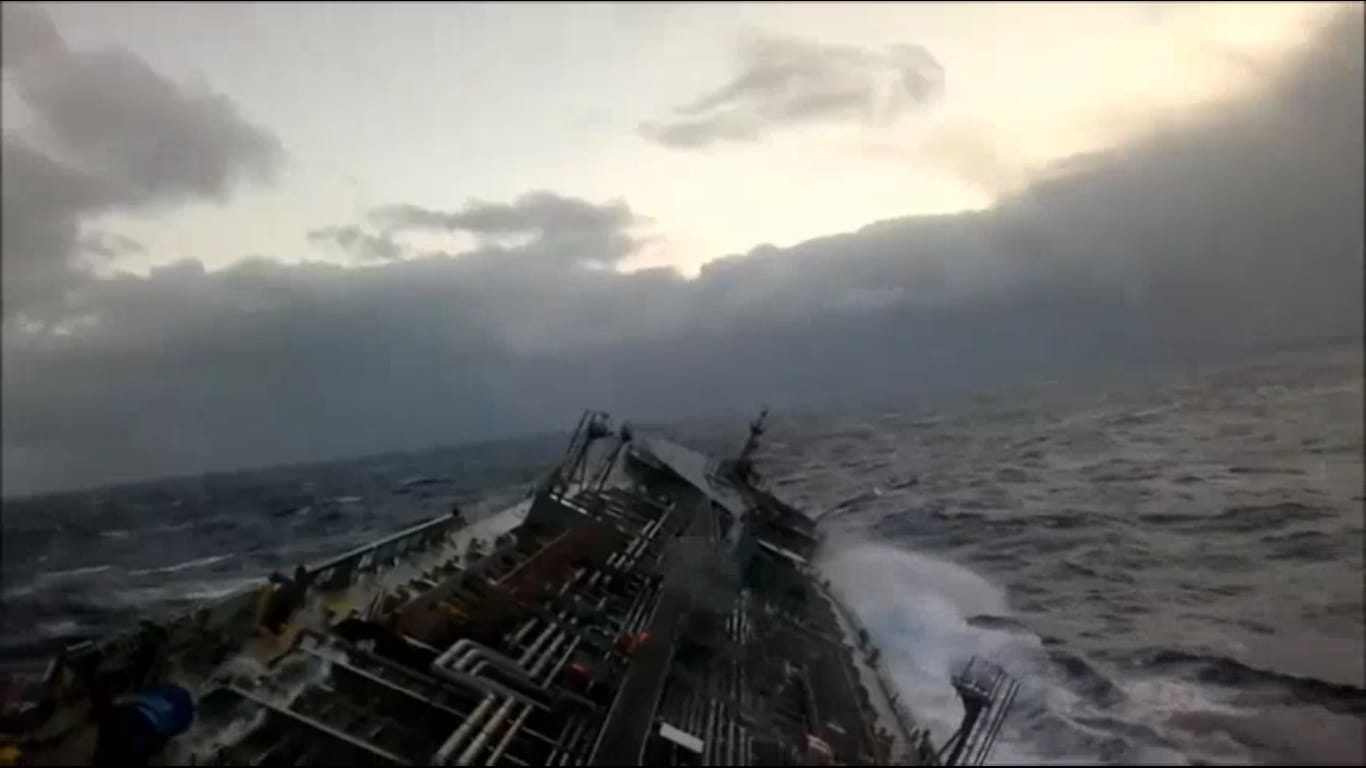
🌊 Heavy Storms at Sea
When the sea state becomes dangerous, course alteration is a key survival tactic.
Even if it causes delays, altering course helps:
- Minimize rolling angles and motion sickness.
- Prevent cargo shifts and structural stress.
- Maintain propulsion and protect the rudder.
🚢 Example: Making only 2 knots ahead at full power while facing a storm head-on is far safer than risking a beam sea and full rolling.
This maneuver ensures the vessel faces waves with the bow, reducing lateral impact and improving the ship’s response.
⚖️ Loaded vs. Ballast Condition: How Ship Weight Affects Storm Survival
A ship’s load condition has a major influence on how she performs during heavy seas.
✅ Loaded Condition:
- Heavier displacement = more resistance to wave motion.
- Lower center of gravity, increasing overall stability.
- Slower motion response but better handling in heavy seas.
⚠️ Ballast Condition:
- Lighter ship = easily tossed by waves.
- Higher freeboard increases windage.
- Rapid rolling and pitching possible if ballast is poorly managed.
Seafarers know how to manipulate ballast water to improve storm response. Adjustments are often made to:
- Lower the center of gravity.
- Reduce windage by adjusting trim.
- Distribute weight evenly to avoid excessive stress on the hull.
🧠 Pro Tip: Chief mates monitor stability parameters constantly, using software or stability books to calculate GM (metacentric height), stress, and bending moments.
📡 Tools That Help Ships Survive
⛈️ 1. Weather Monitoring Systems
Weather prediction is a seafarer’s best defense against storms.
Bridge teams rely on multiple tools to receive and interpret real-time meteorological data.
🌐 Modern storm-tracking systems include:
- NAVTEX (Navigational Telex):
- Automatically broadcasts local weather and navigational warnings.
- Standard equipment on SOLAS-compliant ships.
- Weather Fax:
- Prints synoptic weather charts including pressure systems, isobars, and storm tracks.
- Visual reference for assessing storm strength and direction.
- VHF Coastal Broadcasts:
- Useful when operating near shore, these provide regular weather warnings.
- Satellite Internet & Meteorological Sites:
- Many vessels today use online weather routing and forecast tools.
- Helps in voyage planning, storm avoidance, and course rerouting.
💡 Weather awareness isn’t just about receiving info, it’s about knowing how to interpret it for navigational decisions.
🔁 2. Rerouting vs. Delays: Safety First
Avoiding a storm sometimes means:
- Skipping a scheduled port call.
- Delaying ETA by several days.
- Burning extra fuel to take a longer route.
But the trade-off is safety- not only for the ship but for cargo, crew, and vessel reputation.
Smart captains follow these principles:
- Safety > Schedules
- Avoidance > Reaction
- Early decisions = fewer risks later
This approach prevents:
- Containers going overboard.
- Dangerous rolling and structural damage.
- Crew fatigue or injury during extreme weather.
👨✈️ Seafarer Mindset: What It Feels Like in the Eye of the Storm
Even if the ship is built for survival, the psychological stress during a heavy storm is real especially for those on their first few contracts.
Imagine:
- 15-meter waves crashing over the bow.
- Constant alarms, loud machinery, and unpredictable motion.
- Sleepless nights in a constantly moving ship.
“There were storms that made me question whether we’d even reach the next port.”
⚓ Ships Are Built to Withstand Storms
Despite terrifying conditions, modern ships are designed to survive.
🛠️ Design Features That Help:
- Strong hull structure with reinforced frames.
- Powerful main engine with emergency backups.
- Effective bilge systems and watertight compartments.
- Proper ballast tanks for dynamic stability control.
But beyond steel and sensors, it’s the crew’s knowledge and preparation that make the difference.
“If you take care of your ship, she will take care of you a hundred-fold.”
📌 Conclusion: Riding Out the Storm at Sea
Heavy storms are an inevitable part of maritime life- from tropical depressions to full-force hurricanes.
But seafarers overcome them by:
- Staying informed via weather systems.
- Maintaining engine power and steering.
- Facing waves bow-first to reduce rolling.
- Managing stability and ballast with precision.
- Trusting their training, teamwork, and vessel.
This article reflects not just survival tactics but the spirit of seamanship in action. 🌊🧭
❓ FAQs: Surviving Storms at Sea
1. Do ships ever capsize during storms?
Rarely, but it can happen usually due to poor stability, cargo shift, engine failure, or rogue waves.
Modern ship design and training greatly reduce this risk.
2. What is the safest position for a ship during a storm?
Out at sea, facing the waves with the bow, maintaining propulsion, and avoiding beam seas. This prevents extreme rolling and structural stress.
3. Is it safe for ships to stay at anchorage or port during storms?
It depends. With good holding ground and preparation, anchorage may be safe. In port, added mooring lines and constant monitoring are essential.
4. What equipment do ships use for storm tracking?
NAVTEX, weather fax, internet, VHF coastal stations, and shore-based routing teams all provide accurate and timely weather data.
5. Do seafarers receive storm-specific training?
Yes. Bridge teams study marine meteorology, ship stability, and heavy weather seamanship as part of their certifications (STCW-compliant).
May the winds be in your favor.


Leave a Reply