


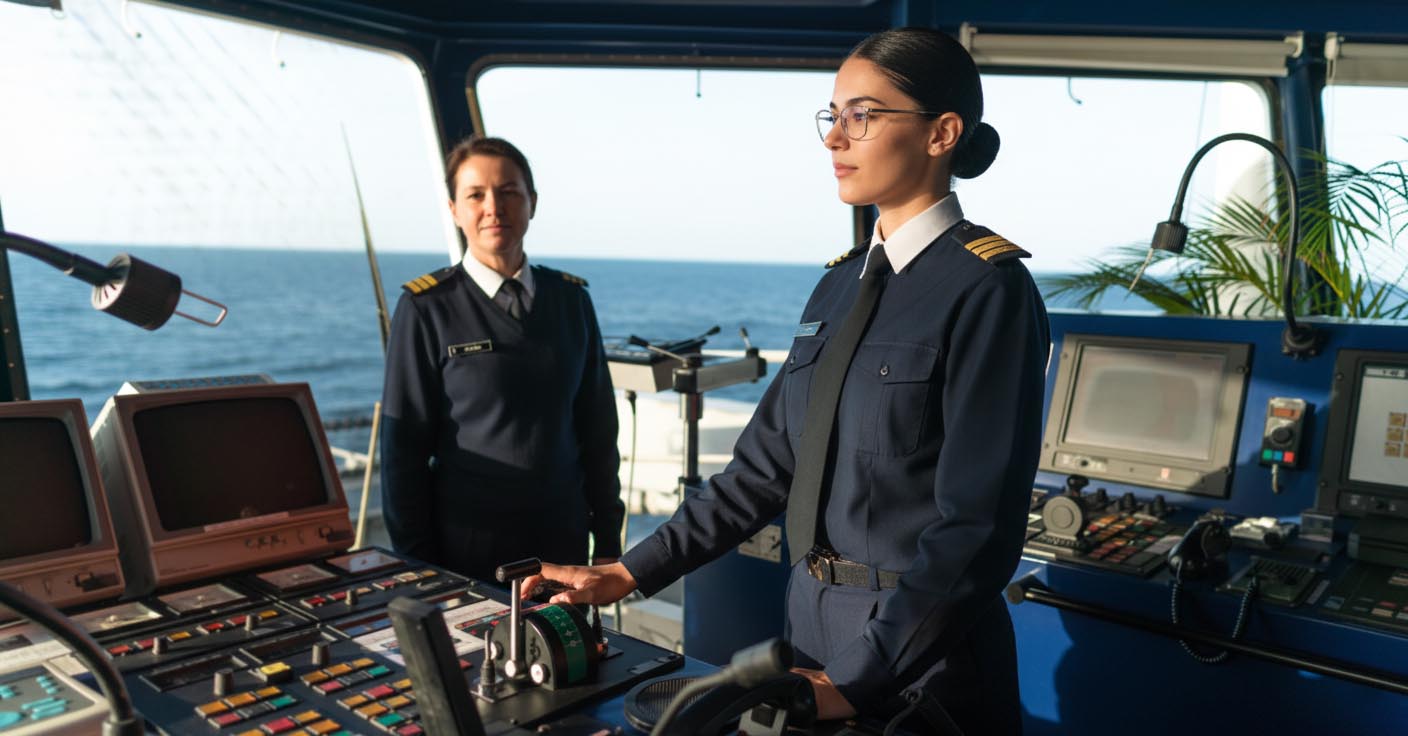
Women account for just 1.2% of the global seafarer workforce, according to the Global Maritime Trends 2050 by Lloyd’s Register.
While diversity in shipping has been a recurring theme in industry discussions, most conversations are broad and rarely focus on what truly matters- the progression of women through maritime ranks.
Looking at the career ladder from cadet to master or chief engineer provides a sharper, more realistic picture of the challenges women face and how they overcome them.
This article delivers fresh data, real-world stories of women breaking barriers, and insights into what companies seek in female talent today, blending hard stats with human experiences to chart the path forward.
Barriers Women Face in Maritime Ranks
The journey from cadet to master is fraught with challenges for women, amplified by the industry’s male-dominated culture and the unique demands of seafaring life.
Understanding these obstacles across different rank levels is crucial for both aspiring female seafarers and companies seeking to diversify their workforce.
Below, we explore these obstacles across career stages, drawing on recent surveys and firsthand accounts.
Cadetship (Entry-Level Challenges)
- Shortage of training berths: Women seafarers reported encountering some difficulties with colleges not addressing the needs of all genders. This includes training while in nautical college. (Source: INTERTANKO Seafarers Survey 2024)
- Acceptance issues: A considerable number of cadets, 75% of female engine cadets, face rejection, indicating fierce competition and limited opportunities for practical training. (Source: All Aboard Alliance | Employability in Maritime)
- Safety concerns: Harassment and isolation remain pressing worries. A 2022 Diversity@Sea study by All Aboard Alliance reported that 66% of female seafarers experienced or witnessed gender-based harassment.
Junior Officers (Third Mate, Fourth Engineer)
Transitioning from cadetship to officer ranks brings new responsibilities and new obstacles.
As women progress to junior officer roles like third mate or fourth engineer, stereotypes about technical aptitude persist.
- Proving technical competence: Women officers would often have to do better than their male colleagues to be perceived as competent or be promoted.
- Mentorship gaps: Female officers frequently lack senior mentors who understand their unique challenges, limiting professional guidance.
- Long contract duration: Many female maritime professionals want to balance between job and personal life – which requires shorter contracts. However, the four to nine month contract assignments seem too long for them.
At this stage, resilience and consistent performance are critical to counter stereotypes and secure future promotions.
Senior Officers (Chief Mate, Master, 2/E, Chief Engineer)
Climbing to senior ranks brings authority but also amplifies bias.
- Leadership bias: A female chief mate or chief engineer may encounter doubts about commanding a predominantly male crew, especially in high-pressure operations like cargo handling, drydocking, or emergency drills. (Source: Diversity@Sea study by All Aboard Alliance)
- Few role models: Globally, the number of women in these ranks is still very small, meaning aspiring officers have fewer success stories to follow.
- Breaking the glass ceiling: Even after years of service, women sometimes find promotions delayed compared to male peers.
- Extra scrutiny: Shipowners, charterers, and clients often hold female masters and chief engineers to stricter performance standards, knowing they may attract external attention.
- Global perception: How a female captain is received varies by region. In progressive ports, her leadership is respected. In more traditional maritime communities, skepticism can still be evident.
Success Stories of Women in Maritime Ranks 🌟
In 2025, women are not just breaking into maritime ranks- they’re redefining them, especially in the push for sustainable shipping.
From commanding vessels to mentoring the next generation, these trailblazers show what’s possible despite the odds.
Below are stories of women who’ve risen through the ranks, with a focus on their contributions to the green transition and diversity.
Trailblazers in Command
- Capt. Radhika Menon (India): In 2016, she became the first female captain in the Indian Merchant Navy and was awarded the IMO Award for Exceptional Bravery at Sea for rescuing seven fishermen in stormy conditions off the Bay of Bengal. Her story symbolizes that skills and courage transcend gender.
- Chief Engineer Nina Sue da Silva (Philippines): The country’s first woman licensed marine chief engineer and a graduate of Maritime Academy of Asia and the Pacific (MAAP). She serves as an inspiration for Filipina cadets who aspire to join the mechanical and engineering side of shipping, where female representation is even lower than on deck.
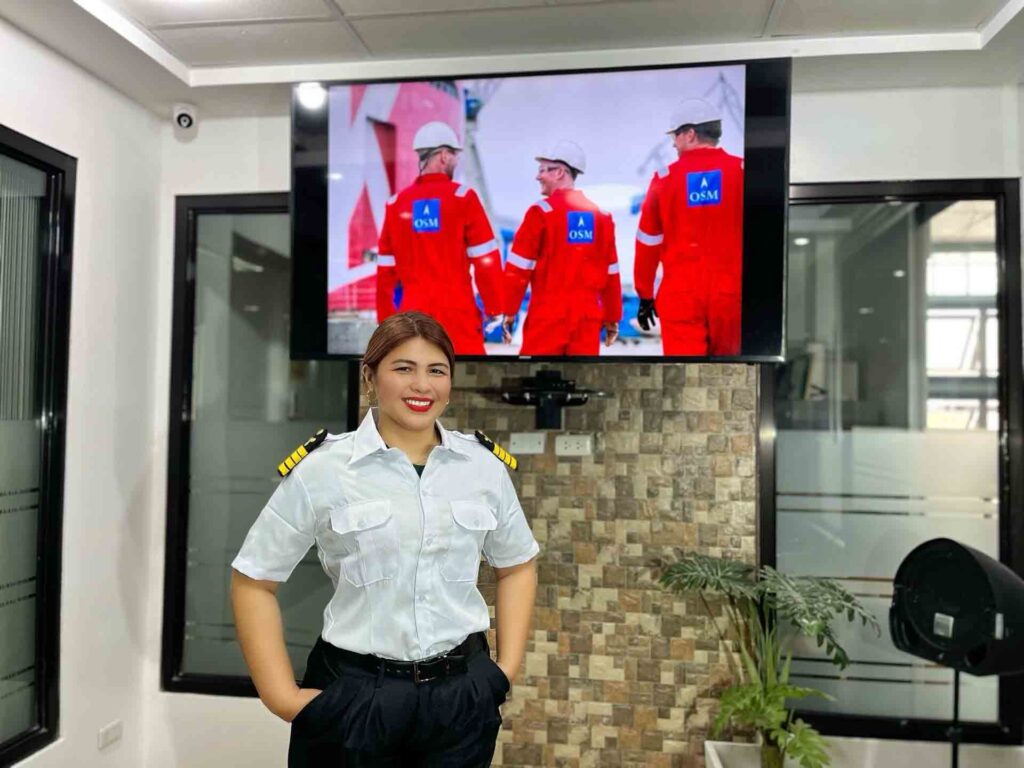
These leaders prove that women can excel in commanding positions when given equal opportunities and support.
Women Maritime Officers in Mentorship
Across maritime schools and companies, many women have climbed from deck or engine cadet to licensed officer and are now mentoring younger seafarers.
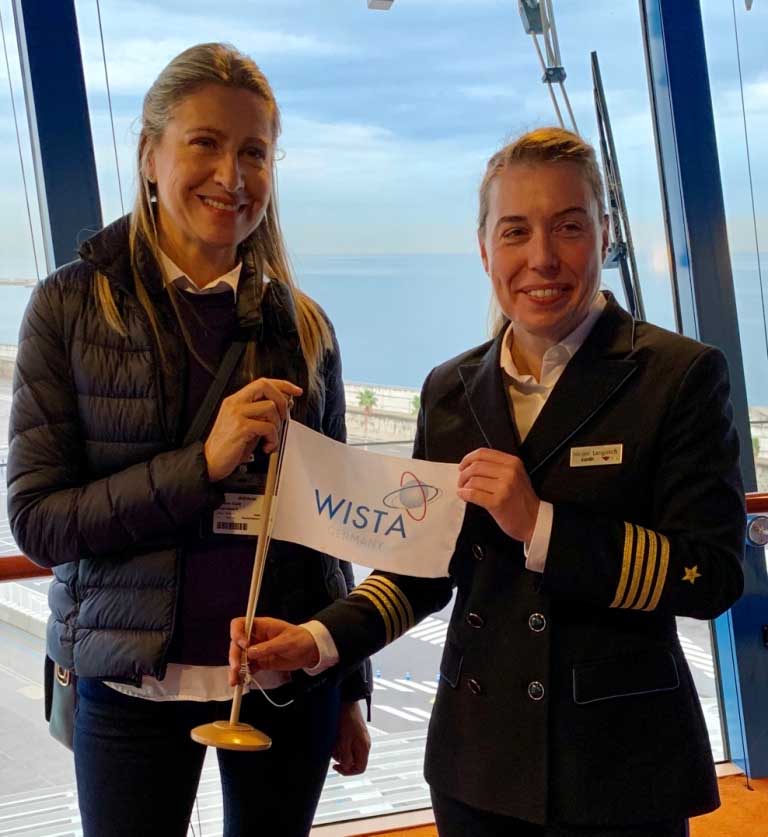
- Captain Nicole Langosch (Germany): Became the first female captain in AIDA Cruises’ fleet and the highest-ranking woman on a cruise ship in Germany when she took command of AIDAsol. She is an active member of WISTA and inspires young women to pursue nautical studies.
- Female Chief Engineer Sherrain Dominguez: First female Chief Engineer in the BW Fleet aboard a very large gas carrier. She is also an instructor and assessor at the Philippine Center for Advanced Maritime Simulation and Training (PHILCAMSAT) and received the SeafarHER Award for Leadership in Seafaring from the Maritime Industry Authority (MARINA) in 2025.
Mentorship not only strengthens women’s confidence but also improves retention rates in an industry where many female cadets drop out after their first contracts.
Regional Highlights
- Philippines: With the country supplying over 26% of the world’s seafarers, more maritime academies now encourage female enrollment in deck and engine programs. (Source: ICS and DMW)
- India: Maritime schools are actively supporting female cadets with scholarships and company partnerships, contributing to success stories like Capt. Menon.
- Nigeria: Women in Maritime Africa (WIMAfrica) promotes female participation in seafaring and port leadership.
- Europe: Scandinavian countries lead in policy-driven gender equality, where women are more represented in maritime officer roles compared to Asia and Africa.
These regional efforts highlight a global shift, showing that women are increasingly breaking into officer and command ranks.
What Companies Look For in Women Seafarers ⚓
Skills Beyond Certificates
Shipping companies emphasize that competence matters more than gender. In practice, this means:
- Teamwork in multicultural crews: Ability to work effectively across nationalities and traditions is highly valued.
- Technical and Digital Skills: The increasing use of automation, AI, and digitalization on “smart and eco-friendly ships” is driving demand for tech-savvy personnel.
- Exceptional Ability and Professionalism: A recurring theme is that female maritime professionals experience being treated as “less competent” indicates that an exceptionally high level of professional capability is necessary to overcome these biases.
- Simulator proficiency: Strong performance in bridge and engine simulators is seen as a predictor of onboard reliability.
- Adaptability: Companies favor officers who can serve on different ship types, from bulk carriers to tankers, not just cruise or passenger ships where women are more common.
Leadership & Soft Skills
As officers progress, technical ability must be complemented by leadership qualities. Companies specifically assess:
- Decision-making under pressure: How candidates handle emergencies, navigation risks, or machinery failures.
- Leadership and Management: For career advancement, companies look for women with leadership and strategic management skills.
- Communication and conflict resolution: Essential for maintaining harmony in mixed crews.
- Crew management style: Some reports note that female ship officers often employ a more inclusive leadership style, which can improve morale and reduce turnover.
Retention & Career Planning
Shipping companies also look at long-term career signals:
- Commitment to sea service: Women who clearly plan to stay at sea have a higher chance of being promoted.
- Willingness to accept mixed postings: Serving on cargo ships (tankers, bulkers, containerships) is viewed as a strong career move compared to limiting choices to passenger or cruise ships.
- Flexibility with contracts: Companies appreciate officers who accept diverse rotations instead of restricting themselves to shorter voyages.
Initiatives Supporting Women in Maritime 💡
Several global organizations are actively promoting female participation in the maritime workforce:
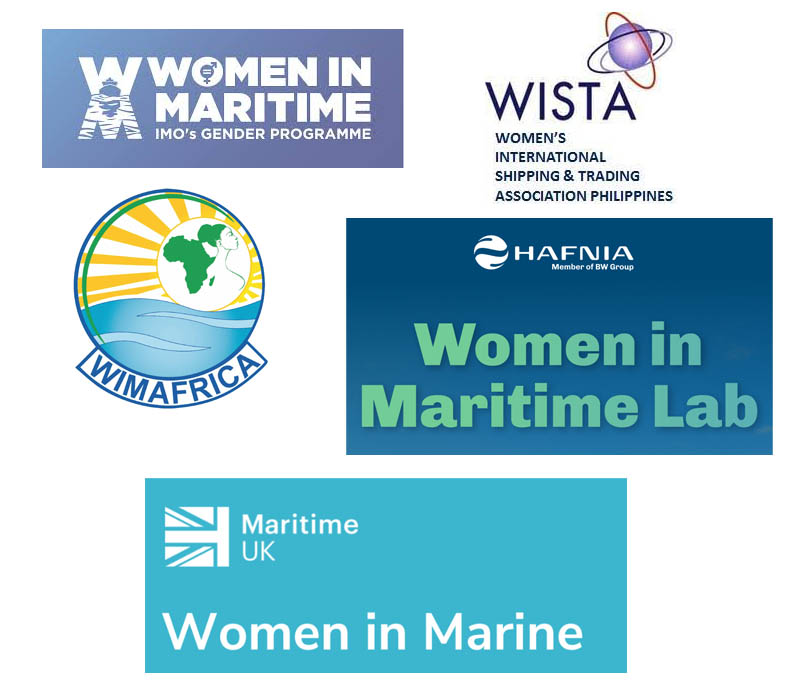
- IMO’s “Women in Maritime” program: Aims to increase the visibility and integration of women across all maritime sectors.
- WISTA (Women’s International Shipping & Trading Association): Provides mentoring, networking, and career development for women in maritime.
- Women in Maritime Lab: Hafnia, BW Group, and Shell’s initiative to find and deploy digital solutions aimed at attracting, retaining, and promoting women in the industry
- WIMAfrica or African Women in Maritime: A non-profit organization designed to answer the call of gender equality, women empowerment as well as to establish a cooperation of entrepreneurship development of African women in the maritime sector.
- Women in Maritime Network: Created by Maritime UK in response to calls for action on gender imbalance in the industry. The network brings together leaders from across the maritime sector to identify practical steps to increase the number of women in maritime roles, especially in senior positions.
These initiatives not only address current challenges but also create pipelines for future female leaders in shipping.
How Women Can Succeed in Maritime Ranks 🚀
Practical Career Tips
- Networking via WISTA and unions: Joining organizations like WISTA International and national maritime unions creates access to mentorship, job referrals, and industry events.
- Build technical competence early: Focus on rank-specific skills such as cargo planning for deck cadets or machinery diagnostics for engine cadets. Strong fundamentals make promotions easier.
- Highlight resilience and adaptability: CVs should reflect the ability to work in challenging ship types, multinational crews, and varied trade routes. Employers value versatility as much as technical expertise.
Preparing for Promotions
- Simulator training & performance records: High scores in navigation and engine-room simulators are often used by companies as indicators of readiness for higher rank.
- Safety & compliance record: A spotless track record in ISM Code, MARPOL, and COLREGS adherence gives companies confidence to promote officers to senior ranks.
- Mentorship from both genders: Women should seek guidance from both male and female mentors. Learning different leadership styles provides a more balanced approach when handling real-life crew management.
Frequently Asked Questions FAQs ❓
How many women are seafarers today?
Women represent 1.2% of the world’s seafaring workforce or ~24,000 out of ~1.89 million seafarers (ICS–BIMCO Seafarer Workforce Report 2021), with the majority serving in the cruise and passenger sectors.
Can women become ship captains or chief engineers?
Absolutely! Examples include Capt. Radhika Menon of India and Chief Engineer Sherrain Dominguez, proving that women can reach the top shipboard ranks.
What are the main obstacles for women cadets?
The initial and most significant hurdle for women cadets is finding a company willing to hire them and provide the mandatory practical sea time required for certification. Another is discrimination and high rejection rates.
Do companies actively hire women officers?
Yes, especially diversity-focused firms like Maersk, MSC, and BP Shipping. These companies are actively recruiting and providing training opportunities for women seafarers.
Which organizations support women in maritime?
Key players include the IMO’s Women in Maritime program, WISTA’s mentorship networks, the World Maritime University (WMU) offering scholarships, Maritime UK’s Women in Maritime Network, and ICS’s training initiatives.
These groups drive funding, advocacy, and visibility in 2025.
Conclusion & Call to Action 📝
Women in maritime ranks continue to face significant hurdles, from cadetship challenges to the glass ceiling at command level.
Yet, success stories of trailblazing captains and chief engineers prove that progress is possible with resilience, mentorship, and company support.
Today, more shipping companies are recognizing the value of diversity at sea and are actively recruiting women into officer and leadership roles.
👉 To cadets and officers- whether male or female, the responsibility to mentor, support, and encourage diversity lies in your hands.
A more inclusive maritime industry not only benefits women but strengthens the entire global seafaring workforce. ⚓🌍
May the winds be in your favor.
Leave a Reply