


Not long ago I asked a deck cadet if he knew his job. “Yes, I know,” he said. I gave him a task and it turned into a mess.
I told him straight: you said you knew, and you didn’t. The next time I asked, he said he had some experience but would double-check first. That was the better cadet.
He wasn’t lazy. He was protecting his pride, and it cost him learning time. I’ve been on both sides, as a cadet and now as the person handing out the work, and I’d handle my own cadetship differently today.
Being on board doesn’t guarantee you’ll learn.
What follows is a method built from my own experience, not a study, so adjust it to your ship and officers.
For the mistakes side, see my article on 24 common mistakes first-time cadets make on board. This one covers what to do instead.
1. Ask, follow up, and clarify
Cadets usually go wrong on questions in one of two ways.
Some don’t ask because they’re afraid officers will think they learned nothing at school, so they nod and pretend.
Others ask everything, including “where is starboard,” which makes it look like school taught them nothing.
Ask about things you don’t know, then use a simple loop:
Question → Explanation → Your follow-up → Apply it next time
The follow-up is the part that matters. Listen to the explanation, connect it to something related, and ask again.
It can be situational: “If the conditions change, would we do this differently?”
Or a comparison: “Why use this method here instead of the one we learned at school?”
It shows you’re thinking, not collecting answers. Pick your moment, though. Never interrupt a critical operation or someone doing a safety-critical task.
Clarify instructions, even when you think you understand. Say the officer tells you to take a cross bearing with the pelorus. If you don’t know what a pelorus is, ask. If you do, still confirm it in your own words:
- “Do you mean the pelorus on the starboard gyro repeater?”
- “Where is it now? Last time I saw it, it was kept near the door.”
Important: Saying “I know” when you don’t is the costliest habit a cadet can have. The task goes wrong, and the officer stops trusting your answers.
2. Keep two notebooks
You’ll see things you can’t ask about right then: a near miss, a piece of equipment you don’t recognize, an operation you only catch the end of.
Write it down.
Then ask when things calm down, maybe a day or two later.
Good questions come from real events:
- What was that valve for?
- Why did they adjust that mooring line?
- Why does this paint have a hardener and the other one doesn’t?
- Why was that equipment isolated?
- What was the officer checking on that inspection?
The working notebook
Keep it small and don’t worry about neatness. It’s for observations, questions, and quick diagrams.
But it won’t last.
It gets rain, spray, and sweat, gets folded and crumpled, and can go through the washing machine in a pocket.
Notes can become unreadable.
The master notebook
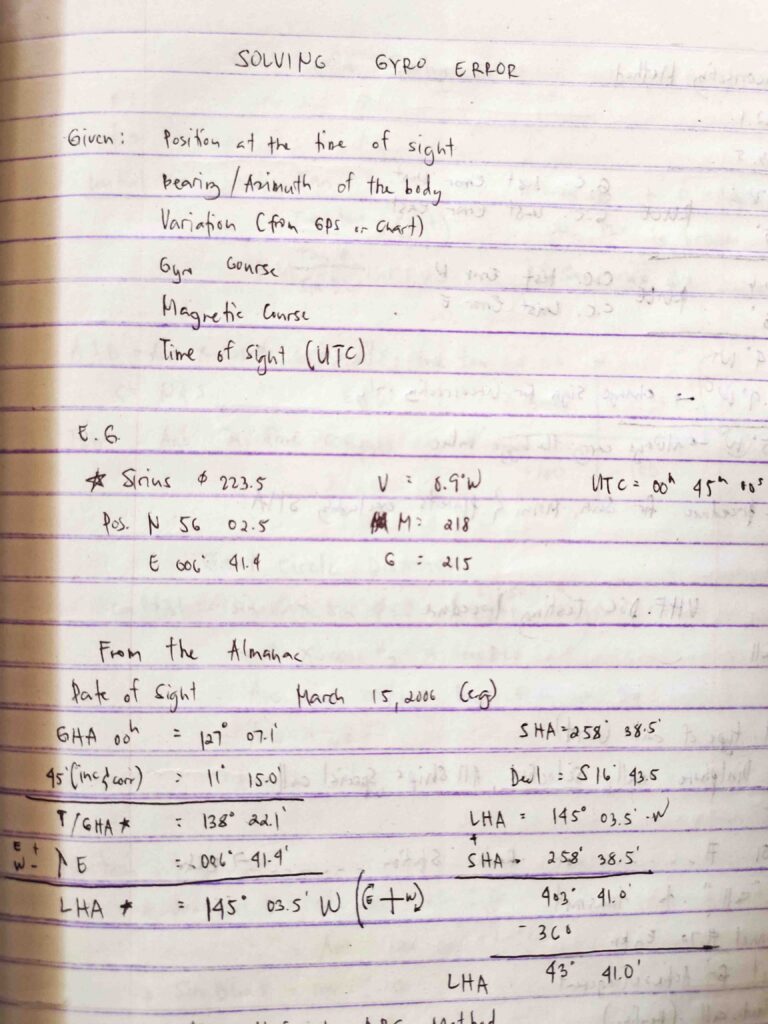
Once you have an answer, move it to a permanent notebook that goes with you from ship to ship.
- Write it from memory first. Don’t copy. If you can’t reconstruct the explanation, you haven’t understood it yet.
- Cross-check against another source. Your record book, a publication, or a second officer’s explanation.
- Add diagrams if they help. If you worked out a LOP on scratch paper on the bridge, redo the steps in your notebook in your own words instead of keeping the scrap.
Over time, the master notebook becomes your own reference for the next ship, your exams, and your first watch as an officer.
3. Use your training record book as a learning map
The training record book isn’t only for signatures.
STCW requires seagoing service to be recorded in an approved training record book, and the ICS record book says cadets should complete as many training tasks as they can.
The wording and requirements vary by flag, company, and programme, so check yours.
Use it to find gaps. For each task, ask:
- Have I seen this?
- Have I done it under supervision?
- Can I explain it?
- Do I know why it’s done this way?
Any “no” is a learning target.
I’ve seen the alternative.
Deck work is tiring, so the record book gets set aside. Then, in the last week before you sign off, the cadet needs signatures from officers who are too busy to evaluate anything.
Some get reprimanded for leaving it so late. Others collect signatures by being friendly, without understanding the topic.
That defeats the purpose.
4. Do it, then teach it
Watching is good. Doing it under supervision is better. Teaching it is better still.
My captain once asked me to demonstrate how to don a breathing apparatus.
I learned more from preparing and explaining it than from watching others do it.
When you explain something, you find the steps you skip and the parts you can’t put into words.
Cadets often avoid this because they’re afraid of being wrong in front of everyone. But being corrected in a drill costs much less than being wrong in an emergency.
If you get the chance, volunteer to explain something like:
- Donning breathing apparatus
- Hand flares and parachute flares
- Using line throwing apparatus
Prepare first. Ask the officer to correct you if you get something wrong.
I also asked the third mate if I could go along on his safety rounds.
I watched and helped as he checked fire extinguishers, refilled BA cylinders, checked stickers, restocked lifeboat provisions, and spliced rope or changed the lifeline on a life ring.
It taught me how safety equipment is maintained, not just how it’s used. Nobody assigned it. I asked.
5. Learn from the ratings
Some cadets only want to do officers’ work, because they think rating work won’t matter after promotion.
It does.
If you’ve never done the job, you won’t know how long it takes or what a sloppy version looks like
As a chief mate, you’ll be handing that work out. Ratings notice when an officer doesn’t understand what they’re asking for.
Spend time with the bosun, ABs, and other deck crew. They know techniques and initiatives that aren’t in textbooks:
- Mooring practices and rope handling
- Deck maintenance
- How equipment behaves in real conditions
- Safe ways to do physical tasks
It also helps you see how they think, which makes you a better supervisor later.
Being on good terms with everyone, including the galley crew, makes ship life easier and keeps the learning going.
6. Ask for exposure and learn the next rank
Some cadets stay on deck for the whole contract because officers just assign them deck work and nobody rotates them.
A cadetship is training, not only labor. Law and company policy generally expect officers to give cadets the exposure they need.
If it isn’t happening, ask the chief mate or captain directly: you want time on the bridge, and you want to learn the officers’ work.
Many cadets don’t ask because of low confidence. It’s the ones who don’t ask who lose out.
You can also start learning the next rank’s job. If you’re aiming to be a third mate, watch what the third mate does and why.
Don’t assume you’ll learn it once you’re promoted. If you’re promoted and turn out not to be ready, the ship carries the risk, not just you.
This is not about taking over duties. When you can ask to accompany officers, good options are:
- Bridge watchkeeping
- Safety rounds and equipment inspections
- Navigation preparation
- Cargo and mooring operations
- Drills
And when the workload allows, show initiative instead of waiting for instructions:
“Third, you’re busy. Can I take that task? You already showed me how, and you can check my work afterward.”
Wait for direction in safety-critical situations, and when you aren’t authorized or competent to do the task.
The goal is supervised practice, with someone checking your work.
7. A daily review
You don’t need a complicated system. At the end of each day, ask yourself:
- What did I see today that I didn’t understand?
- What did I actually do, not just watch?
- What should I ask an officer or crew member tomorrow?
- What goes in my master notebook?
A few minutes is enough. You’ll forget most of the day otherwise.
Frequently Asked Questions
What should a deck cadet write in a notebook?
Equipment you don’t recognize, operations you saw but didn’t understand, near misses, procedures, calculations, and diagrams. Write questions too, so you can ask when the officer has time.
How do I ask questions without annoying officers?
Ask about things you don’t know, not things you should have learned at school. Save questions for calm moments instead of interrupting operations, and follow up on the answer to show you listened.
What if my officers only give me deck work?
Ask the chief mate or captain for rotation to engine and bridge exposure. Explain that you want to learn the officers’ work. It may feel uncomfortable, but it’s part of your training.
Should I rest, or keep pushing to learn?
Rest. You can’t learn well while exhausted, and your rest hours matter. Know your job, write down what you learn, and don’t push so hard you become unsafe.
Final thoughts
Your first ship is more than sea time to complete.
Every mooring, safety round, drill, and conversation with an experienced seafarer can teach you something, but only if you capture it.
Ask, follow up, do it, explain it, write it down, and review it. If you make that a habit, you’ll leave the ship with more than a signed record book.
You’ll have your own notes and practical knowledge to bring to the next one.
What’s your best learning technique when you were a cadet?
May the winds be in your favor.
Leave a Reply