


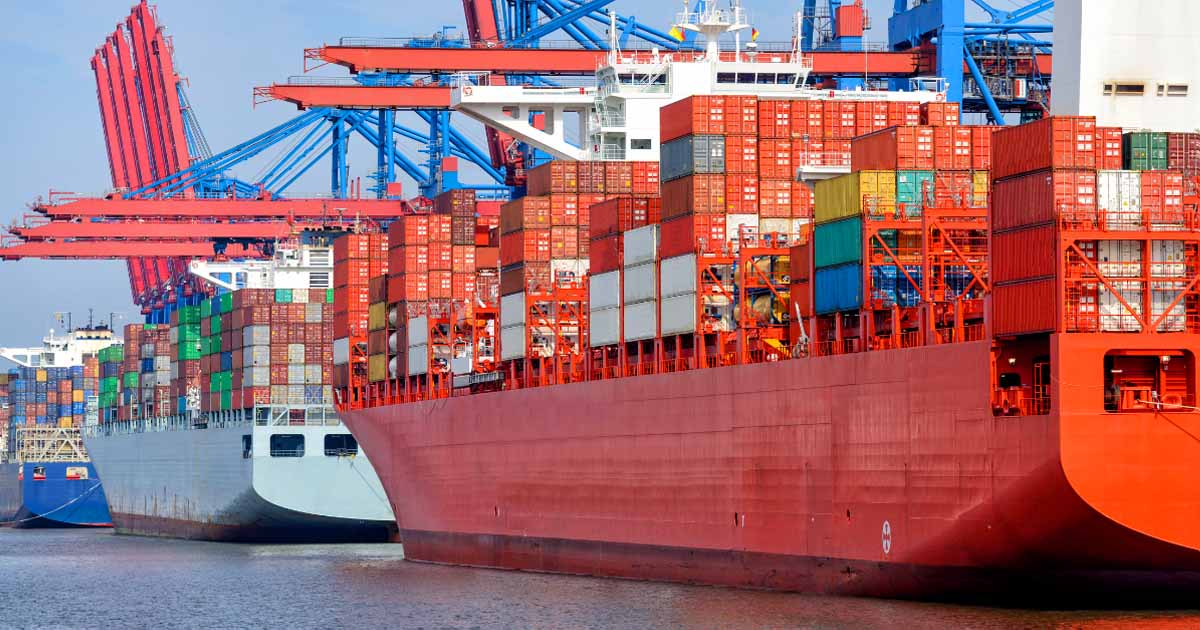
Dry cargo ships are merchant vessels designed to transport solid, non-liquid goods across oceans and inland waters.
These include unpackaged or packaged cargoes such as coal, grains, machinery, vehicles, electronics, steel, and timber– materials that power global industries and everyday life.
In fact, much of what you see at home- your furniture, food items, or mobile phone, likely arrived via a dry cargo vessel.
These ships handle freight in bulk, break-bulk, containerized, palletized, or even unitized forms.
⚓ Types of Dry Cargo Ships
Below are the major types of dry cargo ships, classified based on their design and the type of goods they carry.
1. 🧱 Bulk Carriers
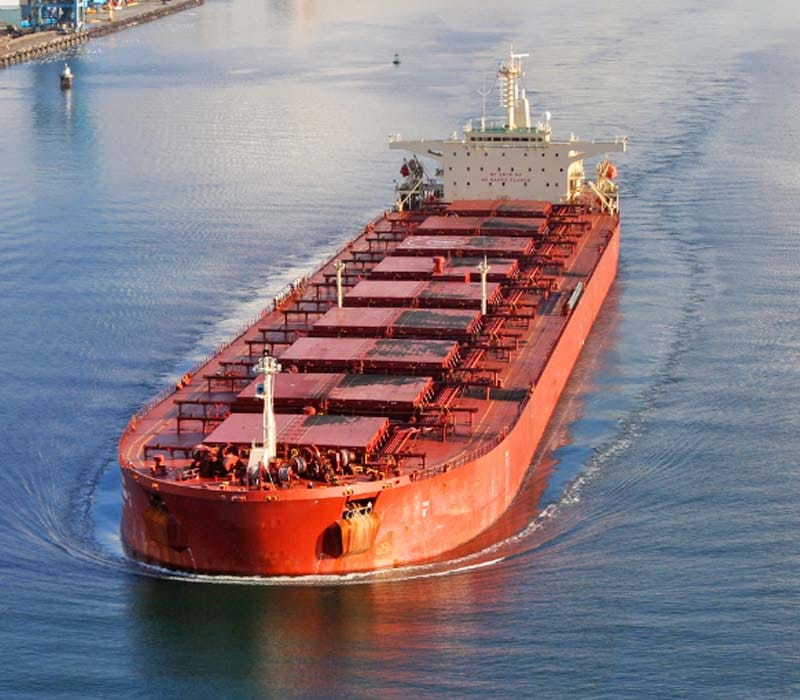
Bulk carriers are ships built to transport unpackaged, loose cargo in vast quantities- typically stored in large holds below deck.
Common cargoes include:
- Coal
- Iron ore
- Cement
- Grains
- Fertilizers
These vessels often operate on long-haul routes and are crucial for raw material transport.
📐 Bulk Carrier Types by Size (DWT)
According to UNCTAD’s Review of Maritime Transport, bulk carriers are grouped by deadweight tonnage (DWT):
| Type | DWT Range | Notes |
|---|---|---|
| Handysize | 10,000–40,000 | Accesses smaller ports |
| Handymax | 40,000–60,000 | Often equipped with onboard cranes |
| Panamax | 60,000–80,000 | Sized to fit the Panama Canal |
| Capesize | 100,000+ | Too large for canals; used for intercontinental shipping |
🔹 Example Operator: Ultrabulk Shipping
2. 📦 Container Vessels (Box Ships)
Container ships carry cargo inside standardized containers, typically 20-foot (TEU) or 40-foot (FEU) units.
These vessels offer speed, security, and efficiency- backbone qualities of global trade.
🧱 Types of Container Ships
| Type | Capacity (TEUs) | Notes |
|---|---|---|
| Feeder | Up to 2,000 | Short sea shipping |
| Feedermax | Up to 3,000 | Medium-range terminals |
| Panamax | 3,001–5,100 | Panama Canal size limit |
| Post-Panamax | 5,100–10,000 | Too large for old Panama locks |
| Neo-Panamax | 10,000–14,500 | Fits expanded Panama Canal (2016) |
| Suezmax | ~20,000 | Max Suez Canal dimensions |
| ULCS | 20,000+ | Ultra-large container vessels (Malaccamax, Post-Malaccamax) |
🔹 Major Operators: Maersk, MSC
3. 📦 General Cargo Vessels (Break-Bulk Ships)
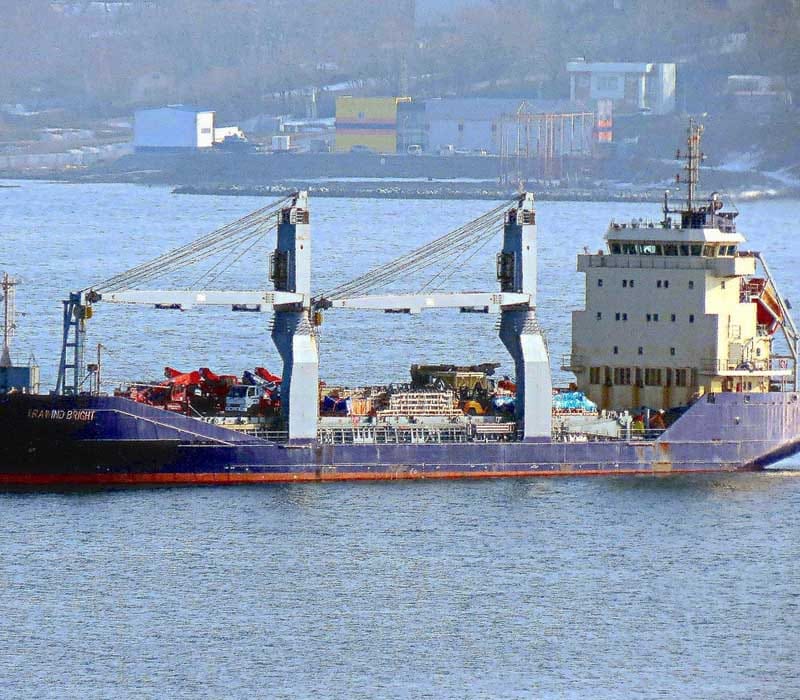
Also called Multi-Purpose Ships (MPP), these vessels are built to carry various cargo types- often in packages, crates, pallets, or containers.
They handle items that can’t fit inside standard containers, such as:
- Windmill blades
- Steel coils
- Heavy machinery
- Refrigerated cargo
Many are fitted with onboard cranes, allowing them to load/unload cargo without relying on shore-based equipment.
🔹 Example Operator: AAL Shipping
4. 🌲 Loggers (Timber Carriers)
Loggers are dry cargo ships specifically designed to carry forestry products like logs, timber, and wood chips.
Cargo may be stowed inside cargo holds or openly on deck.
To prevent cargo shift, they are fitted with deck stanchions– either fixed or removable, that secure the timber during the voyage.
These ships are easily recognizable by the voluminous lumber stacks visible above deck.
❄️ 5. Refrigerated Vessels (Reefers)
Refrigerated vessels, commonly known as reefers, are ships built to transport perishable goods that require specific temperature control.
These include:
- Fresh produce (fruits and vegetables)
- Meat and seafood
- Dairy products
- Pharmaceuticals
Reefers are equipped with advanced refrigeration systems and insulated holds to maintain the required temperature and humidity.
They can carry goods in reefer containers or inside specially built refrigerated chambers.
🔹 Example Operator: Seatrade Reefer Chartering
🐄 6. Livestock Carriers
Livestock carriers are specialized dry cargo ships designed to transport live animals such as:
- Cattle
- Sheep
- Goats
- Poultry
These vessels feature custom-built decks, pens, ventilation systems, and watering/feeding equipment to ensure animal welfare during transit.
Livestock ships may be converted general cargo vessels or purpose-built for live animal trade.
🔹 Example Operator: Vroon’s Livestock Express
🏗️ 7. Heavy Lift Ships
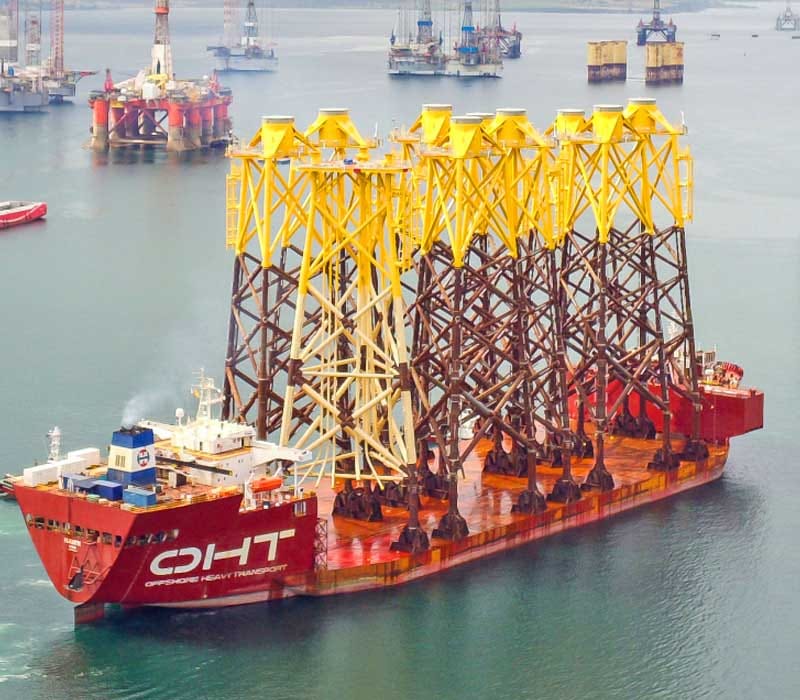
Heavy lift ships transport oversized, unusually shaped, or ultra-heavy cargo- often referred to as project cargo.
Examples include:
- Offshore platforms
- Wind turbine parts
- Large industrial equipment
- Naval vessels or yachts
⚙️ Types of Heavy Lift Ships
- Semi-submersible Ships – These vessels can partially submerge, allowing floating cargo (like rigs or ships) to be floated on and off.
- Crane-equipped Heavy Lift Ships – Fitted with massive onboard cranes for lifting very large items from dock to deck.
These ships are vital for offshore construction and oil and gas industries.
🚗 8. Ro-Ro Vessels (Roll-on/Roll-off)
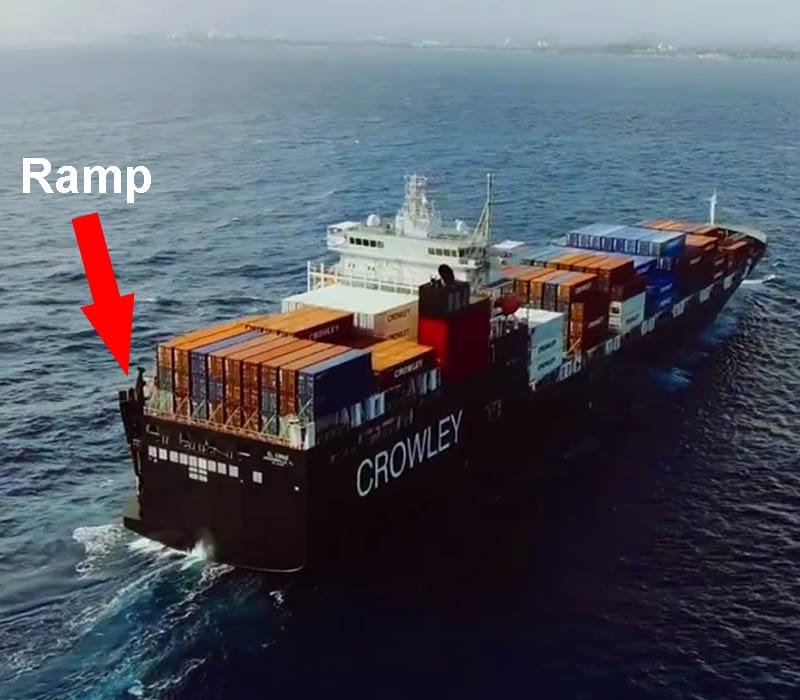
Ro-Ro ships carry wheeled cargo that is driven on and off the vessel via ramps.
This includes:
- Cars
- Trucks
- Trailers
- Buses
- Construction vehicles
Ro-Ro ships offer fast loading/unloading and are widely used for automotive transport and short-sea shipping.
🚙 Types of Ro-Ro Vessels
| Type | Description |
|---|---|
| PCC (Pure Car Carrier) | Exclusively transport cars. E.g. Höegh Autoliners |
| PCTC (Pure Car and Truck Carrier) | Designed for both cars, trucks, and heavy vehicles. E.g. UECC |
| ConRo Ships | Combine containerized and wheeled cargo. E.g. Crowley Maritime |
🛶 9. Barges
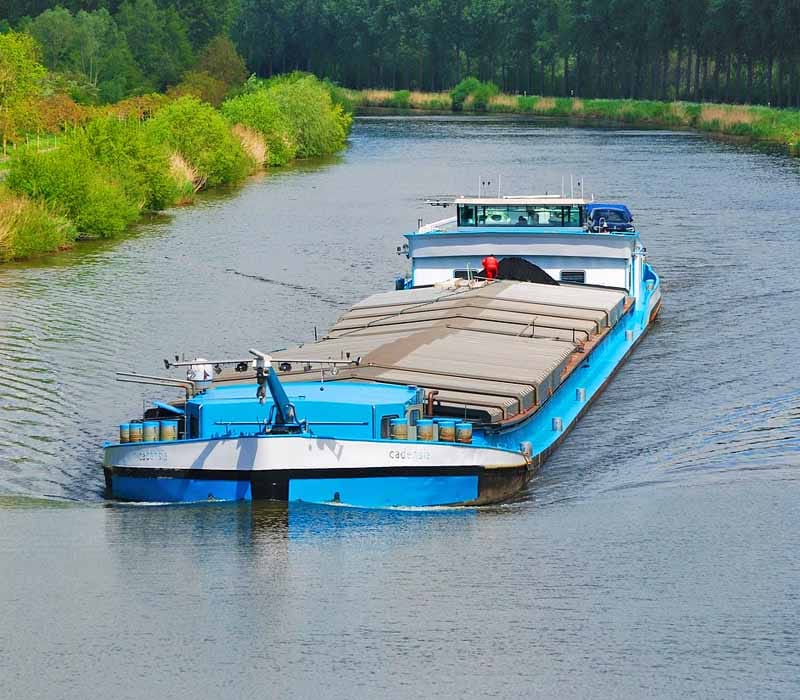
Barges are flat-bottomed cargo vessels primarily used in inland waterways (rivers, canals) and coastal transport.
They’re ideal for transporting large volumes of:
- Grains
- Aggregates
- Coal
- Containers
- Construction materials
Barges can be:
- Non-self-propelled (towed by tugboats or pushed by towboats)
- Self-propelled (equipped with their own engines)
They are highly fuel-efficient and suitable for areas where deep-draft ships can’t operate.
❓ FAQ: Dry Cargo Ships
🔸 What is the difference between dry cargo and liquid cargo ships?
Dry cargo ships carry solid goods (e.g., grain, containers, vehicles), while liquid cargo ships, also known as tankers, transport substances like oil, LNG, and chemicals.
🔸 Which dry cargo ship carries cars?
Ro-Ro vessels, specifically PCCs and PCTCs, are designed to carry cars and trucks.
🔸 Are bulk carriers and container ships the same?
No. Bulk carriers transport loose, unpackaged goods in large holds, while container ships carry goods in standardized containers.
🔸 What is the largest type of dry cargo vessel?
Ultra Large Container Ships (ULCS) and Ultra Large Ore Carriers (ULOC) are among the largest dry cargo vessels, depending on cargo type.
🔸 Do barges operate in oceans?
Most barges operate on rivers and canals, but some are designed for coastal or offshore use with appropriate weatherproofing.
🧭 Conclusion: Why Dry Cargo Ships Matter
Dry cargo vessels form the backbone of global maritime logistics.
From transporting grains across continents to delivering vehicles and machinery, these ships support nearly every industry worldwide.
For seafarers, understanding these differnt ship types not only enhances operational readiness but also expands opportunities across diverse maritime sectors.
Whether you’re working on a container vessel or a bulk carrier, your role is critical in keeping global trade afloat.
📣 Call to Action
🔹 Want to work on a dry cargo ship?
Explore our guides on shipboard ranks, third officer duties, and mooring best practices to prepare for your next contract.
May the winds be in your favor.
Leave a Reply