


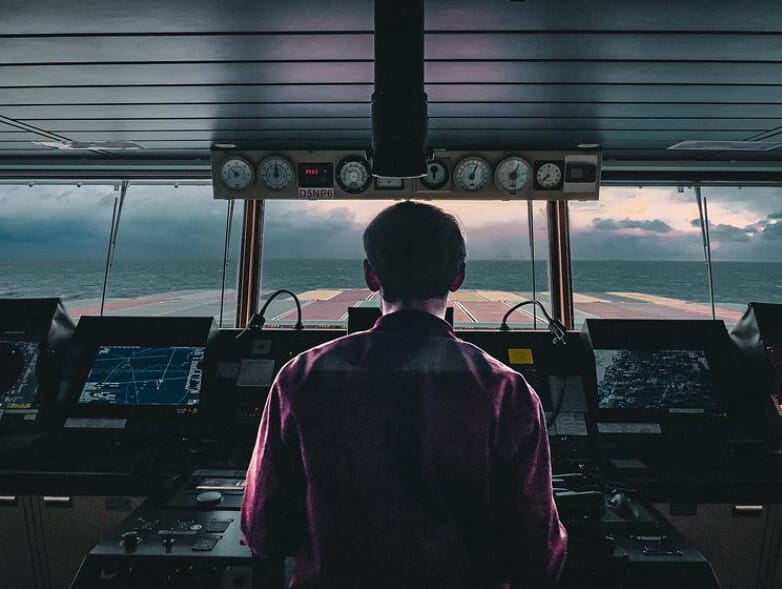
Steering a ship isn’t like driving a car- one wrong command at the helm could put thousands of gross tons at risk.
To avoid confusion during navigation, the International Maritime Organization (IMO) established a set of standard helm orders through the Standard Marine Communication Phrases (SMCP).
These are used globally on all vessels.
Whether you’re a deck cadet, helmsman, or junior officer, you must know these phrases by heart.
This guide will walk you through them all step by step.
🚢 Why Helm Orders Are Standardized
Helm orders are critical in bridge team communication, especially during:
- Canal transits
- Bad weather navigation
- Close-quarter situations
- Anchoring operations
- Pilotage maneuvers
To avoid steering mistakes, IMO-SMCP helm phrases are used across all vessel types.
Whether you’re on a tanker, bulk carrier, or container ship, once you master these orders, you’ll be able to apply them universally.
🧭 Helm Orders, Meaning, and Execution
The helm (also called the steering wheel) controls the ship’s rudder, which dictates the vessel’s heading.
Below are the standard rudder commands every helmsman must know, including their meaning and correct execution.
Knowing them will help you become a better helmsman.
⚙️ 1. Midships / Rudder Midships / Midships the Wheel
Meaning: Bring the rudder back to the neutral (fore-and-aft) position.
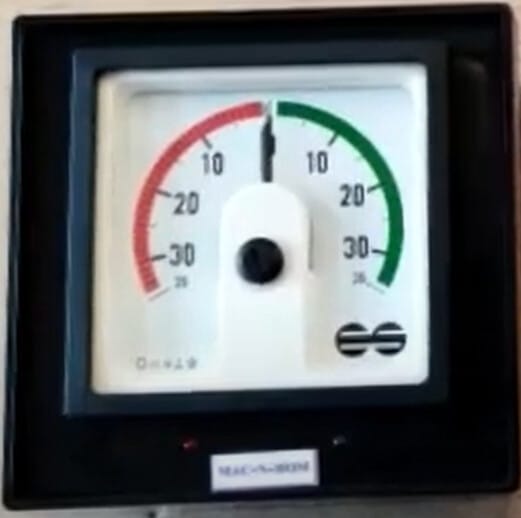
Execution: Turn the steering wheel until the rudder angle indicator reads zero.
📣 Helmsman Response:
- (if reporting) “Rudder is amidships.”
- “Rudder midships now, sir.”
⚙️ 2. Port Five / Starboard Five
Meaning: Turn the rudder 5° to port or starboard, depending on the order.
Execution: Adjust the wheel to achieve a 5° rudder angle, then hold.
📣 Helmsman Response:
- “Port five now, sir.”
- “Starboard five applied, sir.”
⚙️ 3. Port Ten / Starboard Ten
Meaning: Apply 10° rudder angle to port or starboard.
Execution: Monitor the rudder angle indicator to hit the correct position.
📣 Helmsman Response:
- “Port ten now, sir.”
- “Starboard ten now, sir.”
⚙️ 4. Port Fifteen / Starboard Fifteen
Meaning: Apply 15° rudder angle. Used in tighter turns or when maneuvering in narrow channels.
📣 Helmsman Response:
- “Port fifteen now, Mr. Pilot.”
- “Starboard fifteen now, sir.”
⚙️ 5. Port Twenty / Starboard Twenty
Meaning: Apply 20° rudder angle. Used for sharp maneuvers or immediate heading changes.
📣 Helmsman Response:
- “Port twenty now, sir.”
- “Starboard twenty now, sir.”
✅ Note: Always monitor the rudder angle indicator to confirm its exact position.
⚙️ 6. Port Twenty-Five / Starboard Twenty-Five
Meaning: Apply a 25° rudder angle to port or starboard.
Execution: Turn the wheel until the rudder angle indicator reaches 25°.
📣 Helmsman Response:
- “Starboard twenty-five now, sir.”
- “Holding port twenty-five, sir.”
⚙️ 7. Hard-a-Port / Hard-to-Starboard / Hard Starboard
Meaning: Apply the maximum rudder angle to the given side. This angle varies depending on the ship’s rudder type– e.g., standard, flap, or Becker rudder.
📣 Helmsman Response:
- “Hard to port applied, sir.”
- “Rudder hard-a-starboard now.”
💡 Tip: Know your ship’s max rudder angle during onboard familiarization or ask the helmsman or officer on watch.
⚙️ 8. Nothing to Port / Nothing to Starboard
Meaning: Prevent the ship’s head from drifting in the specified direction (port or starboard.
Execution: Monitor the compass and apply counter-rudder as needed.
📣 Helmsman Response:
- “Nothing to port, acknowledged.”
- “Nothing to starboard, sir.”
⚙️ 9. Meet Her / Check Her
Meaning: Stop or slow down the ship’s swing in a turn. This prevents oversteering.
Execution: Observe the vessel’s rate of turn and apply a counter rudder to stop the swing. No specific course needs to be steered. Just stop the movement.
📣 Helmsman Response:
- “Meeting her now, sir.”
- “Meeting her now, sir. Vessel steady.”
⚙️ 10. Steady
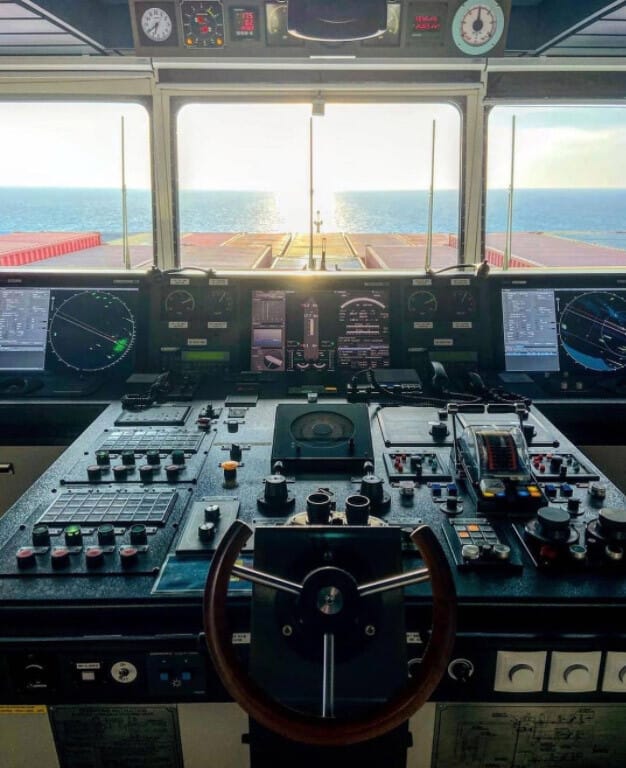
Meaning: Similar to “meet her”, but more commonly used.
Execution: Immediately reduce the vessel’s rate of turn until it stops. This command is often given when the ship is swinging too quickly.
📣 Helmsman Response:
- “Steadying now, sir.”
- “Vessel steady now.”
⚙️ 11. Steady As She Goes
Meaning: Maintain the ship’s heading at the moment the command is given.
Execution: Look at the compass the moment the command is issued, and steer exactly on that heading.
📣 Example Exchange:
- Pilot: “Steady as she goes.”
- Helmsman: “Steady as she goes 0-7-7.”
- (After executing) “Vessel steady on 0-7-7 now, sir.”
- Pilot: “Very well.”
⚙️ 12. Ease to Five / Ten / Fifteen / Twenty
Meaning: Reduce the rudder angle to the specified value without switching sides.
Execution: Adjust the wheel to the new angle and hold.
📣 Example Scenario:
- Pilot: “Starboard twenty.”
- Helmsman: “Starboard twenty now, sir.”
- Pilot: “Ease to five.”
- Helmsman: “Ease to five… Starboard five now, sir.”
- Pilot: “Very Well!”
⚙️ 13. Keep the Buoy / Beacon / Mark / Lighthouse on Port / Starboard / Ahead
Meaning: Use a visual navigation aid to maintain a specific relative bearing.
Execution: Adjust the helm to keep the referenced object where instructed.
📣 Helmsman Response:
- Pilot: Keep the leading light dead ahead!
- Your response: Keep the leading light dead ahead, copy. (Execute)
- Your response: Leading light dead ahead now, Mr. Pilot. (After execution)
🧭 Steering by Compass
Sometimes, the conning officer gives a specific course to steer rather than rudder angle commands.
In this case, it’s up to the helmsman to bring the vessel onto that heading accurately using visual and gyro inputs.
⚙️ 14. 0-8-2 / Starboard (or Port), Steer 0-8-2
Meaning: Adjust course until the vessel’s gyro compass heading matches 082° (0-8-2).
Execution: Apply rudder as needed to bring the ship to that heading, then maintain it steadily.
📣 Helmsman Response:
- “Starboard, steer 0-8-2.”
- (After completion) “Steering 0-8-2 now, sir.”
Other variants: - “Heading 0-8-2, steady now, sir.”
- “Course 0-8-2 maintained.”
🎙️ Other Standard Helm Communications
These are frequently used phrases on the bridge for situational awareness and safety communication.
⚙️ 15. What’s Your Course / Heading / Rudder?
Meaning: The conning officer is asking for the vessel’s current heading or rudder angle.
Execution: Quickly check the compass or rudder angle indicator and respond clearly.
📣 Helmsman Response:
- “Course is 0-9-7, sir.”
- “Rudder is starboard five, sir.”
⚙️ 16. Mind Your Helm / Rudder
Meaning: A warning to focus on your steering duty. You might be distracted or steering inaccurately.
Execution: Immediately correct course and pay full attention to the wheel.
📣 Helmsman Response (optional but respectful):
- “Aye, sir.” (acknowledgment) or
- “Aye, sir. Rudder midships (port 5, stbd 10, etc.)”
⚙️ 17. Report to Me If You Have No Steering
Meaning: Steering may be affected by slow speed, weather, or technical failure. The officer wants to be notified if you lose control.
Execution: Monitor helm response closely. If the rudder has no effect, report it immediately.
📣 Helmsman Report:
- “No steering response, sir.”
- (After pilot adjusts engine or maneuver) “Steering restored now, sir.” or
- “I have steering now, sir!”
⚙️ 18. Finish With the Wheel
Meaning: Manual steering is no longer required, usually after docking or mooring operation.
Execution: Ensure rudder is at midships before letting go.
📣 Helmsman Response:
- “Finish with the wheel, thank you.”
- (If rudder is off-center) “Finish with the wheel, rudder at port ten.”
- (After correction) “Rudder midships. Finish with the wheel, thank you.”
🚨 When Are Helm Orders Used?
Helm orders aren’t only for pilotage and port entries. You may use manual steering in:
- Congested waters or traffic separation schemes
- Bad weather or high sea states
- Navigating narrow channels or canals
- Anchoring maneuvers
- Radar or gyro failure situations
- Overtaking in narrow channels
Even automated ships require a trained helmsman during critical situations.
📋 Quick Reference: Standard Helm Orders Cheat Sheet
| Helm Order | Meaning | Helmsman Response Example |
|---|---|---|
| Midships | Rudder to center (0°) | “Rudder midships now, sir.” |
| Port/Starboard Five | Apply 5° rudder to port/starboard | “Port five now, sir.” |
| Port/Starboard Ten | Apply 10° rudder | “Starboard ten now, sir.” |
| Port/Starboard Fifteen | Apply 15° rudder | “Port fifteen now, sir.” |
| Port/Starboard Twenty | Apply 20° rudder | “Starboard twenty now, sir.” |
| Port/Starboard Twenty-Five | Apply 25° rudder | “Port twenty-five now, sir.” |
| Hard to Port/Starboard | Maximum rudder angle | “Hard to port applied, sir.” |
| Nothing to Port/Starboard | Prevent ship’s head from turning in that direction | “Nothing to starboard, sir.” |
| Meet Her / Check Her | Stop the vessel’s swing using counter-rudder | “Meeting her… Vessel steady at 085.” |
| Steady | Reduce swing and stabilize the heading | “Steadying now, sir.” |
| Steady as She Goes | Steer exactly on the current heading | “Steady as she goes 077…” |
| Ease to Five/Ten/etc. | Reduce current rudder angle to specified value | “Ease to five… Starboard five now, sir.” |
| Keep the [Aid] on [Side] | Maintain visual reference on a specific bearing | “Buoy on port side now, sir.” |
| Steer 0-8-2 | Adjust to compass heading 082° | “Steering 0-8-2 now, sir.” |
| What’s Your Course/Rudder? | Officer is requesting status | “Course 097, sir.” / “Rudder is port five.” |
| Mind Your Helm/Rudder | Focus warning | “Aye, sir.” |
| Report if No Steering | Alert if helm is unresponsive | “No steering, sir.” / “Steering restored.” |
| Finish With the Wheel | End manual steering duties | “Finish with the wheel, thank you.” |
❓ Frequently Asked Questions (FAQs)
🔹 What are standard helm orders?
They are IMO-standardized steering commands used on ships to ensure clear and safe communication between the conning officer and helmsman.
🔹 What is the difference between “Steady” and “Steady as she goes”?
- Steady: Immediately reduce or stop the vessel’s swing.
- Steady as she goes: Maintain the compass heading shown at the moment of the command.
🔹 Who gives helm orders on board?
Usually the conning officer (OOW, Master, or Pilot). The helmsman must repeat and carry out orders clearly.
🔹 Are helm orders universal across all ships?
Yes. Helm orders are standardized in the SMCP (Standard Marine Communication Phrases) and used on all IMO-compliant vessels.
🔹 When do you “finish with the wheel”?
After docking or once manual steering is no longer required. Always ensure the rudder is midships before handing over.
⚓ Final Thoughts: Mastering the Art of Helm Orders
Whether you’re preparing for your first bridge watch or steering during canal transit, clear, accurate helm command execution is critical.
It’s more than just turning a wheel- it’s a demonstration of discipline, precision, and seamanship.
Keep practicing these orders during simulation, training watch, and onboard duties. With time, they’ll become second nature.
May the winds be in your favor.


Leave a Reply