
Our Blog
-
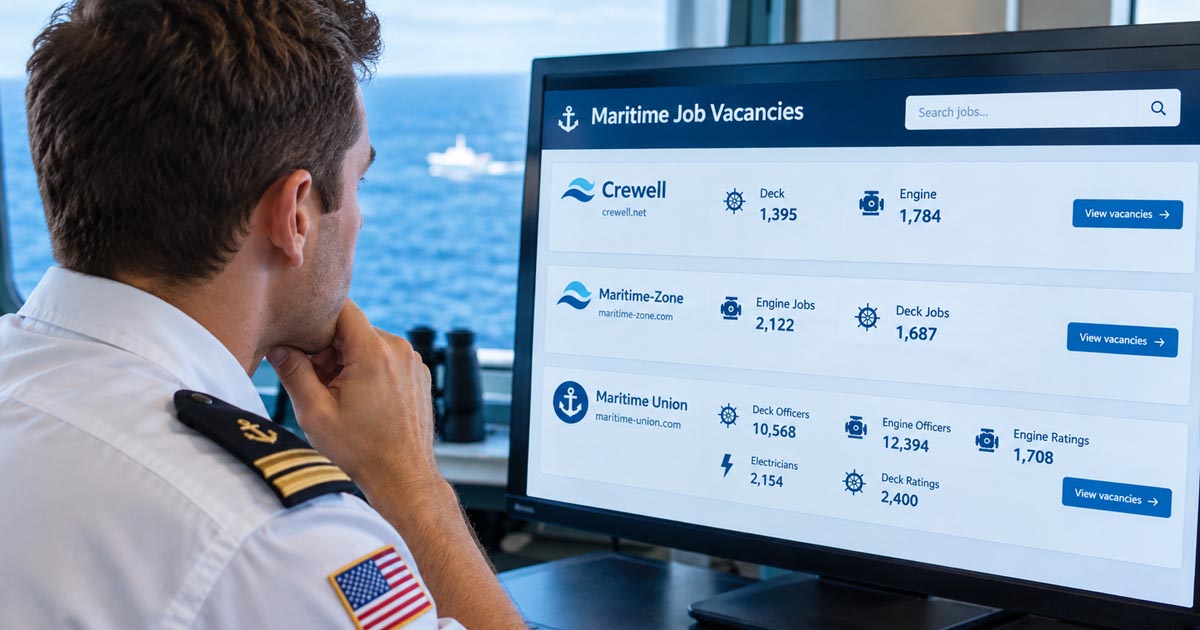
Why Do Seafarer Job Boards Show More Engine Vacancies Than Deck Jobs?
If you browse maritime recruitment websites, you may notice something surprising: engine department vacancies often outnumber deck vacancies. That seems counterintuitive. On many merchant ships, the deck department can have more crew members than the engine department. Yet job boards frequently display more vacancies for marine engineers, engine officers, ratings, and electrical personnel. For example,…
-

OWS 15 ppm Alarm: Troubleshooting False High Readings
It is 0300, your OWS 15 ppm alarm has tripped for the third time this watch, and the discharge water looks clear through the sight glass. Before you condemn the monitor or start looking for a way around it, remember one important principle: Troubleshoot the sample before you blame the monitor. The 15 ppm bilge…
-
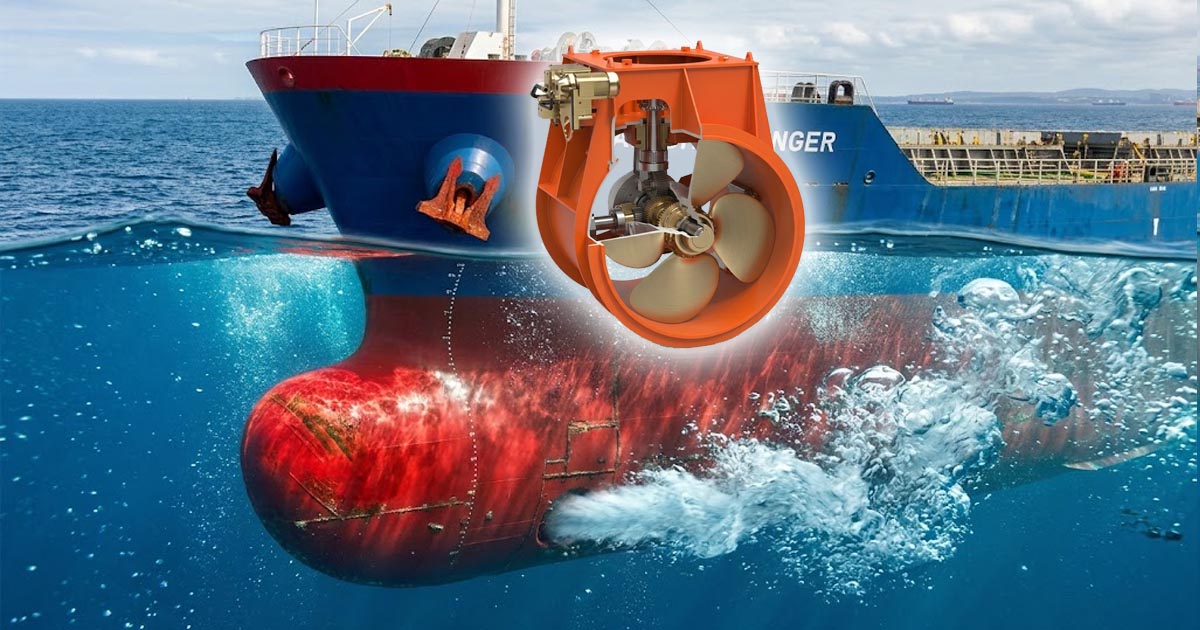
CPP Bow Thruster Zero Pitch: Zero Thrust & Troubleshooting
Your bow thruster lever sits at neutral, yet the bow of your laden bulk carrier creeps off the quay during berthing. That drift is residual thrust, and it comes down to one fact: zero pitch is a target, not a guarantee. How CPP Bow Thrusters Achieve Zero Thrust A controllable pitch propeller (CPP) bow thruster…
-
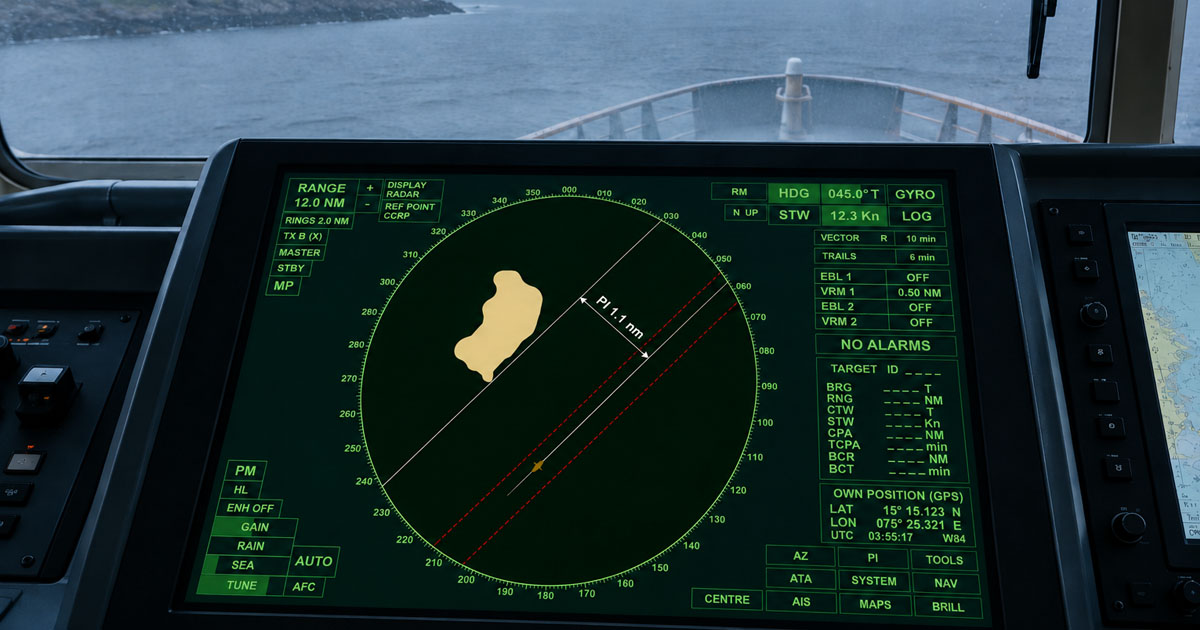
Radar Parallel Indexing: How to Use PI for Safe Navigation in Confined Waters ⚓
Fog reduces visibility to 200 metres at 0200H, and the channel ahead narrows to a quarter of a mile. Visual navigation is no longer reliable. Radar parallel indexing, or PI, provides a continuous reference for monitoring a vessel’s position relative to the planned track and nearby hazards. It helps the OOW quickly determine whether the…
-
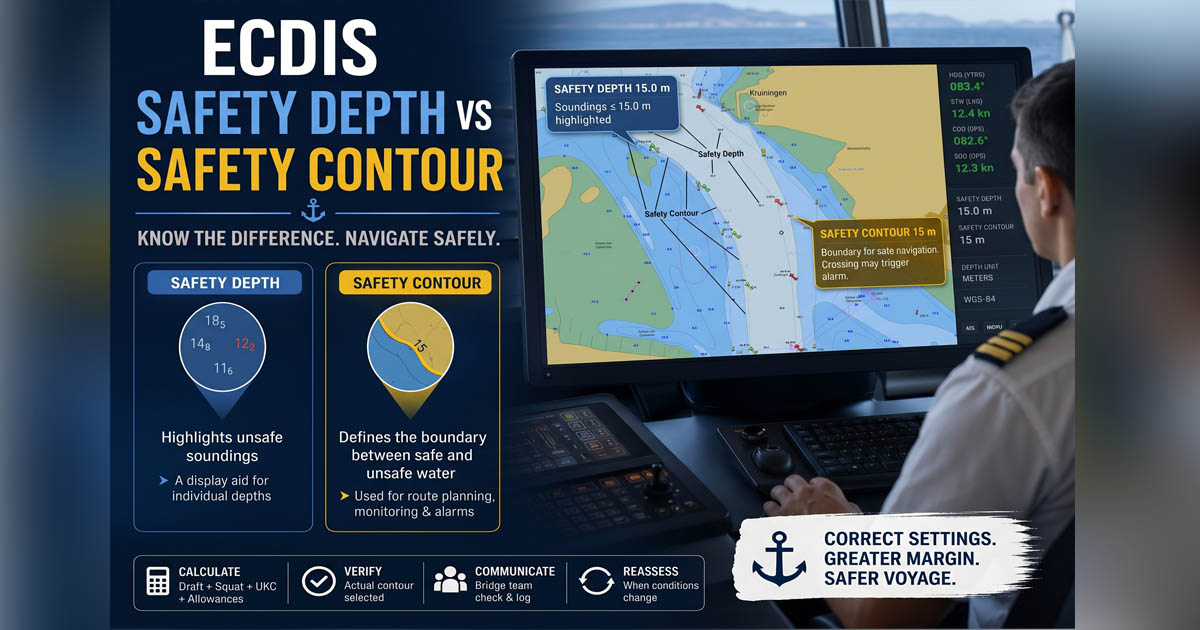
ECDIS Safety Depth vs Safety Contour: A Practical OOW Configuration Guide
Safety Depth and Safety Contour are not the same setting. Safety Depth makes potentially unsafe individual charted soundings more conspicuous. Safety Contour establishes the boundary between navigable and unsafe water for the vessel and is used by ECDIS for safety-related route planning and monitoring. Confusing the two can lead to incorrect assumptions about what the…
-
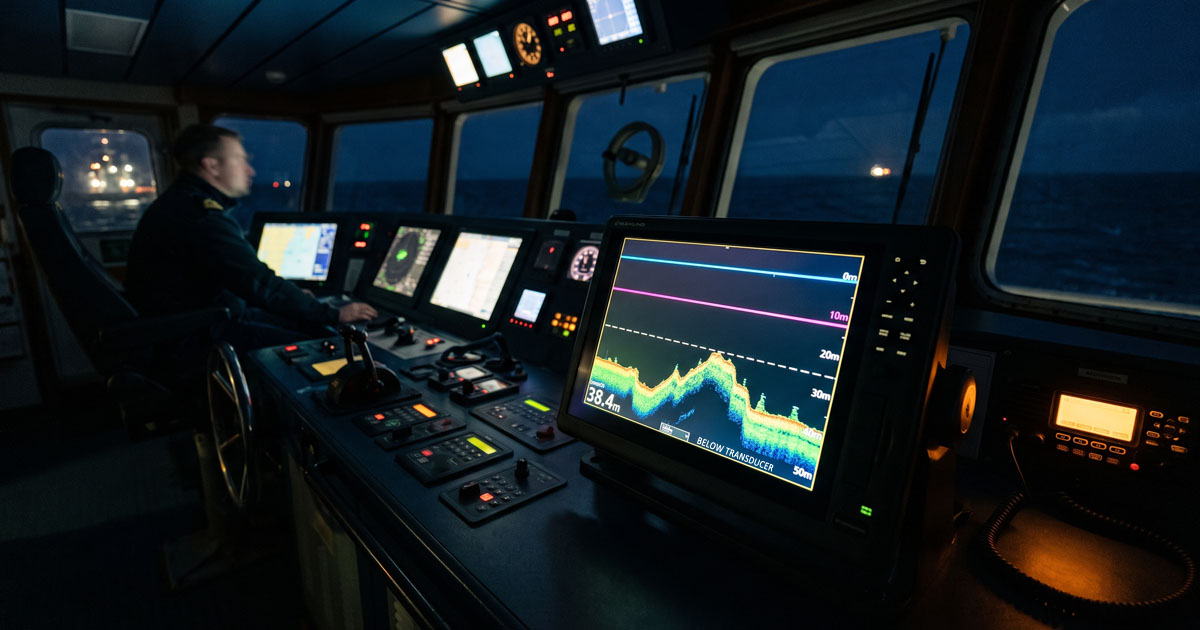
Echo Sounder Draft Offset: DBT, DBK and DBS Explained for Safe Navigation
An echo sounder draft offset determines the reference point from which a depth reading is displayed. If the officer of the watch misunderstands that reference, a displayed depth can be mistaken for the actual clearance beneath the vessel. For example, an echo sounder may show 2.0 m. But is that 2.0 m below the transducer,…
-

Emergency Steering Gear Drill: Bridge-to-Steering Flat Changeover Guide
An emergency steering changeover is the controlled transfer of rudder control from the bridge to an alternative steering position, usually local control in the steering gear compartment. Picture it: 0215H, a loaded bulk carrier entering a traffic separation scheme. The wheel stops responding. Follow-up steering is gone, and the standby arrangement does not restore normal…
-
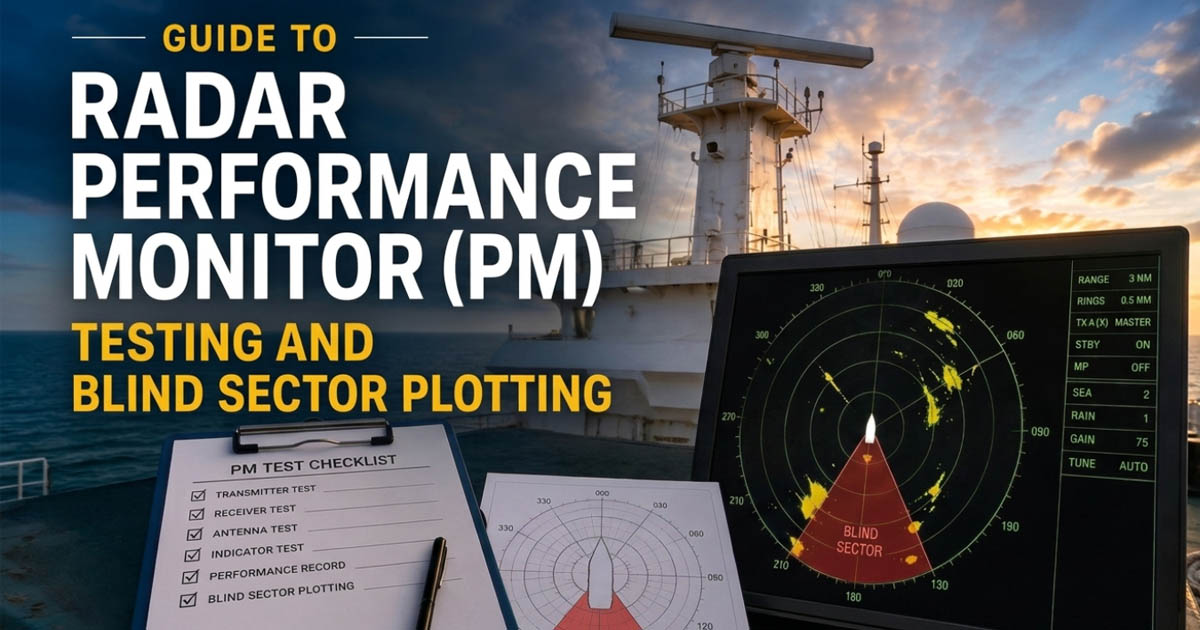
Radar Performance Monitor (PM) Testing and Blind Sector Plotting
A radar performance monitor provides a means of checking transmitter and receiver performance against a calibrated standard established during installation or commissioning. Manufacturers may provide specific procedures and intervals for conducting these checks. IMO Resolution MSC.192(79), section 5.7.3, requires radar equipment to provide a means of determining a significant drop in system performance relative to…
-
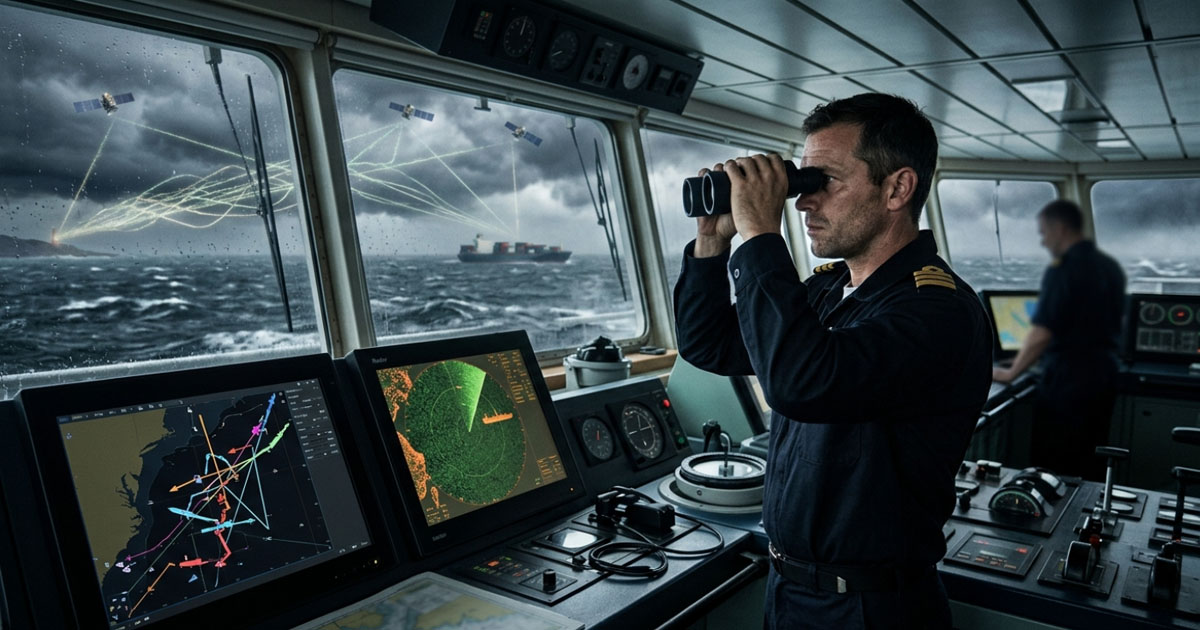
OOW Guide to GNSS Spoofing: Detecting and Navigating False GPS Fixes
Global Navigation Satellite System (GNSS) spoofing has become an operational reality. Operating in choke points like the Baltic, Black Sea, Red Sea, Eastern Mediterranean, Arabian Gulf, and Strait of Hormuz exposes bridge teams to corrupted satellite data. Unlike jamming, which causes overt signal loss, spoofing feeds deceptive coordinates and timing to receivers. When ECDIS displays…
-

USCG MMC Renewal Guide: Sea Service Rules, Grace Periods & Common Rejections
To renew a USCG Merchant Mariner Credential (MMC), mariners must submit Form CG-719B along with verified proof of at least 360 days of sea service within the past 5 years under 46 CFR § 10.227, or pass a National Maritime Center (NMC) open-book renewal exercise (OBE). Applications require an active TSA TWIC Card or proof…